
Listen to this article
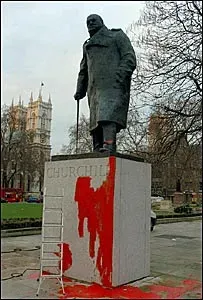
In a shocking act of public defiance, the Winston Churchill statue was defaced with graffiti in Parliament Square, leading to significant outcry and a police investigation. The incident, described as racially aggravated criminal damage, involved a man spraying phrases such as “Zionist war criminal” and “Free Palestine” on the bronze monument of the former prime minister. Following this vandalism, which is being classified under statue defacement news, the Metropolitan Police quickly apprehended a 38-year-old suspect at the scene. This incident has reignited discussions surrounding Churchill’s controversial legacy, particularly amidst the ongoing debates about race and historical accountability. As the cleanup begins, the aftermath of this Churchill statue vandalism underscores the intersection of public art and modern activism.
The recent act of vandalism against a prominent historical figure, notably the Churchill statue, has sparked national conversation regarding the implications of such protests. This particular defacement, which includes radical statements against perceived injustices, reflects a broader trend of graffiti in public spaces that often serve as canvases for social commentary. The graffiti Parliament Square witnessed highlights the tensions surrounding contemporary movements that advocate for global issues like Palestinian rights. As society grapples with its historical narrative, these incidents can serve both as a call to action and a source of division among citizens. Ultimately, the events surrounding the serious nature of racially aggravated criminal damage reveal the complexities involved in commemoration, representation, and activism.
Understanding the Recent Incident: Churchill Statue Defaced
On February 27, 2023, the statue of Sir Winston Churchill in Parliament Square was defaced with graffiti, leading to a swift police response. The words painted on the statue labeled Churchill a “Zionist war criminal” and displayed phrases such as “Stop the Genocide” and “Free Palestine”. This incident has reignited discussions surrounding statue vandalism and the implications of using public art as a canvas for political statements. The arrest of a 38-year-old man shortly after the vandalism highlights the seriousness of such actions, classified under racially aggravated criminal damage.
This incident is not isolated; it draws parallels with past events where the Churchill statue has been targeted during protests. The vandalism reflects the tensions surrounding global political issues, including the Israel-Palestine conflict. The phrase “Free Palestine” indicates a specific political message that resonates with many activists, which has now found its way into controversial expressions of dissent against figures like Churchill. Society continues to grapple with the legacy of historical leaders and how their statues symbolize various perspectives on justice and resistance.
The Impact of Graffiti at Parliament Square
Parliament Square is a significant site in London, well known for its collection of statues that commemorate historical figures and events. Graffiti, such as that seen recently on the Churchill statue, poses a unique challenge to heritage and preservation efforts. The prompt response from heritage wardens underscores the urgency in addressing such acts of vandalism, which can lead to long-term damage to historical monuments. The act of spraying graffiti on statues raises questions about freedom of expression versus the respect due to public figures, especially in a locale imbued with national significance.
Moreover, the reaction from local authorities and politicians symbolizes a broader societal stance on public monuments. The London government and law enforcement view the defacement as an affront to national pride and collective memory. This incident is not just an act of vandalism but a reflection of larger societal issues, including racism, identity, and the historical narratives associated with figures like Churchill. The delicate balance between protesting injustices and maintaining cultural heritage continues to fuel debates among citizens, activists, and policymakers.
Political Context: Vandalism and Protests
The incident involving the Churchill statue is emblematic of the growing tensions in the UK amid ongoing protests related to race and colonialism. Movements such as Black Lives Matter have previously targeted the statue, accusing Churchill of racism and complicity in oppressive regimes. The actions during these protests have led to an escalated focus on whether commemorations should be reevaluated in today’s context. The government’s quick response reflects a desire to maintain historical reverence while navigating the complex emotions surrounding activism and dissent.
Political contexts often shape how acts of vandalism are perceived, particularly in light of events internationally that invoke outrage and solidarity. The phrase “Globalise the Intifada” that appeared alongside the graffiti brings to the fore the relationship between local expressions of solidarity with global movements. Each act of graffiti can thus be seen as a microcosm of larger, interconnected struggles for rights and representation, emphasizing the need for continuous dialogue about race, history, and the legacies of historical figures.
Analyzing the Role of Statues in Society
Statues symbolize collective memory and cultural heritage, serving as reminders of past leaders’ actions and their impacts on history. However, they can also become flashpoints for societal tensions, particularly when associated with controversial figures. Sir Winston Churchill, admired by many for his leadership during World War II, is also critiqued for his colonial perspectives and remarks about race. The defacement of his statue raises important questions about whose narratives are celebrated and whose are contested in public spaces.
As society evolves, so too does the interpretation of history and its figures. The calls to “Free Palestine” and associated criticism of Churchill during recent protests illustrate how historical figures can be invoked in contemporary discourse, challenging the prevailing narratives. These discussions around public monuments prompt a reassessment of how we commemorate the past and consider the diverse viewpoints within society, leading to debates about altering public displays to reflect a more inclusive understanding of history.
The Legal Implications of Statue Defacement
Defacing statues like that of Winston Churchill can lead to significant legal repercussions, categorized clearly as acts of vandalism under laws pertaining to criminal damage. The recent arrest following the graffiti incident at Parliament Square highlights the legal system’s stance on protecting public property, especially commemorative monuments of national significance. Legal frameworks strive to balance the right to express political dissent with the need to uphold societal values and respect for historical figures.
Legal responses to statue vandalism often ignite debates about free speech and the extent to which it can be exercised in public domains. For instance, the mention of “racially aggravated criminal damage” suggests that the motive behind the act also plays a crucial role in legal interpretations. Public sentiments about justice and accountability towards vandalism reflect broader societal attitudes toward historical figures, emphasizing the ongoing struggle to find equilibrium between expressing dissent and maintaining cultural respect.
Public Reaction to the Churchill Statue Incident
The public response to the defacement of the Churchill statue has been mixed, with notable condemnation from political leaders who view it as an attack on national heritage. A spokesperson from 10 Downing Street referred to the act as “completely abhorrent,” emphasizing the importance of respecting historical figures within the context of national pride. As conversations around race and colonialism gain prominence, public perception continues to evolve, illustrating the complexity of how people attach significance to historical figures.
Additionally, many citizens express solidarity with the motivations behind the protest actions, advocating for awareness of current global issues like the Palestinian struggle. This divergence illustrates a critical dialogue about the meanings attributed to historical statues and the extent to which they ought to be symbols of collective memory or points of contention. The Churchill incident thus becomes a platform for broader societal discussions about justice, representation, and the legacy each historical figure embodies in contemporary discourse.
Preserving Historical Integrity amidst Modern Views
The task of preserving the integrity of historical monuments like the Churchill statue becomes increasingly complex as societal views shift. The vandalism that occurred raises important questions about the cycle of historical narratives and their adaptations in light of modern values. Engaging in discussions about history means also acknowledging the imperfections of celebrated figures, thereby fostering a space for critical reflection rather than blind reverence.
Preservationists and local authorities are tasked with cleaning and restoring statues while having to contend with the voices calling for changes in how history is represented. This challenge reflects broader societal movements advocating for equity and representation. Therefore, the incident not only underscores the controversies surrounding specific statues but also urges society to rethink the role of public monuments as reflections of evolving values and histories.
Responses from Activist Groups and Social Movements
Activist group Free the Filton 24 claimed responsibility for the Churchill statue defacement, linking their message to broader activism beyond the UK. By taking responsibility for such actions, groups signal the urgency they feel regarding issues such as Palestine and imperialism. This dynamic showcases how statues have become battlegrounds for social movements, where the act of vandalism is often seen as a form of protest against perceived injustices.
The actions taken by such groups typically aim to provoke dialogue about historical narratives, especially regarding colonial legacies. Their responses echo the sentiments of many who feel that traditional representations of history do not reflect the experiences of marginalized communities. As discussions surrounding race, justice, and historical understanding evolve, incidents like the defacement of the Churchill statue force society to confront uncomfortable truths and engage in critical dialogue.
Reflecting on the Legacy of Churchill and Similar Figures
Winston Churchill’s legacy is a subject of ongoing debate, reflecting both the commendable aspects of his leadership during wartime and the criticisms relating to his views on race and colonialism. The recent graffiti on his statue demonstrates the complexity surrounding his public memory and the reactions it generates. For many, Churchill embodies the spirit of resilience during WWII, while for others, he represents the darker elements of British imperial history, leading to calls for reevaluation of his place in public memory.
This duality in perception is crucial in discussions about statues and their relevance today. Recent vandalism shines a light on how historical figures are often revered by some while being vilified by others. This creates an environment where communities can openly express their views on the legacy of such figures, fostering critical discourse about how society chooses to honor or critique its historical narratives. Engaging with this complexity allows for a richer understanding of history that incorporates diverse perspectives.
Frequently Asked Questions
What happened with the Winston Churchill statue defaced in Parliament Square?
The Winston Churchill statue was defaced with graffiti in Parliament Square, where a 38-year-old man was arrested for racially aggravated criminal damage. The vandalism included phrases such as ‘Zionist war criminal’ and ‘Free Palestine,’ which were painted in red on the statue.
Who was arrested for the Churchill statue vandalism?
A 38-year-old man was arrested by the Metropolitan Police on suspicion of racially aggravated criminal damage shortly after he was seen defacing the Churchill statue in Parliament Square.
What phrases were sprayed on the Churchill statue during the graffiti incident?
The graffiti on the Winston Churchill statue included phrases like ‘Zionist war criminal,’ ‘Stop the Genocide,’ ‘Free Palestine,’ and ‘Globalise the Intifada,’ reflecting political sentiments related to the Israeli-Palestinian conflict.
What is the response from authorities regarding the Churchill statue defacement news?
Authorities, including a spokesperson for 10 Downing Street, condemned the graffiti on the Winston Churchill statue as ‘completely abhorrent,’ affirming that Churchill is a figure of great national pride and emphasizing the need for accountability for the vandalism.
Has the Westminster statue been vandalized before?
Yes, the Winston Churchill statue has been vandalized multiple times in the past, with incidents including graffiti during the Black Lives Matter protests in June 2020 and another instance in October 2020 when an activist was fined for defacing the statue with the word ‘racist’.
What actions have been taken to clean the Churchill statue after the recent defacement?
After the Winston Churchill statue was defaced, it has been cordoned off and is currently undergoing cleaning by heritage wardens to remove the graffiti.
Which organization claimed responsibility for the Winston Churchill statue vandalism?
The Dutch group Free the Filton 24 claimed responsibility for the graffiti incident on the Churchill statue, stating on social media that the act was carried out by associates of Palestine Action.
| Key Point | Details |
|---|---|
| Arrest Made | A 38-year-old man was arrested for racially aggravated criminal damage after vandalizing Churchill’s statue. |
| Graffiti Content | Phrases like ‘Zionist war criminal,’ ‘Stop the Genocide,’ and ‘Free Palestine’ were sprayed. |
| Response from Authorities | 10 Downing Street called the act ‘completely abhorrent,’ emphasizing accountability for the vandal. |
| Historical Context | The statue has faced prior defacement, notably during protests like Black Lives Matter in June 2020. |
Summary
The Winston Churchill statue defaced incident highlights ongoing tensions surrounding historical figures and their legacies. This act of vandalism not only underscores the polarizing views on Churchill but also reflects broader societal issues concerning racism, colonialism, and the Palestine-Israel conflict. As public spaces are often battlegrounds for expressing political dissent, this event serves as a reminder of the complexities involved in honoring historical figures amidst contemporary debates.