Listen to this article
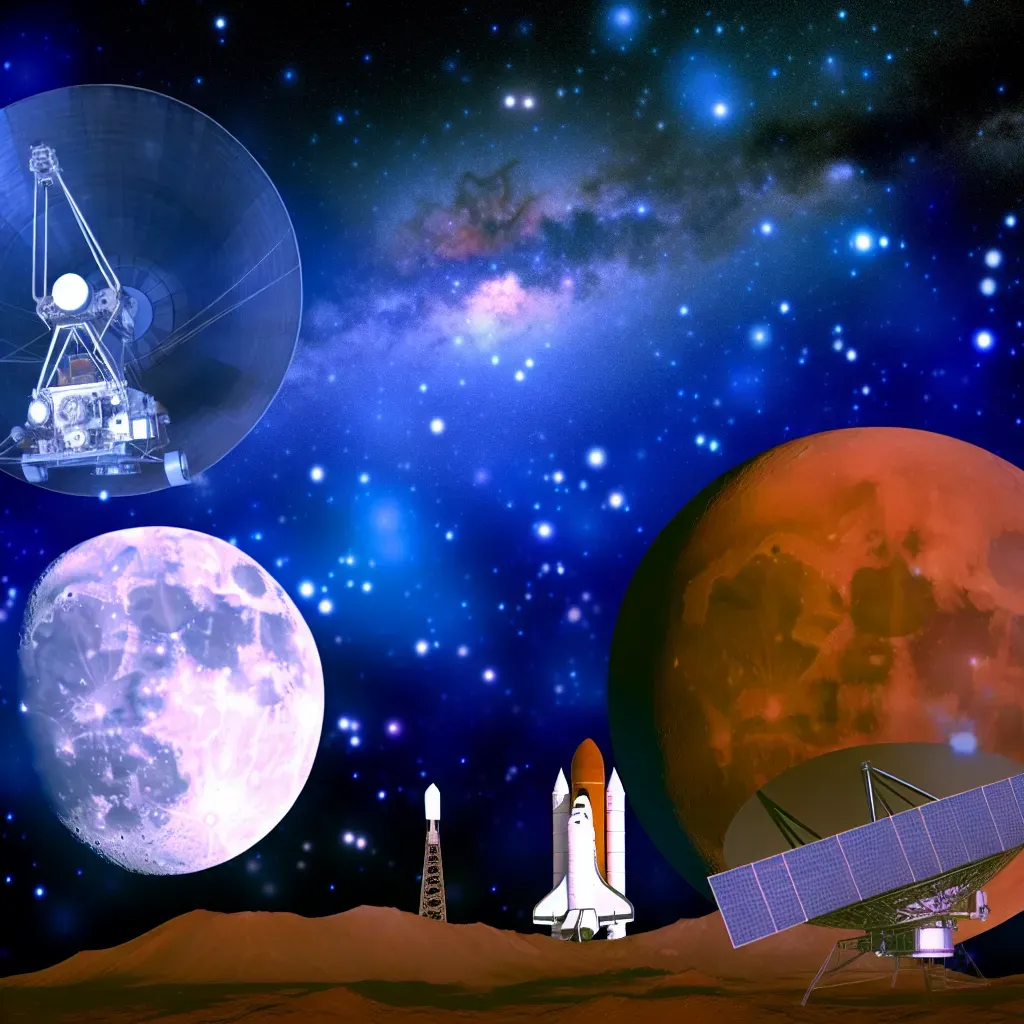
Space exploration has captured humanity’s imagination for decades, and as we enter 2023, the excitement only grows. This year promises groundbreaking advancements with initiatives like NASA’s Artemis program aiming to return humans to the Moon and beyond, as well as the relentless pursuit of Mars missions that could revolutionize our understanding of the Red Planet. The James Webb Space Telescope is already unveiling cosmic secrets, allowing scientists to investigate the atmospheres of exoplanets for signs of life. Meanwhile, SpaceX’s Starship is set to redefine space travel, dramatically lowering costs and making interplanetary exploration more feasible than ever. As these space technology advancements unfold, our quest in astrobiology—searching for life beyond Earth—becomes more tangible, paving the way for a new era of discovery.
The venture into the cosmos has always been a source of curiosity and wonder, reflecting our innate desire to explore the unknown. In 2023, we witness remarkable strides in astrological studies, opening new frontiers in the vastness of space. Significant efforts in lunar exploration and voyages to Mars exemplify our commitment to understanding extraterrestrial worlds and their potential for sustaining life. With the implementation of cutting-edge astronomical technologies and collaborative missions like the Artemis program and James Webb Space Telescope, the search for extraterrestrial life has never been more promising. This new chapter in celestial exploration is not just about reaching new heights; it’s about unlocking the mysteries that the universe holds and understanding our place within it.
Mars Missions: Pioneering the Red Planet
The exploration of Mars has taken on new urgency with recent missions from NASA and international partners. The Perseverance rover, with its state-of-the-art instruments, is not just collecting rocks but is also sending back extraordinary data that will assist future crewed missions to the planet. Analysis of the Martian soil and atmosphere from Jezero Crater holds clues to the past presence of water and possible microbial life, making it a significant hub for astrobiology studies.
Concurrent to NASA’s efforts, China’s Zhurong rover is providing complementary data about Mars’s geology and surface conditions. These missions reflect a broader trend in space exploration where nations collaborate to understand more about the Red Planet. Planned missions like the Mars Sample Return aim to bring back Martian soil samples to Earth, thus marking a pivotal moment in space exploration that could answer lingering questions about life beyond Earth.
The Artemis Program: Humanity’s Return to the Moon
The Artemis program represents a monumental shift in lunar exploration as NASA aims to establish a sustained human presence on the Moon by 2024. This ambitious initiative not only seeks to land astronauts on the lunar surface but also emphasizes the development of the Lunar Gateway, which will serve as a staging point for deeper space missions. As part of the Artemis II mission, astronauts will embark on a lunar flyby, testing crucial technologies that will be vital for future Mars missions.
By fostering international partnerships, Artemis is creating a coalition for lunar exploration. The participation of countries like Canada, Japan, and members of the European Space Agency (ESA) indicates a collective effort that enhances scientific research. The advancements in space technology from these collaborations are instrumental in paving the way for exciting discoveries about not only the Moon but also preparing humanity for the challenges of living and working on Mars.
Decoding the Universe: The James Webb Space Telescope
The James Webb Space Telescope (JWST) has been heralded as a game-changer in astronomical observations since its launch. Equipped with advanced infrared technology, the JWST allows astronomers to investigate the atmospheres of distant exoplanets, potentially uncovering signs of life and marking significant advancements in astrobiology. Its ability to capture light from the earliest galaxies provides a clearer picture of cosmic evolution.
In 2023, JWST is set to contribute significantly to our understanding of extreme cosmic phenomena, including black holes and galactic formation. As researchers sift through the vast data it generates, the potential for new scientific breakthroughs remains immense. The telescope’s findings could redefine our knowledge of the universe, from the life cycle of stars to the conditions of celestial bodies that may host life.
SpaceX Starship: Transforming Interplanetary Travel
SpaceX’s Starship is at the forefront of revolutionizing space travel, particularly with its ambitious plans for Mars colonization. The spacecraft, designed for maximum reusability, stands to significantly reduce the cost of accessing space. As 2023 progresses, SpaceX aims to conduct a series of orbital test flights that could demonstrate Starship’s capability for deep space exploration, including its participation in the Artemis program for lunar missions.
This adaptability of Starship opens doors to various commercial endeavors, from satellite launches to potential tourism in space. Additionally, collaborations with NASA and other international space agencies could lead to unprecedented interplanetary missions that not only focus on Mars but also explore more distant galaxies, turning science fiction into reality with every technological advancement.
Technological Advancements: The Backbone of Space Exploration
The pace of innovation in space technology is accelerating rapidly, making missions safer and more efficient. In 2023, advancements in AI and robotics are transforming how we collect and analyze astronomical data. The use of machine learning algorithms is enabling astronomers to dig through vast datasets more efficiently, facilitating the discovery of previously unnoticed celestial phenomena.
Moreover, improved satellite technologies are enhancing communications and operational capabilities for space missions. The integration of next-gen propulsion systems and advanced life-support technologies promises to make extended human missions to places like the Moon and Mars not only feasible but also sustainable. These breakthroughs are redefining the possibilities within the realm of space exploration, bringing us closer to understanding our universe.
Frequently Asked Questions
What are the latest advancements in Mars missions for 2023?
In 2023, Mars missions have seen significant progress with NASA’s Perseverance rover successfully collecting and sealing samples of Martian rock. The analysis of the Jezero Crater, once an ancient river delta, aims to provide insights into the planet’s past habitability. Additionally, China’s Zhurong rover has resumed operations, contributing valuable geological data, marking a new era of collaboration in Mars exploration.
How does the Artemis program contribute to future Mars exploration?
NASA’s Artemis program is pivotal for future Mars exploration as it aims to return humans to the Moon by 2024, establishing a sustainable presence through the Lunar Gateway. This space station will serve as a launching point for future missions to Mars, promoting international collaboration in space exploration and technology advancements necessary for the Red Planet missions.
What has the James Webb Space Telescope revealed about potential life beyond Earth?
The James Webb Space Telescope (JWST) has transformed our understanding of the cosmos, notably by analyzing exoplanet atmospheres for signs of habitability. Its advanced infrared capabilities allow it to observe distant galaxies and potentially identify locations with conditions suitable for life, thus significantly advancing the field of astrobiology in the quest to find life beyond Earth.
What role does SpaceX’s Starship play in the future of space exploration?
SpaceX’s Starship is set to revolutionize space exploration with its fully reusable design, aimed at both lunar missions and Mars colonization. In 2023, SpaceX plans to conduct multiple orbital flights and is involved in the Artemis program’s lunar missions. Its innovations promise to reduce the cost of space travel and expand humanity’s presence in the solar system.
What are the key areas of focus in astrobiology as part of current space exploration efforts?
Astrobiology is a key focus area in space exploration, particularly in 2023, where missions are investigating subsurface oceans on moons like Europa and Enceladus for signs of life. Upcoming missions, such as the Europa Clipper, aim to explore these moons in detail, providing crucial data on their potential to harbor extraterrestrial life and enhancing our understanding of life’s origins in the universe.
| Key Points | |
|---|---|
| Mars Exploration | NASA’s Perseverance rover has collected samples; China’s Zhurong rover resumes operations. |
| Artemis Program | Aims to return humans to the Moon by 2024; emphasizes international cooperation. |
| James Webb Space Telescope | Revolutionizes our understanding with stunning images and evidence of exoplanet atmospheres. |
| SpaceX Starship | Innovative design for lower-cost travel and plans for Mars colonization. |
| Astrobiology | Focuses on potential life beyond Earth; highlights research on moons Europa and Enceladus. |
| Advancements in Space Technology | Improvements in robotics, AI, and machine learning enhance data analysis and mission execution. |
Summary
Space exploration is a rapidly advancing field in 2023, marked by groundbreaking missions and new technologies. With initiatives like NASA’s Perseverance rover and the Artemis program aiming to return humanity to the Moon, the excitement surrounding space exploration is at an all-time high. The James Webb Space Telescope continues to unveil the mysteries of the cosmos, while SpaceX’s Starship offers new possibilities for space travel and colonization. Efforts in astrobiology highlight our quest to understand life’s existence beyond Earth, and advancements in technology are significantly enhancing our exploration capabilities. As we witness these developments, the future of space exploration looks incredibly promising, filled with potential discoveries that could reshape our understanding of the universe.