
Listen to this article
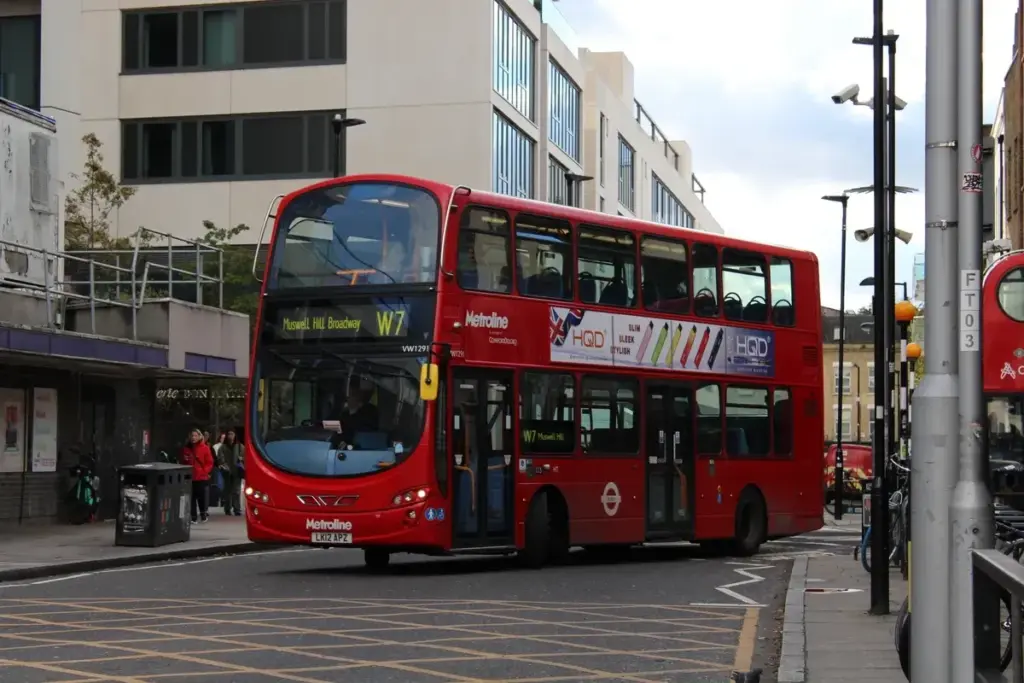
The W7 bus route, one of the busiest bus routes in London, spans a mere 2.6 miles yet transports an impressive 6 million passengers annually. Starting from Finsbury Park and winding its way through Crouch End to Muswell Hill, the W7 provides a crucial link for residents, especially since the surrounding areas lack direct Tube services. Operated by a fleet of 17 double-decker buses, this London bus service runs as frequently as every three minutes during peak hours, showcasing its unwavering demand. Despite its short distance, the W7 proves essential for overcoming the north London’s inclines, especially with Muswell Hill rising to 105 meters. With its efficient service and reliability, the W7 plays a significant role in London’s public transport network, embodying the spirit of urban mobility.
The W7 bus service offers an essential connection between several key areas in North London, starting at Finsbury Park and climbing towards the elevated Muswell Hill. Covering a distance of just 2.6 miles, this route has earned its reputation as London’s busiest service for sub-three-mile journeys, accommodating millions of passengers yearly. Known for its rapid frequency and dependable schedule, the W7 utilizes a fleet of striking double-decker buses to navigate the urban landscape seamlessly. Beyond merely serving as a transit option, it helps bridge the gap between neighborhoods that lack Underground access, making it an invaluable asset to local residents. With consistent performance and strategic routes, the W7 bus stands out as an integral part of London’s comprehensive public transportation framework.
The Significance of the W7 Bus Route in London
The W7 bus route, though only spanning 2.6 miles, holds a remarkable significance in London’s extensive public transport system. Popularly known as one of the busiest bus routes in London, it efficiently bridges the gap between Finsbury Park and Muswell Hill, serving around 6 million passengers annually. This statistic exemplifies its crucial role in ensuring that residents and commuters have consistent access to essential services and connectivity to other transportation options, particularly given the limited Tube service in the area.
Notably, the regularity and frequency of the W7 bus service are what enhance its appeal. With buses arriving every three minutes during peak hours, the W7 bus route not only alleviates congestion but also reduces waiting times, making it a preferred choice among many Londoners. The operational efficiency is bolstered by a fleet of 17 double-decker buses, each contributing to the route’s ability to accommodate high passenger volumes seamlessly.
How the W7 Bus Route Connects Finsbury Park and Muswell Hill
Connecting two of North London’s vibrant areas, the W7 bus route operates as a vital lifeline for residents living between Finsbury Park and Muswell Hill. The bus makes its journey largely along Stroud Green Road and offers passengers breathtaking views as it ascends to Muswell Hill. With Muswell Hill residing at a height of 105 meters above sea level, the W7 bus is essential for those who may find the incline challenging to navigate on foot. Coupled with the lack of direct Tube services to Crouch Hill and Muswell Hill, the W7 bus route becomes an integral part of everyday commuting.
This bus route’s design allows it to function almost like a self-contained shuttle service, starting and ending its journey on a roundabout, an unusual configuration in London. This unique feature aids in reducing potential traffic issues and enhances the flow of transportation in the area. Thus, the W7 is an essential part of London bus services, supporting not just local transit but also the greater network by connecting passengers to other routes and transit points.
Exploring the Double-Decker Experience on the W7 Bus
Riding the W7 bus means engaging in the quintessential London experience of traveling on a double-decker bus. These iconic vehicles not only provide the necessary capacity to handle the bus route’s heavy passenger load but also offer a unique vantage point for appreciating London’s urban landscape. Many travelers prefer the upper deck for its panoramic views of the surroundings, enhancing the overall journey.
The double-decker fleet is a critical component of the W7 service, ensuring that bus reliability and frequency are upheld, even during peak travel times. The availability of these buses allows the service to cater to the bustling demand—making it a prominent choice among locals and tourists alike. Combined with its regular operational schedule, the W7 bus route exemplifies the traditional London bus experience, melding efficiency with cultural influence.
Passenger Insights: The Appeal of the W7 Bus Shape
One of the most appealing aspects of the W7 route is its directness. The simplicity of traveling from Finsbury Park to Muswell Hill makes it a hassle-free option for daily commuters and occasional travelers alike. Many passengers appreciate not having to make multiple transfers or navigate through a complicated network to reach their destinations. This straightforward design streamlines the journey, translating to quicker travel times and enhanced convenience.
Moreover, frequent travelers on the W7 often share their positive experiences, highlighting the bus as an enjoyable mode of transport. The interactions with fellow passengers, the quick access to a variety of local shops, and the scenic ride through green spaces all contribute to the W7 bus’s charm. This route not only serves a practical function but also offers a communal space within the diverse fabric of London.
Challenges and Enhancements of the W7 Bus Service
Despite its successes, the W7 bus route is not without challenges. Given its popularity, congestion during peak periods can sometimes hinder efficiency, impacting the service’s reliability. There are continuous efforts from Transport for London (TfL) to assess bus schedules and improve traffic flow, ensuring that the W7 remains among the most reliable London bus services. Such enhancements are vital in maintaining service quality amidst increasing passenger demands.
In addition, the introduction of advanced technology could contribute to better management of bus operations on the W7 route. Implementing modern tracking systems for real-time updates could empower passengers with accurate arrival information, thus reducing unnecessary waiting times. As the W7 route evolves, continued investment in its infrastructure and service excellence will be necessary to uphold its status as a key element of London’s public transportation network.
The Role of the W7 in Sustainable Urban Transport
The W7 bus route plays a significant role in promoting sustainable urban transport practices within London. By offering a reliable alternative to private car journeys, it helps to reduce congestion and emissions in the city. With a substantial number of double-decker buses operating on this route, the W7 minimizes the carbon footprint associated with individual commutes, aligning with London’s broader environmental goals.
Moreover, as cities grapple with the challenges of air quality and traffic congestion, the W7 demonstrates how public transport can effectively address these issues. Encouraging more people to utilize the W7 bus route, especially during peak hours, not only enhances its operational efficiency but also contributes to cleaner air and a healthier urban environment. Thus, the W7 is not just a transport service; it is an integral part of London’s vision for a sustainable future.
Local Landmarks and the W7 Bus Route
Riding the W7 bus route offers an excellent opportunity to see several local landmarks and attractions in North London. From historic buildings to popular public parks, passengers on this route are treated to a visual feast. Noteworthy sites along the journey include the lush green spaces of Finsbury Park, which serves as a hub for local events and activities, and the cultural offer in Crouch End, known for its cafes and independent shops.
As the W7 climbs to Muswell Hill, passengers can experience amazing views of the city, making the bus ride not just a means of transport but a picturesque journey. Being able to appreciate these landmarks while commuting adds a layer of enjoyment to daily travel and can encourage residents and tourists alike to explore the neighborhoods surrounding the route.
Community and the W7: A Vital Transport Link
The W7 bus route serves as a crucial community link that fosters connectivity among residents in Finsbury Park, Crouch End, and Muswell Hill. It helps individuals engage with local businesses, social groups, and community events, strengthening the neighborhood’s social fabric. By facilitating easy access to these areas, the W7 effectively promotes community development, encouraging residents to utilize public spaces and participate in local culture.
Moreover, the W7 bus route often becomes a conversation starter for people commuting daily. Passengers frequently share experiences, making the bus a space for social interaction and communal identity. This connection among travelers enhances the sense of belonging within North London, showcasing the importance of the W7 route beyond mere transportation—it is a facilitator of community bonds.
Future Developments for the W7 Bus Route
Looking ahead, potential developments for the W7 bus route could involve enhancements in service capacity and technology integration. For instance, the addition of more eco-friendly double-decker buses could contribute to reducing the environmental impact further and improve passenger comfort. Adopting technology such as contactless payment systems can streamline the boarding process, making it hassle-free and enhancing the overall commuting experience.
Additionally, community engagement will be vital in shaping future improvements to the W7 bus route. By considering the needs and feedback of passengers, TfL can ensure that expansions or service modifications align with public expectations. This focus on sustainability and passenger satisfaction will be essential for maintaining the route’s status as one of the most frequented bus services in London.
Frequently Asked Questions
What makes the W7 bus route one of the busiest bus routes in London?
The W7 bus route is the busiest sub-three-mile route in London, carrying about 6 million passengers each year. Its popularity is due to its frequent service, with buses arriving as often as every three minutes during peak times, and its crucial role in connecting areas like Finsbury Park and Muswell Hill that aren’t directly served by the Tube.
How does the W7 bus route connect Finsbury Park to Muswell Hill?
The W7 bus route runs 2.6 miles from Finsbury Park to Muswell Hill, following a nearly straight path along Stroud Green Road to Crouch End Broadway and then ascending to Muswell Hill Broadway. This route makes it an essential link for commuters and local residents in North London.
What type of buses operate on the W7 bus route in London?
The W7 bus route primarily operates with double-decker buses, a common sight in London, allowing it to efficiently transport a high volume of passengers due to its significantly frequent service.
Why is the W7 bus service important for Muswell Hill residents?
The W7 bus service is crucial for Muswell Hill residents as it provides direct access to Finsbury Park and other parts of London. With both Crouch Hill and Muswell Hill lacking Tube connections, the W7 serves as a vital transport link, ensuring residents have reliable travel options.
How frequent is the W7 bus service during peak times?
During weekday peak hours, the W7 bus service is notably frequent, operating every three minutes. This high frequency is part of what makes the W7 route such a popular option for commuters and travelers in London.
Is the W7 bus route environmentally friendly?
Operating a fleet of double-decker buses, the W7 bus route helps reduce the number of individual car journeys made by passengers. Public transport like the W7 is a more environmentally friendly option compared to private vehicle use, thereby helping reduce traffic congestion in London.
What is the total distance of the W7 bus route in London?
The W7 bus route covers a total distance of 2.6 miles, making it a short but essential service within the London bus network, particularly for those traveling between Finsbury Park and Muswell Hill.
Are there any unique features of the W7 bus route?
A unique feature of the W7 bus route is its conclusion at a roundabout at Muswell Hill. This setup is uncommon in London and showcases the route’s distinct operational model, contributing to its efficiency in handling passenger flow.
| Key Point | Details |
|---|---|
| Length | 2.6 miles |
Summary
The W7 bus route is a crucial public transport service in London, spanning just 2.6 miles yet serving 6 million passengers annually. Its efficiency and frequency make it an integral part of the city’s bus network, providing vital connections for residents of areas like Muswell Hill and Crouch Hill, which are not directly accessible via the Underground. Described as ‘small but mighty’, the W7 bus service stands out not only for its impressive passenger numbers but also for its regular timetable, appearing every three minutes during busy times. Its unique operational characteristics, including completing its journey on a roundabout, contribute to its popularity and importance in the commuting landscape of North London.