Listen to this article
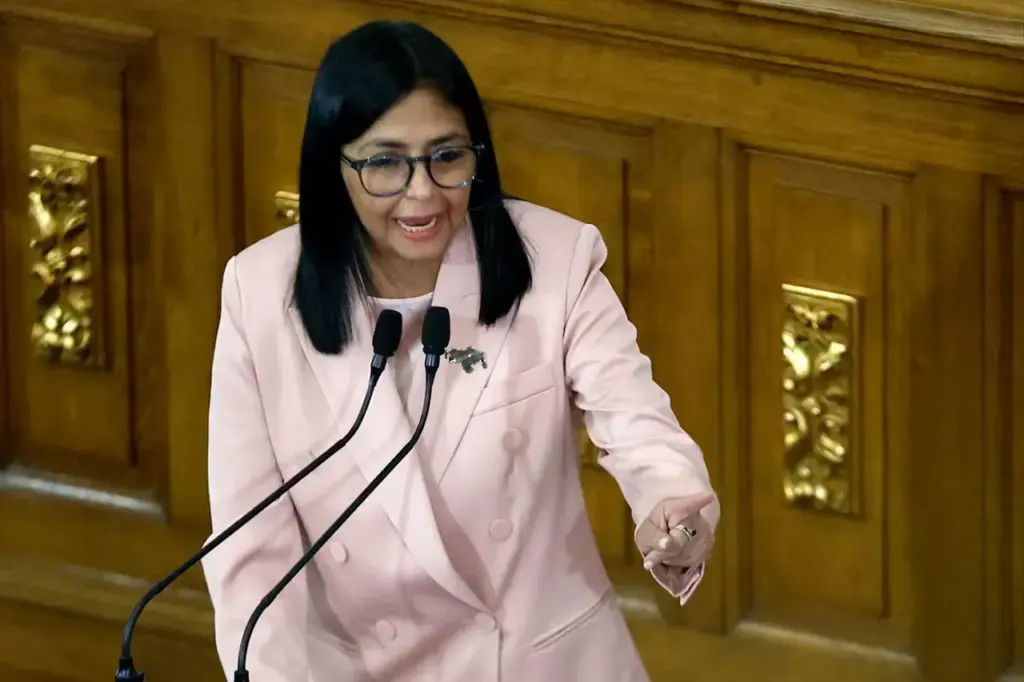
Venezuela’s interim president enters the political scene as the nation grapples with a complex crisis marked by turmoil and tension. In a striking move, Delcy Rodriguez was sworn in shortly after Nicolás Maduro made a defiant plea of not guilty in a New York court concerning serious charges, which include drug trafficking and terrorism. This moment has drawn significant global attention, as the political landscape in Venezuela continues to shift dramatically with rising US intervention in Venezuela. Rodriguez, previously serving as vice president, described Maduro’s detention as a “kidnapping,” asserting that the nation will not be a pawn in international conflicts. As debates intensify over the legitimacy of Maduro’s presidency, the unfolding events echo the broader Venezuela political crisis, encapsulating the clash between national sovereignty and external pressures from the US and its allies.
In recent developments surrounding the Venezuelan leadership, the nation’s new acting leader faces numerous challenges as the political climate grows increasingly grave. Following Maduro’s unexpected arrest and allegations from US authorities, there is rising instability in the country, leading to public outcry and further complicating US intervention strategies. As Delcy Rodriguez assumes her role, she stands at the helm of a government fraught with internal divisions and external pressures, raising questions about the future stability of Venezuela. The ongoing saga, punctuated by legal battles and international condemnation, marks a critical juncture in the narrative of Venezuelan governance and accountability. Amidst these challenges, the people cling to hope for a resolution that ensures peace and prosperity, despite the shadow of turmoil that looms large.
Venezuela Interim President Delcy Rodriguez: A New Era
With Delcy Rodriguez now sworn in as Venezuela’s interim president, the political landscape is undergoing significant changes. Rodriguez has taken over amidst a tumultuous backdrop, as she leads efforts to stabilize a nation marred by economic collapse, political strife, and ongoing public unrest. Her appointment represents what many view as a necessary shift, given the ongoing political crisis that has plagued the country under Nicolas Maduro’s controversial tenure. This change could potentially galvanize international observers to reassess their strategies regarding US intervention in Venezuela’s affairs.
In her inaugural address, Rodriguez faced the heavy burden that accompanies her new role, promising to prioritize peace and stability for the Venezuelan people. She emphasized the need for democratic reforms and called on the international community to aid in rebuilding the nation’s economy, which has been severely affected by years of mismanagement and sanctions. Many supporters believe that her leadership could usher in a new era of accountability, representing a break from Maduro’s past and paving the way for constructive dialogue.
The Maduro Court Plea: Legal Battles in Foreign Lands
Nicolas Maduro’s appearance in a New York court, where he pleaded not guilty to charges including drug trafficking and terrorism, signals the intensifying pressure on his regime. The court plea adds layers of complexity to the already dire political situation in Venezuela and raises questions about accountability on a global scale. Critics of Maduro view this as a critical opportunity for the international community to take a stand against what they perceive as autocratic rule. Amidst these developments, the US government has argued that Maduro is a fugitive from justice, underscoring the need for a firm response.
As Maduro proclaims his innocence and insists he remains the legitimate president of Venezuela, the courtroom drama has captivated audiences beyond the nation’s borders. The charges against him include serious allegations of narco-terrorism, which, if proven, could significantly tarnish his legacy and solidify calls for international interventions. Individuals like US Ambassador Mike Waltz have seized this moment to publicly denounce Maduro’s rule, framing the court case as a matter of justice that transcends Venezuelan sovereignty.
Impact of US Intervention in Venezuela’s Political Crisis
The issue of US intervention in Venezuela is contentious and multifaceted. With Delcy Rodriguez now at the helm, her government’s outreach to the United States for collaboration highlights a potential shift in diplomatic strategies. While Rodriguez seeks to establish cooperative dialogue, some observers are skeptical about the implications of any US involvement, fearing it might exacerbate existing tensions rather than resolve them. The polarized opinions are reflective of the broader concerns over foreign influence in national sovereignty.
As the situation unfolds, the international community watches closely, weighing the potential benefits and pitfalls of US intervention in Venezuela. Advocates for support argue that any assistance could help restore critical infrastructure and stabilize the economy, while opponents contend that external interference might lead to further division among Venezuelans and undermine local governance. Ultimately, the path forward remains fraught with uncertainty as the ramifications of Rodriguez’s presidency and the ongoing court cases against Maduro continue to unfold.
Nicolas Maduro’s Response to Accusations
Following his court appearance, Nicolas Maduro asserted that he remains the uniquely legitimate president of Venezuela. His defiance in the face of accusations paints a picture of a leader under immense global pressure who refuses to relinquish his position. Describing himself as a ‘kidnapped president,’ Maduro’s rhetoric is steeped in claims of injustice and a fight against what he portrays as imperialist efforts to undermine Venezuelan sovereignty. This narrative resonates with his supporters, who view the judicial developments as a violation of national dignity.
However, as media attention amplifies the details surrounding his case, the realities of Maduro’s regime continue to come under increasing scrutiny. Critics argue that his administration’s numerous policies have led to devastating consequences for the Venezuelan populace, and the overwhelming support for investigations into his governance reflect a significant shift in public sentiment. The legitimacy of Maduro’s claims faces scrutiny against a backdrop of his administration’s actions, leading many to question whether he can maintain his grip on power as these legal battles progress.
The Role of International Public Opinion on Venezuela’s Crisis
Public opinion regarding Venezuela’s ongoing crisis plays a pivotal role in shaping international responses to both Maduro and Rodriguez. With widespread criticism of Maduro’s human rights record and the handling of the economy, countries around the world are increasingly vocal about their stance against the regime. Organizations like the UN have called for legal accountability, reflecting a growing consensus that the actions of leaders must be met with appropriate repercussions, especially when human suffering is involved.
In parallel, the swearing-in of Delcy Rodriguez as interim president presents a unique lens through which the global community can reconsider its position on Venezuela. Many view Rodriguez as a figure who could potentially lead towards democratic reforms, while others remain cautious, unsure of her allegiance to policies that distinguish her from Maduro’s leadership. As the international dialogue around Venezuela evolves, the vigilance of the global community in advocating for democratic principles will be critical in influencing both political outcomes and humanitarian assistance.
Venezuela’s Political Landscape Post-Maduro
The political landscape in Venezuela is poised for dramatic change as the interim presidency of Delcy Rodriguez unfolds. Many Analysts speculate on how her leadership could diverge from Maduro’s tenureship, particularly in terms of governance and international collaboration. The sustained oppression faced by many Venezuelans under Maduro has led to a desire for change, and Rodriguez is viewed as a figure who might offer fresh perspectives and strategies to break the cycle of hardship.
Yet, the path ahead is fraught with challenges, and as Rodriguez seeks to implement her vision, the lingering effects of Maduro’s rule may pose significant hurdles. The loyalists who sustained Maduro’s power base continue to wield influence, creating an intricate power dynamic that Rodriguez will have to navigate carefully. As she attempts to unify a fractured nation, attention will turn to her policies and whether they can bridge the divide created by years of division and strife.
Public Support for Maduro and the Interim Government
Public support for Nicolas Maduro remains a contentious issue in Venezuela, with significant segments of the population rallying behind him despite ongoing controversies. The recent swearing-in ceremony of interim president Delcy Rodriguez was attended by thousands who openly expressed their loyalty to Maduro, illustrating the polarized state of Venezuelan society. This enduring support suggests that many view him not only as a political figure but as a symbol of resistance against external oppression, particularly from the United States.
On the flip side, Rodriguez’s leadership also represents hope for a segment of the populace that desires change and stability. Her declaration to prioritize social well-being in her governance is framed as a direct response to the hardships experienced during Maduro’s administration. As both supporters and critics continue to make their voices heard, the question remains whether Rodriguez can reconcile these divergent views and establish a government that truly represents all Venezuelans moving forward.
Future Prospects for Venezuela Amidst Global Attention
As Venezuela navigates its complex political realities, the global spotlight on the country has intensified. The recent developments surrounding both Maduro’s court case and Rodriguez’s ascension highlight a pivotal moment that may determine Venezuela’s trajectory for years to come. International observers caution that how these local events play out could have lasting implications not just for Venezuelans, but for regional stability in South America, where political alliances are often influenced by such conflicts.
The coming months will be crucial as Maduro’s legal battles continue and Rodriguez seeks to establish her authority as interim president. Should international interests band together to support reforms, there could be opportunities for economic recovery and diplomatic advancements. Conversely, if political repression persists, or if Maduro’s loyalist factions undermine Rodriguez, the potential for further unrest remains alarming. The world watches in anticipation, unsure of how the unfolding saga will shape the future of Venezuela.
Frequently Asked Questions
What is the current status of the Venezuela interim president Delcy Rodriguez?
Delcy Rodriguez has been sworn in as the interim president of Venezuela following the recent detention of Nicolas Maduro, who insists he is still the legitimate president. Her appointment comes amid the ongoing Venezuela political crisis and international scrutiny.
How has Nicolas Maduro responded to his charges while in the US court?
Nicolas Maduro pleaded not guilty to serious charges, including drug trafficking and terrorism, in a US court. He continues to assert his position as Venezuela’s president despite being labeled a fugitive from justice.
What actions did the US take against Maduro, prompting the rise of the Venezuela interim president?
The US apprehended Nicolas Maduro in a military raid, leading to the swearing-in of Delcy Rodriguez as interim president. This intervention has intensified the Venezuela political crisis, with widespread condemnation from Maduro’s supporters.
How did Delcy Rodriguez address the National Assembly after her swearing-in as Venezuela’s interim president?
In her address, Delcy Rodriguez expressed concern over the suffering from ‘illegitimate military aggression’ and promised to work towards peace, stability, and collaboration with international partners, including potentially the US.
What does the US government think about the leadership of Venezuela’s interim president?
The US has criticized Nicolas Maduro’s leadership as illegitimate, and has stated that it is willing to collaborate with the interim president Delcy Rodriguez, provided she aligns with a development-oriented cooperation agenda.
What sparked the latest developments surrounding the Venezuela interim president and Maduro’s court case?
The situation escalated with the US military operation that captured Maduro, leading to Delcy Rodriguez being sworn in as interim president, amidst a backdrop of a significant Venezuela political crisis and international intervention debates.
Is there potential for US intervention in Venezuela’s political situation under the interim president?
Yes, US officials have indicated a willingness to intervene in Venezuela’s politics to facilitate a transition, contingent upon cooperation with interim president Delcy Rodriguez.
What is the significance of the swearing-in of Delcy Rodriguez as Venezuela’s interim president?
The swearing-in of Delcy Rodriguez is significant because it represents a shift in Venezuela’s leadership amid the legal troubles of Nicolas Maduro, highlighting the ongoing political instability and the potential for international intervention.
| Key Point | Details |
|---|---|
| Interim President Sworn In | Delcy Rodriguez has been sworn in as interim president during a parliamentary session. |
| Maduro’s Court Appearance | Nicolas Maduro pleaded not guilty to charges of drug trafficking and terrorism, claiming he is still the president of Venezuela. |
| US Criticism at UN | The US faced backlash at the UN for the detention of Maduro, with US ambassador labeling him a fugitive from justice. |
| Venezuela’s Response | Venezuela’s ambassador condemned the US actions as an illegal attack, with Maduro’s allies insisting he remains in control. |
| Trump’s Comments | President Trump expressed that the US would oversee Venezuela until a legitimate transition occurs. |
| Public Support | Thousands gathered to support Maduro and Rodriguez during her swearing-in ceremony, reflecting public sentiment towards the leadership. |
| Rodriguez’s Agenda | Rodriguez aims for cooperation with the US based on international laws and stability for Venezuelans. |
Summary
The situation in Venezuela has been dramatically intensified with the swearing-in of interim president Delcy Rodriguez amidst ongoing turmoil related to Nicolas Maduro. The Venezuelan interim president is positioned during a critical series of events aimed at addressing allegations against Maduro, who claims to remain the country’s legitimate leader despite U.S. charges. As Venezuela navigates these challenges, Rodriguez’s administration promises to seek stability and cooperation, which may reshape international relations with the United States.