
Listen to this article
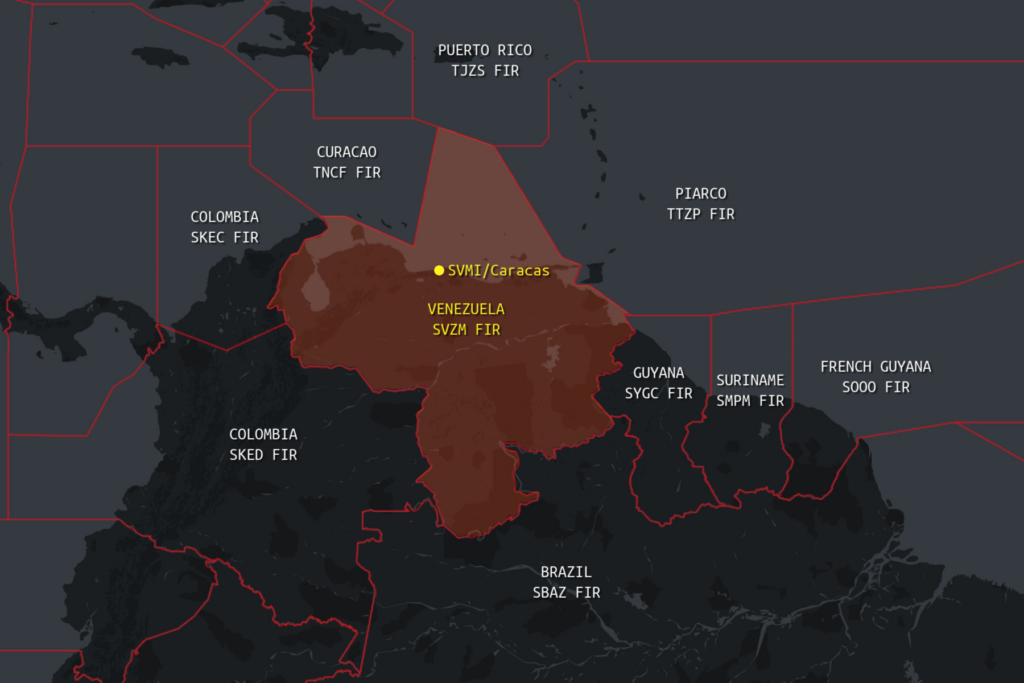
The Venezuela airspace controversy has ignited a heated debate as U.S. President Donald Trump declared that the airspace surrounding Venezuela should effectively be closed. This provocative statement was met with strong condemnation from the Venezuelan foreign ministry, which labeled Trump’s remarks as both illegal and an unwarranted aggression against the nation. The U.S. has recently ramped up its military presence in the region, conducting operations that Venezuela claims have led to significant loss of life, while also raising alarms over alleged drug trafficking activities. With tensions escalating, the ramifications for Venezuela and U.S. relations are becoming increasingly complex, posing questions about the legality and morality of U.S. actions. As this situation develops, the potential for conflict grows, prompting calls for international dialogue and restraint from both sides.
The ongoing conflict surrounding Venezuela’s airspace has become a focal point of international tension, particularly amidst rising military operations. The controversial remarks by President Trump to close off airspace have fueled a backlash from Venezuela, which sees these actions as an infringement of its sovereignty and rights. The military dynamics in the region, characterized by enhanced U.S. military presence and allegations of drug trafficking, further complicate relationships between the Venezuelan government and the U.S. Moreover, this situation illuminates the broader implications for global governance as various nations respond to what is perceived as an escalation of aggression. As both geopolitical strategies and humanitarian considerations intertwine, the international community watches closely to gauge the future of Venezuela and its interactions with external powers.
Venezuela Airspace Controversy and International Law
The controversy over Venezuela’s airspace intensified following U.S. President Donald Trump’s declaration, which was seen as an unprecedented challenge to international law. Venezuela’s foreign ministry reacted fiercely, labeling Trump’s comments as a blatant violation of the sovereignty of nations. They asserted that airspace belongs to the country it is associated with, and any attempt to close it without justification is an illegal act. This situation raises questions about the implications of such statements on Venezuela’s foreign relations and the broader context of U.S.-Latin America dynamics.
Moreover, the legal nuances of airspace sovereignty are crucial in understanding the implications of Trump’s remarks. International authorities maintain that a nation’s airspace is under its complete jurisdiction unless international agreements stipulate otherwise. Trump’s unilateral pronouncement disregarded these norms, further straining already tense Venezuela-U.S. relations. The Venezuelan government responded by calling for global support to uphold the principles of sovereignty and prevent any military aggression from the U.S., framing the controversy as a challenge not just to Venezuela but to the established international order.
Impact of Increased Military Presence in Venezuela
In light of escalating tensions, the U.S. has significantly increased its military footprint near Venezuela, an action that has sparked fear and opposition in the Venezuelan government. The deployment of the USS Gerald Ford and about 15,000 troops marks one of the largest U.S. military postures in the region since its invasion of Panama. This military buildup is officially framed as a countermeasure against drug trafficking, a strategy that the U.S. has historically used to justify interventionist policies in Latin America. However, the Venezuelan leadership views this as a direct threat aimed at destabilizing President Nicolás Maduro’s government.
The ramifications of this enhanced military presence are profound. Firstly, it raises the stakes for regional security and could lead to miscalculations that might escalate into conflict. Secondly, it invites scrutiny from nations across Latin America, many of whom perceive U.S. actions as bordering on neo-colonialism. Venezuelan officials are fortifying their military readiness, showcasing anti-aircraft drills and other defensive maneuvers to send a clear message against U.S. aggression. Such military escalations not only impact Venezuela but also have wider implications for regional alliances and power dynamics.
Responses from the Venezuelan Government and Military Actions
In response to the U.S. military’s heightened presence, Venezuela’s government mobilized its military forces to demonstrate its readiness to defend its sovereignty. The state-controlled media broadcasted military drills featuring anti-aircraft artillery, emphasizing a narrative of national strength and resilience. By conducting these exercises, the Venezuelan military aims to reassure its citizens of their ability to protect the country amidst perceived external threats and U.S. interventionist policies. This kind of show of military force can be interpreted as both a domestic morale boost and a clear warning to the U.S.
Furthermore, the Venezuelan government actively sought to garner international support by rallying other nations against what it regards as U.S. imperialism. Officials have called on the international community and organizations such as the United Nations to denounce the threat posed by U.S. military operations in Venezuelan airspace. This diplomatic effort is coupled with a narrative that frames the U.S. actions as an infringement on the rights of nations and poses a challenge to global peace. The Venezuelan military’s actions and diplomatic appeals are part of a broader strategy to resist U.S. pressures and maintain national sovereignty.
International Reactions to U.S. Military Strategy in Venezuela
The U.S. military strategy regarding Venezuela has drawn varied reactions from the international community, particularly from Latin American nations. Some leaders have expressed solidarity with Venezuela, siding against U.S. interventionist behaviors which they view as a threat to regional autonomy. This has led to discussions around forming a collective front among leftist governments to resist perceived U.S. hegemony, marking a potential shift in regional alliances that could redefine Latin America’s political landscape.
On the other hand, countries that align more closely with U.S. interests have supported Trump’s tough stance on Venezuela, arguing that military intervention is necessary to combat drug trafficking and restore democracy in the region. This division highlights the complexities of contemporary geopolitics in Latin America, where alliances can hinge on issues such as governance and drug policy. As nations weigh their positions, the evolving situation will likely continue to influence diplomatic relations and military strategies across the continent.
The Role of Drug Trafficking in U.S.-Venezuela Relations
Drug trafficking remains a pivotal element in shaping U.S.-Venezuela relations, exacerbating tensions and complicating diplomatic efforts. The U.S. government has accused the Venezuelan regime of facilitating drug trafficking, which it uses to justify military interventions and sanctions. The designation of groups like the ‘Cartel de los Soles’ as terrorist organizations opens the door for more aggressive U.S. actions under the pretext of combating narcotics. Such accusations not only strain bilateral relations but also impact Venezuela’s international standing, prompting allies to be cautious in their engagement with Maduro’s government.
In contrast, the Venezuelan government vehemently denies these allegations, arguing that they are part of a smear campaign to legitimize U.S. intervention. Venezuelan officials have invited international agencies to investigate and have condemned the U.S. for failing to provide factual evidence of drug operations linked to the government. This pushback from Caracas aims to shift the narrative and reinforce a stance of sovereignty, framing the issue of drug trafficking as not only a domestic concern but as a part of a geopolitical struggle for influence in Latin America.
Congressional Reactions to Trump’s Statements on Venezuela
Trump’s statements about Venezuela have elicited strong reactions from members of Congress, reflecting bipartisan concerns over the legality and implications of his rhetoric. Without seeking legislative approval, Trump has declared open military measures, which has led some lawmakers to criticize this approach as overly aggressive and reckless. Figures from both parties, such as Senate Democrat Chuck Schumer and Republican Representative Marjorie Taylor Greene, highlighted the constitutional authority that Congress holds over matters of war, emphasizing the need for oversight regarding military actions abroad.
This congressional backlash signals a growing unease within the U.S. political landscape regarding an unchecked executive approach to foreign policy, particularly concerning military interventions. Lawmakers see the potential for escalated conflict and economic ramifications that could arise from such unilateral decisions. As the debate unfolds, it raises critical questions about the balance of power in U.S. foreign relations and the implications of military actions on domestic political discourse.
Venezuela’s Foreign Policy Amidst U.S. Aggression
In light of U.S. military provocations, Venezuela’s foreign policy has taken a defiant stance against perceived aggression while seeking to strengthen ties with likeminded nations. The Maduro administration has pivoted towards fostering relationships with countries that oppose U.S. hegemony, thereby consolidating a network of alliances in Latin America and beyond. Venezuela’s efforts to garner support from nations that have likewise faced U.S. sanctions underscores a strategic approach aimed at building a coalition against foreign intervention, which the government portrays as essential for national survival.
Moreover, Venezuela’s foreign ministry has actively sought to engage international organizations to publicly criticize U.S. actions, framing them as violations of self-determination. By appealing to the international community, the Venezuelan government hopes to shift the narrative from one of failed governance to one of defiance against imperialistic ambitions. This strategy of leveraging diplomatic channels not only serves to bolster its standing among allies but also to present a united front against external pressures, particularly from the U.S.
The Humanitarian Impact of U.S. Policies in Venezuela
The ongoing tensions between the U.S. and Venezuela have notable humanitarian implications, exacerbating existing crises within the country. U.S. sanctions and military posturing contribute to an already dire economic situation, with citizens facing shortages of essential goods and increased hardship. Critics argue that these policies disproportionately impact vulnerable populations, limiting their access to food, healthcare, and other critical resources. The humanitarian toll of U.S. actions raises ethical questions, fueling debates about the efficacy and morality of coercive measures on sovereign nations.
Furthermore, the Venezuelan government uses this narrative of suffering resulting from external pressures to rally support domestically and internationally. It highlights the plight of its citizens to garner sympathy and calls for solidarity against foreign intervention. This emotional appeal seeks to frame the situation in Venezuela not merely as a political struggle but as a humanitarian crisis. By doing so, the Maduro administration attempts to shift the focus away from allegations of ineffective governance to a narrative of resilience and resistance against foreign domination.
Frequently Asked Questions
What triggered the Venezuela airspace controversy regarding Trump’s statements?
The Venezuela airspace controversy began when U.S. President Donald Trump declared that the airspace above and surrounding Venezuela should be closed, referring to it in a statement that he made on Truth Social. This statement was condemned by the Venezuelan foreign ministry as an illegal and unjustified aggression against the Venezuelan people.
How has the Venezuelan government responded to Trump’s claims about airspace closure?
The Venezuelan government, through its foreign ministry, rejected Trump’s claims, labeling them as a colonialist threat. They emphasized that the U.S. has no legal authority to close another country’s airspace and called for international condemnation of Trump’s remarks.
What military actions has the U.S. taken in response to the Venezuela airspace controversy?
In connection with the Venezuela airspace controversy, the U.S. has increased its military presence in the region, deploying the USS Gerald Ford and approximately 15,000 troops near Venezuela, claiming these actions are aimed at combating drug trafficking.
What are the implications of Trump’s comments on Venezuela’s international relations?
Trump’s comments regarding the Venezuela airspace have strained U.S.-Venezuela relations, prompting significant reactions both domestically and internationally. The Venezuelan foreign ministry criticized U.S. actions as acts of aggression, while some U.S. Congress members voiced concerns over Trump’s unilateral approach without legislative approval.
How are airlines and international travel being affected by the Venezuela airspace controversy?
Following Trump’s declaration about the Venezuela airspace, the FAA alerted airlines to heightened military activity, leading to major airlines suspending flights to Venezuela. Subsequently, Caracas revoked the take-off and landing rights of these airlines.
What role does the U.S. military presence play in the ongoing Venezuela airspace controversy?
The increased U.S. military presence in the region, including reported strikes on vessels suspected of drug trafficking, has escalated tensions in the Venezuela airspace controversy. The Venezuelan government views these military actions as attempts to undermine President Maduro’s administration.
What statements have other political leaders made regarding Trump’s actions toward Venezuela?
Bipartisan outrage has been expressed in the U.S. Congress regarding Trump’s lack of legislative approval for his actions toward Venezuela. Senate Democrat Chuck Schumer and Republican Marjorie Taylor Greene have both emphasized that Congress holds the sole power to declare war, criticizing Trump’s unilateral decision.
How does the designation of ‘Cartel of the Suns’ impact U.S.-Venezuela relations?
The ‘Cartel of the Suns’ designation, which identifies an organization allegedly led by Venezuelan officials as a foreign terrorist organization, enhances U.S. law enforcement’s ability to target Maduro’s regime. This designation has been met with strong rejection from Venezuela’s foreign ministry, further straining relations.
What is Venezuela’s perspective on U.S. drug trafficking claims?
Venezuela rejects U.S. claims of drug trafficking within its borders as unfounded and believes that the military actions taken by the U.S. under the pretext of combating drug trafficking are part of a broader strategy to destabilize President Maduro’s government.
What are some reactions from other Latin American leaders regarding the U.S. stance on Venezuela?
Some Latin American leaders, like fellow leftist President Gustavo Petro of Colombia, have criticized the U.S. for using violence to dominate the region in light of their actions towards Venezuela. Conversely, other leaders have welcomed Trump’s hardline position, indicating a division in regional responses.
| Key Point | Details |
|---|---|
| Trump’s Statement | Trump declared the airspace above and surrounding Venezuela to be closed, urging airlines and pilots to avoid it. |
| Venezuela’s Response | Venezuela condemned the statement as illegal and colonialist, asserting its sovereignty over its airspace. |
| Military Presence | The U.S. has increased military activity in the region with significant troop deployments and naval vessels, citing drug trafficking operations. |
| Congressional Reactions | Both parties in Congress have criticized Trump’s moves, emphasizing that only Congress can declare war. |
| International Critique | Venezuela called on the international community to reject U.S. actions, branding them as aggressive. |
| Military Exercises | In response to U.S. threats, Venezuela conducted military exercises showcasing anti-aircraft capabilities. |
| Drug Trafficking Claims | The U.S. accused Venezuelan officials of being involved in drug trafficking, leading to the designation of certain groups as terrorist organizations. |
Summary
The Venezuela airspace controversy revolves around President Donald Trump’s assertion that the U.S. should close the airspace above Venezuela, which has drawn strong condemnation from the Venezuelan government. This statement reflects not only tensions between the two nations but also broader geopolitical implications as U.S. military presence in the region escalates. The controversy highlights the complexities of sovereignty, legislative authority over military actions, and the ongoing struggle within Venezuela as external powers intervene under claims of combating drug trafficking.

