Listen to this article
The heartrending journey of a Ukraine war widow reveals the profound personal toll of the ongoing conflict, as seen in the decision to relocate her husband’s grave to a Kyiv cemetery. Vitaly Goddard, a devoted soldier and ceramics artist, was tragically killed fighting against Russian forces in 2022. His widow, Natalia, has faced the painful reality of reburial in Kyiv, a choice driven by the fear of losing her husband’s resting place to advancing conflict. Each visit to the cemetery symbolizes not only her loss in war but also the strength of Ukrainian soldiers fighting for their homeland. In this moment of tragedy, the resilience of families like Natalia’s shines through, underscoring the heartbreaking sacrifices experienced by many due to the relentless repercussions of war.
Far beyond the loss of life, the experiences of those affected by the war in Ukraine encompass deep emotional struggles, as exemplified by the heart-wrenching story of a bereaved spouse. As the conflict rages on, widows like Natalia grapple with the duality of grief and resilience while honoring their loved ones who died defending their nation. The choice to transfer remains to a capital city’s resting place represents not just a physical relocation, but the ongoing battles fought by families left behind. Vitaly Goddard’s dedication to Ukraine stems from a shared sense of duty that resonates through the country’s military ranks. Such stories illustrate the broader impacts of occupation and violence, reflecting the enduring spirit and challenges faced by the Ukrainian people.
A War Widow’s Heart-Wrenching Decision
The heartache of a war widow is often filled with insurmountable decisions, as demonstrated by Natalia’s poignant journey to reinter her husband, Vitaly, in the Kyiv cemetery. Vitaly, a devoted husband and a courageous soldier, tragically died defending Ukraine against Russian aggression. After initially laying him to rest in their hometown of Slovyansk, the reality of war’s relentless march forced Natalia to confront the painful choice of moving his burial site to a more secure location in Kyiv, away from escalating violence. This gut-wrenching decision reflects the harsh truth that many families face in wartime, navigating the delicate balance between honoring lost loved ones and ensuring their safety in increasingly dangerous conditions.
Natalia’s story serves as a stark reminder of the sacrifices made by countless Ukrainian soldiers and their families. They endure not just the loss of their loved ones, but also the emotional turmoil and physical dangers of living in regions under threat. For Natalia, moving her husband’s grave was a step dictated by fear of losing him again to the advancing incursions of Russian forces. Her experience encapsulates the widespread angst felt across the nation, where war has forced families to reevaluate traditional practices around death and remembrance in the face of an ongoing conflict.
Reburial Ceremony: Honoring the Fallen
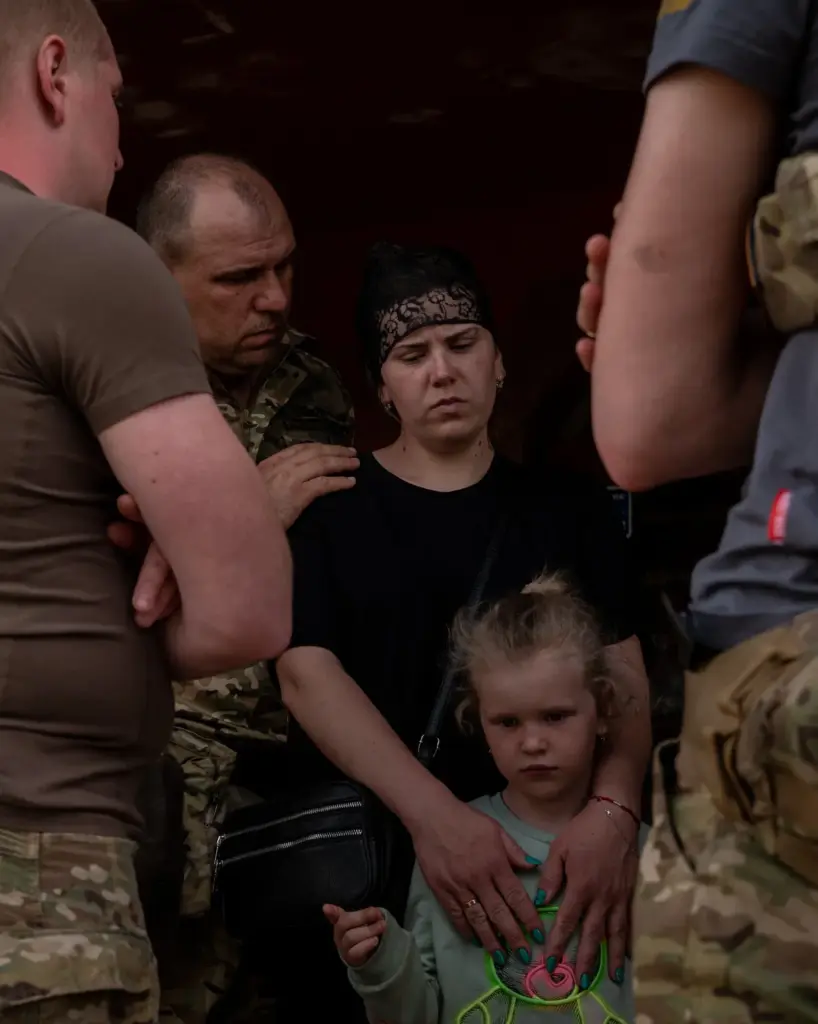
The reburial ceremony of Vitaly in the Kyiv cemetery was a profound and emotional event, marked with military honors and a somber atmosphere. As Ukrainian soldiers paid tribute with a trumpet salute and rifle volleys, Natalia stood by, heartbroken yet resolute. This moment exemplified the dignity afforded to Ukrainian soldiers who have fallen while fighting for their country, echoing the bravery of Vitaly and others who have taken a stand against the invading forces. The ceremony not only honored Vitaly’s life and sacrifice but also brought together a community of mourners who share in the collective grief of losing loved ones in this protracted war.
In the face of overwhelming sorrow, such ceremonies stand as powerful acts of remembrance, allowing bereaved families to feel connected to their lost ones. For Natalia, it was crucial that her husband be buried in a place where she could safely visit, protecting the memory of their love and ensuring her daughter Vitalina would grow up knowing her father through stories and memories. This need for proximity demonstrates the emotional weight that comes with loss in war, as families strive to maintain bonds even in death, so that future generations can learn about the sacrifices made for their freedom.
The Strain of Conflict on Ukrainian Families
The war in Ukraine has placed a heavy burden on families, as evidenced by Natalia’s painful choices and the broader context of the ongoing conflict. With Russian forces encroaching on previously secure areas, countless families have faced the heart-wrenching decision to relocate the graves of loved ones to safer locations. This situation is not isolated; it reflects a national crisis that brings with it unrelenting grief and anxiety. As families grapple with the loss of fathers, brothers, and husbands, they must also navigate the physical realities of war, like relocating their loved ones’ remains to prevent them from being forgotten or abandoned.
Moreover, the psychological impacts of such turmoil cannot be overstated. Each fallen soldier serves as a reminder of the ongoing struggle faced by Ukrainian families, amplifying feelings of vulnerability. Many families, like Natalia’s, are left not only mourning their lost loved ones but also contemplating their futures amid a war that shows no signs of abating. These challenges underscore the emotional scars left by conflict, as communities must band together to support one another in healing from grief, while also remaining vigilant against the looming threats of continued warfare.
The Ongoing Fight for Ukrainian Sovereignty
As the conflict persists, the resilience of Ukrainian citizens is put to the test, with families like Natalia’s symbolizing the indomitable spirit of the nation’s fight for sovereignty. The discussions surrounding land cessions during negotiations lead many to fear an inconclusive peace that merely perpetuates the suffering. Natalia’s insistence that Russia will not be satisfied with merely a peace deal but will continue to encroach on Ukrainian territory highlights the fears felt by many. These negotiations bring to light the fact that every square kilometer of land is soaked with the blood of soldiers who bravely fought to defend their homes and loved ones.
The situation amplifies a collective resolve among the Ukrainian populace to continue resisting aggression and hold onto their freedom. As Natalia stands firm in her belief that her husband would want the fight to go on, it becomes evident that the war is not just a political struggle, but a deeply personal one for countless individuals. Each family’s loss drives home the critical need to fortify national identity against outside pressures, which, in turn, fuels the commitment to fight for a future free from oppression.
Innovation and Adaptation in Warfare
In the ongoing conflict, innovation is becoming a key survival strategy for Ukrainian forces as they adapt to the realities of warfare. The need for creativity and resourcefulness in the face of superior enemy numbers has led to the establishment of local workshops, such as the one operated by the Typhoon unit. These spaces allow soldiers to repair and innovate UAVs, crucial tools in countering Russian advances. As threats grow more sophisticated, Ukraine’s ability to innovate becomes not just a tactical advantage but a reminder of the resourcefulness and determination of its people.
Soldiers and civilians alike have learned to embrace unexpected roles in this fight, contributing in various ways. As Roman echoes the urgency to unite against the common enemy, it’s clear that the spirit of collaboration is vital in sustaining the resistance. Community involvement has extended beyond the battlefield, creating a wave of patriotism and creativity that motivates individuals to contribute to their country’s defense. This shared endeavor speaks to the resilience of Ukraine’s citizens, as they continue to innovate and adapt, underlining the belief that they can withstand and eventually overcome the brutal realities imposed by war.
Living with the Reality of War
Day-to-day life in war-torn regions presents a sobering reality, as Natalia’s description of Slovyansk highlights the pervasive dangers faced by civilians. Reports of drones striking the streets and bombs falling in city centers instill a palpable fear within the community. For residents, the constant threat of violence shapes their existence, compelling them to seek adaptive measures for safety. Such harsh conditions serve as a stark reminder that the repercussions of war extend beyond combatants to all who inhabit these affected areas, affecting their psychological well-being and daily routines.
The warscape of Slovyansk reflects a blend of resilience and vulnerability, where life continues amidst chaos. Yet residents face the unending burden of uncertainty; amidst periods of relative calm, attacks can erupt without warning, shattering the fragile peace. The stories of those living in conflict highlight the deep-rooted scars that war inflicts on the fabric of society. Despite the ongoing hardships, families strive to maintain their connections and memories, showcasing their courage in the face of relentless adversity.
The Emotional Toll of Grief in Wartime
Grief in times of war carries a unique weight, with families like Natalia’s bearing the emotional burden of loss alongside the pressures of survival. The devastating reality is that many Ukrainian families are a part of a collective bereavement, where the losses become emblematic of an entire nation’s struggle. The empty spaces left behind by fallen soldiers are not just personal tragedies but represent the broader sacrifices made by countless individuals who have paid the ultimate price to protect their homeland.
In navigating this grief, survivors often face the difficult task of honoring their loved ones while simultaneously finding ways to cope with their absence. Natalia’s story of placing her husband’s grave in Kyiv demonstrates both her commitment to his memory and her determination to provide for their daughter. The intertwining of personal loss with matters of national significance profoundly shapes how families approach their mourning, emphasizing the deep psychological impacts of war that remain long after the conflict itself ends.
Hope for the Next Generation
In the midst of heartbreak, there lies a glimmer of hope for the next generation, as exemplified by Natalia’s dreams for her daughter, Vitalina. Despite the war and its heavy toll, she remains optimistic about what the future holds, particularly with the prospect of expanding their family. Utilizing the sperm frozen shortly before Vitaly was killed shows both a resilience and a desire to maintain the bonds of love even in the direst circumstances. This notion of hope in continuity serves as a powerful theme not just for Natalia, but for many families striving to look toward a future in a landscape marred by the memories of loss.
Vitalina’s connection to her father through memories and stories becomes a critical aspect of Natalia’s healing process. It exemplifies the necessity for families to preserve legacies through remembrance, as they navigate anew the realities of a life altered by war. The desire to share her husband’s memory with their child imbues the narrative of loss with meaning, offering a pathway to healing through shared stories, love, and resilience amidst uncertainty.
Frequently Asked Questions
What challenges do Ukraine war widows face amidst the ongoing conflict?
Ukraine war widows face immense emotional and practical challenges, such as dealing with the grief of losing their spouses who were Ukrainian soldiers, navigating the complexities of reburial in Kyiv if their husbands fall in battle, and the constant threat of occupation in their home towns like Slovyansk.
How does the situation in Kyiv cemetery reflect the experiences of Ukraine war widows?
The Kyiv cemetery serves as a poignant reminder of the sacrifices made by Ukrainian soldiers, where war widows like Natalia, who recently moved her husband Vitaly’s grave there, experience profound loss while seeking to honor their loved ones in a more secure location away from the advancing Russian forces.
What is the significance of reburial in Kyiv for families of Ukrainian soldiers?
Reburial in Kyiv is significant for families of Ukrainian soldiers, especially war widows, as it provides a sense of safety and permanence for their loved ones’ resting place, away from conflict zones where they might fear that their graves could end up under occupation.
How do personal stories of Ukraine war widows highlight the broader impact of the war?
The personal stories of Ukraine war widows, like Natalia’s, highlight a broader impact of the war by illustrating the heartbreaking choices they must make, the emotional toll of relocating graves, and the deep familial connections that are disrupted when their soldier husbands, who fought valiantly, are lost.
Why did Natalia choose to relocate her husband Vitaly’s grave to a Kyiv cemetery?
Natalia chose to relocate her husband Vitaly’s grave to a Kyiv cemetery due to fears of Russian occupation in Slovyansk, where Vitaly was initially buried. Moving his remains ensured she could visit him safely and honor his memory without the threat of conflict encroaching on their family history.
What does the experience of Ukraine war widows tell us about the consequences of loss in war?
The experience of Ukraine war widows underscores the profound consequences of loss in war, showcasing not just the grief of losing a beloved partner who was a Ukrainian soldier, but also the ongoing struggles they face in maintaining connections with their deceased loved ones amidst the uncertainty of war.
How are Ukraine war widows coping with their losses during the ongoing conflict?
Ukraine war widows are coping with their losses through various means, such as reburial ceremonies that bring them closer to their loved ones, sharing memories, and finding solace in the ongoing support of communities and friends as they navigate the realities of life after loss.
What role do Ukrainian soldiers play in the stories of war widows?
Ukrainian soldiers play a crucial role in the stories of war widows by representing the bravery and sacrifice that led to their deaths, while also highlighting the personal impacts of the war on families, as seen through the eyes of widows like Natalia who mourn their husbands while celebrating their patriotic commitments.
| Key Point | Details |
|---|---|
| The Reburial of Vitaly | Vitaly was initially buried in Slovyansk after dying in combat in 2022, but was reburied in Kyiv due to safety concerns as Russian forces closed in on Slovyansk. |
| Natalia’s Emotional Journey | Natalia describes the moving experience of exhuming her husband’s remains and emphasizes that keeping him close was the right decision despite the emotional pain. |
| Life Under Attack in Slovyansk | Natalia reflects on the increasing attacks in Slovyansk, indicating the dire situation for those still in the area as safety deteriorates. |
| Ukrainian Military Resilience | Ukrainian soldiers are innovating and adapting to combat the larger Russian forces, highlighting the ongoing struggle and the importance of unity. |
| Hope and Future Plans | Natalia holds hope for the future, including using frozen sperm to conceive another child with Vitaly, representing resilience amidst tragedy. |
Summary
For many Ukraine war widows like Natalia, the struggle does not end with the loss of a spouse. The emotional weight of relocating a loved one’s grave in the face of ongoing conflict symbolizes both profound loss and an enduring hope for safety and continuity. As they navigate grief and uncertainty, Ukraine war widows represent the resilience of their communities and the fight against the encroachment of war on their lives and heritage.