
Listen to this article
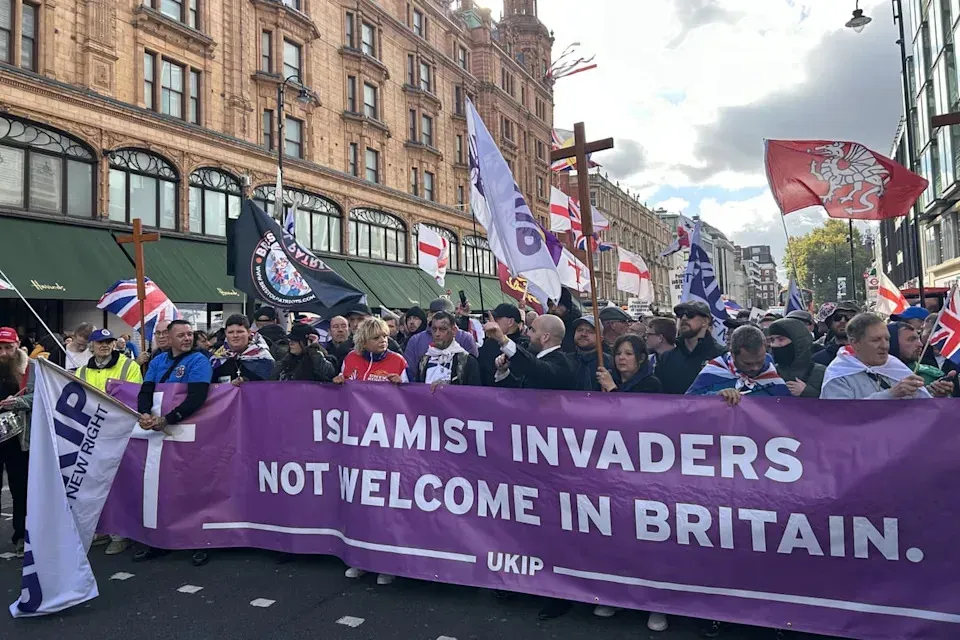
The Ukip protest in Tower Hamlets has sparked significant debate as the Metropolitan Police have opted to block the march, citing fears of potential violence. Scheduled for January 31, this far-right demonstration aimed at calling for mass deportations poses serious concerns not only for public safety but also for community relations in this diverse London borough. As Tower Hamlets protests unfold, the Met police emphasize their commitment to maintaining order in the face of escalating tensions and past experiences with similar events. With Ukip’s march banned from its original route, authorities are working to provide an alternative location that meets UK protest regulations without inciting local unrest. The decision reflects growing apprehensions surrounding far-right activities, echoing previous instances where the police have had to intervene for the sake of public safety.
The anticipated gathering of Ukip supporters has become a focal point of controversy as security measures intensify in Tower Hamlets, an area known for its rich cultural diversity and vibrant community. The decision to curtail this demonstration, ostensibly for the sake of preventing disorder, underscores the delicate balance between the right to protest and the safety concerns of local residents. As the Metropolitan Police enforce restrictions reminiscent of past events, they reinforce their role in safeguarding public peace amidst rising tensions connected to far-right movements. This situation exemplifies the challenges faced by law enforcement in navigating public demonstrations while addressing the fears of community members about potential unrest. Ultimately, the implications of such protests extend beyond mere public gatherings, reflecting broader societal concerns regarding inclusivity, safety, and the ongoing discourse surrounding political expressions in urban settings.
Understanding the Decision to Block the Ukip March in Tower Hamlets
The decision made by the Metropolitan Police to block the Ukip march through Tower Hamlets was primarily based on public safety concerns. With the area known for its significant Bangladeshi population, the potential for significant disorder was a key factor. The police emphasized that allowing the protest could lead to serious violence, stemming not only from the actions of the Ukip supporters but also from potential local counter-protests. Such considerations highlight the delicate balance law enforcement must maintain when dealing with politically charged events in communities with tumultuous histories.
Deputy Assistant Commissioner James Harman articulated that the overarching goal of the police is to protect the community. In this context, the decision is less about denying free speech and more about upholding the law and ensuring peace among potentially conflicting groups. The Met’s strategy reflects a growing trend in the UK where public order regulations are implemented in response to anticipated unrest, particularly concerning far-right demonstrations, which often face vehement opposition in diverse urban areas like Tower Hamlets.
The Impacts of Ukip Protest Concerns on Local Communities
The community in Tower Hamlets has experienced a history of resistance to far-right movements, with past incidents highlighting friction between various community members. Given this backdrop, the fear surrounding the Ukip march is not merely a response to current events but rather a continuation of longstanding tensions. Local residents and organizations have been vocal about their concerns, advocating against the normalization of such protests that can exacerbate racial discord or incite violence.
These community dynamics illustrate why the Met police’s actions are viewed through a lens of not only public safety but also historical context. The decision to restrict the Ukip march signals an acknowledgment of the potential for racial conflict and the importance of maintaining order. This proactive approach aims to prevent any escalation that could endanger both local citizens and law enforcement, emphasizing the need for sensitivity to neighborhood dynamics when implementing UK protest regulations.
Alternatives for the Ukip March: Legal Considerations and Location
While the Ukip march has been blocked in Tower Hamlets, the police have made it clear that an alternative route may still allow the protest to occur. This nuanced approach underscores the complexity of public demonstration laws in the UK, where organizers must comply with regulations designed to maintain peace. As public safety remains paramount, the importance of identifying appropriate venues for such events is crucial. The police’s assessment of community risk is a vital component in this decision-making process.
Moreover, this situation opens up discussions about the rights of protesters versus the rights of residents to safety and security. Finding a balance that respects both interests leads to more productive civic engagement. Alternative locations can help facilitate peaceful expression while also mitigating the risk of violence, reinforcing the principle that the right to protest does not eliminate the responsibility to protect public safety in diverse communities.
Historical Precedents of Banned Protests in Tower Hamlets
Historically, Tower Hamlets has been the site of various protests and counter-protests, particularly involving far-right movements. The 2011 decision by then Home Secretary Theresa May to ban a march by the English Defence League in the area is a notable example. This precedent set a significant legal framework surrounding the management of protests within Tower Hamlets, emphasizing that the government is willing to intervene when community safety is at risk.
The reaction to previous protest events has shaped the current police strategies and the community’s expectations. With a backdrop of past violent incidents linked to protests, local authorities continue to assess potential risks before allowing demonstrators of any ideology to gather. This history informs not only public policy but also community sentiment towards far-right groups, making the decision to block the Ukip march resonate deeply with residents who have long been affected by the actions and ideologies of such movements.
Public Safety and the Role of Metropolitan Police
The Metropolitan Police have a dual responsibility: to uphold the law while also ensuring public safety. The decision to restrict the Ukip march was framed by this necessity. Officials recognized the potential for severe disorder, predominately arising from community reactions rather than the protestors themselves, illuminating the complexities in managing public demonstrations.
As protests across the UK have increased in frequency and intensity, so too has the Metropolitan Police’s approach adapted to address these challenges. With millions spent on policing protests, the department’s strategy involves proactive assessments of risks associated with gatherings, reflecting a growing recognition of the potential for violence. In this light, the role of law enforcement becomes increasingly critical in balancing the right to protest with the imperative to maintain order in diverse neighborhoods.
Community Reactions to the Ukip Blockade
Community reactions to the Metropolitan Police’s blockade of the Ukip march have been mixed. While many local residents express relief that the police have prioritized their safety and well-being, others view the move as a suppression of free speech. The neighborhood’s varied demographics and history of managing racial tensions contribute to these divided opinions, with some arguing that alternative protest routes could foster constructive dialogue rather than confrontation.
Local activism plays a crucial role in shaping perceptions about such protests, as community organizations seek to amplify voices contrasting the far-right ideologies represented by Ukip. Many see the police’s decision as a validation of their long-standing resistance to hate speech and bigotry, framing the blockade as a necessary step towards fostering a safe and inclusive environment in Tower Hamlets.
The Importance of Communication During Public Protests
Effective communication plays a vital role during public protests, particularly in underrepresented communities like Tower Hamlets. The Metropolitan Police have recognized that conveying their rationale for blocking the Ukip march is essential in managing public trust and ensuring community understanding of their actions. Transparent dialogue can help bridge gaps between law enforcement and local residents, mitigating fears and leading to collaborative safety measures.
Furthermore, by engaging with community leaders and organizations, authorities can better understand local sentiments and tailor their approaches to meet the unique needs of diverse populations. Such proactive communication fosters a climate of cooperation during protests, potentially reducing tensions and enabling communities to express their views without fear of violence or disorder.
Potential Legal Ramifications of Protest Restrictions
The legal implications surrounding the blocking of the Ukip march could have far-reaching consequences for future protests in the UK. The circumstances that led to the blockade underscore the delicate balance between the right to protest and the obligation of authorities to maintain public order. Should groups challenge these decisions legally, it could set significant precedents affecting how authorities manage protests moving forward.
Lawyers and civil rights advocates closely monitor these developments, as they highlight the ongoing tension between freedom of expression and community safety. The outcomes could influence future UK protest regulations, prompting discussions about optimizing the legal frameworks in place to protect both demonstrators’ rights and the welfare of the broader community, particularly in areas with histories of racial and political tensions.
Lessons Learned from Tower Hamlets Protest Management
The management of protests in Tower Hamlets offers critical lessons on how law enforcement and communities can work together to navigate conflicts. The decision to block the Ukip march demonstrates the necessity for real-time assessments of community safety during politically charged events. The practices employed by the Metropolitan Police can serve as a model for other urban areas facing similar challenges.
By engaging in continuous dialogue with residents and understanding the unique challenges that diverse communities face, authorities can create educated strategies for protest moderation that prioritize safety while respecting individual rights. These lessons emphasize the idea that when communities collaborate with law enforcement, the outcomes can cultivate a safer environment while still allowing for the expression of differing viewpoints.
Frequently Asked Questions
Why was the Ukip protest banned in Tower Hamlets?
The Ukip protest was not technically banned but was redirected due to concerns of serious violence, particularly from local residents in Tower Hamlets. The Metropolitan Police, assessing public safety, determined that allowing the march in its originally planned location would likely lead to significant disorder.
What are the public safety concerns regarding the Ukip protest in Tower Hamlets?
Public safety concerns regarding the Ukip protest include the potential for violence from both the protesters and the local community. Tower Hamlets has a history of strong resistance to far-right demonstrations, leading the Metropolitan Police to take precautionary measures to prevent serious disorder.
How can the Ukip protest still take place if it’s not allowed in Tower Hamlets?
While the Ukip protest cannot proceed through Tower Hamlets due to public safety concerns, it can still occur in another part of London. The Metropolitan Police have indicated they will allow the protest to happen as long as it takes place in a location assessed to pose no risk of serious disorder.
What factors did the Metropolitan Police consider regarding the Ukip march in Tower Hamlets?
Factors considered by the Metropolitan Police regarding the Ukip march included the potential reactions from the local community, the nature and location of the protest, previous violent incidents, and the overall risk associated with allowing the march to take place in Tower Hamlets.
What was Deputy Assistant Commissioner James Harman’s statement regarding the Ukip protest in Tower Hamlets?
Deputy Assistant Commissioner James Harman emphasized that allowing the Ukip protest to proceed in Tower Hamlets would be reckless due to the risk of serious violence. He reiterated the police’s duty to protect communities and the necessity of imposing conditions to maintain public order.
What has been the historical context of protests in Tower Hamlets involving far-right groups?
Tower Hamlets has a significant Bangladeshi population and a history of opposing far-right groups through various forms of resistance. Past incidents of violence related to such protests have informed current police strategies, aiming to prevent serious disorder during events like the Ukip march.
What precedent exists for banning protests in Tower Hamlets?
A precedent for banning protests in Tower Hamlets includes a decision made by then Home Secretary Theresa May in 2011 to prohibit a planned march by the English Defence League, citing similar concerns about potential violence and public safety.
What is the punishment for attending the redirected Ukip protest?
Individuals who ignore the conditions imposed by the Metropolitan Police regarding the Ukip protest and attempt to participate in the march in Tower Hamlets may face arrest, as warned by Deputy Assistant Commissioner James Harman.
| Key Points | Details |
|---|---|
| Police Block Ukip March | The Metropolitan Police have prevented a planned Ukip march through Tower Hamlets due to concerns over potential violence. |
| Reason for Prevention | The police assessed that allowing the protest could lead to serious disorder, particularly from the local community. |
| Location Significance | Tower Hamlets has a significant Bangladeshi population and a history of resisting racist attacks. |
| Comments from Authorities | Deputy Assistant Commissioner James Harman emphasized the need for public safety. Conditions can be imposed by police when significant disorder is feared. |
| Alternative March Route | Ukip can still hold their protest if relocated to an area deemed safe. |
| Comparison to Past Events | The current situation is compared to a previous incident where Maccabi Tel Aviv fans were banned from a match due to violence fears. |
| Possible Consequences | Anyone participating in the banned march in Tower Hamlets could face arrest. |
| Overall Context | Protests in London have increased in complexity, with significant police resources allocated to manage them. |
Summary
The recent decision to block the Ukip protest in Tower Hamlets highlights the challenges faced by law enforcement in managing public safety. With concerns about potential violence from both protesters and local residents, the Metropolitan Police prioritized community safety while still allowing for political expression in a different location. This situation emphasizes the ongoing dynamics of protests in urban areas, particularly where demographic tensions exist, reflecting a broader discourse on freedom of speech and public order.