
Listen to this article
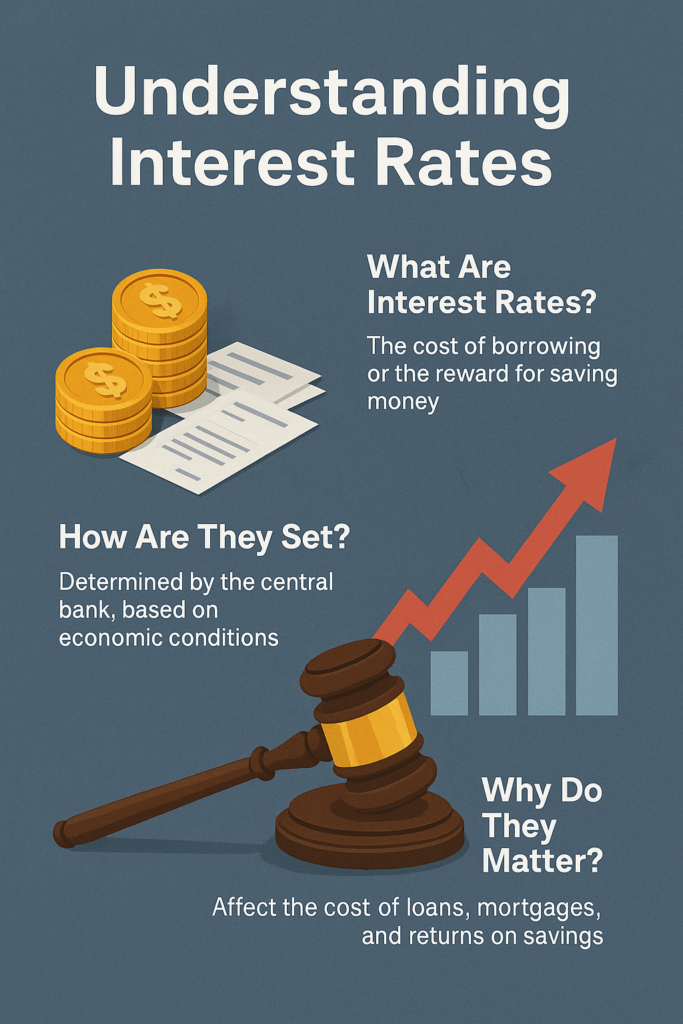
London, UK — Interest rates in the UK remain a major concern for homeowners and renters in 2025, as borrowing costs stay higher than they were for much of the past decade. While recent decisions by the Bank of England suggest rates may be nearing a peak, many households continue to feel the impact through higher mortgage payments and rising rents.
Understanding how interest rates work — and what they mean for everyday finances — has become increasingly important for UK households.
What Are Interest Rates and Who Sets Them?
In the UK, the official base interest rate is set by the Bank of England. This rate influences how much banks charge for mortgages, loans, and credit cards, as well as how much savers earn on deposits.
When interest rates rise, borrowing becomes more expensive. When they fall, loans and mortgages generally become cheaper. The Bank of England adjusts rates mainly to control inflation and support economic stability.
How Higher Rates Affect Mortgage Holders
Homeowners with fixed-rate mortgages are often protected until their deal ends. However, those coming off fixed-term agreements may face significantly higher monthly repayments compared with a few years ago.
Borrowers on variable or tracker mortgages have already felt the impact, as their payments rise or fall in line with changes to the base rate. Housing analysts say this has placed pressure on household budgets, particularly in areas with high property prices such as London and the South East.
What It Means for Renters
Higher interest rates also affect renters. Many landlords face increased mortgage costs, which can be passed on through higher rents. In cities like London, where demand for rental properties remains strong, this has contributed to rising rental prices.
Tenant groups warn that affordability is becoming a growing issue, especially for younger renters and low-income households.
Will Interest Rates Fall Soon?
Economists suggest that while inflation has eased compared with previous years, interest rates may remain elevated for some time. The Bank of England has signalled that decisions will continue to depend on inflation trends, wage growth, and overall economic conditions.
Any future rate cuts are expected to be gradual rather than sudden, meaning households should plan for borrowing costs to remain higher than pre-pandemic levels in the near term.
Why It Matters for the UK Economy
Interest rates play a central role in the wider economy. Higher borrowing costs can reduce consumer spending and slow housing market activity, while lower rates can stimulate growth but risk fuelling inflation.
For households, understanding interest rates helps with long-term financial planning, whether that means budgeting for mortgage repayments, deciding when to remortgage, or planning future home purchases.
Sources
- Bank of England — https://www.bankofengland.co.uk
- Office for National Statistics (ONS) — https://www.ons.gov.uk