
Listen to this article
As we delve into the UK economy forecasts for 2026, significant factors are shaping the outlook for growth and stability. According to the OECD UK report, the nation is projected to experience a modest economic growth rate of 1.2%, despite current predictions showing it remains the second-fastest growing economy within the G7. This is contrasted by persistent challenges such as high inflation, expected to maintain a leading position in the G7 at 3.5%. The UK fiscal policy is under scrutiny, particularly regarding recent tax increases that may impede household disposable income and consumption. Additionally, the Bank of England interest rates are forecasted to decline, providing a glimmer of hope for recovery as global trade conditions gradually improve.
In examining the economic landscape of the United Kingdom, various projections for 2026 reveal a nuanced picture of potential growth and hurdles. The latest assessments hint at a leveling off in economic activity, with a predicted growth rate of 1.2% as the country grapples with elevated inflation levels and cautious fiscal measures. The OECD’s insights underscore the ongoing need to address the impact of taxation and public spending on consumers and businesses alike. Meanwhile, adjustments to interest rates by the Bank of England might create a conducive environment for gradual economic revitalization. The convergence of these elements illustrates a complex interplay between growth initiatives and economic policies as the UK navigates its future.
UK Economic Growth Forecasts for 2026
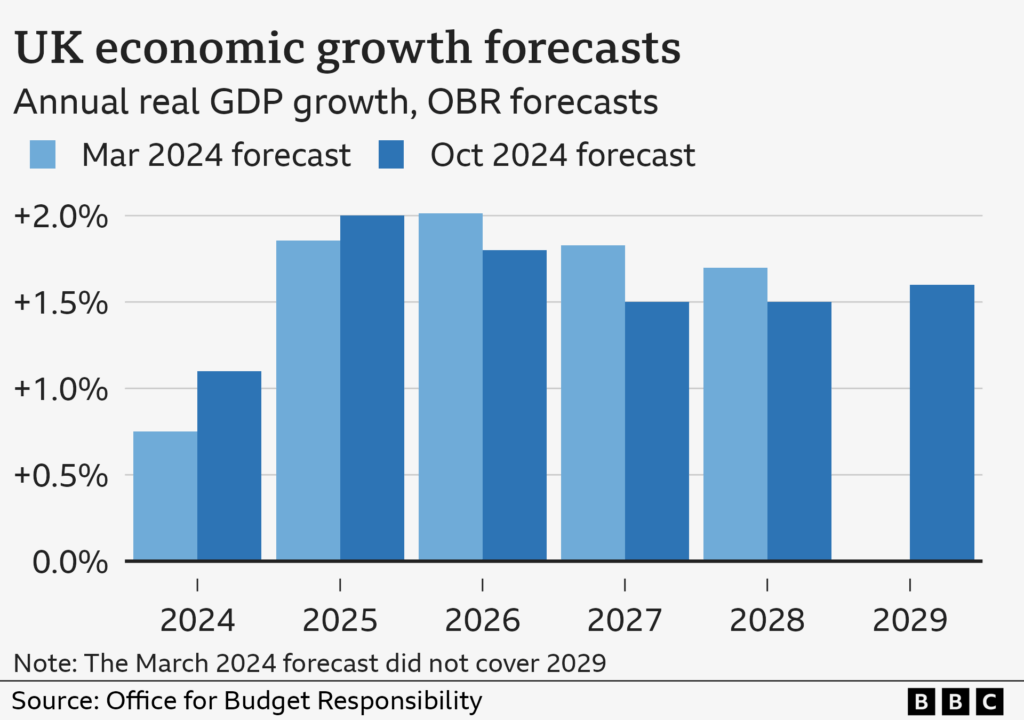
The OECD’s recent forecast for the UK economy in 2026 highlights a predicted growth of just 1.2%, which reflects a slowdown compared to the current year’s growth rate of 1.4%. While the UK is projected to be the second-fastest growing economy in the G7 this year, its position in 2026 is set to diminish as Canada is expected to outpace the UK’s performance. This anticipated decline is attributed to increased fiscal constraints stemming from substantial tax increases and freezes on income tax thresholds announced in the recent Budget. Observers note that such measures, aimed at improving fiscal health, may paradoxically hinder consumer spending and economic vitality in the long run. Furthermore, the ongoing struggle with productivity and workforce dynamics, such as declining migration, will continue to temper growth prospects for the UK economy in the years to come.
The forecast for 2026 also suggests that inflation will remain a significant concern for UK households. With the OECD projecting inflation to be 3.5% this year, the country sustains the highest inflation rates among G7 nations, albeit with a slight expected decrease to 2.5% next year. This persistent inflation poses challenges not only for consumers but also for the Bank of England, which may need to adjust interest rates accordingly. As the central bank anticipates further interest rate cuts to a key rate of 3.5%, the implications on borrowing costs and savings will be crucial for shaping the economic landscape moving forward. Therefore, while short-term growth forecasts may appear optimistic, the long-term outlook remains clouded by inflationary pressures and fiscal policies.
Frequently Asked Questions
What are the UK economy forecasts for 2026 according to the OECD?
The OECD forecasts that the UK economy will experience a steady growth of 1.2% in 2026, a slowdown from 1.4% expected this year. While the UK will rank as the third fastest growing economy in the G7, it faces challenges from fiscal policies and sluggish productivity.
What factors are influencing the UK economic growth forecast for 2026?
The UK economic growth forecast for 2026 is influenced by factors such as tax increases, a freeze on income tax thresholds, and slow growth in the working-age population. Additionally, past austerity measures are expected to impact household disposable income and consumption.
How does the UK inflation forecast affect the economy in 2026?
The UK inflation forecast for 2026 is projected to be 2.5%, down from 3.5% this year, which remains the highest in the G7. This decrease in inflation is expected to help alleviate some cost pressures for households and businesses, contributing positively to economic conditions.
What is the role of Bank of England interest rates in the UK economy forecast for 2026?
The Bank of England’s interest rates are predicted to drop to 3.5% by late 2026, which is expected to provide a slight boost to the economy. Lower interest rates typically enhance borrowing and spending, which can stimulate economic growth.
How does UK fiscal policy impact the economy in the 2026 forecasts?
UK fiscal policy plays a critical role in the 2026 economy forecasts by introducing significant tax increases and spending restrictions that could hinder growth. The OECD indicates that such fiscal policies create a headwind for consumption and overall economic expansion.
What are the expected unemployment rates in the UK economy by 2026?
The OECD predicts that the unemployment rate in the UK will rise to 4.9% in 2026, reflecting some challenges in the job market as economic growth slows. This projection highlights concerns about the labor market amidst ongoing economic adjustments.
How do UK economic forecasts in 2026 compare with previous estimates?
The OECD’s forecasts for the UK economy in 2026, which project growth of 1.2%, are slightly more pessimistic than the UK government’s Office for Budget Responsibility, which anticipates 1.4%. These differences underscore variations in assumptions about fiscal policy and economic resilience.
What is the OECD’s outlook on the UK economy’s growth potential by 2026?
The OECD suggests that the UK’s growth potential by 2026 is limited due to fiscal consolidation and productivity challenges. However, it notes opportunities for improvement through structural reforms and optimal tax measures to enhance economic performance.
What can be expected regarding global economic conditions impacting the UK in 2026?
The OECD expects global economic growth to slow to 2.9% in 2026, which may impact the UK economy as international trade dynamics shift. Improved global trade conditions towards late 2026 could benefit the UK’s growth trajectory.
What measures can the UK government take to bolster economic growth by 2026?
To bolster economic growth by 2026, the UK government could focus on reforms such as improving infrastructure planning and simplifying regulations in financial services. Additionally, minimizing trade barriers can help stimulate both domestic and international economic activities.
| Key Point | Details |
|---|---|
| OECD Growth Forecasts | UK economy growth predicted at 1.4% in 2026, slowing to 1.2% in 2026. |
| Inflation Rates | UK inflation expected at 3.5% this year, decreasing to 2.5% next year. |
| Government Spending Impact | Tax increases of £26 billion and freezes on income tax thresholds hinder economic growth. |
| Labour Market Predictions | Unemployment projected to rise to 4.9% in 2026 and 5% in 2027. |
| Comparison with Government Estimates | OECD predictions are more pessimistic compared to the Office for Budget Responsibility. |
| Future Economic Factors | Interest rates expected to cut to 3.5%, with potential boost from global trade. |
| Global Economic Context | World growth predicted to slow from 3.2% this year to 2.9% in 2026. |
Summary
UK economy forecasts for 2026 indicate a period of cautious growth as restrictive fiscal policies and high inflation present challenges. Predictions show that the economy will achieve a modest growth rate, impacted by tax increases and decreased spending, leading to concerns about household consumption. Despite these hurdles, some optimism remains with projected interest rate cuts and an eventual recovery in global trade. As the UK positions itself within a changing global economy, monitoring these forecasts will be crucial for businesses and policymakers to make informed decisions.

