Listen to this article
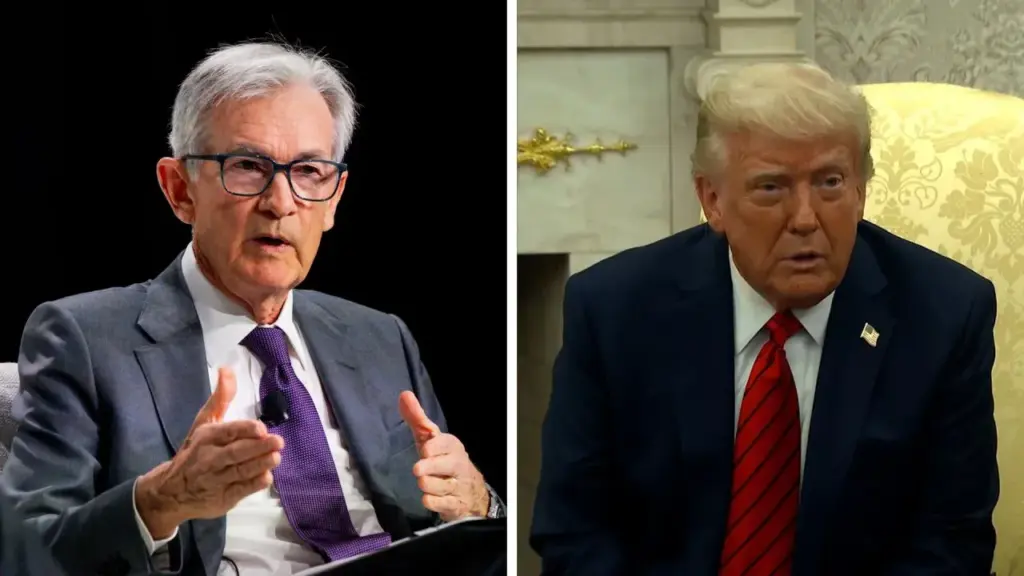
The Trump Fed Chair spat has escalated into a remarkable confrontation that raises concerns over the independence of the Federal Reserve. In an unprecedented move, Jerome Powell, the Chair of the Federal Reserve, addressed the nation via an unscheduled video statement, a rarity in the world of central banking. The conflict revolves around President Trump’s attempts to influence interest rates and exert political pressure on Powell, highlighting the tension between the White House and central bank independence. As accusations swirl regarding the government’s motives behind the pressuring of the Fed, the implications for economic policy become increasingly significant. This extraordinary moment signals a potential turning point in the historical balance between fiscal governance and autonomous monetary authority in the United States.
The ongoing feud between President Trump and his appointed Federal Reserve Chair highlights a significant clash in U.S. economic governance. This dispute has drawn attention to issues surrounding the autonomy of monetary policy amidst increasing political tensions, with Trump aiming to sway decisions typically reserved for independent economists like Jerome Powell. By leveraging his influence, the President seeks to manipulate interest rates that could ultimately affect global markets. Such dynamics complicate the already intricate relationship between political directives and the directives of the central bank, raising questions about the future of economic policy-making in America. This unusual scenario emphasizes the critical need for central bank independence in maintaining economic stability.
Understanding the Trump Fed Chair Spat
The ongoing conflict between President Trump and Federal Reserve Chair Jerome Powell highlights a significant clash between political leadership and central bank independence. This spat has escalated to unprecedented levels, culminating in Powell’s recent unscheduled video statement aimed at clarifying the Federal Reserve’s autonomy in setting interest rates. The context for this friction lies in Trump’s attempts to influence monetary policy, particularly through vocal criticisms and the appointment of economists who align with his views. The core issue is whether monetary policy will be dictated by political pressures or remain insulated from such influences, as Powell emphasized in his remarks.
Powell’s public assertion of the importance of Federal Reserve independence underscores how vital it is for markets and the economy at large. An independent central bank not only serves the nation but also stabilizes global financial systems. The fear is that political meddling could undermine this stability, leading to misguided financial decisions driven by transient political agendas rather than sound economic analysis. The implications of Trump’s actions on the global stage can be dire, mirroring examples from other nations where central banks have suffered under the thumb of governmental control, ultimately disregarding the established protocols of economic governance.
The Impact of Political Pressure on Interest Rates
The central bank’s role in determining interest rates is pivotal for economic growth, as it directly influences borrowing costs and consumer spending. Powell’s declaration against the economic risks posed by political pressure reveals his commitment to maintaining an objective standard for monetary policy. Under his leadership, the Federal Reserve has consistently aimed to respond to economic indicators rather than succumb to political whims, which ensures more stable financial conditions. By resisting external pressures, the Fed can adjust interest rates based on thorough evaluations, ultimately fostering an environment conducive to long-term growth.
However, the emergence of political figures openly challenging the Fed’s autonomy, as seen during the Trump administration, raises serious concerns about the intermingling of fiscal policies and political motivations. If interest rate decisions are swayed by the current administration’s agenda, it could lead to heightened volatility in financial markets. Investors and consumers alike thrive on predictability, so any deviation from established practices can unsettle markets and potentially lead to economic downturns. Therefore, the resilience of central bank independence remains a crucial factor in sustaining economic stability and public confidence.
Geopolitical Implications of Fed Policies
The ramifications of the Fed’s monetary policy extend beyond the U.S. borders, affecting international relations and global economic dynamics. As Trump continues to vocalize his disdain towards Powell’s policy decisions, the potential weaponization of the Fed’s tools could lead to unfavorable outcomes in global financial markets. Historically, central banks have played an essential role in providing stability during times of geopolitical strife. However, if the integrity of the Federal Reserve is compromised, it could invite a spillover effect, influencing how other nations manage their own economic policies in response to U.S. actions.
As we observe the current landscape, it’s crucial to analyze how our allies and trade partners might react to perceived threats from U.S. economic policy decisions influenced by political agendas. The Fed’s independence serves as a bulwark against potential coercive tactics that might ensue from political pressures, offering a framework for international diplomatic and economic relations. Without such a barrier, there exists a precedence where foreign markets might become hesitant to align with U.S. economic policies, which could generate broader ramifications for global economic coherence.
The Future of Jerome Powell’s Leadership at the Fed
As speculation increases surrounding Jerome Powell’s future at the Federal Reserve, there is much discussion about whether President Trump will seek to replace him with someone more aligned with his economic vision. Given Powell’s term is set to expire soon, the interplay of administrative preferences and the quest for a trustworthy monetary leadership becomes critical. Trump’s prior actions indicate that he favors appointing a Fed chair who would pursue a growth-driven agenda, potentially distracting from the Fed’s dual mandate of maximizing employment and ensuring stable prices.
The potential shift in leadership raises questions about the long-term sustainability of Fed policies in the face of external pressures. If Trump were to appoint a more compliant successor, the long-established traditions of Federal Reserve independence could be at risk. Financial markets are inherently sensitive to changes in leadership at such critical institutions, responding not only to new policies but also to perceptions about the Fed’s autonomy in crafting those policies. The question remains: will Powell’s departure usher in a new era of political dominance over monetary policy or reinforce the institution’s commitment to independent decision-making amidst a backdrop of governmental scrutiny?
Repercussions of Central Bank Independence on Economic Stability
The independence of a central bank has far-reaching consequences on economic stability and public trust. As Jerome Powell has noted, a Federal Reserve that operates free from political influence is vital in maintaining confidence among investors and consumers. This independence allows for decisions to be grounded in empirical data and sound economic theory rather than swayed by short-term political considerations, which ensures consistent, rational approaches to managing inflation and employment rates. Such steadfast policies bolster public trust and foster a climate conducive to business growth.
Conversely, encroachments on this independence can lead to significant economic uncertainty. When politicians attempt to manipulate central bank functions, it raises alarms regarding the capacity of monetary authorities to act decisively on behalf of the economy. It could lead to increased market turbulence, as investors would likely reassess their risk profiles in anticipation of potentially erratic monetary policies. The outcome could be detrimental not just to domestic financial health but also to investor confidence globally, as stakeholders become wary of unpredictable U.S. economic policy.
Historical Context of Central Bank Interference
Examining historical instances of central bank interference in various countries can provide a sobering backdrop to the current situation in the U.S. Nations like Turkey have witnessed firsthand how meddling in central bank operations—whether through direct political pressure or intimidation—can lead to disastrous financial fallout. Such histories serve as a cautionary tale against the erosion of independent monetary policy, emphasizing why it is imperative for the Fed to maintain its authority over interest rate adjustments without political meddling.
Furthermore, in these historical cases, the pattern often follows a troubling trajectory: a government’s attempt to manipulate the economy results in ephemeral gains, followed by greater instability. This underscores the importance of separating economic policy from political considerations. Powell’s assertion against such influences aligns with the lessons learned from global precedents, reaffirming that sustained economic growth hinges on a central bank’s ability to function without partisanship, thereby preserving effective monetary governance.
The Role of Economists in Shaping Fed Policy
Economists play a pivotal role in determining Fed policy, with their analyses and forecasts directly influencing the trajectory of interest rates. As Trump pushes for favored economists to be appointed to key positions within the Federal Reserve, concerns arise regarding the neutrality of monetary policy in relation to political affiliation. Powell has often relied on economic indicators and expert assessments to guide the Fed’s decisions, but an influx of politically aligned figures could shift this approach towards more biased interpretations of economic data.
It is vital for the integrity of the Federal Reserve that it maintains a diverse and apolitical body of economic advisors. This diversity ensures that various perspectives on fiscal issues are considered, allowing the Fed to adapt to changing economic climates without succumbing to external pressures. As we witness potential changes in leadership dynamics, the selection of economists with strong independence and credibility will be crucial in shaping monetary policy that focuses on long-term public interests rather than transient political goals.
Market Reactions to Powell’s Statements
Market reactions to Jerome Powell’s statements can significantly impact investor confidence and economic outlook. Following Powell’s public remarks addressing political pressures, market analysts have observed shifts in investment strategies, particularly in the U.S. Treasury market. The unpredictable element of federal monetary policy, characterized by external pressures, incites caution among investors who prioritize stable returns. Concerns about the Fed’s independence could spur volatility, leading traders to reassess risk levels and adjust their portfolios accordingly.
Moreover, the attention directed towards Powell’s statements can result in either a corrective response or exacerbation of market fears. If the markets perceive Powell as standing firm against political interference, it may enhance confidence and stabilize investment climates. However, if traders view his remarks as a sign of impending instability in monetary policy, it could trigger broader sell-offs and increased volatility. The interplay between market expectations and central bank governance illustrates the intricate balance that Powell must navigate amidst the ongoing political tumult surrounding the Federal Reserve.
Implications for Future Fed Appointments
As discussions about Jerome Powell’s potential replacement heat up, the implications of future Fed appointments bear considerable weight on both domestic and global economic policies. Appointing someone aligned with political motivations could undermine the Fed’s longstanding mission, steering it away from data-driven decision-making. Future leaders must prioritize the maintenance of a politically agnostic stance to uphold the institution’s credibility. Having experts in the top ranks who understand the importance of independent economic analysis is crucial to navigating the complexities of the current marketplace.
This upcoming transition period underscores the urgency of establishing a framework that protects the Federal Reserve’s autonomy amid executive pressures. If political influencers are allowed to dictate appointments, it could usher in an era of turbulence for economic governance. Thus, ensuring the appointment of credible and impartial leaders who can champion central bank independence will serve as a cornerstone for fostering stability and confidence among investors and consumers alike.
Frequently Asked Questions
What is the Trump Fed Chair spat about and how does it involve Jerome Powell?
The Trump Fed Chair spat centers around President Trump’s ongoing criticism of Jerome Powell, the Federal Reserve Chair, regarding the setting of interest rates in the U.S. Trump has pressured Powell to lower interest rates, arguing they hinder economic growth. This has raised concerns about Federal Reserve independence, as Powell insists that the Fed’s decisions must be based on economic data rather than political pressure.
Why is Federal Reserve independence important in the context of the Trump Fed Chair spat?
Federal Reserve independence is crucial because it ensures that monetary policy decisions, such as interest rates, are made without political influence. In the Trump Fed Chair spat, Trump’s criticisms and attempts to influence Powell raise alarm about the potential for political pressure to undermine the Fed’s ability to act in the public interest, which could destabilize both U.S. and global markets.
How have Trump’s actions affected Jerome Powell’s role as Federal Reserve Chair?
Trump’s actions have created an atmosphere of political pressure around Jerome Powell’s role as Federal Reserve Chair. Trump has openly criticized Powell and made attempts to influence Fed policy, which Powell argues could compromise the Fed’s independence and its ability to set interest rates based on sound economic analysis rather than political motivations.
What did Jerome Powell say about political pressure in his statement regarding the Trump Fed Chair spat?
In his statement, Jerome Powell emphasized that the Federal Reserve’s decisions on interest rates should not be swayed by political pressures or intimidation. He characterized the Department of Justice’s recent moves against the Fed as part of a broader context of threats against the institution, reinforcing the importance of maintaining central bank independence for the integrity of monetary policy.
What are the potential consequences of the Trump Fed Chair spat on U.S. interest rates?
The Trump Fed Chair spat could lead to increased volatility in U.S. interest rates, as the ongoing political pressure may impact the Fed’s decision-making process. If the independence of the Federal Reserve is undermined, it could result in interest rates being set not purely on economic conditions but influenced by political considerations, potentially destabilizing both domestic and global markets.
Could Jerome Powell’s position as Fed Chair be at risk due to the Trump Fed Chair spat?
Yes, Jerome Powell’s position as Federal Reserve Chair could be at risk due to the Trump Fed Chair spat, especially since Powell’s term ends in May. There is speculation that Trump may appoint a more compliant economist if Powell continues to resist political pressure regarding interest rates, raising stakes for the Fed’s independence.
| Key Point | Details |
|---|---|
| Unexpected Fed Chair Statement | Jerome Powell made an unscheduled video statement addressing the ongoing criticism from President Trump. |
| Background of the Spat | The conflict between Trump and Powell revolves around Trump’s attempts to influence interest rate decisions and criticism over a renovation at the Fed. |
| Consequences of Political Pressure | Powell highlighted that political pressure on the Fed undermines its independence and raises concerns for global financial stability. |
| Implications for Interest Rates | There is uncertainty regarding how Powell’s independence will influence U.S. interest rates amid threats of criminal action from the Trump administration. |
| Global Market Stability | The independence of the Fed is crucial for stability in U.S. markets and globally, potentially impacting Treasuries and international relations. |
Summary
The Trump Fed Chair Spat has highlighted a critical moment in U.S. fiscal policy as President Trump seeks to exert influence over Federal Reserve Chair Jerome Powell. The ongoing conflict not only questions the independence of the Fed but also raises alarms about the potential impact on global financial markets. Powell’s assertions about maintaining a politically independent monetary policy underscore the stakes involved, emphasizing that U.S. interest rates must be set based on economic conditions and evidence rather than political pressures. As we move forward, the implications of this confrontation could reshape financial stability in the U.S. and abroad.