Listen to this article
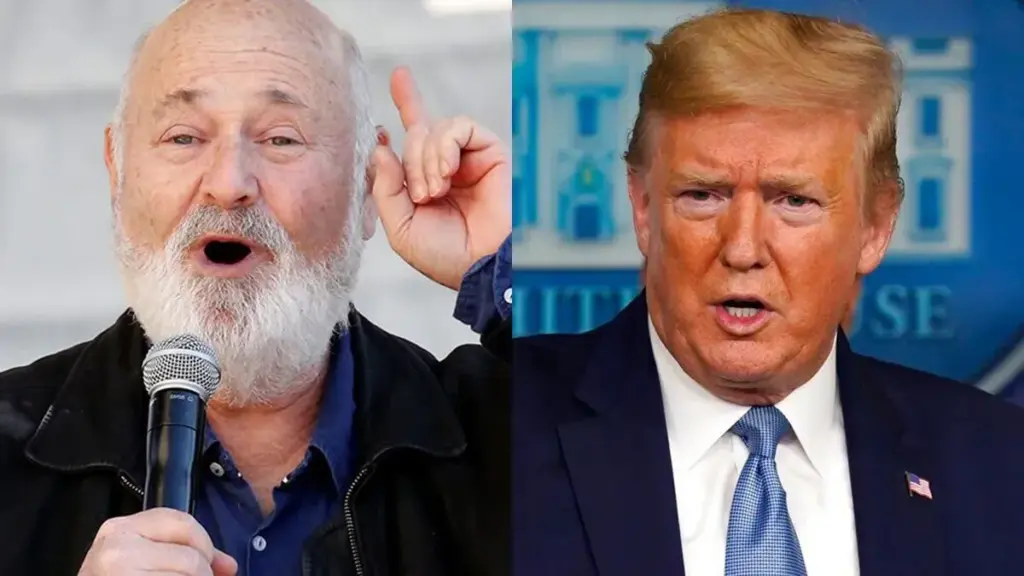
In a recent outburst, Trump criticizes Rob Reiner, thrusting the late Hollywood director back into the political spotlight following his tragic murder. The president’s comments, made shortly after Reiner’s death, have sparked a wave of political backlash, as many interpret his words as lacking empathy in a moment of communal tragedy. Trump, a frequent target of Reiner’s critiques, stated that the director was ‘very bad for our country,’ invoking the divisive term ‘Trump derangement syndrome’ to describe Reiner’s fervent opposition. With the murder investigation underway, involving the couple’s son as a suspect, many are questioning the appropriateness of such remarks at a time when empathy should prevail. The fallout is indicative of a broader discourse in which political commentary meets personal tragedy, highlighting the challenges of maintaining compassion in the heated arena of American politics.
The recent events surrounding the tragic killing of noted filmmaker Rob Reiner have ignited a firestorm of political discourse, particularly as former President Trump voices his controversial opinions on the matter. Reiner, who held a prominent position in Hollywood, has long been an outspoken critic of Trump, making the situation even more of a flashpoint. With the investigation into Reiner’s death ongoing and accusations of murder directed at his son, the discussions surrounding the incident delve deep into the intersection of media, politics, and personal loss. Trump’s disparaging remarks about Reiner reveal the complexities involved in public figures’ responses to tragedy, as the lines between personal grief and political rhetoric become increasingly blurred. This situation also raises questions about how empathy in tragedy is viewed in contemporary society, especially from those in the public eye.
Trump Criticizes Rob Reiner Post-Murder: A Controversial Response
In the wake of Rob Reiner’s tragic murder, President Donald Trump’s remarks have sparked a significant uproar across the political landscape. Trump has doubled down on his criticism of Reiner, who he claimed was ‘very bad for our country.’ His comments, delivered on Truth Social, insinuated that Reiner’s death was a direct consequence of what he terms ‘Trump derangement syndrome.’ This phrase, often used to dismiss criticism from his opponents, was again at the forefront of Trump’s narrative, showcasing his tendency to intertwine personal grievances with broader political commentary.
The backlash from these comments has been profound, with not only critics from the Democratic side voicing their discontent but also several Republicans expressing disapproval. Many have labeled Trump’s remarks as inappropriate and disrespectful in light of the tragic circumstances surrounding Reiner’s death. The situation exemplifies the heightened tensions within American politics, where even the most sensitive events, such as a murder, can quickly become fodder for political rhetoric.
Understanding the Political Backlash Following Trump’s Statements
Trump’s criticism of Rob Reiner has not only led to a strong political backlash but has also illuminated the divisions within his own party. High-profile Republicans have voiced their objections, labeling Trump’s comments as inappropriate during a time of mourning. For instance, Representative Thomas Massie condemned the President for his remarks, suggesting they detracted from the respectful discourse that’s typically expected during family tragedies. This dissent encapsulates a rift in the Republican Party, where some members advocate for a more compassionate response to national tragedies, while others align closely with Trump’s more controversial style.
This backlash emphasizes the growing concern among some political leaders regarding the tone and direction of political discourse in America. Critics argue that Trump’s remarks reflect a broader trend of leveraging tragedy for political gain, rather than fostering empathy in times of hardship. As the political climate becomes increasingly polarized, the call for empathy and respectful dialogue remains essential, particularly in instances where personal loss is involved.
Empathy in Tragedy: The Need for Respectful Dialogue
In light of recent events, the discourse surrounding Rob Reiner’s murder has highlighted the imperative of empathy in times of tragedy. While political figures often express their opinions forcefully, the need to approach sensitive subjects with care and compassion is more crucial than ever. This perspective has been echoed by various public figures and observers who stress that tragedies should be met with understanding rather than political opportunism. The sentiment reflects a collective call for a return to decency in public discourse, where empathy supersedes divisive political commentary.
As many have noted, tragedies like the death of Rob Reiner not only affect the immediate family but resonate throughout communities and across the nation. The culture of empathy and respect can serve as a foundation for healing and understanding. Engaging with such events should transcend partisan lines, allowing for a unified response that acknowledges the loss of life and the sorrow of families affected by violence.
Reactions from Colleagues and Party Members: A Divided Response
The responses from Trump’s Republican colleagues following his comments about Rob Reiner have been varied, accentuating the divisions within the party. While some members continue to support Trump’s rhetoric and approach, others have distanced themselves, signifying a rift that might affect party unity. Figures like Senator John Kennedy criticized Trump for his failure to remain silent in the face of tragedy, insisting that wise leaders should know when to hold their tongues to avoid aggravating situations.
This divided response illustrates the complexities within the Republican Party as they navigate a landscape marked by Trump’s polarizing presence. With some members advocating for a more traditional and empathetic approach, contrasting voices nonetheless continue to support Trump’s brash style. How the party reconciles these differences may have profound implications for its future, particularly in the wake of events that call for collective mourning rather than political rivalry.
Rob Reiner’s Legacy: A Tribute Beyond Politics
Rob Reiner’s legacy as a Hollywood director transcends the political controversies surrounding him. Renowned for his directorial work in films like ‘This is Spinal Tap’ and ‘Stand By Me,’ Reiner shaped the cinematic landscape and left an indelible mark on American culture. His storytelling abilities and creativity garnered him a place in the hearts of many, establishing a distinguished career that many admired regardless of divergent political views.
Following Reiner’s untimely death, it is essential to remember him not solely as a critic of Trump’s policies but as a prominent figure who contributed significantly to the arts. By reflecting on his body of work, individuals can acknowledge the broader impact he had on entertainment and society, thus fostering a more nuanced understanding of his life beyond the realm of politics. Celebrating this legacy may serve as a reminder of the values of creativity and storytelling that unite rather than divide.
The Role of Media in Shaping the Narrative around Tragedy
The media plays a crucial role in shaping public perception, especially regarding tragic events such as Rob Reiner’s murder. The way news outlets choose to report on such incidents can significantly influence public sentiment and political dialogue. While some platforms may amplify voices that align with specific political agendas, others strive for a more balanced and empathetic portrayal. This disparity highlights the responsibility of the media to maintain ethical standards and portray events with the necessary sensitivity.
Moreover, the coverage can either exacerbate or mitigate political tensions. As Trump criticizes Rob Reiner while the nation mourns, the media’s framing of these comments becomes pivotal in guiding public reaction. By prioritizing fact-driven and respectful reporting, journalists can help cultivate a discourse that emphasizes understanding rather than division — an essential factor in political and societal healing.
The Impact of Celebrity Deaths on Political Climate
Celebrity deaths have a unique ability to influence the political climate, often serving as a catalyst for broader conversations. The murder of Rob Reiner not only evokes a response from fans and colleagues but also intensifies the dialogue around political civility and the implications of public figures’ rhetoric. As attention centers on Reiner’s life and contributions, the political landscape may shift, reflecting a more nuanced understanding of the intersection between fame and societal issues.
This phenomenon highlights the responsibility of public figures, including those in politics, to navigate sensitive topics with care. The reaction to Reiner’s murder illustrates how celebrity deaths can prompt discussions on empathy, respect, and the ethics of public commentary. Insensitive remarks may not only provoke backlash but can also cloud the memory of the deceased, distracting from their legacy and contributions to society.
Navigating the Line Between Politics and Personal Tragedy
Navigating the line between politics and personal tragedy is an increasingly complex challenge in contemporary discourse. The recent remarks from Trump following the murder of Rob Reiner have showcased how personal losses can quickly become politicized. As political leaders weigh their statements, they must consider the potential consequences on public perception and the emotional impact on families and communities affected by tragedy.
This interplay between personal and political realms raises critical questions about accountability and sensitivity. How leaders respond to tragic events can define their character and influence their credibility. Emphasizing a compassionate and respectful approach could serve to solidify a leader’s position and earn public trust, showcasing that empathy often holds greater value than political gain.
Reflections on Tragic Events: Learning from Rob Reiner’s Legacy
As the nation reflects on the tragic events surrounding Rob Reiner’s murder, it is essential to draw lessons from both his life and the reactions that followed. Recognizing the significant contributions of Reiner to the film industry should encourage a focus on his artistry rather than the politicization of his death. Allowing appreciation for his work to thrive can foster a spirit of unity and understanding in a time marked by division.
Moreover, these events invite a broader conversation about the importance of empathy in political dialogue. In a landscape often characterized by harsh rhetoric and criticism, the way forward necessitates a shift toward compassionate discourse that honors those lost and promotes healing. By choosing to respond with kindness and respect, society can work together to ensure that the legacies of individuals like Rob Reiner are celebrated and remembered appropriately.
Frequently Asked Questions
What did Trump say about Rob Reiner’s death?
Trump criticized Rob Reiner following the news of his murder, suggesting that Reiner’s long-standing criticism of him contributed to his mental state, which he referred to as ‘Trump derangement syndrome.’ This statement sparked significant backlash among both political allies and opponents.
How did the political backlash unfold after Trump’s comments about Rob Reiner?
Trump’s comments on Rob Reiner’s murder received considerable political backlash. Notable Republicans, including Kentucky Representative Thomas Massie and Senator John Kennedy, publicly condemned Trump’s remarks as inappropriate and disrespectful, arguing that such discourse was not fitting in light of the tragedy.
Why did Trump call Rob Reiner ‘very bad for our country’?
Trump labeled Rob Reiner as ‘very bad for our country’ due to the director’s vocal criticism of him throughout his presidency. This comment was part of his broader narrative concerning individuals he claims suffer from ‘Trump derangement syndrome,’ which he believes clouds their judgment.
What is the public response to Trump’s remarks regarding Rob Reiner?
The public response to Trump’s remarks about Rob Reiner has been one of outrage and condemnation. Critics argue that his comments were politically charged and exploitative, particularly in the wake of a violent tragedy, demonstrating a lack of empathy.
What are some of Rob Reiner’s notable works as a Hollywood director?
Rob Reiner was renowned for directing several acclaimed films, including ‘This is Spinal Tap,’ ‘Stand By Me,’ ‘Misery,’ and ‘A Few Good Men,’ which showcased his versatility and creativity in Hollywood.
What is ‘Trump derangement syndrome’ as mentioned by Trump in relation to Rob Reiner?
‘Trump derangement syndrome’ is a phrase frequently used by Trump to describe what he perceives as irrational behavior and obsession among his critics. In the context of Rob Reiner’s death, Trump suggested that Reiner’s extreme views against him contributed to an unfortunate mental state.
Did Trump’s comments have any impact on his relationships within the Republican Party?
Yes, Trump’s comments about Rob Reiner have affected his relationships within the Republican Party, as several prominent GOP members distanced themselves from his remarks, with some openly criticizing him for lacking tact and empathy in a moment of tragedy.
How did others in the GOP respond to the criticism of Trump regarding Rob Reiner?
Response among GOP members varied, but notable figures, including Marjorie Taylor Greene and Thomas Massie, criticized Trump’s remarks. Greene emphasized the need for empathy in light of the tragedy, while Massie called Trump’s comments disrespectful.
What happened to Rob Reiner and his wife Michele?
Rob Reiner and his wife Michele were found dead at their home in Los Angeles, with their son Nick arrested on suspicion of murder. The police have not disclosed any motive or evidence linking their political views to the incident.
| Key Points |
|---|
| Trump reiterates criticism of Rob Reiner, calling him “very bad for our country.” The comments follow Reiner’s murder, which has sparked significant backlash. |
| Trump connects Reiner’s death to ‘Trump derangement syndrome’, a phrase he often uses. |
| Reiner and his wife Michele were found dead; their son Nick has been arrested for murder. |
| Trump’s comments received criticism from both sides of the political aisle, with notable Republicans condemning his remarks. |
| Senator John Kennedy advises Trump should have refrained from public commentary on the tragedy. |
| Rob Reiner was famed for directing iconic films and had a family deeply involved in the arts. |
Summary
Trump criticizes Rob Reiner following the tragic news of his murder. The president’s remarks have sparked widespread condemnation and backlash, even from within his party. This incident highlights the complexities of public discourse, especially when tragedy intersects with political rhetoric. Reiner, remembered for his significant contributions to cinema, leaves behind a legacy that many hope will be honored without politicization.