
Listen to this article
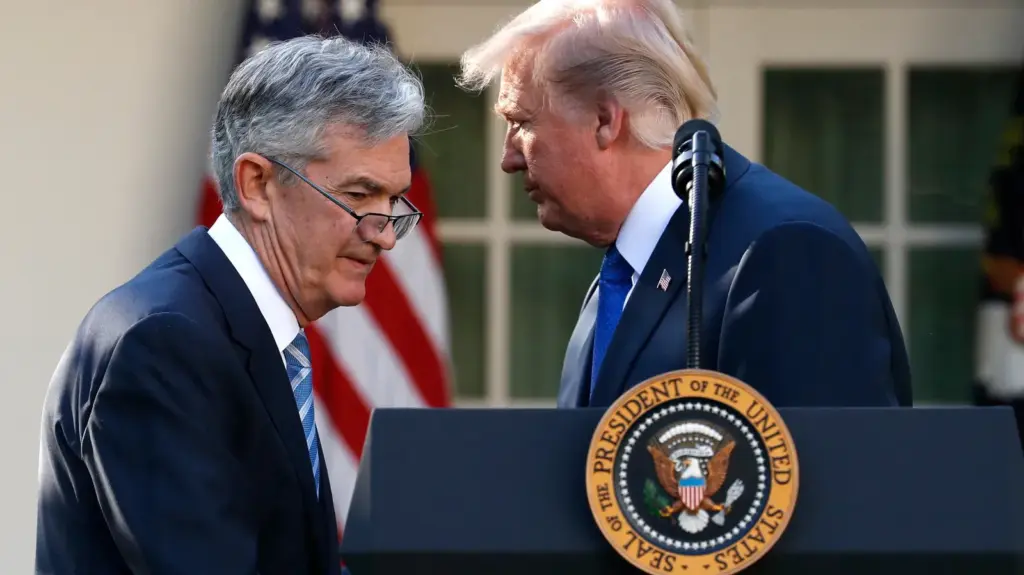
Trump and the Fed have found themselves at the center of a heated standoff that reverberates throughout the US economy. Since returning to office, President Trump has not shied away from critiquing Federal Reserve Chair Jerome Powell, accusing him of mismanaging interest rates that could ultimately exacerbate inflation risks. This situation has raised concerns about central bank independence in the face of perceived political interference, as Trump’s demands for lower interest rates echo troubling patterns seen in other countries grappling with similar economic challenges. Economists warn that such pressure could jeopardize the integrity of the Fed and undermine its crucial role in maintaining economic stability. As this saga unfolds, all eyes are on how the interplay between Trump, the Fed, and the ongoing economic conditions will shape the future of monetary policy in the US.
In the ongoing debate surrounding monetary policy in the United States, the dynamic between the sitting president and the Federal Reserve draws parallels to global instances of political influence over economic institutions. With Trump’s vocal demands for adjustments from the central banking system, discussions have ignited about the implications for economic stability and inflation management. The idea of political figures pushing for lower interest rates to stimulate short-term growth invites scrutiny about the long-term consequences of such strategies. As Trump continues to challenge the Fed’s operational independence, voices from the economic community are sounding alarms, warning of potential adverse impacts on the broader fiscal landscape. This emerging narrative underscores the vital importance of safeguarding central banking decisions from partisan pressures in order to ensure a resilient economic framework.
Trump’s Confrontation with the Federal Reserve: A Lesson from History
The standoff between President Donald Trump and the Federal Reserve is reminiscent of historical instances where political leaders collide with central banks over monetary policy. Martin Redrado, the former president of Argentina’s central bank, points out the stark similarities between his experiences in Argentina and Trump’s current situation. Redrado faced intense pressure from then-President Cristina Kirchner, who demanded he release reserves to manage national debt—an action that ultimately led to his dismissal. Such conflicts often foreshadow economic instability, a narrative that seems to be echoing in the U.S. as Trump’s aggressive stance against Jerome Powell raises concerns about the erosion of central bank independence and the potential repercussions for the U.S. economy.
Historians and economists alike warn that Trump’s confrontational tactics could mirror the economic turmoil seen in developing nations. The cracks in central bank independence typically manifest in rising inflation and instability in national currencies. This situation in Argentina became a cautionary tale as it spiraled into high inflation and a devalued currency. As Trump’s Fed saga unfolds, it’s essential to draw lessons from these historical precedents to understand the potential risks facing the U.S. economy.
Trump’s approach to the Fed has sparked significant debate about the independence of central banks and the dangers of political interference. The recent attempts to influence Fed policymaking could signal a shift in the institutional trust that has historically shielded the U.S. economic framework. Economists warn that compromising central bank independence can invite immediate political benefits but pose long-term risks, including inflation and currency devaluation—as witnessed in countries like Argentina. The need for a robust and autonomous central bank has never been clearer, especially as Trump continues to voice dissatisfaction with Powell’s decisions.
With many analysts drawing parallels to the struggles faced by central banks in other nations, it remains crucial for the U.S. to safeguard the autonomy of the Fed. The U.S. economy, unlike those in developing countries, may have more resilience, yet current events cast a shadow on the established norms of independence. Market responses to political pressures indicate investors prioritize the Fed’s ability to function free from political whims, reinforcing the idea that political interference could lead to economic repercussions reminiscent of historical disasters.
Inflation Risks and Central Bank Independence
Amid President Trump’s continuing criticisms of the Federal Reserve’s monetary policies, inflation risks loom large over the U.S. economy. Trump’s vocal objections to interest rate hikes have prompted significant questions regarding the principles of central bank independence. Historically, economies have thrived under independent central banks, especially in the wake of the inflation crises of the 1970s. Economists emphasize that political pressure can skew a central bank’s focus, often prioritizing short-term gains over long-term stability. This recurring theme across various global economies highlights the delicate balance between political influence and economic health.
In this context, Trump’s assertion of rightful intervention raises alarms among economists who fear that such actions could lead to inflationary pressures reminiscent of those that have plagued countries lacking central bank autonomy. As past events indicate, when political leaders exert influence over monetary policy, the consequences often manifest as economic instability, manifesting through rising inflation rates and diminished public trust in financial institutions.
Current data suggests that, despite Trump’s criticism, inflation expectations among Americans remain relatively contained, but experts warn this could change if political interference persists. A key factor in maintaining this stability is the belief in the Fed’s independence—a belief that appears vulnerable amid ongoing confrontations. Economic studies have repeatedly demonstrated that central banks operate most effectively and have better inflation control when insulated from political tides. Such findings resonate globally; from the U.K. to Turkey, political leaders have faced backlash for undermining their central banks and compromising their economies. As Trump’s rhetoric escalates, the fear remains that he inadvertently sets the stage for an inflation surge unless the Fed retains its operational autonomy.
Market Reactions and the Consequences for the US Economy
The market’s muted response to President Trump’s disputes with the Federal Reserve may suggest a level of investor confidence in the Fed’s capacity to navigate political pressures. However, analysts caution this perception could shift rapidly should the Fed’s independence become increasingly compromised. Historical trends illustrate how nations experiencing political interference in monetary policy often face dire economic consequences, such as spiraling inflation and currency depreciation. For example, a marked decline in the dollar’s value has been observed, reflecting investors’ concerns about potential instability linked to Trump’s ongoing scrutiny of the central bank.
Moreover, as discussions about the Fed’s independence surface, the implications for U.S. monetary policy grow more significant. Central banks ideally should function free from political encroachments to build trust and confidence among investors and the public. The evidence of market volatility following Trump’s announcements signals that even a hint of diminished Fed autonomy could shake investor confidence. As such, the prospect of political interference carries potential risks that could reverberate across financial markets, cautioning against the backdrop of an already challenging economic landscape.
However, despite the current unease, analysts indicate that the long-term structural integrity of the U.S. economy might buffer it from severe repercussions. The combination of a diverse and resilient market, alongside a structure designed to hedge against rapid shifts in monetary policy, may provide a necessary safeguard. Yet the erosion of central bank independence due to political conflicts could introduce unanticipated volatility and instability. Notably, recent discussions among prominent lawmakers and Wall Street leaders defending the Fed indicate a recognition of the importance of autonomous monetary policy in ensuring economic stability.
Lessons from Global Counterparts: Political Interference in Central Banking
Looking globally, the standoff between Trump and the Federal Reserve invites comparisons to instances of political interference in central banking witnessed worldwide. Economies such as Turkey and Argentina illustrate the potential fallout of centralized control over monetary authorities. In Turkey, President Erdogan’s pressure on the central bank to conform to unorthodox economic policies led to soaring inflation rates and economic instability, showcasing the dangers of political intervention. Similarly, the lessons learned from Argentina’s handling of its central bank during its economic crisis provide a stark warning of the long-term damage resulting from disregarding central bank independence.
If the U.S. begins to align with these distressed economies by compromising the Fed’s autonomy, the ramifications could be profound. Central banks enjoy the leverage to manage inflation and ensure economic stability when they operate without fear of direct political influence. Thus, understanding the implications of political interference becomes paramount, as historical precedents illustrate that ignoring the lessons of global counterparts can lead to detrimental consequences.
Economist Carola Binder’s research underscores that political interference in central banking typically correlates with adverse economic outcomes, particularly spikes in inflation—a phenomenon that has been observed in numerous nations. These findings bolster the case for maintaining central bank independence as a bulwark against inflationary pressures. As Trump’s conflict with the Fed unfolds, it’s essential to closely monitor the implications this may have on U.S. economic policy, especially as similar patterns have emerged in economies with less resilient structures. Bolstering the autonomy of institutions like the Fed becomes essential not just for immediate economic health but for the long-term viability of the U.S. economic framework against political whims.
The Role of Central Bank Independence in Economic Stability
The fundamental premise supporting central banking involves ensuring its independence from political machinations to maintain economic stability. Central banks are typically designed to operate free from day-to-day political pressures, allowing them to focus on their primary objectives: controlling inflation and fostering economic growth. The turmoil surrounding Trump’s criticisms of the Federal Reserve raises significant questions about the potential implications for the U.S. economy—if political leaders manipulate monetary policy, we could see detrimental shifts in inflationary trends reminiscent of episodes in countries with unstable economic governance.
Moreover, as historical evidence suggests, central bank independence correlates strongly with lower inflation rates and overall economic resilience. Trump’s ongoing confrontation with the Fed could inspire doubts about the institution’s stability, thereby inviting inflationary expectations into the market. Should confidence in the Fed wane, the consequences could reverberate through the broader economy, indicating the pressing need for maintaining a clear separation between political influence and monetary policy.
Current geopolitical pressures only enhance the importance of safeguarding institutional independence, particularly in a landscape where populist sentiments manipulate economic policies for immediate gain. Protecting the Federal Reserve’s role as an independent arbiter of U.S. monetary policy is crucial, ensuring it can pursue long-term economic goals without succumbing to short-term political agendas. As seen in historical contexts, yielding to political whims can unravel the stability cultivated over decades, suggesting that Trump’s confrontational discourse could pose latent risks that must not be ignored.
Investor Confidence Amid Political Turmoil
Despite President Trump’s direct confrontations with the Federal Reserve, investor responses suggest a measured level of confidence in the Fed’s capacity to navigate political strife. Historically, markets have shown resilience when central banks maintain credibility and independence from political interference. However, as events unfold, this confidence may come under strain if political pressures escalate to the detriment of the Fed’s decision-making independence. The notion that investors view the Fed as a pillar of economic stability becomes more vital during times of political uncertainty, especially when central banks play crucial roles in predicting and controlling inflation.
An essential factor in sustaining this trust is the recognition that, historically, political leaders attempting to influence central bank policies often exacerbate inflationary issues. The recent dip in the dollar’s value illustrates how quickly market perceptions can shift in response to presidential actions directed at the Fed, underscoring the significance of preserving the central bank’s independence. As Trump’s challenges to the Fed mount, analysts emphasize the need to safeguard investor confidence—an integral aspect of maintaining economic stability, particularly in turbulent political times.
Long-term investor sentiment hinges significantly on the perceived stability and independence of the Federal Reserve. Recent data and market performance indicate a cautious optimism among investors; however, any sign of erosion in the Fed’s autonomy paves the way for potential declines in confidence that could ripple across financial markets. The crucial nature of the Fed’s functions goes beyond day-to-day monetary policy—they underpin a systemic faith in economic governance. As Trump’s ongoing dialogue with the Fed unfolds, maintaining investor confidence becomes paramount, as market reactions will reflect back on the broader economy’s health amid political uncertainty.
Comparing Economic Models: Lessons for US Policy
The U.S. economy has historically been regarded as a global leader in economic stability and institutional resilience. Yet, Trump’s engagements with the Federal Reserve invite scrutiny of this reputation and challenge the norms associated with monetary governance. By examining the economic models of other nations affected by political instability, the U.S. can draw critical lessons in preserving institutional integrity. Political leaders in countries like Argentina and Turkey have sowed the seeds of their economic decline by undermining central banks, suggesting that the risks associated with similar actions in the U.S. could be profound.
With a focus on avoiding the pitfalls faced by other economies, emphasizing the necessity of an independent central bank could serve as a guiding principle for U.S. policymakers. Learning from the past allows for a more resilient economic strategy that fortifies central bank autonomy and fosters public trust, ultimately ensuring a more stable economic environment. Trump’s actions may indeed serve as a crucial inflection point; understanding and responding to these lessons will be essential for sustaining U.S. economic health.
In evaluating the broader implications of global central banking practices, lessons emerge regarding the importance of safeguarding independence from direct political influence. These narratives emphasize that the U.S. must remain vigilant in protecting the autonomy of its central bank to retain credibility and effectively manage inflation. The ongoing discourse surrounding Trump and the Fed stands as a clarion call for policymakers to consider the long-term ramifications of their influence and intervention in economic institutions. As the U.S. charts its course through these complex dynamics, integrating these lessons will be vital for ensuring sustained economic growth and public confidence.
Frequently Asked Questions
What is the significance of Trump’s confrontations with the Fed regarding central bank independence?
Trump’s confrontations with the Fed raise significant concerns about central bank independence, a key principle that economists believe helps maintain stable inflation and economic growth. His attempts to influence the Fed’s policies have sparked debates about the potential risks of political interference in monetary policy, reminiscent of situations in other countries that destabilized their economies.
How does Trump’s Fed standoff compare to central bank issues in other countries?
Trump’s standoff with the Fed echoes stories from countries like Argentina and Turkey, where political leaders have pressured central banks, leading to high inflation and economic turmoil. This highlights a potential shift in the US towards a model where political interference could undermine the Fed’s autonomy and effectiveness.
What inflation risks are associated with Trump’s pressure on the Federal Reserve?
Inflation risks associated with Trump’s pressure on the Federal Reserve stem from the possibility that political demands could lead the Fed to prioritize short-term economic gains over long-term stability. Historical evidence suggests that central banks that operate independently tend to achieve lower inflation rates, raising concerns about political influence worsening economic conditions.
How might Trump’s desire to control the Fed impact the US economy?
Trump’s desire to control the Fed could impact the US economy by undermining confidence in the central bank’s independence, potentially leading to higher inflation and volatility in financial markets. Past experiences in other nations demonstrate that political interference in central banking often results in adverse economic outcomes.
What are the potential consequences of political interference in the Federal Reserve’s operations?
The potential consequences of political interference in the Federal Reserve’s operations include loss of central bank credibility, increased inflation expectations, and market instability. Such interference could damage the historical trend of low inflation rates in the US and challenge the notion of an independent monetary policy.
Are there parallels between Trump’s Fed conflicts and past central bank controversies in global contexts?
Yes, there are notable parallels between Trump’s Fed conflicts and past controversies in global contexts, where leaders like Erdogan in Turkey and Kirchner in Argentina pressured their central banks, ultimately leading to economic distress. These examples serve as warnings about the risks of undermining central bank independence and the stability it provides.
What does the Trump Fed confrontation mean for future economic policy?
The Trump Fed confrontation may signal a shift in how economic policy is formulated in the US, as ongoing political pressures could compel the Fed to operate under more influence from the executive branch. This situation raises concerns about the long-term implications for monetary policy effectiveness and economic health.
How have market reactions been to Trump’s challenges against the Fed?
Market reactions to Trump’s challenges against the Fed have been relatively muted, indicating that investors currently believe in the Fed’s ability to function independently. However, any perceived loss of central bank independence could lead to market volatility and increased scrutiny of monetary policy decisions.
What role does public perception play in the relationship between Trump and the Fed?
Public perception plays a crucial role in the relationship between Trump and the Fed, as growing skepticism about the Fed’s independence could lead to higher inflation expectations among consumers and investors. This dynamic emphasizes the importance of maintaining confidence in central banking institutions to sustain economic stability.
What can be done to protect the Fed from political interference during Trump’s administration?
To protect the Fed from political interference during Trump’s administration, it’s essential to reinforce the commitment to central bank independence through clear legal frameworks and uphold the tradition of non-political decision-making in monetary policy. Advocacy for structured governance of the Fed can also help mitigate the influence of political agendas on its operations.
| Key Points | Details |
|---|---|
| Trump’s Confrontation with the Fed | Trump’s demands on the Federal Reserve raise concerns about economic stability similar to past incidents in countries like Argentina. |
| Political Pressure on Central Banks | Historical instances in other countries show political leaders often exert pressure on central banks for short-term gains, risking long-term economic stability. |
| Market Reaction | Despite conflicts, recent market reactions have shown that confidence in the Fed remains, though concerns exist regarding its independence. |
| Comparison with Other Countries | Experts draw parallels between Trump’s confrontations and situations in developing countries like Argentina and Turkey, where central bank independence was compromised. |
| Potential Consequences | If Trump continues to pressure the Fed, there could be inflationary risks, and economic uncertainties may arise. |
Summary
Trump and the Fed have become a focal point for discussions about economic policy and central bank independence. The ongoing confrontation raises significant questions about the potential for political interference in monetary policy, echoing the experiences of other nations with similar circumstances. While market reactions remain stable for now, the implications of Trump’s aggressive tactics could pose risks for the economic landscape in the future, warranting careful attention from both investors and policymakers.

