
Listen to this article
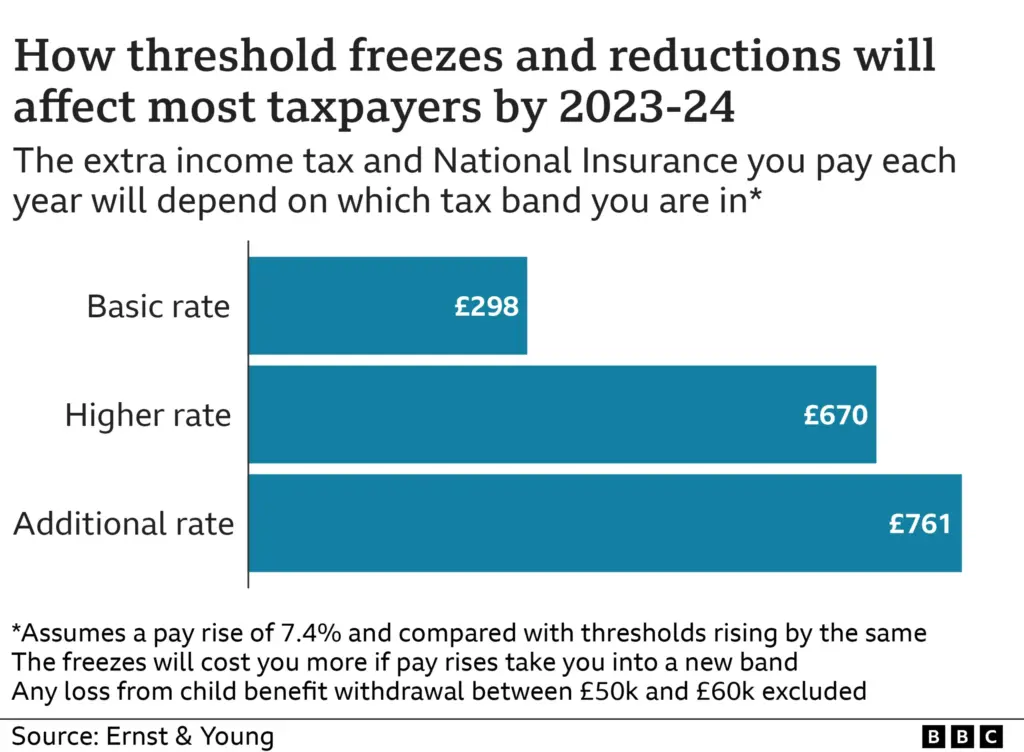
The impact of frozen tax thresholds is set to significantly affect taxpayers in the UK, particularly in light of recent wage increases. As salaries rise, many workers are finding themselves caught in a tax trap; while they earn more, the persistent freeze on tax thresholds means a larger chunk of this increased income disappears to taxes. This situation creates a ripple effect on take-home pay, drastically altering the net income of average earners. With the government’s decision to maintain these frozen income tax thresholds up until 2031, workers earning even modest salaries may face unexpected increases in their tax liabilities. Understanding how to calculate tax effects in this context is crucial for navigating the changing financial landscape, especially with the ongoing UK tax changes challenging household budgets across the nation.
The ramifications of maintaining stagnated tax thresholds extend beyond mere numbers; they encapsulate a broader financial concern for many citizens. When income tax brackets are frozen, the stealth tax effect means that even modest pay increases can push individuals into higher tax brackets, impacting their overall compensation. As wages continue to grow, the lack of adjustments in personal allowances and thresholds dramatically constrains take-home pay. Analyzing the implications of these fiscal policies underscores the importance of grasping the nuances of current taxation systems and their influence on everyday life. Ultimately, the conversation around frozen tax thresholds and their consequences is essential for anyone aiming to make informed financial decisions amid evolving economic conditions.
The Impact of Frozen Tax Thresholds
Frozen tax thresholds are set to significantly affect the take-home pay of millions of earners in the UK. These thresholds determine how much tax individuals incur as they earn more, and with the government deciding to keep these thresholds unchanged until 2031, the implications are substantial. For instance, as salaries rise, individuals may find themselves paying more tax without any increase in disposable income. The freeze essentially means that more people will be pushed into higher tax bands, ultimately increasing their tax obligations even when their salary growth is outpaced by inflation.
Currently, millions of employees are facing a situation where their increased earnings are merely compensating for rising prices. Economists often refer to this phenomenon as a ‘stealth tax.’ It allows the government to collect additional revenue without raising tax rates, leading to a scenario where taxpayers are paying more despite the lack of real growth in their disposable income. Specifically, many who are currently earning just above the tax-free personal allowance will soon find themselves entering the basic and higher tax brackets sooner than they would have with adjusted thresholds.
Frequently Asked Questions
What is the impact of frozen tax thresholds on take-home pay?
Frozen tax thresholds result in individuals paying a higher portion of their income in taxes as their earnings rise, effectively reducing their take-home pay. This is because as wages increase, more income may fall into higher tax bands without the thresholds adjusting for inflation, leading to a stealth tax effect.
How do frozen tax thresholds affect income tax thresholds in the UK?
In the UK, frozen tax thresholds mean that the income tax thresholds, such as the personal allowance and basic rate band, remain static until 2031. This can cause individuals to move into higher tax brackets as their wages increase, resulting in a higher tax burden.
How can I calculate the tax effects of frozen tax thresholds on my salary?
To calculate the tax effects of frozen tax thresholds, use a tax calculator that factors in your current salary and projected wage growth. It will show how much extra tax you could pay due to the absence of adjustments to the tax thresholds over time.
What are the consequences of UK tax changes on frozen tax thresholds?
UK tax changes to frozen tax thresholds mean that more taxpayers will fall into higher tax brackets, increasing their overall tax liability. For instance, by 2030-31, millions more individuals will pay the basic and higher rates of income tax, leading to significant increases in the tax revenue collected by the government.
Why are frozen tax thresholds considered a stealth tax?
Frozen tax thresholds are viewed as a stealth tax because they increase the tax burden without a formal rate increase. As wages rise, more people pay tax at higher rates, resulting in greater government revenue without explicit tax hikes.
What impact do frozen tax thresholds have on average UK workers?
Average UK workers are significantly impacted by frozen tax thresholds, as their rising salaries may push them into higher tax brackets. This can lead to an estimated increase of around £465 in tax payments for those earning an average salary of £39,000 by 2030-31.
What was the initial reason for freezing tax thresholds in the UK?
The initial freezing of tax thresholds was implemented to address budget constraints and generate additional revenue without raising nominal tax rates. It has been a strategy used by successive governments to enhance fiscal resources while minimizing public discontent.
How does the government justify the impact of frozen tax thresholds?
The government justifies the impact of frozen tax thresholds as a necessary measure to fund essential public services like healthcare and education. By keeping thresholds unchanged, they can increase tax revenue without altering tax rates, which can be politically sensitive.
| Key Point | Details |
|---|---|
| Tax Thresholds Explained | The income levels at which individuals start paying different rates of income tax and National Insurance contributions. |
| Personal Allowance | Earnings up to £12,570 are tax-free. |
| Basic Rate Tax | 20% applies on earnings between £12,571 and £50,270. |
| Higher Rate Tax | 40% on earnings between £50,271 and £125,140. |
| Additional Rate Tax | 45% on earnings above £125,140. |
| Effect of Frozen Thresholds | Frozen tax thresholds until 2031 will lead to higher tax bills as wages increase. |
| Impact on Average Earners | An average salary of £39,000 will lead to an additional £465 in tax by 2030-31. |
| Stealth Tax | Freezing thresholds is often viewed as a stealth tax, increasing tax income without rate hikes. |
| Estimated Impact on Taxpayers | By 2030-31, over 5 million more people will be paying income tax due to thresholds being frozen. |
Summary
The impact of tax thresholds freeze is significant, as it effectively raises the tax burden on individuals despite no direct increase in tax rates. With rising wages, many taxpayers find themselves paying more due to stagnant thresholds that have been maintained since 2022. This situation creates a burdensome scenario where average earners, especially those nearing the basic and higher-rate thresholds, will experience considerable increases in their taxable income without any corresponding adjustments to their tax allowances.

