Listen to this article
A devastating explosion during Friday prayers at a mosque in Homs, Syria, has left at least eight people dead and injured 18 more, highlighting the ongoing crisis of violence in the region. The Imam Ali ibn Abi Talib Mosque bore the brunt of the attack, with stark images revealing blackened walls and blood-stained carpets, as reported by Syria’s state-run news agency, Sana. According to a security source, an explosive device was detonated within the mosque, and the notorious jihadist group Saraya Ansar al-Sunnah has already claimed responsibility for this tragic incident. This terrifying ‘Homs mosque attack’ emphasizes the severe challenges facing the nation’s efforts to maintain stability following years of turmoil. The Syrian Foreign Ministry called the explosion a “terrorist act” aimed at undermining the security of the nation, reflecting the broader scope of Syria violence news that frequently emerges from the area.
In a shocking incident reflecting the heightened risks in the region, a tragic bombing event occurred at a mosque in the city of Homs, Syria, revealing the stark reality of ongoing sectarian strife. The community has recently witnessed a surge in violence, as extremist groups like Saraya Ansar al-Sunnah initiate their latest assaults via coordinated strikes, such as the attack on Imam Ali ibn Abi Talib Mosque during a peak worship time. This incident adds to the unsettling trend of severe clashes and rising fear among minority groups within the nation. Many are left questioning the motives behind such brutal actions that not only claim lives but also aim to destabilize the fragile peace that hangs over Syria. As investigations continue, the implications of this violent episode resonate beyond the immediate destruction, touching upon the deeper societal rifts exacerbated by years of conflict.
Tragic Consequences of the Syria Mosque Explosion
The recent explosion at the Imam Ali ibn Abi Talib Mosque in Homs has resulted in a devastating loss of life and injuries to many others, highlighting the ongoing violence in Syria. Reports indicate that at least eight individuals have been killed, while 18 others are nursing serious injuries following this harrowing incident during Friday prayers. Images sourced from state-run media portray scenes of chaos, with scorched walls and blood-stained carpets framing the aftermath of this tragic event. Such attacks not only claim lives but also instill fear within communities already ravaged by war.
Witnesses described the moment of the explosion as horrifying, with many congregants caught off guard while partaking in their spiritual duties. The attack targeted a space meant for peace and devotion, transforming it into a scene of despair. As investigations unfold, local authorities are under pressure to bring those responsible to justice, even as the community grapples with the psychological aftermath. The implications of such violence extend beyond mere fatalities; they perpetuate the cycle of fear and distrust among various sects within a nation still reeling from years of conflict.
Saraya Ansar al-Sunnah: The Claim of Responsibility
In the wake of the explosion at the Imam Ali ibn Abi Talib Mosque, Saraya Ansar al-Sunnah has claimed responsibility for this heinous act, asserting responsibility over the incident with a jihadist narrative that targets specific groups within Syria. Saraya Ansar al-Sunnah, known for its extremist views and alignment with Sunni ideologies, has been linked to previous attacks, including a notorious church bombing in Damascus. Their recent activity raises significant alarms about potential sectarian violence spreading, as the group operates under the pretense of correcting perceived injustices towards Sunni populations in a country dominated by Alawite governance.
The group’s alarming resurgence highlights the precarious balance of power within Syria and underscores the threat it poses to communal harmony. Observers suggest that the group’s tactics and messaging echo those of the Islamic State, leading to widespread speculation regarding their actual affiliations and whether they may be acting as a front for larger jihadist movements. This connection deepens concerns over the recruitment of marginalized Sunni youths into militant cells, potentially perpetuating cycles of extremism and retaliation.
The Ongoing Impact of Sectarian Violence in Syria
The explosion in Homs occurs against a backdrop of escalating sectarian violence in Syria, which has been exacerbated by the ongoing civil war. With President Bashar al-Assad’s regime primarily representing Alawite interests, the Sunni population has often found themselves marginalized and targeted. This mosque attack exemplifies the fragility of peace within a landscape where communities are constantly on edge due to sectarian distrust. Following the ousting of Assad a year prior, the dynamics of power shifted, yet the underlying sectarian tensions have remained volatile.
Many Alawites are now living under siege, fearing reprisals for their association with the former regime, amidst a landscape fundamentally altered by years of conflict. The repercussions of such violence deeply affect daily life in Syria, causing community fragmentation and a return to cycles of retaliatory violence. As regional powers jostle for influence and control, the prospects for healing and reconciliation remain bleak, with incidents like the recent mosque explosion serving as stark reminders of the country’s turbulent journey toward peace.
International Reactions to the Homs Mosque Attack
International reactions to the explosion at the Imam Ali ibn Abi Talib Mosque have been swift, with condemning statements emerging from various global entities and governments. The Syrian Foreign Ministry denounced the attack as a ‘terrorist crime,’ emphasizing its implications on the fabric of the nation. As the world watches these events unfold, concern mounts over the potential for heightened sectarian strife that could destabilize not only Syria but also its neighboring regions. Such violence undermines efforts for diplomatic resolutions in a deeply fragmented society.
The international community has long been divided on its response to the Syrian conflict, grappling with how best to assist a nation suffering from civil war. The recent mosque attack serves as a grim reminder of the ongoing crisis, prompting calls for increased humanitarian assistance and a renewed focus on peace initiatives. Diplomats are under pressure to seek solutions that will address the root causes of sectarian tension and promote a reconciliatory approach, yet the actions of extremist groups continue to pose significant challenges to meaningful dialogue.
The Role of Local Militias in Syria’s Violence
Local militias, such as Saraya Ansar al-Sunnah, play a significant role in the ongoing violence in Syria, often acting independently of national forces. Their emergence highlights the fragmented nature of the conflict, where various groups assert their influence over specific territories. These militias capitalize on local grievances, further polarizing societies along sectarian lines. The mosque explosion in Homs illustrates how these non-state actors can assert their power through acts of violence, creating a culture of fear among targeted communities.
The proliferation of local militias also complicates peace efforts, as many groups operate beyond the control of central authorities. This scenario raises critical questions about accountability and the potential for effective governance in a post-war Syria. As militias like Saraya Ansar al-Sunnah reinforce their agendas through violence, the possibility for genuine reconciliation dwindles, complicating the path toward a stable future for the nation.
Images of Despair: The Aftermath of the Mosque Explosion
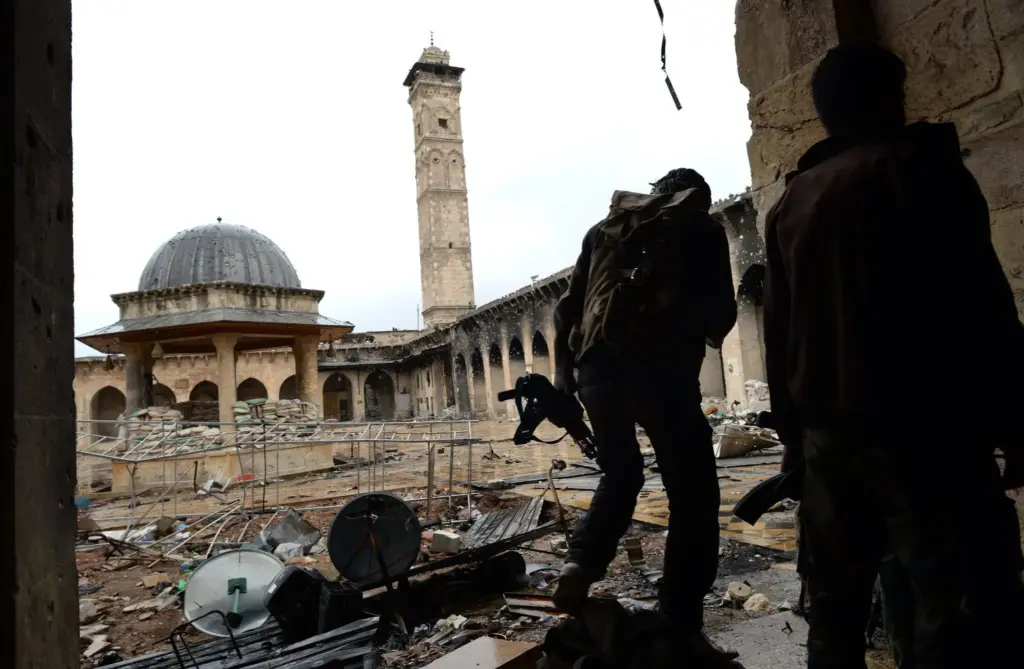
Images published following the explosion at the Imam Ali ibn Abi Talib Mosque in Homs depict a scene of utter devastation, showcasing the realities faced by those caught in the crossfire of Syria’s ongoing conflicts. Shattered glass, burnt debris, and bloodied carpets paint a grim picture of the violence that erupted during what should have been a peaceful moment of prayer. Such visual documentation serves not just to narrate the tragedy of the day but also to highlight the urgent need for international intervention to address the cyclical violence affecting so many innocent lives.
Reports from the scene convey stories of immense grief, illustrating how the community struggles to cope with the aftermath of the bombing. Survivors recount feeling a sense of disbelief as violence intrudes upon sacred spaces—a reminder that no area is exempt from the reach of terrorism in Syria. As photographs circulate globally, they evoke sympathy and outrage, igniting discussions about the humanitarian implications of such attacks and the wider consequences for the ongoing conflict.
The Political Landscape Following the Homs Attack
The political landscape in Syria is inextricably linked to the sectarian violence that continues to erupt, as evidenced by the recent explosion in Homs. The attack has not only drawn attention to the perils faced by minority populations but has also rekindled discussions about the need for political reform. As various factions, such as Saraya Ansar al-Sunnah, leverage violence to achieve their ends, the question of how to rebuild trust among differing sects becomes increasingly pressing. The ability of the Syrian government to navigate this complex environment will be crucial for long-term stability.
Moreover, the dynamics of power among competing groups complicate the overall resolution to the conflict. Political leaders often find themselves caught between appeasing violent factions and maintaining order among their civilian populations. The Homs mosque explosion may serve as a wake-up call for policymakers to seek more comprehensive approaches to governance and peacebuilding, emphasizing the importance of inclusivity and accountability in a nation desperate for cohesion.
The Displacement Crisis in Syria Amidst Rising Violence
Amidst the backdrop of violence, including the recent mosque explosion in Homs, Syria’s displacement crisis continues to escalate. Many families are forced to flee their homes to escape sectarian violence, with significant portions of the population residing in makeshift camps with inadequate resources. The explosion exacerbates the existing humanitarian crisis, as it displaces individuals seeking refuge in places they thought were safe. As communities fracture under the pressure of violence, the plight of the displaced becomes a critical issue demanding immediate action.
The international response to Syria’s displacement crisis has been uneven, with many aid organizations struggling to secure sufficient funding to address the needs of those affected by violence. The mosque attack underlines the urgency with which organizations must respond, as displaced individuals often lack access to healthcare, education, and essential services. Long-term solutions must be prioritized to ensure that displaced Syrians can rebuild their lives and communities, but this requires a commitment from both national leadership and international stakeholders to foster an environment of peace.
Religious Institutions Under Siege: The Impact of Attacks on Places of Worship
The attack on the Imam Ali ibn Abi Talib Mosque in Homs demonstrates the increasing peril that religious institutions face amid Syria’s ongoing conflict. These sacred spaces, intended as havens for worshippers, have become targets for extremist groups seeking to assert their ideological dominance. The violence not only causes physical damage but also strikes at the heart of communal identities, further polarizing sects already wary of each other. As places of worship become battlegrounds, the foundational tenets of faith and coexistence are jeopardized.
The implications of targeting religious institutions extend far beyond the immediate loss of lives and property; they erode the very fabric of society that depends on mutual respect and understanding among differing beliefs. The trauma inflicted upon communities that witness such violence can have lasting effects, breeding resentment and animosity. As a result, the explosion at the mosque stands as a sobering reminder of the dire consequences of sectarian warfare, urging a collective re-evaluation of how society can promote tolerance and safeguard its cherished places of worship.
Frequently Asked Questions
What happened during the Syria mosque explosion in Homs?
The Syria mosque explosion occurred during Friday prayers at the Imam Ali ibn Abi Talib Mosque in Homs, resulting in at least eight fatalities and injuring 18 people. The blast, attributed to an explosive device planted inside the mosque, created extensive damage and drew widespread condemnation.
Who claimed responsibility for the Homs mosque attack?
The jihadist group Saraya Ansar al-Sunnah has claimed responsibility for the Homs mosque attack, stating that they coordinated the explosive assault with another unnamed faction.
What are the implications of the Syria mosque explosion on sectarian violence?
The Syria mosque explosion exacerbates existing sectarian violence in the region, particularly against Alawites, after a year of political turmoil and instability following the ousting of Bashar al-Assad. Such attacks serve to heighten tensions among various ethnic and religious groups within Syria.
How has the Syrian government responded to the mosque attack?
Syria’s Foreign Ministry condemned the mosque attack as a “terrorist crime,” labeling it a cowardly act aimed at undermining the nation’s security and stability. The government continues to search for those responsible for the explosion.
What is known about Saraya Ansar al-Sunnah in relation to the Syria violence news?
Saraya Ansar al-Sunnah is a Sunni extremist group that has gained notoriety for its involvement in violent attacks, including the recent Homs mosque explosion. Analysts suggest that its activities may indicate a broader agenda tied to the Islamic State group.
Where did the explosion occur in Homs and what was its immediate impact?
The explosion occurred at the Imam Ali ibn Abi Talib Mosque located in the Wadi al-Dhahab neighborhood of Homs. The immediate impact included multiple casualties, severe structural damage to the mosque, and a heightened security presence in the aftermath.
What were the repercussions for the Alawite community following the Homs mosque explosion?
Following the Homs mosque explosion, the Alawite community is likely to face increased fears of reprisals and ongoing instability, particularly after a year marked by sectarian violence and targeted attacks.
What does this incident suggest about the current state of terrorism in Syria?
The Syria mosque explosion reflects the persistent threat of terrorism in the region, indicating an ongoing struggle with extremist groups like Saraya Ansar al-Sunnah that aim to exploit sectarian divisions amid the country’s political chaos.
Are there any recent trends in terrorist attacks in Syria similar to the Homs mosque explosion?
Yes, there has been an uptick in terrorist attacks in Syria, including targeted bombings and sectarian-driven violence, reminiscent of strategies utilized by groups like Saraya Ansar al-Sunnah and the Islamic State, highlighting ongoing instability.
What is the significance of the Imam Ali ibn Abi Talib Mosque in Homs?
The Imam Ali ibn Abi Talib Mosque in Homs serves as a key religious site for the Alawite community. Its targeting in the recent explosion underscores the sectarian divides within Syria and the potential for increased violence against Alawites amidst a volatile political landscape.
| Key Point | Details |
|---|---|
| Explosion Impact | At least 8 killed, 18 injured during Friday prayers at Imam Ali ibn Abi Talib Mosque. |
| Location | The explosion occurred in the Wadi al-Dhahab neighborhood of Homs. |
| Claim of Responsibility | The jihadist group Saraya Ansar al-Sunnah claimed responsibility for the attack. |
| Nature of the Attack | An explosive device was reportedly detonated inside the mosque. |
| Official Response | Syria’s Foreign Ministry condemned the explosion as a terrorist crime. |
| Group Background | Saraya Ansar al-Sunnah is suspected to have connections to the Islamic State, with a history of sectarian violence. |
| Sectarian Tensions | The incident highlights ongoing sectarian violence in Syria following the ousting of Bashar al-Assad. |
Summary
The recent Syria mosque explosion, which occurred during Friday prayers, has resulted in the tragic loss of life and injury to many. This attack draws attention to the ongoing sectarian tensions in Syria, particularly in the aftermath of the Syrian conflict. As investigations continue and security dynamics evolve, the implications of this attack resonate deeply within the context of Syria’s turbulent history. The grief and chaos following this explosion serve as a somber reminder of the vulnerabilities faced by communities amid the ongoing conflict.