
Listen to this article
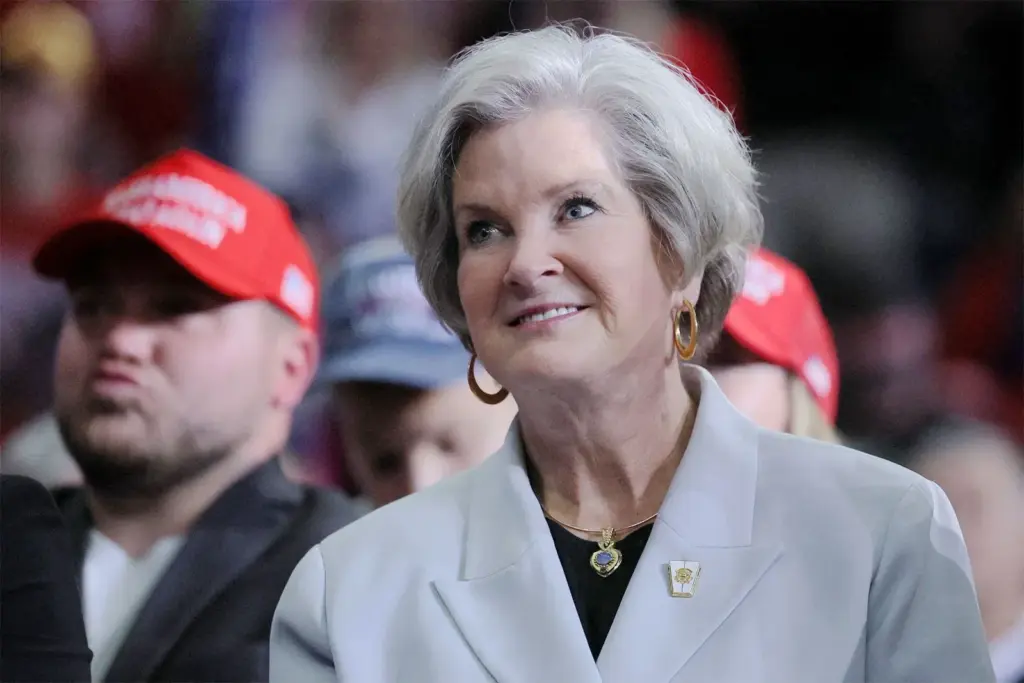
Susie Wiles has emerged as a formidable figure in the political landscape, notably serving as the White House Chief of Staff—the first woman to ever do so. Recently, she took a firm stance against a Vanity Fair article that sought to undermine the Trump administration’s achievements, arguing that it misrepresented the narrative of her leadership. In her critique, Wiles described Donald Trump as having an “alcoholic’s personality,” while also casting Vice President JD Vance as a long-time “conspiracy theorist.” She lamented that the article lacked the essential context needed to understand the complexities of the administration, leading to a biased portrayal. Wiles’ defense underscores her critical role not only in Trump’s political strategies but also as a voice of reason amidst rampant political commentary surrounding the former president’s tenure in office.
In the realm of modern politics, Susie Wiles stands out as an influential strategist and the first female White House Chief of Staff. Recently, she has engaged in a public rebuttal against a critical Vanity Fair feature that painted the Trump administration in a negative light. Her comments suggest an alignment between personal experience and political insight, particularly concerning the portrayal of figures like Donald Trump and JD Vance, the Vice President. Wiles emphasized the importance of context in political narratives, asserting that oversimplified critiques often fail to capture the intricacies of governance. This situation illuminates the broader conversation about the challenges and responsibilities of political leaders when navigating media representation and public perception.
Susie Wiles Challenges Vanity Fair’s Narrative
In her role as the White House Chief of Staff, Susie Wiles recently took a stand against a Vanity Fair article that presents a critical view of the Trump administration. Wiles contended that the article lacks crucial context, which ultimately skews the portrayal of events and individuals within the administration. She feels that the narrative constructed by the publication was designed to undermine her credibility and the successes of Trump’s presidency. Wiles believes the framing of the article as a “hit piece” serves to distract from the significant achievements made during the administration, particularly in the lead-up to the 2024 presidential campaign.
By emphasizing misrepresentation, Wiles aims to reclaim the narrative surrounding the Trump administration’s policies and actions. The article’s claim that Donald Trump possesses an “alcoholic’s personality,” in her view, simplifies a complex individual into an irresponsible caricature. For Wiles, this reductive portrayal diminishes the nuanced understanding of Trump’s leadership style, particularly in juxtaposition with his commitment to advancing conservative policies and political commentary that resonate with the Republican base.
Understanding Trump’s Leadership Through Susie Wiles’ Perspective
Susie Wiles brings a unique understanding of Donald Trump’s leadership style, shaped not just by her professional roles but also by her personal experiences. Having grown up with an alcoholic father, Wiles offers insights into the psychological traits sometimes seen in high-functioning alcoholics, like Trump. She argues that such experiences have equipped her with the tools necessary to effectively navigate the complexities of working alongside the former President, especially when discussing sensitive topics like political revenge and strategic maneuvering.
In her candid discussions, Wiles highlights that while Trump does not actively seek retribution, he’s fully aware of when to capitalize on opportunities to assert his influence. This acknowledgment of Trump’s complex personality traits not only humanizes him but also frames his actions in a light where political context is essential for understanding motives. For Wiles, analyzing Trump’s character is crucial to grasping the overarching narrative of his presidency, particularly in the face of opposition from figures like JD Vance, whose political shift she deftly critiques.
JD Vance’s Political Shift and Its Implications
JD Vance’s realignment with the Trump administration has prompted much discussion around political loyalty and opportunism. Susie Wiles is among those who have commented on Vance’s transition from a self-proclaimed ‘conspiracy theorist’ to a significant supporter of Trump’s policies. In her view, this shift represents more than just political alignment; it speaks volumes about the broader trends in Republican politics and where the Party is heading as it prepares for the next electoral cycle.
Wiles suggests that Vance’s move was not purely ideological but rather a strategic decision to align himself with the powerful forces within the GOP. Her assessment points towards the complicated dynamics of political commentary surrounding such changes, as well as the implications for other potential candidates making similar decisions. This kind of alignment could reshape the landscape of Republican politics, as newer figures, like Vance, seek to establish their place within a party that continues to embrace Trump’s controversial legacy.
Critique of Elon Musk’s Influence on Policy
Susie Wiles has not held back in expressing her views on Elon Musk, citing his unconventional behaviors and lifestyle choices as troubling in the context of political influence. By referring to Musk as an “avowed Ketamine user,” she underscores her concerns about the tech mogul’s fitness to engage in serious political discourse, especially regarding his proposals that could potentially affect government funding, including cuts to USAID. She argues that the potential ramifications of Musk’s influence could lead to significant disruptions in vital governmental processes.
Wiles’ contention lies in the belief that while visionaries like Musk can drive rapid innovation, their lack of political pragmatism may yield results without regard for essential frameworks that ensure governmental accountability. In her perspective, the rapid pace of change that tech figures advocate could jeopardize public service efficacy, requiring a careful balance of innovation and responsible governance—a balance that Wiles aims to promote as she navigates her role within the Trump administration.
The Role of Women in the Trump Administration
As the first woman to serve as White House Chief of Staff, Susie Wiles represents a significant milestone in political history. Her position not only reshapes the narrative around women’s involvement in high-level government roles but also highlights the challenges and criticisms that female officials often face in political arenas dominated by men. Wiles’ achievements reflect both her resilience and the evolving dynamics of gender within the Trump administration, which has been scrutinized for its diversity in leadership.
Wiles’ leadership has oftentimes been viewed through a lens colored by the expectations placed on women in power—a reality that she confronts head-on. By engaging in public discussions about her methods and political philosophy, she sets a precedent for future female leaders within the party. Her experience illustrates that women can thrive in historically male-dominated fields, pushing back against narratives that suggest otherwise, thus fostering a more inclusive environment in political discourse.
Strategic Insights from Susie Wiles on Trump’s Presidency
Are we witnessing a political reawakening under the guidance of leaders like Susie Wiles? Absolutely. Wiles’s strategic insights into the Trump presidency reveal an administration that, while often mired in controversy, has achieved substantial policy advances. Her focus on narrative construction highlights the importance of controlling communication within political boundaries. Wiles’ position allows her to influence narratives about the administration’s policies, helping to clarify complex situations that are often misrepresented in mainstream media.
By examining the dynamics of Trump’s approach to governance and communication, Wiles offers a valuable framework for understanding not just the history of the Trump administration but its potential trajectory. Her insights into fostering public perception are critical, especially as the political landscape evolves for the 2024 campaign. As she guides the administration through its next phase, it’s clear that Wiles intends to leverage her unique perspective for both strategic gains and to safeguard the narratives she believes are essential for Trump’s legacy.
The Impact of Media on Political Perception
The relationship between media narratives and political perception is a battleground, and Susie Wiles recognizes this well. Her rebuke of the Vanity Fair article underscores the significant role that media plays in shaping public perceptions of political figures and administrations. Wiles argues that the framing of news can distort the truth, resulting in a skewed understanding of the actions and intentions of political leaders. This awareness drives her to challenge media portrayals that she perceives as dishonest or deliberately harmful.
Wiles advocates for a more nuanced media landscape—one where stories capture the complexities of political realities rather than reducing them to sensational headlines. She emphasizes that the implications of media narratives go beyond mere reputation; they influence voter engagement, public trust, and ultimately the effectiveness of leadership. By calling out flawed narratives, Wiles aims to foster a more informed public that can engage critically with the political discourse presented to them.
Navigating Controversy in the Trump Administration
With a reputation for steering through contentious situations, Susie Wiles is well-versed in the art of navigating controversy within the Trump administration. Her ability to handle backlash—whether warranted or not—has proven invaluable in maintaining both the administration’s agenda and its public image. Wiles believes that strong leadership requires not only addressing criticism head-on but also understanding the underlying motivations of detractors to forge effective responses.
In a world where social media can amplify controversies at unprecedented rates, Wiles’ approach includes a strategic communication plan aimed at mitigating negative press. Her experiences have illustrated that confronting media narratives directly can often turn the tide in favor of more favorable public discourse. Wiles’ proactive nature indicates a significant evolution in political strategy, particularly for figures within the Trump administration who face relentless scrutiny.
The Future of Political Leadership Post-Trump
As the political landscape shifts, the implications of Susie Wiles’ experiences with Trump’s leadership could signal changes for future political campaigns. Wiles embodies the evolving nature of political leadership, illustrating how personal background and professional experience can merge to create formidable leaders. Her insights into the complexities of operating within the Trump administration may serve as crucial lessons for aspiring politicians navigating similar turbulent waters in their own careers.
Looking ahead, Wiles’ involvement in shaping the narrative surrounding Trump and ensuring the continuity of his political philosophy indicates the remnants of his influence will endure within the Republican Party. The lessons learned from her time in the administration, particularly regarding the importance of narrative control and effective communication, suggest that future leaders might adopt similar strategies to secure their own political legacies.
Frequently Asked Questions
What role does Susie Wiles play in the Trump administration?
Susie Wiles serves as the White House Chief of Staff and is notably the first woman to hold this prestigious position in the Trump administration. Her responsibilities include managing the White House operations and advising President Trump.
How did Susie Wiles respond to the Vanity Fair article about the Trump administration?
Susie Wiles publicly contested the Vanity Fair article, describing it as a ‘disingenuously framed hit piece.’ She claimed the article omitted significant context, creating a negative narrative about both her and the Trump administration.
What are some of Susie Wiles’ key criticisms of JD Vance?
Susie Wiles criticized JD Vance by labeling him a ‘conspiracy theorist’ for many years, pointing to his political shift to align with the Trump administration as politically motivated.
What insights did Susie Wiles share about Donald Trump’s personality?
Wiles described Donald Trump as having an ‘alcoholic’s personality,’ indicating that he exhibits traits similar to high-functioning alcoholics, which she connects to her personal experiences growing up with an alcoholic father.
How has Susie Wiles influenced Trump’s 2024 presidential campaign?
Susie Wiles has played a critical role in shaping and executing Trump’s 2024 presidential campaign strategy, leveraging her extensive experience in campaign management and fundraising.
What criticisms did Susie Wiles make regarding Elon Musk and his proposals?
Susie Wiles criticized Elon Musk for his eccentric lifestyle and initial proposals for government budget cuts, particularly targeting USAID funding, which she argued could disrupt essential government processes.
What are the allegations concerning Trump’s pursuit of retribution, according to Susie Wiles?
Wiles acknowledged that while Trump may not actively seek revenge, his actions against former rivals, especially through criminal cases, might contain elements of retribution, as he seizes opportunities to address past grievances.
How did the White House Press Secretary defend Susie Wiles following the Vanity Fair article?
White House Press Secretary Karoline Leavitt defended Susie Wiles by affirming her instrumental role in achieving significant milestones during Trump’s presidency, countering the negative portrayal in the Vanity Fair article.
| Key Points | Details |
|---|---|
| Susie Wiles’ Position | Chief of Staff at the White House, first woman to hold the position. |
| Response to Vanity Fair Article | Contestations regarding portrayal of the Trump administration and comments attributed to Wiles. |
| Depiction of Donald Trump | Described as having an ‘alcoholic’s personality’ and does not seek revenge but takes action on adversaries. |
| Vice President JD Vance | Called a ‘conspiracy theorist’ and noted his political alignment with Trump. |
| Background Influence | Wiles’ experience with an alcoholic father helps in understanding Trump’s behavior. |
| Remarks on Elon Musk | Criticized Musk’s eccentric lifestyle and initial cost-cutting proposals. |
| Wiles’ Defense | Labeled Vanity Fair article a ‘disingenuously framed hit piece’. |
| Press Secretary Support | Karoline Leavitt defended Wiles, asserting her instrumental role in Trump’s presidency. |
Summary
Susie Wiles has emerged as a pivotal figure in the Trump administration, navigating complex political landscapes and defending against negative portrayals in the media. Her insights and experiences not only shape her perspectives on leadership but also reflect the challenges faced by those within high office. As we approach the next stages of political campaigning, Wiles’ influence and resilience will likely play a crucial role in shaping narratives around the Trump administration.

