
Listen to this article
Starting your own business can be an exciting journey filled with opportunities and challenges. If you’re eager to embrace the entrepreneurial spirit, this comprehensive guide will equip you with essential business startup tips to help you along the way. From crafting a solid business plan to exploring innovative small business ideas, we’ll cover everything you need to know about how to start a business effectively. Learn how to analyze market needs, and develop strategies that will set you apart from the competition. Whether you’re launching a side hustle or a full-fledged venture, this entrepreneurship guide is your roadmap to success.
Launching an enterprise can be both thrilling and overwhelming, especially for first-time entrepreneurs. Navigating the process of establishing a new venture requires careful planning and consideration. In this overview of becoming your own boss, we’ll delve into the critical steps necessary to create a thriving organization. From conceptualizing unique ventures to implementing effective marketing tactics, this discussion will provide insights into the world of self-employment. Join us as we uncover practical advice to guide new business owners through the exhilarating landscape of entrepreneurship.
Identifying Your Business Idea: Where to Begin
Starting your own business begins with the fundamental task of identifying a compelling business idea. This step is critical as it lays the foundation for everything that follows. Engage in self-reflection—what are your passions and interests? Have you ever felt a creative spark while working on a particular hobby? By evaluating what you love to do, you might stumble upon a viable business concept. Consider various avenues such as turning a homemade craft or your culinary skills into a service or product that people would want to buy.
Additionally, think about pressing problems in your community that remain unsolved; many successful businesses are birthed from recognizing a gap in the market. When you identify a common challenge that you can address, you create the potential for a business that adds genuine value. Start brainstorming small business ideas that not only align with your interests but also serve a purpose for others. Conduct market research to determine if there’s a demand for your concept, ensuring you’re set up for success right from the start.
Creating a Business Plan: Your Roadmap to Success
A business plan is an essential document that functions as a roadmap for your startup venture. When starting your own business, taking the time to write a clear and concise business plan can significantly increase your chances of success. This plan should include an executive summary detailing your business objectives, company description with the unique selling proposition, and a thorough market analysis to outline your competitive landscape. By doing so, you prepare yourself for the challenges ahead while compelling potential investors to support your endeavors.
Moreover, don’t overlook the significance of a well-thought-out marketing strategy within your business plan. How will you attract your target customers? Your approach should encompass both online and offline marketing tactics that resonate with your audience. Finally, financial projections are crucial; detailing your expected income streams and expenses will equip you with vital insights into your potential profitability. A strong business plan isn’t just a tool for launching your business; it’s a continuous guide as you navigate through your entrepreneurial journey.
Understanding Legal Structures: Choose Wisely
Navigating the legal landscape is imperative when you’re starting a new business. One of the key decisions is selecting the appropriate legal structure that aligns with your business goals. Each structure—be it a sole proprietorship, partnership, LLC, or corporation—comes with its own set of advantages and liabilities. For instance, a sole proprietorship is straightforward and low-cost to establish but exposes you to personal liability. On the other hand, an LLC offers personal liability protection while providing flexible management options. Choose wisely based on your risk tolerance and business aspirations.
In addition, registering your business and adhering to local regulations must be a top priority. Many entrepreneurs mistakenly underestimate this step, which can lead to fines and setbacks down the line. Compile a checklist of necessary licenses and permits tailored to your business type and location, ensuring that you’re fully compliant before launching. This preparation not only legitimizes your startup but also builds a solid reputation with customers from the outset.
Financing Your Business: Finding the Right Sources
The financial aspect of starting your own business cannot be overstated. Adequate funding is crucial to cover initial expenses and support growth. One of the first sources many entrepreneurs consider is their personal savings. While self-funding grants you maximum control, it also entails significant personal financial risk. Before committing your funds, evaluate other alternatives like small business loans, which can provide substantial capital if you present a solid business plan.
Another avenue is seeking out investors; while this option may dilute your ownership stake, it can provide the necessary funds for rapid scaling. Grants from government and private organizations are also worth investigating, especially if your business meets particular social or innovative criteria. Understanding all these financing methods not only enhances your financial literacy but also empowers you to make informed decisions as you work toward establishing your business.
Building Your Brand: Establishing a Unique Identity
Your brand is more than just a name; it’s the identity that will resonate with your customers. Making a memorable impression starts with choosing a business name that reflects your unique value proposition. Consider names that are easy to remember yet distinctive to stand out in your industry. A well-crafted logo and cohesive visual identity further enhance brand recognition. Your brand is crucial in conveying what your business represents and should be designed with your target demographic in mind.
Establishing an online presence is equally critical. In today’s digital age, having a professional website and active social media profiles can significantly enhance your reach. Invest time and resources into creating a website that effectively showcases what your business offers, incorporates SEO best practices, and provides an intuitive user experience. Engaging consistently on social media platforms also allows you to connect with your audience, build relationships, and foster brand loyalty that can turn casual customers into brand advocates.
Marketing Your Business: Strategies for Success
A robust marketing strategy is essential for attracting and retaining customers. When starting your own business, it’s vital to embrace both digital and traditional marketing methods to reach your target market effectively. Online marketing channels, such as social media and email campaigns, can provide targeted outreach with measurable results. Establishing an SEO strategy helps to boost your visibility in search results, driving organic traffic to your website.
Moreover, don’t underestimate the value of networking. Engaging with local businesses, attending community events, and joining entrepreneurial networks can not only lead to referrals but also enhance your credibility. Complement these strategies with traditional marketing approaches, like flyers or local newspaper ads, depending on your audience’s preferences. A well-rounded marketing approach allows you to adapt and thrive in a competitive business landscape.
Launching and Evaluating Your Business: The Final Steps
The launch of your business is an exhilarating milestone. It’s not just about making your product available; it’s about creating an impactful entry into the market. Consider a soft launch with a select group of customers to gather early feedback and make adjustments before a broader unveiling. An exciting grand opening event can generate significant buzz and draw in curious customers, so plan accordingly to ensure it’s memorable.
Once your business is operational, the work isn’t finished. Ongoing evaluation is crucial for sustained success; regularly assess your business performance against established goals. Collect customer feedback and be prepared to make adjustments in your products or services as the market evolves. Staying attuned to industry trends and competitor strategies allows you to pivot when necessary, ensuring your business remains relevant and continues to grow.
Frequently Asked Questions
What are the essential business startup tips for someone beginning their entrepreneurial journey?
When starting your own business, consider these essential tips: identify your passion, conduct thorough market research, and draft a detailed business plan. This foundational work will help you understand your market and structure your business for success.
How to start a business with only a small budget?
Starting your own business on a small budget can be achieved by minimizing costs. Use personal savings, explore affordable online tools, and consider starting as a sole proprietorship. Additionally, focus on low-cost marketing strategies, like social media.
What should be included in a business plan for a new startup?
A business plan should include an executive summary, company description, market analysis, marketing strategy, and financial projections. These components will guide you in starting your own business efficiently and attract potential investors.
What are the best small business ideas for first-time entrepreneurs?
For first-time entrepreneurs, great small business ideas include online tutoring, e-commerce, digital marketing services, and homemade crafts. Choose an idea that aligns with your skills, passion, and market demand to increase your chances of success.
How does legal structure affect my business startup?
Choosing the right legal structure is crucial when starting your own business. It influences your liability, taxation, and registration requirements. Consider whether a sole proprietorship, LLC, or corporation is best based on your business goals and risk tolerance.
What financing options are available when starting your own business?
When starting your own business, financing options include personal savings, bank loans, angel investors, and grants. Each option has its benefits, so select one that suits your business model and growth trajectory.
How can I effectively market my business after starting?
To effectively market your business after starting, create a comprehensive marketing strategy that combines online and offline techniques. Use SEO, social media, email marketing, and networking to reach your target audience and build brand awareness.
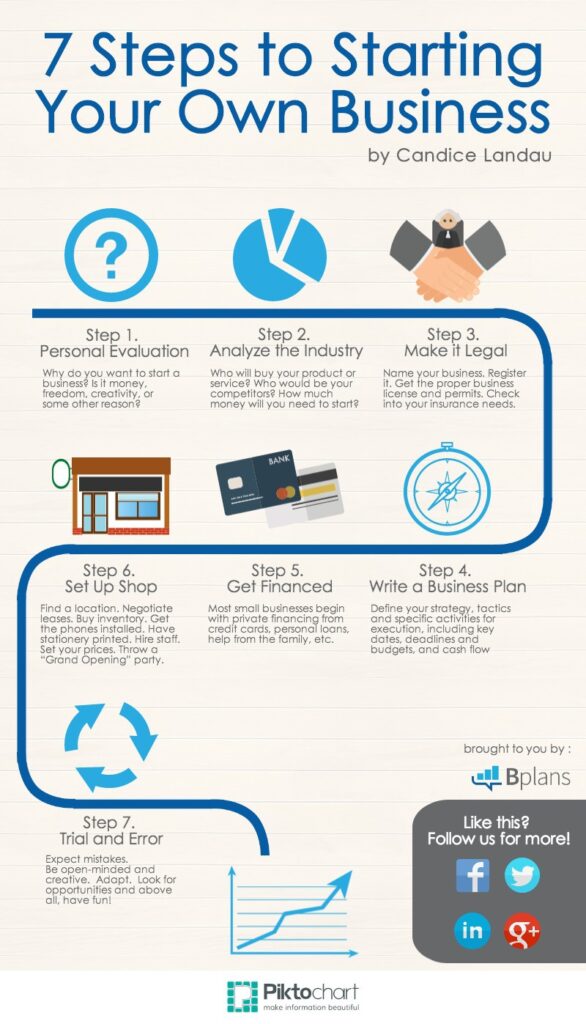
| Step | Key Points |
|---|---|
| 1. Identifying Your Business Idea | Determine your passion, solve a problem, and conduct market research to find a viable business idea. |
| 2. Creating a Business Plan | Develop an executive summary, company description, market analysis, marketing strategy, and financial projections. |
| 3. Legal Structure and Registration | Choose between sole proprietorship, partnership, LLC, or corporation and register your business accordingly. |
| 4. Financing Your Business | Explore funding options such as personal savings, loans, investors, or grants to finance your startup. |
| 5. Building Your Brand | Create a memorable business name, a professional logo, and establish an online presence to develop your brand. |
| 6. Marketing Your Business | Implement strategies including online marketing, networking, and traditional marketing to attract customers. |
| 7. Launch Your Business | Conduct a soft launch for feedback, plan a grand opening, and collect customer feedback for improvements. |
| 8. Evaluate and Adjust | Regularly review business performance, track financials, and remain adaptable to market trends. |
Summary
Starting your own business is an exciting venture that requires careful planning and execution. Have you ever thought about the steps involved? From identifying your business idea to launching and adjusting your strategies, each phase plays a crucial role in your entrepreneurial journey. Remember, every challenge you face is an opportunity for growth, so embrace the adventure of building a business that reflects your passions!

