Listen to this article
Sheep farming in the UK has long been a fundamental part of the country’s rich agricultural heritage, representing a deep-rooted connection between the land and its people. However, the industry has faced significant challenges in recent years, leading to a concerning decline of sheep farming across the nation. Data reveals that UK sheep populations have significantly decreased, with many farmers struggling to maintain profitability amid rising costs and changing consumer preferences. The history of sheep farming is being rewritten as traditional practices are overshadowed by lamb consumption trends that show a dwindling demand for sheep meat. As the landscape of British agriculture shifts, the future of this iconic farming practice hangs in the balance, prompting urgent discussions about the sustainability of sheep farming in the UK.
The practice of raising sheep in the UK has been a cherished aspect of the nation’s agricultural landscape, crucial for both economic stability and cultural identity. Yet, the unique set of hurdles—ranging from escalating operational costs to evolving consumer tastes—has led many to contemplate the sustainability of this vital sector. Historical insights into sheep husbandry reveal a rich tapestry of farming that is facing unprecedented changes, marked by a decline in the number of sheep and shifting lamb consumption trends. The intricate relationship between agriculture and societal demands raises questions about the adaptability of sheep farming in light of contemporary challenges in agriculture. As this sector seeks to navigate its place in the modern world, the conversation around sheep farming continues to evolve.
The Current State of Sheep Farming in the UK
Sheep farming in the UK has undergone significant transformations in recent years, reflecting both economic pressures and changes in consumer preferences. The UK currently boasts about 14.7 million breeding ewes, which is notably the lowest figure recorded in recent history. As Phil Stocker from the National Sheep Association indicates, this decline is part of a broader trend where the country’s national flock is projected to decrease to approximately 30.4 million sheep by 2025. Such figures underscore the gravity of the challenges facing sheep farmers today, particularly in maintaining profitability and sustainable practices amidst fierce global competition.
Economic hardships, combined with pressures from changing consumer trends and government policy shifts, have created a precarious environment for sheep farming. The rise of imported lamb from countries like New Zealand and Australia, following recent trade agreements, has further diminished the market for British lamb. Farmers are also grappling with rising operational costs, making it difficult to sustain the industry. As a result, many traditional sheep farming families are being pushed to reconsider their practices and explore alternative agricultural ventures, casting a shadow over the future of sheep farming in the UK.
Challenges Confronting Sheep Farmers Today
The challenges in agriculture are particularly acute for sheep farmers, who face rising costs for essentials like fuel and fodder amidst a backdrop of declining income from subsidies. For many farmers, particularly those belonging to older generations, the financial viability of continuing sheep farming is becoming increasingly uncertain. The average age of farmers in the UK is now around 60, raising concerns about the future sustainability of the industry as younger generations seek other opportunities.
Moreover, changes in governmental support have shifted the focus from volume-based payments to schemes prioritizing environmental sustainability and biodiversity, which may deter some farmers from maintaining their sheep flocks. The Sustainable Farming Incentive, while well-intentioned, has led to a greater emphasis on alternative grazing options that can replace traditional sheep farming. This situation is further exacerbated by rising global demand for lamb, which contrasts sharply with the domestic market that sees a reduced appetite for sheep products.
Moreover, an emerging discourse about animal welfare and climate implications has become a central aspect of the sheep farming narrative. As organizations like PETA call for reduced meat consumption to combat ethical concerns and climate change, sheep farmers are left to navigate a landscape fraught with controversy and critique.
The Geographic and Cultural Importance of Sheep Farming
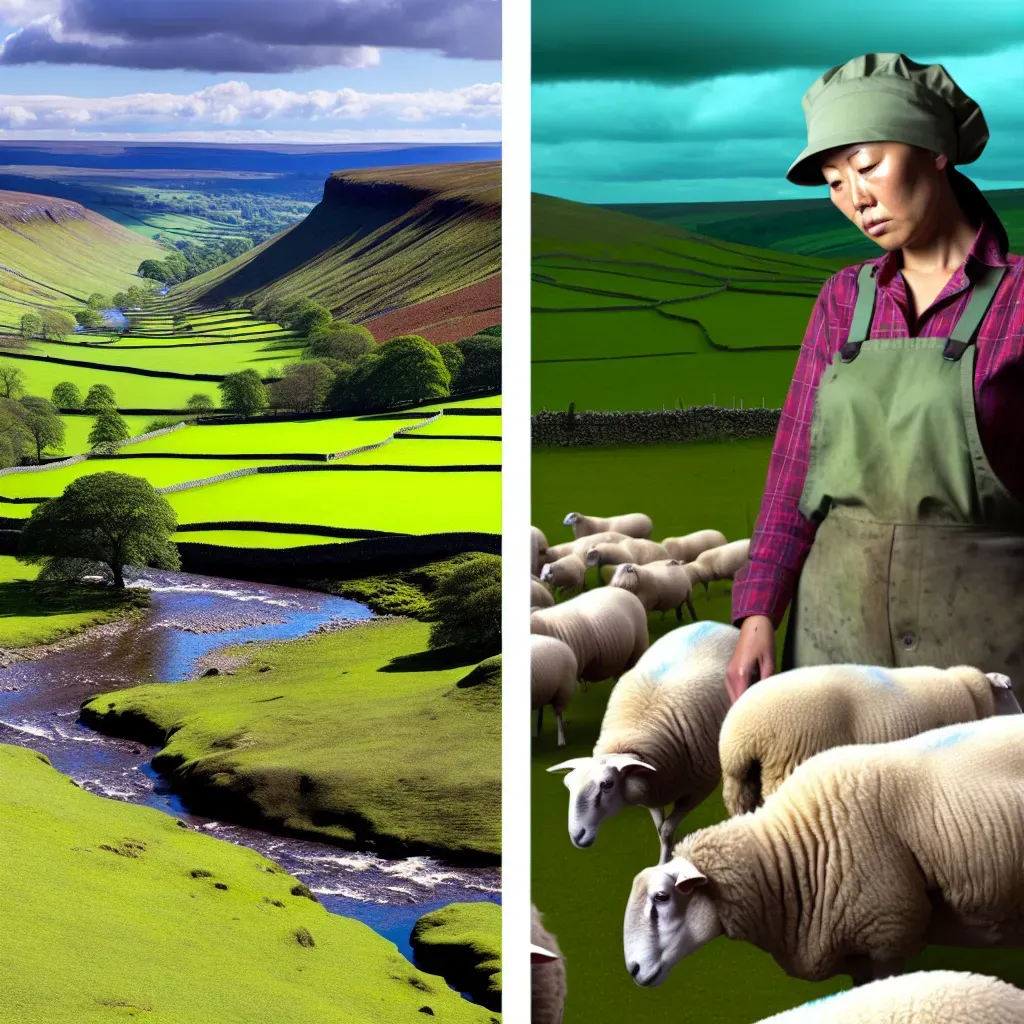
Sheep farming in the UK is more than just an agricultural endeavor; it represents a cultural heritage deeply embedded in the country’s history and landscape. The picturesque views of the Yorkshire Dales, characterized by sprawling pastures and drystone walls, have been shaped by centuries of sheep grazing. The phrase ‘half the wealth of England rides on the back of the sheep’ speaks to the profound role sheep have played in the national economy, culture, and identity over time.
However, as sheep populations continue to decline and the profitability of farming diminishes, there is a growing concern about the preservation of these iconic rural landscapes. Farmers and historians alike emphasize the need to preserve this heritage while also exploring more sustainable practices, such as rewilding efforts that aim to balance agricultural needs with ecological recovery. What lies ahead for these cherished uplands depends significantly on how farmers, policymakers, and conservationists collaborate to find common ground in addressing both agricultural viability and environmental goals.
Lamb Consumption Trends and Their Impact on Sheep Farming
The trends in lamb consumption highlight a shifting culinary landscape in the UK. Historically a staple of British diets, lamb is experiencing a decline in popularity; average consumption per person has dropped dramatically from 128 grams per week in 1980 to just 23 grams per week projected for 2024. This reduction is particularly concerning for sheep farmers, as it corresponds directly to lower demand for their products and, consequently, decreased flock sizes.
Interestingly, however, the demographic changes within the UK are presenting both challenges and opportunities. The growing Muslim population, which represents a significant consumer base that favors lamb, could enhance market demand at specific times of the year, particularly during celebrations like Eid. This dichotomy underscores the complex relationship between cultural dietary preferences and traditional sheep farming practices, suggesting that a focus on niche markets might be a key strategy for revitalizing the industry.
Historical Context of Sheep Farming in the UK
Understanding the historical context of sheep farming in the UK is essential to grasp the current challenges facing the industry. Sheep were first domesticated around 10,500 years ago, with their arrival in Britain occurring about 4,000 years ago. Over thousands of years, sheep farming evolved into a cornerstone of British agriculture, providing both economic resources and cultural significance. By the medieval period, the reliance on sheep had become so entrenched that it was considered vital to the nation’s prosperity.
However, as social and economic landscapes shift, the historical significance of sheep farming is at risk of being overshadowed by contemporary pressures. The legacy of sheep farming, intertwined with the identity of rural regions, faces an uncertain future as modern agricultural practices evolve. Farmers must now balance the weight of this history with the pressing need for adaptability in an increasingly competitive and environmentally-conscious market.
Future Prospects for Sheep Farming in the UK
Looking ahead, the future of sheep farming in the UK seems fraught with uncertainty but still holds potential for innovation. Key industry voices, like Phil Stocker from the National Sheep Association, suggest that while challenges are substantial, southern lamb markets may grow, especially with a focus on halal consumption. This rise could provide some consolation for farmers grappling with declining flocks, indicating that there may still be a viable future for sustainable sheep farming practices.
Nevertheless, the transition toward a more resilient sheep farming industry will necessitate the concerted efforts of farmers, consumers, and policymakers alike. Strategies that prioritize economic viability while embracing sustainability and biodiversity will be crucial in preserving the cultural and historical essence of sheep farming in the UK. As we move deeper into the 21st century, imaginative solutions must emerge to ensure sheep remain an integral part of the British landscape.
Frequently Asked Questions
What has contributed to the decline of sheep farming in the UK?
The decline of sheep farming in the UK can be attributed to several factors, including rising operational costs, reduced incomes from subsidies, and increasing competition from imported lamb due to recent trade agreements. With the average British farmer now being around 60 years old, the aging farmer demographic also exacerbates the situation as many struggle to adapt to market changes.
How have UK sheep populations changed over the past few decades?
UK sheep populations have seen a significant decline, with breeding ewe numbers falling to just 14.7 million—the lowest in recent memory. Projections suggest that the national flock could drop to 30.4 million sheep by 2025, reflecting the historical lows of the mid-20th century.
What challenges does sheep farming currently face in the UK?
Sheep farming in the UK faces numerous challenges, including high operational costs for feed and fuel, decreasing subsidies, and a shrinking market for lamb due to shifting consumption patterns. Farmers also encounter competition from cheaper imported meats and a growing emphasis on agricultural shifts towards biodiversity over livestock production.
What historical significance does sheep farming hold in the UK?
Sheep farming has a rich history in the UK, with evidence of domestication dating back to around 10,500 years ago. By medieval times, sheep were pivotal to the economy, famously referred to in the saying ‘half the wealth of England rides on the back of the sheep,’ reflecting their importance in agriculture and society.
How have lamb consumption trends impacted sheep farming in the UK?
Lamb consumption trends in the UK indicate a substantial decline over the last 50 years, with average household consumption dropping from 128g per person per week in 1980 to just 23g projected by 2024. This reduced demand affects sheep farming viability as fewer consumers choose lamb as a regular meal.
What role do trade agreements play in the future of sheep farming in the UK?
Recent trade agreements, particularly post-Brexit deals with countries like New Zealand and Australia, have introduced competition for UK sheep farmers by allowing tariff-free imports. This could lead to increased market pressures on domestic producers, compounding the challenges faced by sheep farming in the UK.
Is there a future for sheep farming in the UK amidst these declines?
While challenges abound, some experts believe there is still a viable future for sheep farming in the UK, especially with the increasing demand for lamb from the growing Muslim population. However, farmers will need to adapt and find strategies to remain competitive in an evolving agricultural landscape.
What alternative farming practices are being explored in sheep farming areas in the UK?
Some farmers in sheep farming areas are exploring alternative practices such as transitioning to cattle for grazing, as exemplified by farms like Hill Top Farm. These shifts aim to enhance farm profitability while contributing to biodiversity and addressing changing agricultural policies.
| Key Points | Details |
|---|---|
| Decline of Sheep Farming | Neil Heseltine’s farm decreased from over 800 lambing sheep to just 45 in 20 years. |
| Average Age of Farmers | The average British farmer is now 60 years old, with rising operational costs affecting profitability. |
| Impact of Trade Agreements | Post-Brexit trade deals with New Zealand and Australia pose competition for UK sheep farmers. |
| Consumer Preferences | Lamb consumption in the UK has decreased significantly; from 128g per person per week in 1980 to a projected 23g by 2024. |
| Challenges Ahead | The reduction in the flock size is projected to create higher prices for remaining lamb, exacerbating financial strain for farmers. |
| Future of Sheep Farming | Despite the challenges, there is potential for market growth, particularly within specific demographic groups favoring lamb. |
| Biodiversity Considerations | Some uplands may be more beneficial for biodiversity if not used for intensive sheep farming. |
Summary
Sheep farming in the UK has faced significant challenges in recent years due to economic pressures, changing consumer preferences, and new trade dynamics. As highlighted by recent trends, the number of breeding ewes has fallen to the lowest in decades, prompting farmers like Neil Heseltine to pivot away from traditional methods. This shift is echoed across the industry as farmers grapple with balancing heritage practices and modern agricultural demands. The future of sheep farming in the UK may hold opportunities for niche markets, such as those providing halal lamb, pointing to a complex but potentially resilient agricultural landscape despite current difficulties.