
Listen to this article
Recently, the focus has turned to the Russian claims of a Ukrainian drone strike that allegedly targeted government sites, marking a significant escalation in the ongoing conflict. This accusation comes at a time when the European Union firmly rejects Russian claims, interpreting them as a tactical distraction aimed at derailing crucial peace negotiations in Ukraine. Kaja Kallas, the EU’s top diplomat, made a statement indicating that these unfounded allegations serve to distract from Russia’s persistent attacks on Ukrainian infrastructure and civilians. Amidst rising tensions, the Ukrainian military response has been characterized by a strong denial of the accusations, labeling them as laughable. As both sides navigate this complex narrative, the implications for the ongoing peace process remain uncertain.
In the wake of escalating tensions, the international spotlight has shifted towards the purported Ukrainian drone assault on Russian governmental facilities, an issue that has sparked vigorous debates among global leaders. The European Union’s swift dismissal of Moscow’s allegations highlights the delicate balance of power as discussions around peace talks intensify. Kaja Kallas’ response embodies the collective skepticism towards claims that are viewed more as an attempt to sidetrack vital diplomatic efforts than as factual occurrences. Meanwhile, the Ukrainian military’s firm denial and calls for rational discourse reflect a broader desire to maintain focus on ceasefire negotiations rather than engage in retaliatory rhetoric. As both nations maneuver through these sensitive issues, potential pathways towards stability are increasingly challenged.
EU Diplomat Rejects Russian Claims of Ukraine Drone Strike
In a strong rebuff to Moscow’s allegations, the EU’s top diplomat characterized Russia’s claims of a Ukrainian drone strike as nothing more than a ‘deliberate distraction.’ Kaja Kallas, who heads the European Union’s foreign affairs, stated that these claims aim to derail ongoing peace negotiations, which have gained momentum in recent weeks. Despite the Kremlin’s rhetoric, Kallas emphasized the importance of dismissing unfounded accusations from an aggressor responsible for indiscriminately targeting Ukrainian civilians and infrastructure.
This rejection of Russian claims aligns with the collective stance of the EU, which seeks to uphold the integrity of peace talks that could potentially lead to a cessation of hostilities. Furthermore, Kallas’s remarks underscore the need for skeptism regarding reports which have not been substantiated by credible evidence. The narrative that Russia is crafting around the so-called Ukraine drone attack serves only to distract from its own military aggressions.
Kaja Kallas and the Call for Credible Evidence
Kaja Kallas’s statement not only refutes the baseless assertions of a Ukrainian attack on Russian territory but also calls for a commitment to transparency and factual representation in this conflict. The absence of credible evidence backing the allegations of a Ukrainian drone strike enhances the urgency for both parties to engage in constructive dialogue rather than trading accusations. The situation highlights the complexities surrounding media narratives influenced by governmental assertions, particularly in a conflict where both sides have a vested interest in shaping public perceptions.
In light of Kallas’s comments, the responsibility falls on the Kremlin to provide verifiable documentation of its claims. By failing to substantiate their allegations, Russian officials risk further isolating themselves on the international stage. As peace negotiations unfold, it will be crucial for all parties involved to prioritize factual discourse over inflammatory rhetoric to facilitate a resolution that respects the sovereignty and security of Ukraine.
Ongoing Tensions Amid Peace Negotiations in Ukraine
The backdrop of these tensions is framed by crucial peace negotiations between Ukraine and Russia, complicated by the allegations of a drone strike. Ukrainian President Volodymyr Zelensky has vocally denied claims regarding any drone activity targeting Putin’s residence, suggesting that such assertions could undermine delicate discussion processes. As Zelensky noted, the peace agreement may be near fruition, pending resolute decisions from the Russian side. This precarious situation demands both patience and a commitment to diplomatic engagement from all parties.
With U.S. and EU allies closely involved in facilitating these dialogues, the latest accusations could threaten the momentum built during past negotiations. As discussions about security guarantees and de-confliction measures continue, maintaining a focus on factual evidence, rather than accusations, will be imperative for both sides. The potential for significant advancements in peacemaking hinges on mutual respect and the avoidance of provocative claims that escalate violence.
The Impact of Russian Claims on Ukrainian Morale
The impact of Russia’s allegations extends beyond diplomatic circles, affecting the morale of the Ukrainian populace. In cities like Kyiv, where residents are hopeful for peace, unfounded claims can stoke fears of further escalation and military reprisals. Furthermore, statements from governmental channels can shape public sentiment and influence how citizens perceive both their safety and sovereignty.
Ukrainian citizens have shown remarkable resilience in the face of ongoing conflict, yet the psychological implications of Russian rhetoric cannot be overlooked. The assertions regarding a drone strike might act as a pretext for increased military action against Ukraine, which leaves communities vulnerable. It is this context of uncertainty that underscores the importance of credible information from both governments and media sources.
Zelensky’s Denial and Ukraine’s Military Response
In the events following the Russian allegations, President Zelensky’s denial of targeting Vladimir Putin’s private residence highlights Ukraine’s strategic communication efforts. By categorically refuting the claims, Zelensky aims to strengthen his government’s position in the eyes of both domestic and international audiences. The Ukrainian military has also stood firm, indicating that any perceived threats may provoke an appropriate and measured response to protect their sovereignty.
The broader implications of Zelensky’s denial tie back to the ongoing war dynamics, as every claim and counterclaim can have tangible effects on troop movements and operational strategies. If Russia were to act upon their own accusations, Ukraine’s military readiness could escalate, potentially leading to additional civilian suffering. This ongoing cycle emphasizes the necessity for grounded dialogue, avoiding misleading narratives that could incite further violence.
EU’s Position on Russian Provocations
The European Union has maintained a consistent stance regarding Russian provocations, viewing them as distractions from the priority of achieving a peaceful resolution to the conflict. Amidst allegations of a Ukrainian drone strike, EU leaders remain committed to pursuing peace through diplomacy while condemning any acts of aggression from Russia. The EU’s support for Ukraine signals a united front against attempts at destabilization that can arise from disinformation campaigns.
As the EU addresses the disinformation flowing from Russian claims, it emphasizes the importance of unity in European policy. Solidarity among member states can be critical in countering the narratives promoted by Moscow. This consistent messaging aims not just at protecting Ukraine but also safeguarding European stability against external threats that could potentially cascade into wider conflicts.
The Role of International Allies in Ukrainian Peace Efforts
International allies play a pivotal role in supporting Ukraine’s quest for peace amidst the tumultuous backdrop of conflict. Recent meetings involving key advisors from the U.S., the U.K., France, and Germany reflect ongoing efforts to forge a comprehensive strategy that enhances security guarantees for Ukraine. These nations recognize the importance of collaborative diplomacy in addressing the complex issues surrounding peace negotiations.
As global powers engage with Ukraine’s leadership, their commitment to a stable resolution is crucial for regional and global stability. The anticipated commitments from allies during hastened talks will bolster Ukraine’s negotiations with Russia, especially when concerning contentious topics surrounding territorial integrity and security being a priority in future discussions. Ensuring Ukraine’s voice is amplified within these conversations is essential in laying the groundwork for lasting peace.
Military Operations amid Diplomatic Negotiations
Despite ongoing diplomatic efforts, military operations persist, highlighting the paradox of war amidst peace talks. Recent drone strikes and active military engagements illustrate the challenges faced by negotiators, as ground realities often contradict high-level discussions. Ukraine’s military continues to respond to Russian aggressions while critical discussions aimed at ensuring a ceasefire remain ongoing.
The pressures of military operations often infiltrate diplomatic initiatives, complicating the already fraught landscape of negotiations. Each episode of violence not only impacts public perception but also disrupts the trust required for meaningful dialogue. As Ukraine navigates through military responses while seeking peace, the focus must consistently remain on de-escalation and constructive engagement.
Public Sentiment and the Desire for Stability in Ukraine
Public sentiment in Ukraine is marked by a deeply rooted desire for stability and an end to hostilities that have disrupted lives for years. Citizens express apprehensions over the continuing conflict while hoping for a return to normalcy. As shown in various polls, the overarching wish is for a peaceful resolution, with many Ukrainians laboring under the strain of uncertainty and fear of Russian aggression.
The emotional and psychological toll of ongoing conflict necessitates a renewed commitment to peace from both domestic leaders and international allies. Ensuring that the voices of ordinary Ukrainians are heard amid the cacophony of politics and accusations is vital. As the new year approaches, the collective hope for peace symbolizes the enduring spirit of the Ukrainian people, emphasizing the need for a resolution that honors their aspirations.
Frequently Asked Questions
What are Russian claims about the Ukraine drone strike on government sites?
Russian claims suggest that Ukraine conducted a drone strike targeting Russian government sites, including a residence owned by President Vladimir Putin. These allegations are characterized by Moscow as a deliberate provocation and an affront to Russia. However, the EU’s diplomatic leadership, including Kaja Kallas, has dismissed these claims as unfounded and a distraction from ongoing peace negotiations in Ukraine.
How has the EU responded to Russian claims of a Ukraine drone attack?
The EU has rejected Russian claims of a Ukraine drone strike as baseless and a strategic distraction. EU officials, including Foreign Minister Kaja Kallas, have emphasized that these allegations aim to disrupt peace negotiations and undermine Ukraine’s ongoing efforts to address the conflict. The EU stands firm against accepting claims from an aggressor country.
What did Kaja Kallas state regarding the alleged Ukraine drone strike?
Kaja Kallas, the EU’s top diplomat, stated that the accusations from Russia about a drone strike by Ukraine are a ‘deliberate distraction.’ She argued that no credible evidence supports these claims and criticized Russia for attempting to draw attention away from its own aggressive actions that have targeted Ukraine’s infrastructure and civilians.
Why does Ukraine dismiss Russian accusations of a drone strike?
Ukrainian officials dismiss Russian accusations of a drone strike as ‘laughable’ and without foundation. They argue that these claims aim to disrupt peace momentum and mislead the international community about Ukraine’s military actions. Ukrainian President Volodymyr Zelensky has strongly denied the allegations and linked them to ongoing negotiations for a ceasefire.
What evidence has Russia presented to support its claims about the Ukraine drone attack?
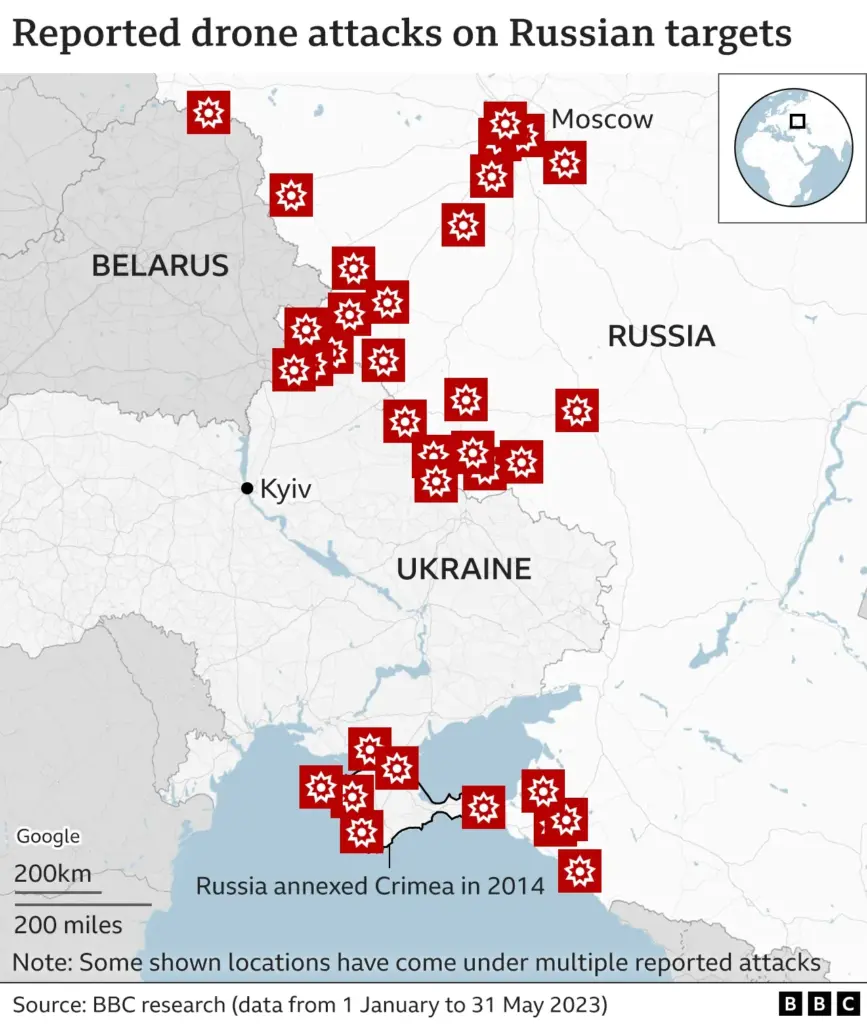
Russia has released what it claims is evidence of the attempted drone strike, including a map showing the supposed launch points from Ukrainian regions and a video of a downed drone. However, the authenticity of the footage is unverified, and investigations indicated that local residents did not witness the event, casting doubt on Russia’s narrative.
How have Western nations reacted to Russia’s claims about the Ukraine drone attack?
Western nations, particularly those in the EU and the United States, have largely rejected Russia’s claims regarding the alleged Ukraine drone attack. Discussions among allied countries, including U.S. and European officials, emphasize the importance of continuing peace negotiations and maintaining support for Ukraine amidst these provocations.
What implications could Russian claims about a Ukraine drone strike have on peace negotiations?
Russian claims about an alleged Ukraine drone strike may jeopardize ongoing peace negotiations, as they could be used as a pretext for escalating military actions against Ukraine. Ukrainian leaders have indicated that such accusations could lead to further attacks on Ukrainian territory, complicating efforts to establish a ceasefire and achieve a lasting peace agreement.
What is the significance of the alleged drone strike on Putin’s residence in relation to the Ukraine conflict?
The alleged drone strike on Putin’s residence is significant as it reflects escalating tensions and serves as a focal point for Russian propaganda. Moscow’s narrative of the incident aims to rally domestic support and justify military actions while simultaneously deflecting attention from Russia’s own attacks on Ukrainian civilians, all of which could affect the delicate balance of peace negotiations.
| Key Points | Details |
|---|---|
| EU’s Top Diplomat’s Statement | Kaja Kallas describes Russian claims as a deliberate distraction from peace negotiations. |
| Russian Accusation | Moscow accuses Ukraine of attempting a drone strike on Putin’s residence. |
| Russian Media’s Response | Russian politicians use heated rhetoric about the alleged attack, labeling it ‘unforgivable’. |
| Evidence Presented by Russia | Russia presents a map and video claiming to show proof of the attack. |
| Ukraine’s Response | Ukraine dismisses the claims as laughable and unfounded. |
| Concern over Peace Talks | Claims may be an attempt to disrupt ongoing U.S.-led peace negotiations. |
| Recent Attacks in Ukraine | Ongoing drone attacks in Ukraine, including civilian casualties in Odesa. |
| Hope for 2026 | Ukrainians express a desire for peace and a return to normalcy. |
Summary
Russian claims regarding Ukraine’s drone strike aim to undermine ongoing peace efforts and divert attention from Russia’s actions against Ukraine’s infrastructure and civilians. The EU’s top diplomat has firmly rejected these assertions as unfounded, underlining the importance of continuing negotiations for peace. Overall, the situation remains tense as both nations brace for potential escalations, while civilians bear the brunt of the conflict.

