
Listen to this article
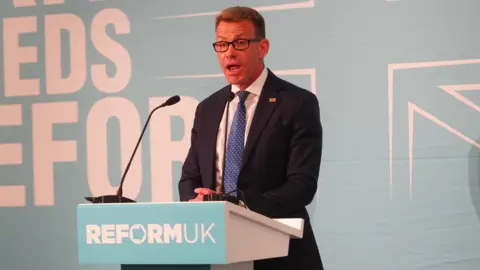
The conflict surrounding the Reform UK racism controversy has taken center stage in British politics, particularly following shocking allegations against Ian Cooper, the council leader for Staffordshire County Council. These accusations stem from his inflammatory remarks about Sadiq Khan, the London mayor, and a black British lawyer, which have sparked outrage among political commentators and the public alike. Cooper’s posts, laden with racist undertones, echo a troubling pattern of behavior among members of the party, raising serious questions about their values and the internal culture within Reform UK. This political controversy in the UK highlights the dangerous intersection between far-right ideologies and mainstream political discourse, as exemplified by Cooper’s outrageous comments on social media. The urgent internal investigation into these claims reflects the growing concern surrounding the party’s leadership and their accountability in addressing racism within their ranks.
In recent weeks, allegations of racism linked to Ian Cooper, a leading figure in Reform UK, have emerged, drawing considerable attention from both the media and the public. The comments made by the Staffordshire County Council leader, which include derogatory statements about Sadiq Khan and others, signify a wider issue of racial insensitivity that seems to proliferate in certain political circles. Such remarks not only damage the reputations of those involved but also tarnish the party as a whole, raising critical discussions about the acceptance of extreme views within British politics. The ongoing dialogue surrounding this issue shines a light on the disturbing phenomenon of far-right rhetoric gaining traction in political arenas, particularly within parties like Reform UK. As investigations unfold, the implications for other affiliated politicians, and the party’s public image, remain uncertain.
The Racism Controversy Surrounding Reform UK
Recently, a Reform UK council leader, Ian Cooper, has ignited a significant racism controversy by making derogatory remarks about prominent figures, including Sadiq Khan. His comments, labeling Khan as a “narcissistic Pakistani”, reflect deep-seated prejudices that have drawn widespread condemnation. This incident highlights a troubling trend in UK politics, where some individuals in leadership positions make inflammatory remarks that undermine social cohesion and promote divisions within society. The implications of such behavior extend beyond individual actions, calling into question the values held by political parties like Reform UK.
Cooper’s comments, alongside claims that migrants are seeking to “colonise the UK”, reveal a troubling narrative that aligns with far-right rhetoric often propagated in media outlets. As the nation grapples with issues of racism and integration, these remarks invite scrutiny not only of Cooper’s character but also of the accountability mechanisms within political parties. Nigel Farage’s announcement of an urgent internal investigation raises further questions about how the party manages incidents of racism and whether it genuinely disavows such extremist views.
Frequently Asked Questions
What triggered the Reform UK racism controversy involving Ian Cooper?
The Reform UK racism controversy was triggered by allegations against Ian Cooper, a council leader, who reportedly made racist comments about Sadiq Khan, referring to him as a ‘narcissistic Pakistani’. Additionally, Cooper’s offensive remarks toward a black British lawyer and other derogatory comments about migrants and diversity have sparked significant backlash and prompted an internal investigation by Reform UK.
How has Ian Cooper’s comments been received within the Reform UK party?
Ian Cooper’s racist remarks have led to an internal investigation by Reform UK after concerns about his social media posts were raised. His comments reflect a broader issue of racism within the party, which has seen other members, such as Laura Anne Jones and Tom Pickup, suspended for similar offensive remarks, indicating the party’s struggle with extremist views among its elected officials.
What did Ian Cooper say about Justice Secretary David Lammy?
In his social media posts, Ian Cooper expressed that ‘no foreign national or first-generation migrant should be allowed to sit in parliament,’ which comments directed at Justice Secretary David Lammy have further fueled the Reform UK racism controversy. These comments highlight his controversial views on migration and representation in government.
How do Cooper’s remarks align with the actions of other Reform UK politicians?
Cooper’s remarks align with the actions of other Reform UK politicians who have also faced scrutiny for racist and offensive comments. For example, Laura Anne Jones was suspended for using a racial slur, and Tom Pickup faced suspension for derogatory language against Keir Starmer. This trend suggests a concerning pattern of extreme and divisive rhetoric within the party.
What are the implications of the Reform UK racism controversy for Nigel Farage and the party’s leadership?
The Reform UK racism controversy, especially concerning Ian Cooper’s comments, raises serious questions about the vetting process for candidates within the party. With Nigel Farage leading Reform UK, the scandal could undermine the party’s credibility and public image, highlighting a failure to adequately address or distance itself from racist ideologies among its members.
How have activist groups responded to Ian Cooper’s comments?
Activist groups like Hope Not Hate have responded critically to Ian Cooper’s comments, describing them as deeply bigoted and indicative of far-right media influence. They emphasize the need for accountability within political parties to ensure that individuals with such extremist views are not allowed to hold leadership positions or represent communities.
What specific examples of Ian Cooper’s racist comments have caused controversy?
Ian Cooper’s racist comments include referring to Sadiq Khan as a ‘narcissistic Pakistani’, stating that a black British lawyer should ‘F’d off back to Nigeria’, and asserting that diversity is a ‘lie’ that negatively impacts Britain. These statements have contributed to the ongoing Reform UK racism controversy and have sparked widespread condemnation from various groups and individuals.
What calls for action have arisen from the Reform UK racism controversy involving Ian Cooper?
In light of the Reform UK racism controversy, there have been calls for deeper political accountability and better vetting processes within the party. Activists and critics demand that the party not only investigate Ian Cooper’s comments but also implement measures to prevent similar incidents in the future, ensuring that candidates with racist views are excluded from political leadership.
| Key Point | Details |
|---|---|
| Racist Remarks by Ian Cooper | Referred to Sadiq Khan as a ‘narcissistic Pakistani’ and made derogatory comments about a black British lawyer. |
| Attacks on Migrants | Claimed that no foreign national or first-generation migrant should sit in parliament and accused migrants of intent to colonize the UK. |
| Internal Investigation | Reform UK is conducting an internal investigation into Cooper’s conduct and the disclosure of his social media activities. |
| Previous Incidents | Two other Reform UK politicians were suspended for making offensive remarks, indicating a pattern of problematic behavior within the party. |
| Cooper’s Defense | Cooper defended a fellow councillor’s controversial statements, suggesting that the criticism was politically motivated. |
| Expert Opinions | Experts highlight the extremism of views expressed by Cooper and link it to a broader pattern within Reform UK. |
Summary
The Reform UK racism controversy centers around Ian Cooper’s inflammatory remarks and allegations of racism, which have led to public outcry and an internal investigation. His comments reflect a troubling trend of extreme views within the party, raising questions about the vetting processes for leaders and the acceptance of such rhetoric. As this controversy unfolds, it underscores the critical need for accountability and the promotion of inclusivity within political discourse.