
Listen to this article
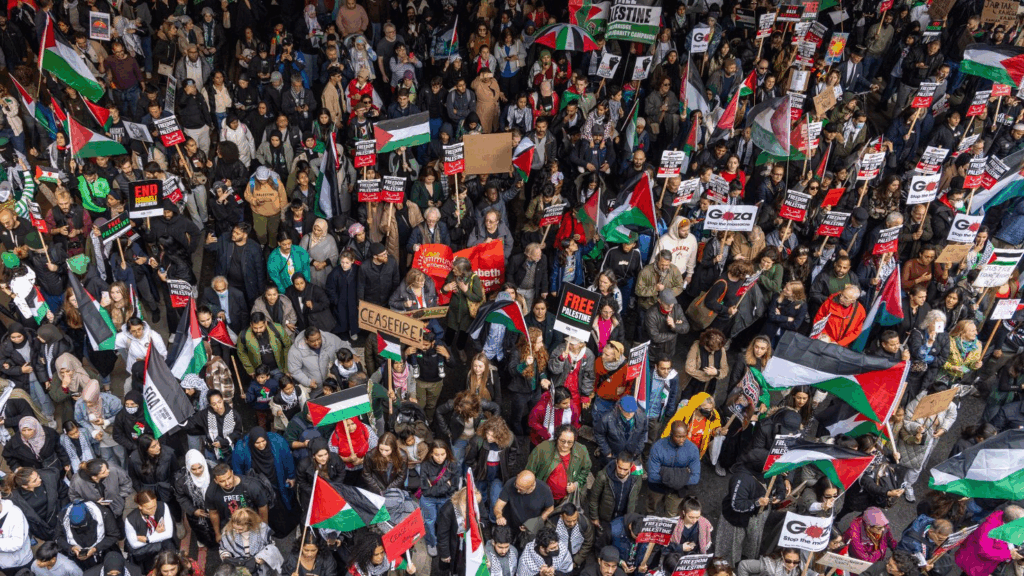
Pro-Palestine protesters made their voices heard at the UEFA Euros 2028 launch event, accusing the organization of having “blood on their hands” for allowing Israel to participate in football. This passionate demonstration, organized by the Game Over Israel campaign, gathered dozens outside Piccadilly Circus, as protesters chanted calls for the Israel football ban and showed unwavering determination to boycott Israel’s presence in sports. As supporters waved signs urging a sports boycott of Israel and shouted phrases like “show Israel the red card,” the atmosphere was charged with emotion, casting a shadow over the UEFA proceedings. Each chant resonated with the urgency of their message: a demand for justice and accountability from UEFA in light of the ongoing conflict. The event highlighted growing concerns surrounding Israel’s involvement in international football, as calls for a Pro-Palestine demonstration continue to echo through the sports community.
The launch of the Euros 2028 has become a focal point for activists calling for change within the world of football. At this high-profile event, demonstrators gathered to voice their opposition to Israel’s participation, accusing UEFA of complicity in actions that they believe amount to violations of human rights. The protest was notably organized under the banner of the Game Over Israel campaign, which advocates for a sports boycott against Israeli teams amid escalating calls for accountability and ethical practices within the sport. With chants and placards condemning the normalizing of relations during times of alleged oppression, it’s clear that the intersection of sports and politics remains a potent battleground. This event not only showcased the passion of those fighting for Palestinian rights but also signified the increasing integration of political activism into the realm of international sports.
Pro-Palestine Protesters Demand Action from UEFA
At the recent launch event for the UEFA Euros 2028, Pro-Palestine protesters made their voices heard, accusing UEFA of having “blood on their hands”. They gathered outside Piccadilly Circus, emphasizing the urgent call for Israel to be banned from all football activities. This protest was a direct reflection of the increasing tensions surrounding Israel’s involvement in international sports and the growing advocacy for a sports boycott of Israel as part of broader efforts to address human rights concerns. The demonstrators, organized by the Game Over Israel campaign, argued that allowing Israel to participate in UEFA competitions contradicts the values of sportsmanship and justice, especially amid ongoing allegations of human rights violations.
The protesters carried signs with slogans like “show Israel the red card” and “kick Israel out of football,” effectively bringing attention to their cause. This demonstration aligns with previous events where similar calls were made, including protests outside Maccabi Tel Aviv’s Europa League match as fans rallied for a boycott of Israel. By positioning themselves outside the Euros launch, the protesters aimed not just to influence UEFA’s decision-making but to raise global awareness about the impact of political conflicts on sports.
The Impact of the Israel Football Ban on Sporting Events
The call for a ban on Israel’s participation in UEFA competitions is not just about sports; it embodies a broader conversation about ethics and responsibility in sport. Many advocates argue that the presence of Israel in international football events legitimizes its actions in the ongoing conflict, thus calling for a complete sports boycott of Israel to symbolize international disapproval. This movement highlights the intersection of sports and politics, illustrating how global sporting entities like UEFA must navigate these challenging waters, particularly in light of incidents such as the chaos surrounding the Euro 2020 final.
As UEFA gears up for the Euros 2028, the implications of an Israel football ban could reverberate throughout the sport, affecting everything from ticket sales to global sponsorship deals. If UEFA takes a stance against Israel, it could set a precedent for how sports organizations address human rights concerns and political controversies. Additionally, with plans for event logistics and locations already underway, there is a palpable tension in the air that challenges UEFA to take decisive action regarding its relationship with the Israel Football Association.
Game Over Israel Campaign: Objectives and Goals
The Game Over Israel campaign has emerged as a pivotal force in advocating for the suspension of Israel from UEFA’s competitive framework. Led by figures like Ashish Prashar, the campaign articulates a vision for a football community that aligns with principles of justice and equality. By rallying support from over 70 sports professionals who signed an open letter to UEFA president Aleksander Ceferin, the campaign underscores a growing movement within and beyond sports to challenge the status quo regarding Israel’s participation.
Their objectives extend beyond mere protest. Activists aim to raise awareness and generate dialogue about the implications of normalizing relationships with institutions associated with perceived human rights violations. The campaign seeks to inspire fans and players alike to reconsider their complicity in the institutionalization of such relationships within the sporting landscape. By advocating for a sports boycott of Israel, they hope to foster a more ethical approach to global sportsmanship.
UEFA’s Response to Pro-Palestine Demonstrations
As Pro-Palestine protests intensify, UEFA finds itself in a challenging position, needing to balance operational commitments with growing public sentiment against Israel’s ongoing involvement in football. The organization’s response to these demonstrators will be crucial in defining its reputation and addressing calls for accountability within the context of human rights and sports ethics. The event at Piccadilly Circus provided a stage for activists to air their grievances, challenging UEFA directly on its policies and relationships.
UEFA has yet to provide an official response to the demands conveyed at the demonstration, which could impact its legitimacy in the eyes of supporters and play a role in influencing future sponsorship arrangements. The organization must navigate these pressures carefully, especially considering the global appeal and responsibility of hosting a major event like the Euros 2028. Taking action could either enhance its standing as a governing body committed to fair play and equity or further entrench it in controversy as critics demand more substantial responses to calls for Israel’s exclusion.
Historical Context of Pro-Palestine Movements in Sports
Pro-Palestine movements have a long-standing history that intersects with various global sports initiatives, particularly in the wake of geopolitical conflicts. The drive for sporting boycotts against Israel is not a new phenomenon; it has historical roots tracing back to the broader Boycott, Divestment, Sanctions (BDS) movement. Such initiatives in sports have often sought to raise awareness of international military actions and to advocate for the rights of Palestinians under occupation.
Events like the recent Pro-Palestine protests at UEFA highlight how sports can serve as a platform for political expression and activism. This historical context is essential for understanding the motivations behind the ongoing calls for change and the collective action of various sportspersons. Just as past athletes have made bold statements regarding social justice and civil rights, today’s sports figures and supporters are using similar strategies to fight against perceived injustices related to Israel.
The Role of Sports in Political Activism
Sports have historically been a powerful medium for political activism, with numerous instances of athletes using their platforms to advocate for social justice. The Pro-Palestine protests at UEFA serve as a notable example of how sports can intersect with urgent political issues. As fans mobilize and athletes raise their voices, the call for a sports boycott of Israel becomes not just a sports issue but a movement about ethics and humanity.
This activism reminds us that the world of sports is not isolated from political realities; rather, it reflects the society in which it exists. By challenging institutions like UEFA to reconsider their affiliations with Israel amid widespread protests, activists aim to reshape narratives and demand accountability from powerful entities in the world of sports. The continued pursuit of justice for the Palestinian people through such activism is a testament to the potential of sports to influence change beyond the pitch.
Consequences of Ignoring Pro-Palestine Protests
If UEFA ignores the mounting protests and calls for action against Israel’s participation in football, it risks facing severe backlash from both supporters and international organizations advocating for human rights. Failing to acknowledge the concerns raised during events like the Euros 2028 launch could result in diminished public trust and participation in the sport, as fans align their emotional and ethical support with the movements they believe in. The ongoing conflict in the Middle East adds an extra layer of complexity, as sporting bodies navigate their positions amid pressures from various factions.
Furthermore, disregarding these protests could lead to increased divisions within the football community. Fans, clubs, and athletes may find themselves at odds, with protests possibly expanding to other international events, thereby complicating UEFA’s governance. Understanding the consequences of ignoring these calls for action is crucial as it has the potential to influence how sports organizations approach similar political concerns in the future.
Future of UEFA and the Pro-Palestine Movement
The future of UEFA in the context of the Pro-Palestine movement is uncertain and fraught with challenges. As the movement grows in momentum, UEFA will have to take a proactive approach to address these concerns, either through engagement with activists or by reevaluating its stance on relationships with countries like Israel involved in geopolitical tensions. The response from UEFA in the wake of these protests will likely determine how it is perceived in the international community and its commitment to principles of fairness in sport.
Increase in activism within sports related to the Pro-Palestine cause seems poised to remain a significant theme in upcoming years. The efforts by various organizations, such as the Game Over Israel campaign, show that advocacy within football is possible and influential. UEFA’s mitigation strategies and the development of policies addressing these concerns may set an essential precedent not only for football but also for the broader sports community, challenging them to reconsider their partnerships in the face of global human rights issues.
Frequently Asked Questions
What is the significance of the Pro-Palestine demonstration at the UEFA Euros 2028 launch?
The Pro-Palestine demonstration at the UEFA Euros 2028 launch was significant as it highlighted calls from protesters for Israel to be banned from football. Organized by the Game Over Israel campaign, this protest aimed to raise awareness of the perceived injustices surrounding Israel’s membership in UEFA amidst ongoing human rights concerns.
How does the Game Over Israel campaign relate to UEFA and Pro-Palestine protests?
The Game Over Israel campaign is directly related to UEFA and Pro-Palestine protests as it advocates for Israel’s expulsion from UEFA due to alleged human rights violations. Protesters, including sports professionals, have urged UEFA to sever ties with the Israel Football Association, claiming that football should not be associated with what they call acts of genocide.
What accusations were made against UEFA during the Pro-Palestine protests?
During the Pro-Palestine protests, demonstrators accused UEFA of having ‘blood on their hands’ due to its relationship with Israel’s football institutions. Protesters demanded accountability and called for action against the Israel Football Association as part of their ongoing campaign for a sports boycott against Israel.
What were the messages displayed by protesters at the UEFA Euros 2028 event?
Protesters at the UEFA Euros 2028 event displayed messages emphasizing their demands, such as ‘show Israel the red card’ and ‘offside for genocide’. These slogans were part of a broader message seeking to challenge UEFA’s affiliation with Israel amidst calls for justice and accountability regarding human rights issues.
What actions have sports professionals taken regarding Israel’s participation in UEFA?
Over 70 sports professionals signed a letter delivered to UEFA president Aleksander Ceferin, urging the organization to cut ties with the Israel Football Association. This collective action reflects significant support within the sports community for a boycott of Israel in response to ongoing conflicts and human rights concerns.
How did protesters respond to UEFA’s announcement of the Euros schedule?
Protesters responded to UEFA’s announcement of the Euros schedule by chanting slogans and raising awareness about their demands. The protests aimed to disrupt the event, underscoring their message that Israel should not participate in football while alleged injustices continue, thus amplifying the call for accountability from UEFA.
What role does the prohibition of Israeli fans play in the Pro-Palestine protests against UEFA?
The prohibition of Israeli fans from attending specific matches, such as the Europa League game involving Maccabi Tel Aviv, bolstered the arguments of Pro-Palestine protesters. It illustrated ongoing tensions and frustrations regarding sports and politics, fueling further demonstrations aimed at urging UEFA to reconsider its relationship with Israel.
How have the Pro-Palestine protests gained international attention in relation to UEFA events?
Pro-Palestine protests have gained international attention through organized demonstrations at high-profile UEFA events, like the Euros 2028 launch. These protests have garnered media coverage, increased public dialogue about sports and human rights, and mobilized significant public support for a sports boycott against Israel.
| Key Points |
|---|
| Pro-Palestine protesters accuse UEFA of complicity in Israel’s actions. |
| Demand for Israel’s suspension from football during Euros launch. |
| Demonstration organized by Game Over Israel campaign at Piccadilly Circus. |
| Protesters chanted slogans and displayed signs against Israel’s membership in UEFA. |
| Ashish Prashar emphasized that Israel does not belong in football due to its actions. |
| A letter to UEFA president garnered support from over 70 sports professionals. |
| Euro 2028 details: England’s matches, ticketing, and final kick-off time announced. |
Summary
Pro-Palestine protesters at UEFA’s recent event highlighted their call for the suspension of Israel from football due to human rights concerns. This demonstration is part of a broader campaign against what protesters describe as Israel’s complicity in crimes against humanity. Through chants and collective statements, these activists aim to bring attention to the ethical obligations of sports organizations like UEFA. The continuation of such protests underscores the growing demand for accountability in international sportsmanship, urging UEFA to reconsider its relationship with the Israel Football Association.