
Listen to this article
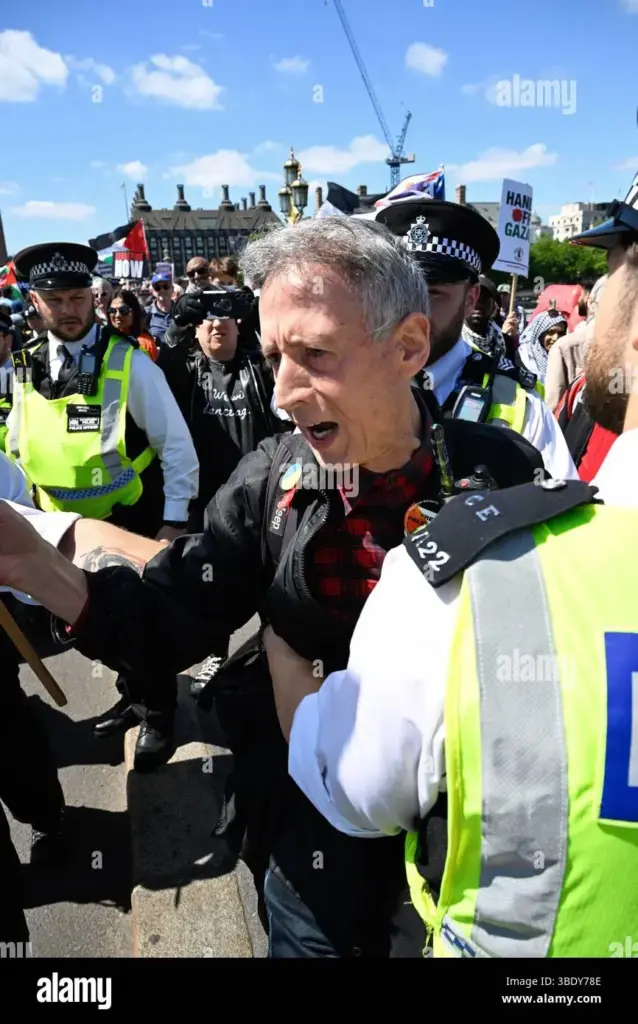
Peter Tatchell’s recent arrest at a pro-Palestine march has sparked intense debates about free speech and activism. The veteran activist was taken into custody for holding a placard that declared “globalise the intifada,” raising concerns about the boundaries of expression in the context of political protests. During the event, Tatchell emphasized that his message was rooted in the fight for Palestinian rights and non-violent resistance against oppression. He views his arrest as a troubling indication of a growing trend to stifle dissent and peaceful demonstrations. This incident not only highlights the complexities surrounding the term “intifada,” but also the ongoing struggle for solidarity within freedom of speech movements.
In a recent incident that has drawn significant media attention, noted activist Peter Tatchell was detained during a demonstration advocating for Palestinian rights. This protest, characterized by its peaceful nature, marked a significant moment for supporters of non-violent resistance against perceived injustices in the Middle East. Tatchell, known for his outspoken views, carried a banner referencing the intifada—a term which translates to uprising and has deep historical significance. His arrest raises critical questions about governmental responses to public expressions of political solidarity. Ultimately, this event underscores the delicate balance between maintaining public order and safeguarding the rights of individuals to voice their opinions in support of global human rights.
Peter Tatchell’s Arrest at a Pro-Palestine March
Peter Tatchell’s recent arrest during a pro-Palestine march in London has raised significant questions about free speech and the rights of protesters. Carrying a placard that read ‘globalise the intifada: Non-violent resistance. End Israel’s occupation of Gaza & West Bank,’ Tatchell was demonstrating peacefully when he was taken into custody by the police. His arrest highlights the tension surrounding public support for Palestinian rights and how expressions of solidarity can be perceived as unlawful under certain regulations.
Known for his long-standing advocacy for LGBTQ+ rights, Tatchell’s actions at this demonstration reveal the intersection of various social justice movements. He argues that his message was rooted in promoting non-violent resistance, similar to the strategies used during the anti-apartheid movement in South Africa. This incident illustrates a growing concern that dissenting voices, particularly those advocating for Palestinian rights, may face suppression amidst a broader crackdown on protest activity.
Frequently Asked Questions
What happened during Peter Tatchell’s arrest at the pro-Palestine march?
Peter Tatchell was arrested while participating in a pro-Palestine march in London, where he displayed a placard stating “globalise the intifada: Non-violent resistance. End Israel’s occupation of Gaza & West Bank.” Police detained him because they considered the term ‘intifada’ to be unlawful, marking an ongoing issue surrounding freedom of speech protests.
Why did Peter Tatchell describe his arrest as an attack on free speech?
Peter Tatchell referred to his arrest as an attack on free speech because it highlighted a worrying trend of restricting peaceful protests. He argued that his message about ‘globalising the intifada’ was directed towards non-violent resistance against Israel’s actions, not promoting violence.
What does ‘intifada’ mean in the context of Palestinian rights?
In the context of Palestinian rights, the term ‘intifada’ refers to an uprising or rebellion against Israel’s occupation of the West Bank and Gaza. It encompasses the concept of non-violent resistance, which advocates for methods like boycotting and diplomacy, rather than violence.
What was the police’s justification for arresting Tatchell at the protest?
The police justified Peter Tatchell’s arrest on suspicion of a public order offense, claiming that he was carrying a sign containing potentially unlawful terms such as ‘globalise the intifada.’ They cited a ‘changed context’ surrounding protests and expressions of support for Palestinian rights.
How does Peter Tatchell relate his advocacy for Palestinian rights to other historical movements?
Peter Tatchell relates his advocacy for Palestinian rights to the anti-apartheid movement in South Africa, suggesting that ‘globalise the intifada’ calls for a worldwide campaign to address and resist oppression similarly. He emphasizes that his approach focuses on non-violent resistance, akin to methods that dismantled apartheid.
Has the Metropolitan police changed their approach to handling protests supporting Palestine?
Yes, the Metropolitan police have indicated a change in their approach to protests supporting Palestine, stating that individuals chanting ‘globalise the intifada’ could face arrest due to heightened security concerns following terrorism incidents. This shift has raised concerns regarding the freedom of expression at public demonstrations.
What has been the impact of Peter Tatchell’s previous activism on public perceptions of antisemitism?
Peter Tatchell has a history of combating antisemitism and standing alongside Jewish communities against extremism. He argues that supporting Palestinian rights should not be equated with antisemitism, and his activism aims to clarify these distinctions in public discourse.
What legal and social implications does Tatchell’s arrest indicate for future protests?
Peter Tatchell’s arrest signals potential legal ramifications for individuals expressing support for Palestinian rights or using terms like ‘intifada’ during protests. It raises concerns over the balance between maintaining public order and protecting the right to peaceful assembly and free speech.
| Key Points |
|---|
| Peter Tatchell arrested for holding a placard at a pro-Palestine march in London. |
| The placard stated: ‘Globalise the intifada: Non-violent resistance. End Israel’s occupation of Gaza & West Bank.’ |
| Tatchell claims the arrest infringes on free speech, stating that police deemed the term ‘intifada’ unlawful. |
| Tatchell describes his arrest as part of a trend to restrict peaceful protests. |
| The ‘intifada’ is defined as a non-violent resistance movement against Israeli occupation, not antisemitic. |
| Police indicated they would arrest protesters chanting ‘globalise the intifada’ following a terror attack in Sydney. |
| Tatchell has a history of supporting Jewish communities against antisemitism, highlighting his commitment to civil rights. |
| He has previously been wrongfully arrested and is awaiting a settlement. |
Summary
Peter Tatchell’s arrest has sparked a heated debate around free speech and protest rights in the UK. As a prominent activist, his actions at the pro-Palestine march have drawn attention to the issues surrounding the use of the word ‘intifada’ and its implications. Tatchell’s stance emphasizes non-violent resistance and solidarity with oppressed groups, reinforcing the notion that advocating for Palestinian rights does not equate to antisemitism. This recent incident underscores the ongoing tensions between law enforcement and activist movements, illustrating the complexities of political expression in contemporary society.