Listen to this article
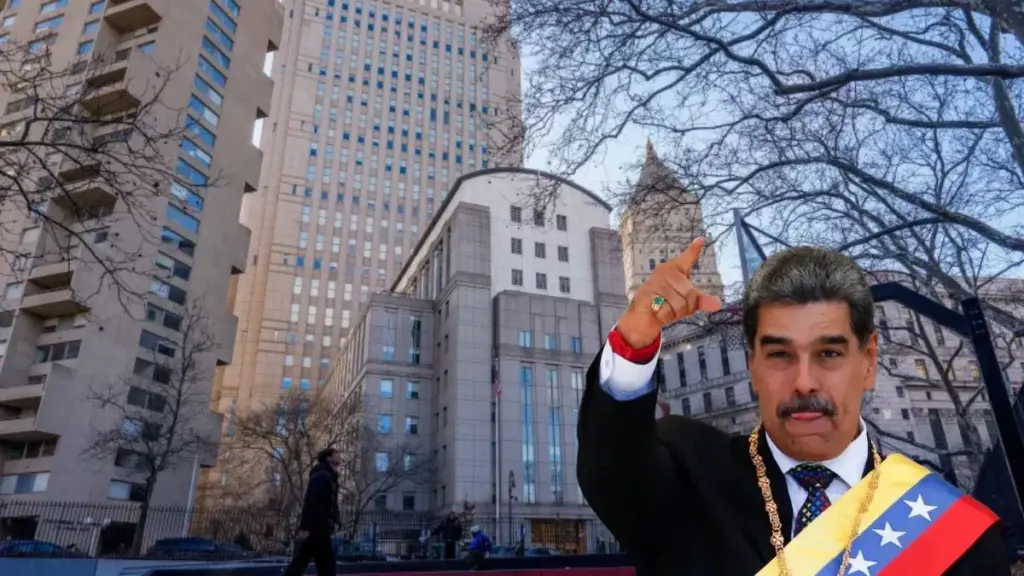
In a highly publicized court appearance, Nicolás Maduro, the controversial Venezuelan president, stepped into a New York City courtroom under dramatic circumstances. Just moments before entering, the sound of clanking leg shackles echoed, heightening the tension in the packed courtroom. Maduro boldly claimed that he had been “kidnapped” since January 3rd, a statement that underscored the gravity of his arrest and the ongoing turmoil in Venezuela. During the proceedings, both Maduro and his wife, Cilia Flores, pleaded not guilty to serious drug charges, asserting their innocence vehemently. The courtroom buzzed with anticipation, as this significant event would undoubtedly shape the headlines of Venezuelan president news and draw attention to the escalating legal challenges facing Maduro.
The recent arraignment of Nicolás Maduro, who stands at the center of a political storm, marks a pivotal moment in U.S.-Venezuela relations. Dubbed an unexpected courtroom drama, Maduro’s first appearance in a NYC courtroom not only captivated the media but also intensified conversations about his administration’s alleged criminal activities. With accusations ranging from narco-terrorism to the possession of illicit weapons, the implications of this case extend far beyond the courtroom walls. Moreover, the sight of Maduro and his wife, Cilia Flores, facing serious charges reflects the broader issues of governance and human rights in Venezuela today. This extraordinary legal situation has attracted global scrutiny and raises questions about the future of Venezuela’s leadership.
Nicolás Maduro’s Court Appearance Provides Dramatic Insights
The recent court appearance of Nicolás Maduro in New York City marked an unprecedented moment in Venezuelan political history. As he entered the courtroom, the distinct sound of clanking leg shackles set a stark contrast against his insistence of being “kidnapped”. Such declarations captured the attention of reporters and citizens alike, signifying the tension surrounding the trial of a figure who has presided over Venezuela amidst tumultuous times. The dramatic nature of his arrival raised questions about the implications surrounding the Venezuelan president news and the growing international scrutiny of his administration.
Judge Alvin Hellerstein’s instructions to address identity verification indicated the formal nature of the proceedings, but Maduro’s emotional response alluded to a deeper narrative of power dynamics and his self-proclaimed status as a martyr. The initial charges against him, which include drug-related accusations, have not only legal consequences but serve as a potent reminder of the ongoing crises facing Venezuela, further compounding the issues of governance and humanitarian challenges.
In the courtroom, Maduro maintained a calm exterior, yet his declaration of innocence contrasted sharply with the serious allegations laid out against him. His insistence on being treated as a head of state, in a setting that depicted him as a criminal, highlights the tensions of legality versus sovereignty in international law. Such a trial, particularly in a New York courtroom that has witnessed celebrity trials, also emphasizes the broader implications of U.S. military and judicial involvement in foreign political affairs, raising questions about sovereignty and international relations.
Importantly, the arraignment of Maduro and his wife, Cilia Flores, alongside their not guilty pleas, adds layers to the ongoing narrative of their administration’s struggles against both domestic dissent and international criticism. The situation unveils a stark contrast to the earlier glamor of their political careers, now overshadowed by accusations that include conspiracy to engage in narco-terrorism, reflecting the depth of the allegations and charges Maduro faces.
The Arrest of Maduro: What Led to His Detention?
The context of Nicolás Maduro and Cilia Flores’ arrest reveals a deeply layered situation marked by geopolitical tensions and internal strife. Their arrest by U.S. forces was a result of allegations of serious crimes that have drawn international attention, including drug charges against Maduro. The operation involved the stealthy U.S. military strikes on key Venezuelan military bases and their compound, an indication of escalating measures taken by the United States against what it terms a narco-terrorist regime. This unforeseen military action has further strained relations between the U.S. and Venezuela, creating an atmosphere of chaos in a nation already grappling with instability.
As Maduro expressed grievances of being a victim of a kidnapping, the reality of his legal challenges looms large. His portrayal of the arrest as an illegitimate seizure of power speaks volumes about his strategy to position himself as a political prisoner. It brings attention to the narrative of sovereignty and the implications these arrests might have on international diplomacy and human rights discussions concerning Venezuela.
Maduro’s arrest sent shockwaves throughout the international community, striking a nerve particularly within Latin America. It is not just a story about a detention of a dictator; it raises important questions regarding the implications for future governance in Venezuela. The 63-year-old former bus driver turned president has been a significant figure in the region’s political landscape, often invoking polarized opinions.
The suddenness of the operation that led to Maduro’s detention indicates a well-coordinated effort by the U.S. to dismantle the leadership of a government accused of engaging in drug trafficking and repression. Analysts see this as a significant turning point not just for the Maduro regime but for the broader context of drug-related crime and governance strategies in Latin America.
Cilia Flores: Support Amidst Controversy
Cilia Flores, Nicolás Maduro’s wife, joins her husband in facing serious accusations, including drug offenses. During the proceedings, she showed visible signs of distress, with injuries noted by her lawyers, raising concerns about her treatment during their apprehension. Her presence alongside Maduro in the courtroom not only reflects the personal stakes involved but also sheds light on the socio-political structure within Venezuela, where political partnerships are often entwined with governance and societal roles.
As a prominent figure in Venezuelan politics, Flores’ arraignment may stir reactions among Maduro’s supporters and detractors alike. The couple’s defense posture emphasizes their claims of innocence, which positions them as victims of U.S. intervention. The couple’s plight garners emotional responses as critics and supporters of the regime reflect upon their historical significance and the ongoing struggles facing the Venezuelan populace.
Beyond mere representation in the courtroom, Flores exudes a quieter strength, embodying the complexities inherent in political marriages within tumultuous regimes. As accusations mount, the narrative surrounding her role in the government evolves, further complicating the public perception of Maduro’s administration. The duo’s ongoing battles against their respective charges continue to paint a broader picture of the implications of such political turbulence for the Venezuelan citizenry.
The public’s reaction towards Flores’ injuries and her subsequent medical treatment requests during the trial might evoke sympathy from certain factions, while others may decry the couple’s governance as directly responsible for current hardships in Venezuela. As the trials progress, it will be compelling to observe the evolving perceptions of both Maduro and Flores, and how these perceptions may shape the future of Venezuelan politics.
The Impact of Maduro’s Arrest on Venezuelan Politics
The arrest of Nicolás Maduro signifies a critical juncture in Venezuelan politics, exacerbating an already volatile situation characterized by economic despair and political division. Analysts argue that this event could ignite further unrest within Venezuela, as the opposition may capitalize on the perceived weakness of Maduro’s regime. His lengthy tenure, marked by controversial policies and international backlash, finds itself on trial not only in the eyes of U.S. courts but also increasingly within the minds of Venezuelans. The ongoing crises, alongside the latest court appearances, serve not only as a legal battle but as a referendum on his autocratic governance style.
With widespread reports of human rights violations under his leadership, this trial and narrative will likely fuel ongoing dissent. Citizens frustrated by ongoing shortages of basic necessities might rally against a regime that they perceive as becoming increasingly isolated and vulnerable, putting the future of Maduro’s presidency at substantial risk.
Additionally, the political ramifications of Maduro’s arrest extend beyond Venezuela’s borders, impacting diplomatic relations and policies in Latin America and beyond. U.S. actions, including the arrest operation, may influence other nations grappling with similar concerns regarding drug trafficking and governance. The implications of this trial could potentially reshape alliances and provoke discussions surrounding international law and sovereignty, particularly among Latin American leaders responding to the U.S.’s assertive strategies.
As Venezuela navigates its next steps in light of these developments, the ramifications of Maduro’s court appearance and the surrounding events could lead to significant changes in both the political climate within Venezuela and its interactions on the global stage. The trajectory of these events remains uncertain, setting the stage for potential upheaval or reform.
Frequently Asked Questions
What are the details of Nicolas Maduro’s court appearance in New York City?
Nicolas Maduro made his first court appearance in a New York City courtroom after being arrested by U.S. forces. During the dramatic 40-minute arraignment, Maduro, along with his wife Cilia Flores, pleaded not guilty to drug and weapon charges. The hearing took place on a Monday afternoon, and Maduro stated he had been ‘kidnapped.’ The couple is facing serious allegations including conspiracy to engage in narco-terrorism.
What drug charges are Nicolas Maduro and his wife facing?
Nicolas Maduro and his wife Cilia Flores face multiple drug charges, including conspiracy to engage in narco-terrorism and conspiracy to import cocaine. These charges are part of a broader accusation related to their alleged involvement in drug trafficking operations. Both declared their innocence during the court appearance.
How did Nicolas Maduro describe his arrest during his court appearance?
During his court appearance, Nicolas Maduro described his arrest as a kidnapping, claiming he had been ‘captured at my home in Caracas, Venezuela.’ He expressed this during the arraignment, emphasizing that he was the ‘president of the Republic of Venezuela’ and asserting his status.
What was the role of Judge Alvin Hellerstein during Maduro’s arraignment?
Judge Alvin Hellerstein presided over Maduro’s arraignment in New York City. He began the proceedings by asking Maduro to confirm his identity, which was essential for the legal process to commence. The judge also reminded Maduro that there would be an appropriate time to address his claims regarding his kidnapping.
What were the conditions of Nicolas Maduro and Cilia Flores in court?
Nicolas Maduro and Cilia Flores appeared in court dressed in blue and orange jail shirts and khaki pants. They wore headphones for Spanish translation during the hearing and were escorted by U.S. marshals. Reports indicate that Maduro took meticulous notes throughout the proceedings.
When is the next court date for Nicolas Maduro and Cilia Flores?
The next court hearing for Nicolas Maduro and Cilia Flores is scheduled for March 17. During the initial arraignment, neither Maduro nor Flores sought bail and were ordered to remain in federal custody until their next appearance.
What other individuals were charged alongside Nicolas Maduro?
In addition to Nicolas Maduro and his wife Cilia Flores, their son and several other associates were charged in connection with the allegations of drug trafficking and narco-terrorism. The case highlights a broader investigation into their alleged activities.
What is the significance of Maduro’s courtroom demeanor during the appearance?
Throughout the courtroom proceedings, Nicolas Maduro maintained a calm and expressionless demeanor, even when confronted by a member of the audience who expressed anger at him. His composed behavior may reflect his intention to present himself as a leader despite the serious charges against him.
| Key Point | Details |
|---|---|
| Court Appearance | Nicolás Maduro appeared in a New York courtroom, claiming he was kidnapped. |
| Charges | Maduro and his wife face charges of drug trafficking and weapons possession. |
| Response in Court | Both Maduro and his wife pleaded not guilty, asserting their innocence. |
| Arrest Details | They were arrested in a U.S. operation at their compound in Venezuela. |
| Court Atmosphere | Maduro remained calm; emotions ran high among those in attendance. |
| Next Hearing | The following court date is scheduled for March 17. |
Summary
Nicolas Maduro’s court appearance marked a significant moment in international relations and law, as the Venezuelan leader claimed he had been “kidnapped” prior to facing serious drug trafficking and weapons charges in New York. The dramatic proceedings not only attracted media attention but stirred a wave of emotions from both supporters and detractors. As Maduro enters the legal arena, the implications of his presence in a U.S. courtroom reflect much deeper political tensions, raising questions about sovereignty, justice, and the future of Venezuela’s leadership.