Listen to this article
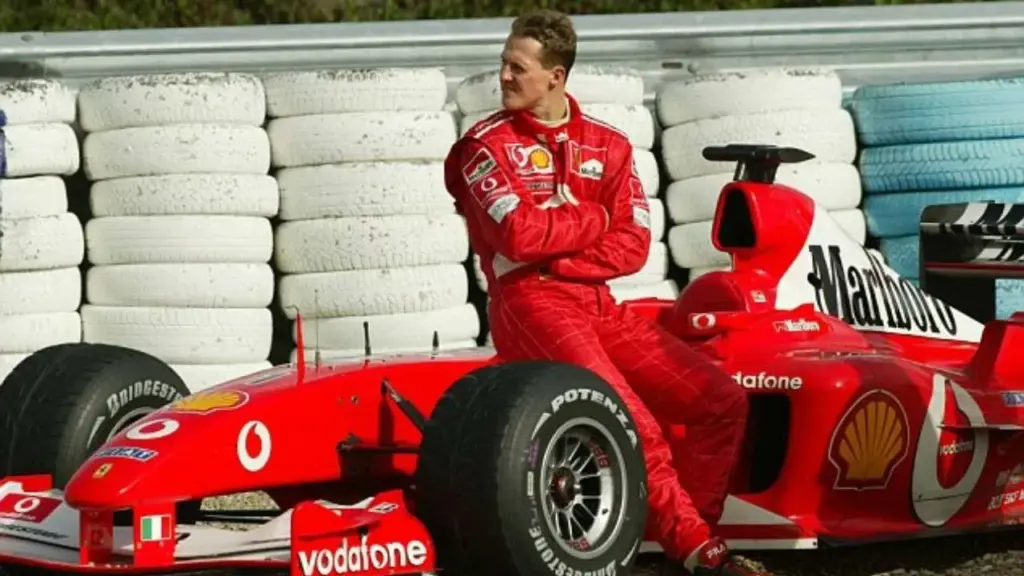
Michael Schumacher’s legacy in Formula 1 extends beyond his seven world championships; it embodies a unique blend of unparalleled talent and a profound dedication to teamwork. Renowned for his achievements, Schumacher not only dominated the racing track but also revolutionized F1 team dynamics, especially during his era with Ferrari. His collaboration with the legendary engineer Ross Brawn was pivotal in securing unmatched success, including five consecutive championships from 2000 to 2004. Schumacher’s approach to fostering a strong team mentality was vital, as he often participated in off-track activities, seamlessly integrating with the team members who supported his remarkable journey. Today, Schumacher is remembered not just as a champion but as an icon who redefined what it means to excel in Formula 1.
The remarkable career of the racing prodigy from Germany transforms the realm of competitive motor sports into a breathtaking saga. As a dominant figure in auto racing, Michael Schumacher’s unparalleled victories and strategic prowess have left an indelible mark on Formula racing history. His collaborative success with F1 engineers and teammates builds an inspiring narrative of resilience and aspiration. The synergy fostered between Schumacher and his crew, particularly during his time with the prestigious Ferrari team, illustrates the importance of cohesive team dynamics in achieving greatness on the race track. This synergy not only led to Schumacher’s astronomical success on the circuit but also reshaped the expectations of what a driver can reciprocate off the track.
Michael Schumacher’s Leadership in Formula 1
Michael Schumacher’s impact on Formula 1 extends beyond his unparalleled driving abilities; it encompasses his leadership qualities that fostered a winning team mentality. He understood that success in Formula 1 is not just about individual brilliance; it’s also about creating a cohesive unit where every member feels valued. Schumacher was known for integrating himself with the entire crew, from engineers to mechanics. This approach created a culture of collaboration, evident during his early years at Benetton and later at Ferrari, leading to unprecedented achievements in F1 history.
His relationship with key figures like Ross Brawn exemplifies this leadership style. Together, they built an environment where innovation and open communication thrived, allowing for strategic advancements in car performance. Schumacher was more than a star driver; he was a mentor, often seen engaging with team members off the track, whether it was during casual football games or factory visits. This camaraderie played a critical role in the consistency and reliability that characterized Schumacher’s teams and led to multiple Formula 1 championships.
The Winning Formula: Schumacher and Brawn
The partnership between Michael Schumacher and Ross Brawn was pivotal in redefining success in Formula 1. As technical director at Benetton, Brawn orchestrated the technical strategies that supported Schumacher’s first two world titles. Their collaboration was characterized by a deep mutual understanding, where Brawn’s insights complemented Schumacher’s driving prowess. This synergy not only led to immediate victories but also laid the groundwork for sustained success in later years when they reunited at Ferrari.
Under Brawn’s leadership, Schumacher adapted to the changing demands of F1, proving himself a versatile and resilient competitor. Their joint efforts brought Ferrari to the forefront of motorsport, resulting in five consecutive world titles from 2000 to 2004. Brawn often remarked on Schumacher’s dedication and focus, which inspired the entire team to elevate their performance. The legacy of this partnership goes beyond the titles; it showcases how collaboration and respect among team dynamics can yield extraordinary results in Formula 1.
Schumacher’s Historic Achievements in F1
Michael Schumacher’s name is synonymous with greatness in Formula 1, highlighted by his record of seven world championships, a feat that is as much about skill as it is about the strategic foundation laid by his teams. Each championship tells a story of perseverance, technical mastery, and teamwork, beginning with his back-to-back titles with Benetton in the mid-1990s. Schumacher’s prowess on the track was matched by his ability to motivate and lead those around him, ensuring everyone was aligned with the common goal of success.
His unmatched achievements reflect a broader narrative of commitment and hard work, particularly during his time at Ferrari, where he transformed a struggling team into a dominant force. His relentless pursuit of excellence coupled with Brawn’s technical insights paved the way for a historic era in F1, demonstrating that individual brilliance, when combined with a strong team dynamic, can lead to legendary status in motorsports.
The Significance of Team Dynamics in Schumacher’s Success
Understanding the core of Michael Schumacher’s success in Formula 1 requires an appreciation of the critical role team dynamics played throughout his career. The collaborative environment fostered by Schumacher, especially at Ferrari, created a synergy that propelled the team to its pinnacle. He invested time and effort in building relationships with his engineers and mechanics, understanding that every role, no matter how small, contributed to the overall performance of the car. This holistic approach ensured that his team operated as a well-oiled machine, capable of overcoming challenges and celebrating victories together.
Schumacher’s approach to team dynamics stands in contrast to many perceptions of a solitary superstar. Instead of distancing himself from the team, he immersed himself in their world, understanding that strong bonds would lead to improved morale and, ultimately, better results. As Brawn noted, Schumacher’s ability to uplift the entire team through genuine interaction and respect supported a culture of excellence, which was essential in achieving the remarkable feats of the early 2000s.
The Enduring Legacy of Michael Schumacher
Even after his incredible career, Michael Schumacher’s legacy in Formula 1 continues to resonate deeply within the sport. His achievements have inspired a new generation of drivers, many of whom dream of emulating his record of seven world championships. Beyond statistics, Schumacher’s approach serves as a blueprint for aspiring athletes, emphasizing the importance of teamwork, dedication, and an unwavering drive for success. His story is one of perseverance and resilience, showcasing that greatness is achievable through hard work and strategic collaboration.
Moreover, Schumacher’s influence can be seen in the evolving dynamics of modern F1 teams, where collective efforts and interpersonal relationships are more critical than ever. As the sport continues to evolve, the principles that Schumacher embodied—the synergy of talent, technological excellence, and team spirit—remain relevant. His commitment to excellence will forever serve as a benchmark in the world of Formula 1, a testament to the extraordinary capabilities of a driver who transformed the sport.
Michael Schumacher’s Impact on Team Culture
Michael Schumacher revolutionized the way drivers interact with their teams, fostering a culture that emphasized unity and mutual respect. He understood that a successful race weekend depended not just on the driver but on the entire team working seamlessly together. This profound understanding of team culture helped to cultivate an environment where everyone felt like an integral part of the team’s quest for victory. Schumacher’s willingness to engage with both high-profile engineers and daily mechanics demonstrated a humility that rewarded him with trust and dedication from those around him.
In his role at Ferrari, Schumacher often participated in team-building activities, whether through group dinners, factory visits, or simple sports games. This proactive involvement created a family-like atmosphere, making every team member feel valued and respected. Such dynamics fostered open communication, enabling innovative ideas to flourish, which was essential for the technological progress that led to Ferrari’s dominance during his tenure.
Michael Schumacher: A Champion of Professionalism
Michael Schumacher’s achievements in Formula 1 are a reflection of his professional approach to racing. He epitomized the dedication necessary to excel at the highest levels of motorsport. His training regimen, meticulous preparation, and analytical mindset were key components that set him apart from his peers. Understanding the intricate nuances of racing and engineering allowed Schumacher to excel during critical moments on the track, further illustrating how professionalism in practice translates to victory.
Schumacher’s commitment went beyond the racetrack; he was known for holding extensive debrief sessions where data from each race would be dissected meticulously. His relentless pursuit of improvement drove not only his performance but also inspired his team to push boundaries in technology and mechanics. This exceptional level of professionalism contributed to his enduring legacy within the sport, establishing standards that continue to influence aspiring racing professionals to this day.
The Role of Innovation in Schumacher’s Success
Innovation played a pivotal role in Michael Schumacher’s Formula 1 career, particularly during his record-breaking years with Ferrari. His partnership with Ross Brawn was instrumental in not only refining car dynamics but also in developing pioneering race strategies. The technological advancements they introduced were critical in gaining competitive advantages over rivals, allowing Schumacher to navigate races with a unique blend of precision and aggression.
Furthermore, Schumacher’s ability to adapt to new technologies and regulations made him a formidable competitor. His input on car design and performance optimization was invaluable, as he worked closely with engineers to push the envelope of what was possible in car performance. This data-driven approach to racing, combined with a visionary mindset, set the stage for breakthroughs that reshaped the landscape of Formula 1 and contributed to his unprecedented success.
Michael Schumacher and the Future of F1
Michael Schumacher’s legacy continues to influence the future of Formula 1. His exceptional successes opened doors for innovative practices that are now standard across the sport. Drivers today are expected not just to perform on the track but to engage deeply with their teams, drawing from Schumacher’s example of leadership and commitment to collaboration. The values he embodied, such as resilience and teamwork, remain essential as the sport evolves with new technologies and racing strategies.
The story of Michael Schumacher serves as both an inspiration and a lesson for future generations of racers. As F1 continues to embrace advancements in technology, the balance between individual talent and team effort remains crucial. Schumacher’s holistic approach to racing, where mental fortitude complemented technical skills, is a guiding principle that will keep shaping the sport well into the future, ensuring his impact is felt long after he hung up his racing gloves.
Frequently Asked Questions
What are Michael Schumacher’s main achievements in Formula 1?
Michael Schumacher’s achievements in Formula 1 include securing a record seven world championships, winning two titles with Benetton in 1994 and 1995, and five consecutive championships with Ferrari from 2000 to 2004. His remarkable career has set numerous records, many of which still stand today.
How did Michael Schumacher contribute to Ferrari’s success in Formula 1?
Michael Schumacher’s success at Ferrari can be attributed to his exceptional ability to foster team dynamics. He engaged closely with the entire team, played football with mechanics, and consistently motivated everyone, turning Ferrari into a dominant force in Formula 1 and securing five consecutive championships during his tenure.
What role did Ross Brawn play in Michael Schumacher’s Formula 1 success?
Ross Brawn was instrumental in Michael Schumacher’s success in Formula 1, serving as the technical director at Benetton during Schumacher’s early championships. Their partnership continued at Ferrari, where Brawn’s engineering acumen and strategic insight complemented Schumacher’s driving skills, leading to seven world titles.
What impact did Michael Schumacher’s achievements have on Formula 1?
Michael Schumacher’s achievements in Formula 1 significantly impacted the sport by setting new standards for excellence. His competitive spirit, work ethic, and innovative approach to racing influenced generations of drivers and contributed to the evolution of team dynamics within F1 teams.
How did Michael Schumacher’s physical condition contribute to his Formula 1 success?
Michael Schumacher’s exceptional physical condition allowed him to maintain peak performance during races, which was crucial for his success in Formula 1. His remarkable concentration power, commitment, and ability to push his limits played a pivotal role in his seven world championship titles.
How did the team dynamics influence Michael Schumacher’s success in Formula 1?
Team dynamics were vital to Michael Schumacher’s success in Formula 1. He had a unique ability to unite his team, fostering a collaborative environment that emphasized collective effort. This approach not only improved performance but also helped build a winning culture at Ferrari and during his time at Benetton.
| Key Point | Details |
|---|---|
| Team Mentality | Schumacher fostered a strong team spirit both on and off the track, emphasizing collaboration with his team members. |
| Championship Titles | Michael Schumacher won a record seven world titles in Formula 1, which were eventually matched by Lewis Hamilton. |
| First Two Titles | Schumacher secured his first championships with Benetton in 1994 and 1995. |
| Ferrari Success | He won five consecutive titles from 2000 to 2004 while driving for Ferrari. |
| Guidance of Ross Brawn | All championships were achieved under the guidance of Ross Brawn, who played a crucial role in his success. |
| Building Team Spirit | Schumacher’s engagement with team members, such as playing football with mechanics, helped boost morale and camaraderie. |
| Physical and Mental Attributes | His exceptional physical condition, focus, and commitment are credited for his success in F1. |
| Impact on F1 | Schumacher’s blend of talent, hard work, and intelligence set him apart as one of the greatest drivers in Formula 1 history. |
Summary
Michael Schumacher Formula 1 stands as a testament to unparalleled dedication and teamwork in sports. His extraordinary journey, marked by seven world titles, highlights the significance of building strong relationships within the team. Schumacher’s ability to maintain a positive team spirit, along with his physical prowess and mental acuity, made him a legendary figure in Formula 1. As both a champion and a motivating leader, he not only transformed the landscape of the sport but also set a benchmark for excellence that future drivers will aspire to.