Listen to this article
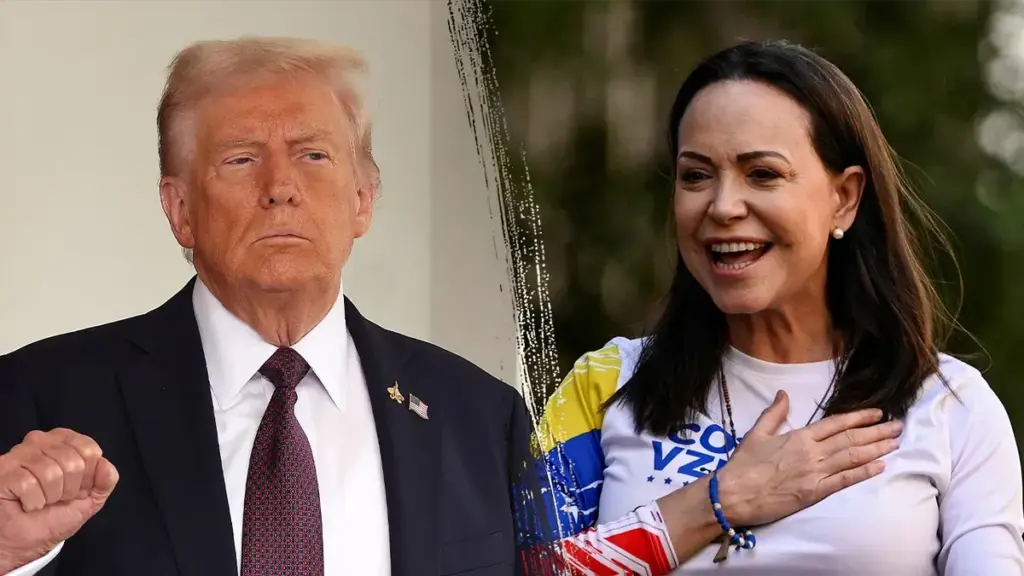
In a high-stakes diplomatic maneuver, Venezuelan opposition leader María Corina Machado will visit Trump, as confirmed by the White House. This anticipated meeting comes on the heels of a tumultuous period in Venezuelan politics, marked by the recent removal of President Nicolás Maduro, showcasing the political landscape’s volatility. Machado, a Nobel Peace Prize laureate, aims to thank Trump for supporting actions against the Maduro regime while intending to discuss her vision for Venezuela’s future. Despite her accolades and claims of victory in the contentious 2024 elections, the U.S. has notably backed Delcy Rodríguez, Maduro’s former vice president, as the interim president. As Machado strives for a significant role in shaping Venezuela’s destiny, the international community watches closely, eager to see how this Trump meeting will impact the ongoing political crisis.
In a significant diplomatic engagement, María Corina Machado’s visit to Trump marks a pivotal moment in the unfolding saga of Venezuelan leadership discussions. As an influential figure in Venezuelan politics, Machado represents a coalition that has fought against oppression, positioning herself at the forefront of the nation’s struggle for democracy and human rights. Her meeting with the former president aims to address mutual interests in stabilizing the crisis-ridden nation and restoring peace and prosperity. Meanwhile, the U.S. government’s endorsement of Delcy Rodríguez as Venezuela’s interim leader adds layers of complexity to this dialogue, highlighting the divisions within the opposition. With Machado’s international stature bolstered by her Nobel Peace Prize recognition, this encounter could redefine alliances and strategies in the ongoing efforts to resolve Venezuela’s chaotic political landscape.
María Corina Machado Meets Trump: A Pivotal Moment in Venezuelan Politics
The anticipated meeting between Venezuelan opposition leader and Nobel Peace Prize winner María Corina Machado and former President Donald Trump represents a significant development in the landscape of Venezuelan politics. The backdrop of this encounter is steeped in the recent upheaval following Nicolás Maduro’s ousting, with Machado positioning herself as a key figure advocating for change in her country. The meeting underscores the complexities of U.S. foreign policy towards Venezuela, raising questions about the recognition and legitimacy of leadership claims amid political turmoil.
During her visit, Machado aims not only to express gratitude towards Trump’s administration for their stance against Maduro but also to highlight her vision for a democratic Venezuela. Despite Trump’s previous reservations about Machado’s role in Venezuelan politics, the discussion could forge strategic alliances that may influence future U.S. interventions. The varying support for Machado and her opponent, Delcy Rodríguez, who is seen as the interim president backed by the U.S., illustrates the challenges facing Venezuelan opposition leaders seeking to gain traction both domestically and internationally.
The Diplomatic Implications of Machado’s Visit to Trump
María Corina Machado’s meeting with Trump symbolizes a wider commentary on the diplomatic relations between the U.S. and Venezuela. As Washington navigates its strategies in South America, Machado’s assertion for leadership dives deep into the ongoing narrative surrounding political legitimacy. Trump’s previous statements highlighted a preference for Delcy Rodríguez, pointing to potential tensions within the U.S. administration’s approach towards Venezuela’s future. This meeting could reshape perceptions of U.S. alignment with Venezuelan leaders going forward.
The diplomatic landscape is further complicated by Machado’s Nobel Peace Prize accolade, which she hopes to leverage during her discussions. Despite efforts to elevate her status and appeal to international support, Machado faces challenges, including Trump’s initial skepticism about her leadership respect within Venezuela. This dynamic reflects the ongoing struggle for power in Venezuelan politics, where recognition on an international stage could either bolster or undermine her movement.
Machado’s Vision for Venezuela and Trump’s Role
At the heart of María Corina Machado’s agenda during her visit with Trump lies her vision for a democratic Venezuela, where she advocates for an end to repression and the establishment of law and order. She has boldly criticized Delcy Rodríguez, deeming her one of the primary architects behind the oppressive regime under Maduro’s leadership. Machado’s determination to present herself as the rightful representative of the Venezuelan people challenges the current political narrative endorsed by the U.S. administration.
Trump’s acknowledgment of Machado’s aspirations and her Nobel Prize suggests a potential shift in dialogue surrounding Venezuelan politics. By engaging directly with Machado, Trump may aim to better understand the opposition’s perspectives amidst rapidly evolving conditions in Venezuela. Such discussions are pivotal as they could influence U.S. policy decisions that shape the future governance of Venezuela, especially as Machado seeks to unify support against the current interim administration.
The Controversy Over Nobel Peace Prize Recognition
The ongoing dialogue surrounding María Corina Machado’s Nobel Peace Prize candidacy has sparked heated discussions in political circles, particularly with Trump’s remarks. Machado’s desire to present the Nobel Prize to the former president was seen as a gesture of gratitude, yet the Nobel Committee’s clarification that the prize is not transferable brings forth complexities surrounding its symbolic value. This emphasizes the delicate balance of recognition in international politics, especially in tumultuous regions like Venezuela.
The award not only highlights Machado’s efforts for peace but also raises questions about the future of leadership and legitimacy in Venezuelan politics. Critics argue that despite her global recognition, the local acceptance of her role remains tenuous. Trump’s commentary on Machado’s influence reflects broader sentiments on her potential effectiveness as a leader versus Rodríguez’s status as interim president, emphasizing the intricate game of geopolitical alliances and public perception.
U.S. Foreign Policy and Support for Delcy Rodríguez
In contrasting terms with Machado, U.S. support for Delcy Rodríguez as Venezuela’s interim president poses significant implications for the future of Venezuelan governance. Rodríguez’s reputation as a former vice president during Maduro’s regime complicates the picture for U.S. foreign policy, which seeks to promote change while balancing relationships with various Venezuelan factions. The White House’s endorsement speaks to a potentially pragmatic approach, recognizing Rodríguez’s willingness to cooperate with American interests.
This backing places Machado in a challenging position, as she contests the narrative that presents Rodríguez as a viable leader. Machado’s assertion that Rodríguez lacks trust and is an architect of past repressions highlights the complexities of the opposition landscape in Venezuela. As U.S. foreign policy continues to unfold, the dynamic between support for Rodríguez and the rising prominence of Machado will be crucial in determining who will genuinely lead the charge for democracy in Venezuela.
The Role of International Perception in Venezuelan Leadership
International perception plays a critical role in shaping the trajectories of leaders within Venezuelan politics. María Corina Machado seeks to enhance her global standing through her engagement with influential figures like Trump, drawing attention to her vision for a democratic Venezuela. The significance of international accolades, such as the Nobel Peace Prize, can tip the scales by elevating the legitimacy of her cause, enabling her to garner support on a broader scale against the Maduro regime and its affiliates.
Conversely, the perception of Delcy Rodríguez as a legitimate leader by the U.S. complicates this narrative, as she navigates a unique situation of being recognized by a powerful ally. How these perceptions shift over time will be influenced by further developments in Venezuelan politics and U.S. engagement strategies, ultimately impacting the future of governance in the troubled nation. The story of Machado, Rodríguez, and their respective claims to leadership exemplifies the geopolitical chess game unfolding in South America.
The Future of Venezuelan Politics Post-Maduro
The political landscape in Venezuela has been dramatically reshaped following Nicolás Maduro’s removal, prompting questions about the future direction of governance. María Corina Machado’s emergence as a leading figure signals hope for democratic restoration amidst a history marred by repression and dictatorship. As Venezuelans look for stability, her ambitions tethered with U.S. attention could foster new patterns of leadership and governance in a new era.
Yet, the future remains uncertain, as competing claims for power between Machado and Delcy Rodríguez complicate the narrative. The absence of a clear unity within the opposition could hinder the momentum required for substantial political change. Furthermore, whether international support aligns with Machado or Rodríguez will significantly influence the capacity to mobilize the Venezuelan populace in favor of democratic ideals, setting the stage for the nation’s next chapter.
The Impact of U.S. Military Action on Venezuela
U.S. military action in Venezuela has been framed by figures like María Corina Machado as necessary interventions aimed at restoring law and democracy. By labeling these actions as a pivotal step towards prosperity for Venezuelans, Machado seeks to galvanize both local and international support in her quest to lead the nation. The complexities of U.S. military involvement require careful navigation, balancing ambitions for freedom with potential backlash from various segments of the population.
Conversely, Rodríguez has vehemently denied claims that the U.S. controls Venezuela, emphasizing the pride of sovereignty in defining the nation’s governance. This dynamic interplay between external military influences and internal leadership struggles offers a fascinating glimpse into the narrative of power in Venezuela, creating a complex framework of loyalty, respect, and resistance that shapes the future of the country. Understanding this impact will be crucial for any leader, be it Machado or Rodríguez, as they endeavor to reclaim Venezuelan dignity.
Public Trust and the Challenges Facing Venezuelan Leaders
Public trust is a vital currency in Venezuelan politics, and leaders like María Corina Machado and Delcy Rodríguez must navigate these treacherous waters carefully. Machado’s criticisms of Rodríguez highlight her attempts to position herself as the trust-worthy alternative for Venezuelans seeking a path away from repression. In a context where skepticism about leadership is rampant, building a trustworthy image is essential for any figure aspiring to lead a nation towards democracy.
Rodríguez, despite U.S. backing, faces significant hurdles in solidifying public trust due to her historical ties with the Maduro regime. As she endeavors to assert her legitimacy, the distinction between a leader who can unite a fractured nation versus one who perpetuates existing divisions is crucial. The capacity of either Machado or Rodríguez to resonate with the populace on issues of governance, rights, and opportunity will ultimately dictate their success, both as individuals and as representatives of a hopeful change.
Frequently Asked Questions
What were the main outcomes of María Corina Machado’s visit to Trump?
During her visit to President Trump, Venezuelan opposition leader María Corina Machado aimed to express gratitude for U.S. actions against Nicolás Maduro and shared her desire to present the Nobel Peace Prize to Trump, which the Nobel Committee clarified is not transferable. Trump’s comments indicated a mixed perception of Machado’s role in Venezuelan politics, emphasizing the need for further discussion regarding her influence.
How did Trump’s meeting with María Corina Machado affect Venezuelan politics?
Trump’s meeting with María Corina Machado stirred discussions in Venezuelan politics, particularly since Machado’s coalition has claimed victory in the 2024 elections. However, Trump reiterated support for Delcy Rodríguez as Venezuela’s interim president, raising questions about the legitimacy of Machado’s leadership claims despite her popularity as a Nobel Peace Prize winner.
Why did María Corina Machado want to thank Trump during her visit?
María Corina Machado expressed her desire to personally thank Trump for the U.S. military actions against Nicolás Maduro, which she believes could help restore democracy in Venezuela. She also wished to share her Nobel Peace Prize recognition with Trump, viewing it as a significant event in Venezuelan politics.
What is Delcy Rodríguez’s role in the current Venezuelan government following the Machado visit?
Delcy Rodríguez, former vice president under Maduro, is currently recognized by the U.S. government as the interim president of Venezuela. Trump’s administration has supported Rodríguez, highlighting her cooperation with U.S. officials, even amidst Machado’s claims that Rodríguez lacks legitimacy and is untrusted among Venezuelans.
How did Trump view María Corina Machado after their meeting?
After meeting María Corina Machado, Trump acknowledged her as a ‘very nice woman’ but expressed skepticism about her popularity and respect within Venezuela. His comments suggested he recognizes her potential role but remains unconvinced about her standing among the Venezuelan public.
What did Trump say regarding Machado’s Nobel Peace Prize?
During the visit, Trump referred to Machado’s intent to present her Nobel Peace Prize to him as ‘a great honor.’ However, he later expressed uncertainty about how this prize might influence his perception of her capabilities in leading Venezuela.
What challenges does María Corina Machado face in her political journey after meeting Trump?
Despite the high-profile nature of her visit with Trump, María Corina Machado faces significant challenges in establishing her leadership in Venezuelan politics. These challenges include competing with the established influence of Delcy Rodríguez and overcoming doubts expressed by Trump regarding her support within the country.
How has public perception of Delcy Rodríguez changed after Machado’s visit to Trump?
Public perception of Delcy Rodríguez has remained polarized after Machado’s visit, particularly as Machado has publicly criticized Rodríguez, labeling her as an architect of repression. However, with ongoing U.S. support for Rodríguez as interim president, her standing is juxtaposed against Machado’s attempts to secure her political legitimacy.
| Key Point | Details |
|---|---|
| Meeting Confirmation | María Corina Machado will meet with President Donald Trump on Thursday. |
| Recent Events | This visit follows the seizure of Nicolás Maduro by US forces in Caracas. |
| Trump’s Non-Endorsement | Trump did not endorse Machado despite her movement’s claim of victory in the 2024 elections. |
| Support for Delcy Rodríguez | The US has backed Delcy Rodríguez, Maduro’s former vice president, as interim president. |
| Machado’s Intentions | Machado wants to thank Trump and present him with her Nobel Peace Prize. |
| Trump’s Comments | Trump expressed doubts about Machado’s support and respect within Venezuela. |
| Rejection of Foreign Control | Rodríguez insists that Venezuela is governed by its government, rejecting US dominion. |
| Military Action Perspective | Machado sees US actions as steps towards restoring democracy in Venezuela. |
Summary
María Corina Machado’s visit to Trump is a pivotal moment for Venezuelan politics. Despite her aspirations to lead Venezuela post-Maduro, Trump’s preference for Delcy Rodríguez complicates her position. Machado emphasized the need for her coalition to spearhead Venezuela’s government, reflecting deep divisions within the opposition. With US backing for Rodríguez and doubts cast on Machado’s support, the implications of this meeting could reshape the future of Venezuela’s political landscape.