
Listen to this article
The London murder rate has significantly dropped to its lowest point in over a decade, sparking discussions about safety and crime in the capital. In stark contrast to the perceptions propagated by some politicians, who argue that London grapples with rampant crime issues, the real data reveals a decline in homicide rates. According to the latest London crime statistics, the Metropolitan Police recorded just 97 homicides in 2025, a noteworthy reduction from 153 in 2019. This progress can be attributed to enhanced policing strategies and initiatives aimed at youth crime reduction, allowing the city to emerge as one of the safest metropolises in the Western world. These achievements underscore the effectiveness of a community-oriented approach in tackling violence and highlight the overall improvements in public safety in London.
When examining the current landscape of violent crime in the capital, it is evident that London’s homicide statistics present a more nuanced picture than many narratives suggest. With a focus on the overall safety and security of the city, it becomes apparent that the drop in killings can be attributed to the concerted efforts of law enforcement and community programs aimed at reducing youth violence. As crime rates fluctuate, terms such as violent incidents and criminal activities are closely monitored by the Metropolitan Police, which plays a pivotal role in fostering a safer environment. The data points to a positive trend, demonstrating a collaborative effort to address the underlying social issues contributing to crime, thereby reinforcing the importance of community engagement and crime prevention strategies.
London’s Murder Rate Decline: Statistics and Trends
London’s murder rate has seen a remarkable reduction over the past decade, with recent statistics revealing it has reached its lowest point since records began. In 2025, the Metropolitan Police reported just 97 homicides, a significant drop from 153 in 2019. This decline is particularly notable against the backdrop of rising urban populations, with London’s residents increasing from 8.1 million in 2010 to 9.1 million today. Such figures are indicative not only of a safer environment but also reflect the successful strategies employed by law enforcement and community programs focusing on crime prevention.
The trend of decreasing homicide rates is especially evident among younger individuals. The data highlights a dramatic fall in homicides of under-25s, with just 18 recorded in 2025 compared to a peak of 69 in 2017. This positive shift can be attributed to targeted policing efforts and proactive community outreach, including the initiatives spearheaded by the Violence Reduction Unit, which emphasizes addressing root causes of violence, such as poverty and unemployment. As a result, the city is not only becoming safer but is also fostering an atmosphere where young people are less likely to engage in violent behavior.
Impact of Metropolitan Police Achievements on Crime Rates
The achievements of the Metropolitan Police have played a crucial role in shaping the current landscape of crime in London. By employing a strategic approach that combines enhanced enforcement with community engagement, the police have effectively reduced the murder rate. Commander Paul Brogden, head of homicide investigations, has noted the cultural shift occurring on the streets, where individuals are now less inclined to resort to violence as a means of resolving disputes. By focusing on gang-related and organized crime, authorities are targeting the root causes of many violent incidents.
Moreover, the community-oriented initiatives championed by the police, such as the public health approach advocated by Mayor Sadiq Khan, aim to provide young people with alternatives to violence. These programs actively work to engage at-risk youth and divert them from potential criminal activities, contributing significantly to the decline in homicide rates and enhancing overall safety in London. The combined efforts of focused policing and community support illustrate a successful model for reducing crime in metropolitan areas.
Youth Crime Reduction Strategies in London
In recent years, youth crime reduction strategies in London have evolved to become more impactful, contributing to the decline in murder rates among younger demographics. The introduction of programs that connect youth with mentors and resources has proven instrumental in steering them away from violence. For instance, initiatives by the Violence Reduction Unit not only address immediate concerns but also invest in long-term solutions that target the inequities faced by young people, particularly in economically disadvantaged communities.
Moreover, the focused efforts on prevention highlight the importance of collaboration between law enforcement, local communities, and educators. By emphasizing open lines of communication and understanding, the police seek to build trust with young people, encouraging them to engage in productive activities instead of succumbing to the allure of gang affiliation or criminal behavior. This multifaceted approach showcases a commitment to reducing youth crime rates while simultaneously fostering a safer environment for all Londoners.
The Role of Community Programs in London’s Crime Reduction
Community programs have emerged as a pivotal element in London’s crime reduction efforts, particularly concerning youth violence. These initiatives often provide essential resources and support systems designed to empower young people and deter them from engaging in criminal activities. By offering mentorship, education, and vocational training, these programs address the underlying social issues that contribute to crime, fostering a sense of belonging and purpose among participants.
Additionally, the collaboration between community organizations and law enforcement agencies has proved effective in creating a united front against crime. By working collectively, they facilitate workshops and outreach activities that promote awareness and prevention strategies among youth. Such proactive measures not only help mitigate crime but also cultivate a culture of respect and collaboration, ultimately leading to increased safety and improved community relations across London.
Homicide Rates in London Compared to Other Major Cities
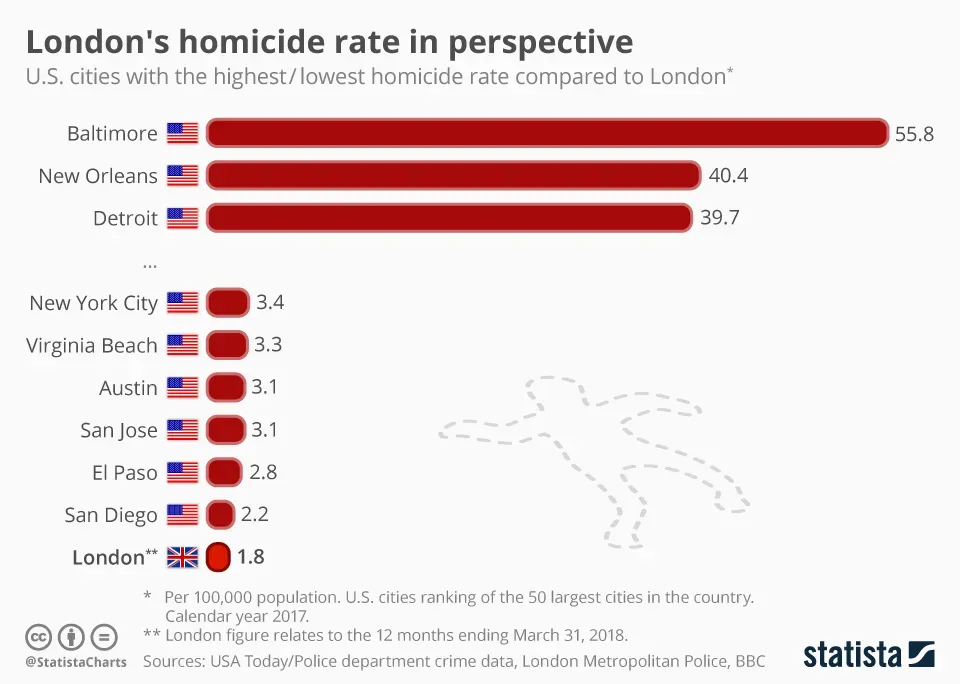
When considering the homicide rates in London, it becomes evident that the city holds a favorable position compared to many other major urban centers. With only 1.1 homicides per 100,000 residents in 2025, London outperforms cities like New York and Los Angeles, which report significantly higher rates. This comparative analysis underscores the effectiveness of the capital’s crime prevention strategies and community engagement efforts, reinforcing London’s image as one of the safest cities in the Western world.
Furthermore, the data shows a marked contrast in trends related to violent crime when juxtaposed with other global metropolitan areas. Cities such as Berlin and Brussels, with higher homicide rates, illustrate the challenges facing urban safety elsewhere. London’s concerted efforts, particularly in the realm of youth crime reduction and community involvement, not only serve as a model for other cities but also highlight the importance of targeted strategies that prioritize safety while addressing the community’s concerns.
Addressing Root Causes of Violent Crime in London
To effectively combat the rise in violent crime, it is crucial to address the root causes that contribute to such behaviors. In London, Mayor Sadiq Khan has championed a public health approach aimed at understanding and mitigating the factors leading to violence, such as poverty, lack of access to education, and limited employment opportunities. By acknowledging these underlying issues, the city can implement pragmatic solutions that not only reduce crime but also foster a more equitable society.
Moreover, creating opportunities for at-risk youth through education and job training programs can significantly reduce the likelihood of their involvement in violence. The collaboration between government agencies, non-profits, and community leaders serves as a testament to the shared commitment to tackling these social determinants of crime. This holistic focus on prevention, as opposed to solely punitive measures, marks a progressive step toward long-term crime reduction in London.
Cultural Shifts and Changes in Public Perception of Crime
Cultural shifts within London over the past few years have led to changes in public perception regarding crime rates and safety. As the homicide rate decreases and positive narratives surrounding crime prevention emerge, residents are beginning to acknowledge that the city is indeed becoming safer. This perception is bolstered by community engagement and police transparency in their strategies, affirming the accomplishments that have been achieved in reducing violence.
Consequently, as crime trends improve, Londoners are increasingly keen to embrace the diverse and vibrant nature of their city without the fear of violence overshadowing their experience. The role of media in shaping these narratives cannot be underestimated; as the discourse around London’s safety shifts, it encourages broader conversations about community dynamics and the importance of collective action in maintaining peace.
Controversies Surrounding Stop-and-Search Tactics in London
The use of stop-and-search tactics by the Metropolitan Police has been a point of contention in London, often highlighted as a practice that disproportionately affects minority communities. As the police shift towards more targeted interventions rather than broad-based operations, there’s an opportunity to address the concerns of residents who feel marginalized by such practices. Commander Brogden emphasizes the importance of maintaining trust and communication between law enforcement and the communities they serve.
Despite criticisms, it’s essential to recognize that the decrease in crime rates aligns with more strategic policing methods. By fostering dialogue and transparency, the police can work to improve community relations while focusing on serious and organized crime. The ongoing evolution of stop-and-search tactics seeks to balance safety and fairness, illustrating the complexities involved in modern policing amidst a culturally diverse population.
Future Challenges and Opportunities for Crime Reduction in London
Looking ahead, London faces both challenges and opportunities in continuing its trend of crime reduction. While homicide rates have decreased, the persistence of social disparities leaves many communities vulnerable to violence. Addressing these inequalities through sustained investments in education, job creation, and community programs will be crucial. Policymakers must remain vigilant and adapt their strategies to address emerging issues effectively and engage local populations in meaningful ways.
On the other hand, the successful strategies implemented thus far offer a robust foundation for future crime reduction efforts. The ongoing collaboration between police, government, and community organizations presents an opportunity to create lasting change. By fostering an inclusive approach to public safety, London can not only maintain its status as a safe city but also serve as a leading example for others grappling with similar challenges.
Frequently Asked Questions
What is the current London murder rate compared to previous years?
As of 2025, London’s murder rate has significantly decreased, with only 97 homicides, down from 153 in 2019 and 109 in 2024. In the early 2000s, such as in 2003, homicides peaked at 216. This decline indicates that London is becoming increasingly safer.
How do London crime statistics affect perceptions of safety in the city?
Despite political narratives suggesting high crime rates, current London crime statistics reveal a decrease in violent crime and homicide rates, making it one of the safest major cities in the Western world. Mayor Sadiq Khan stresses that the public health approach to crime reduction, focusing on root causes and community engagement, enhances safety in London.
What initiatives have contributed to the reduction of homicide rates in London?
The reduction in homicide rates in London can be attributed to focused police work and community-based programs, such as the Violence Reduction Unit established in 2019. This unit employs a public health approach to address violence by engaging with youth and diverting them from potential criminal activities.
How does youth crime reduction impact London’s murder rate?
Youth crime reduction has had a notable impact on London’s murder rate, with homicides among individuals under 25 dropping dramatically from a peak of 69 in 2017 to just 18 in 2025. Improved community efforts and targeted interventions are critical components of this success.
What are the homicide rates in London compared to other major cities?
London’s homicide rate is relatively low, with 1.1 homicides per 100,000 residents in 2025, compared to higher rates in cities like New York (2.8), Los Angeles (5.6), and Philadelphia (12.3). This data highlights that safety in London is on par with or exceeds many North American cities.
How has the population growth in London affected homicide rates?
London’s population has grown from 8.1 million in 2010 to 9.1 million in 2025, yet the homicide rate has decreased. This means that the likelihood of being a homicide victim in London has significantly reduced, showcasing effective crime reduction strategies amidst population growth.
What role does drug-related crime play in London’s homicide statistics?
Approximately 50% of homicides in London are related to drugs. The Metropolitan Police’s efforts to target serious organized crime and improve community relations have contributed to the reduction of violence connected to drug issues, positively influencing London’s overall murder rates.
What measures are being taken to address racial disparities in London’s murder rates?
To address racial disparities, particularly among young Black men who face a disproportionate risk of homicide, community programs and police outreach initiatives aim to build trust and provide support. Ongoing efforts focus on guiding youth away from crime and fostering opportunities for education and employment.
How effective are the Metropolitan Police’s strategies in reducing murder rates in London?
The Metropolitan Police’s strategies, which include targeted interventions and improved data analytics, have shown effectiveness in reducing London’s murder rates. Commander Paul Brogden notes a cultural shift towards less violence and a 90% success rate in diversion initiatives aimed at young individuals.
What has been the impact of political narratives on public perception of crime in London?
Political narratives that portray London as unsafe contradict the evidence presented by crime statistics. While some political figures emphasize crime issues to gain traction, contrasting data shows London has among the lowest homicide rates for major cities, thereby mitigating fears and promoting a sense of safety.
| Year | Homicide Count | Population (millions) | Homicides per 100,000 |
|---|---|---|---|
| 2019 | 153 | 8.9 | 1.7 |
| 2024 | 109 | 9.0 | 1.2 |
| 2025 | 97 | 9.1 | 1.1 |
| 2003 (Peak) | 216 | Unknown | Unknown |
Summary
The London murder rate has significantly improved, reaching its lowest point in over a decade. With ongoing initiatives focusing on community support and smart policing strategies, London stands out as one of the safest cities in the Western world. This reduction in homicides, despite a growing population, reflects the city’s effective approach to tackling violent crime and underscores Mayor Sadiq Khan’s commitment to addressing the root causes of violence, such as social deprivation and lack of opportunity. As London continues to implement its public health strategy, it aims to maintain this positive trend in reducing crime and ensuring the safety of all its residents.