
Listen to this article
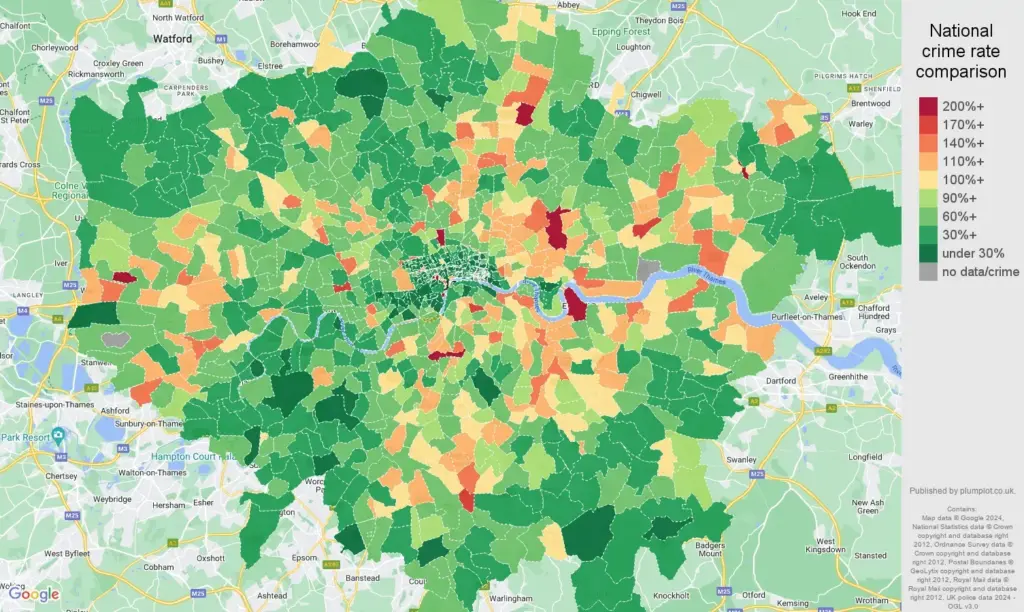
The London crime severity map has unveiled alarming data about the safety of various neighborhoods, highlighting areas heavily impacted by criminal activity. By utilizing crime statistics London presents through this interactive tool, residents can now compare their localities against the city’s most vulnerable regions. Notably, Westminster recorded the highest crime severity score, reflecting the frequency and nature of offenses prevalent in this bustling area. This severity index emphasizes the stark contrast between violent crime in England’s urban hubs compared to the so-called safest areas in London, as crime rates fluctuate significantly across boroughs. Understanding this map can empower communities, helping to address concerns and improve safety measures across the capital.
In exploring the criminal landscape of London, various terms like crime intensity map or criminal activity index might arise, each shedding light on the uneven distribution of offenses throughout the city. This mapping tool provides critical insights into the areas experiencing serious infractions, much like the contrasting crime severity seen in regional statistics such as Blackpool crime rate and Middlesbrough crime severity. By evaluating the frequency and seriousness of different types of offenses, the map highlights troubling trends in violent crime and theft across England’s metropolitan regions. The insights gained from this map are invaluable for anyone looking to navigate London safely or understand broader crime patterns in urban environments.
Understanding the London Crime Severity Map
The London Crime Severity Map is a vital tool for understanding the landscape of criminal activity across the capital. This interactive resource categorizes each borough based on its crime severity score, providing residents and visitors alike with critical insights into safety levels. High scores indicate areas where severe crimes, such as violent offenses and sexual assaults, are prevalent. For example, Westminster leads the pack with a staggering crime severity score of 61.0, highlighting the intense challenge of crime management in central London.
Using the London Crime Severity Map, individuals can compare neighborhoods to assess their relative safety. It showcases not only the hotspots of criminal activity but also areas where crime is less frequent. While tourists may often perceive London as a bustling metropolis stained by high crime rates, a closer look at the map reveals that serious crime is concentrated in certain boroughs, such as Camden and Westminster, influencing perceptions of safety among the populace.
Comparison with Other UK Cities: Blackpool and Middlesbrough
When compared to London, cities like Blackpool and Middlesbrough reveal alarming crime statistics that rival or exceed those of the capital. Blackpool, known for its seaside escapades, recorded a severe crime severity score of 31.7, driven predominantly by violent crime and sexual offenses, making it one of the most dangerous council areas in the country. This highlights an essential aspect of crime in the UK, where locations sentimentally regarded for tourism can also house significant risks.
Similarly, Middlesbrough, with a crime severity score of 29.9, faces challenges marked by high rates of serious offenses. These scores call for a nuanced understanding of crime statistics London residents often utilize to guide safety decisions. As communities grapple with the realities of these statistics, there remains a pressing need to identify the underlying factors fueling such high crime rates in cities beyond just central London.
Safety Rankings: The Safest Areas in London
Despite the highs of crime severity scores in certain boroughs, London does boast some of the safest areas within its extensive metropolitan landscape. For instance, regions like Wokingham and Wiltshire have emerged as havens of safety, boasting crime severity scores significantly lower than the chaotic zones like Westminster. Wokingham’s score of 6.4 serves as an attractive option for families and individuals seeking security in their living environments amidst the urban sprawl.
Identifying these safest areas in London provides essential information for potential residents and visitors. The crime statistics not only reflect the frequency of incidents but also the perception of safety among the community members. As one seeks out areas with lower severity scores, supporting safer environments across the capital becomes a priority for both local authorities and inhabitants.
The Role of Crime Severity Scores in Crime Analysis
Crime severity scores are a critical factor in dissecting crime data. Unlike traditional crime rates that merely count offenses, severity scores encapsulate the seriousness of crimes through weighted classifications – serious crimes like murder and rape are pivotal in shaping the overall scores. For instance, the score recorded by Westminster, primarily fueled by thefts and assaults, starkly illustrates how crime severity gives a deeper insight into the real dangers posed to residents and tourists alike.
This quantitative approach allows law enforcement and community programs to allocate resources more effectively. By identifying areas with high crime severity, authorities can implement targeted interventions to reduce crime rates and improve community safety. Thus, understanding crime severity scores is paramount for developing effective crime reduction strategies and fostering safer urban environments.
Trends in Crime Severity Over the Years
A look into the trends of crime severity over the years shows a complex narrative in the UK. Starting from a high point of 15.9 in March 2003, crime severity has fluctuated yearly, reflecting external societal influences, including the economic climate and more recently, pandemic-related impacts. The most recent peak at 16.4 in March 2023 indicates a resurgence in severe crime, prompting concern among policymakers and community leaders regarding the necessitated safety measures.
Understanding these trends is essential as it sheds light on the effectiveness of initiatives designed to curb crime. For example, the sharp decline witnessed from 2003 to 2013 offers valuable insights into what strategies might have been effective during that period, while the current rise in crime severity scores could prompt a necessary reevaluation of community safety measures and crime prevention frameworks. Identifying and addressing the root causes behind these fluctuations will be key in mitigating crime in the future.
Impact of Violent Crime in England
Violent crime remains a pressing concern across England, etching its way into the crime severity landscape and affecting urban and rural communities alike. Statistics reveal that violent offenses significantly contribute to the overall crime severity score in various regions, including notorious places like Middlesbrough and Blackpool. The prevalence of these violent acts not only disrupts community safety but also dials up public anxiety regarding law enforcement’s ability to maintain order.
Addressing the impact of violent crime requires a multi-faceted approach. Recognizing its correlation with other social issues, such as poverty and substance abuse, is vital for tailored responses to violent crime. By focusing preventive measures on the communities most affected, authorities can ideally reduce both the frequency and severity of these crimes, aiming for a future where neighborhoods are characterized not by fear, but by safety and communal harmony.
Understanding the Factors Influencing Crime Rates
The dynamic landscape of crime rates across the UK, particularly in major cities, can be attributed to numerous factors ranging from socio-economic variables to community engagement levels. Areas like Westminster demonstrate the impact of high footfall and tourism on crime rates, where thefts and violent incidents spike during peak seasons. These fluctuations highlight the need for localized strategies tailored to specific criminal activities prevalent in certain areas.
Furthermore, the interplay of policing strategies and community cooperation significantly influences crime rates. Regions that actively engage citizens in crime prevention and reporting mechanisms generally see lower offense rates. Encouraging positive relationships between law enforcement and communities can create safer environments, reducing the overall crime severity scores by addressing the underlying issues driving criminal behavior.
The Importance of Community Awareness and Education
In enhancing safety and reducing crime statistics, community awareness and education play a pivotal role. By educating residents about their local crime severity scores and the implications attached to them, individuals can better protect themselves and their neighborhoods. Awareness initiatives can help residents identify suspicious behaviors and empower them to participate in local safety programs effectively.
Moreover, educational campaigns geared towards crime prevention can further contribute to lowering crime severity across areas with alarming statistics. Workshops and community forums create spaces for individuals to share experiences and best practices, effectively fostering a united front against crime. These collaborative efforts are integral in nurturing a culture of safety and vigilance within communities.
Comparative Analysis of Crime Management Across Regions
Examining regions like Cleveland, which reported a high crime severity score of 23.4, against British cities such as London emphasizes the necessity for a comparative analysis in crime management practices. Each area showcases differing responses to criminal challenges, highlighting the effectiveness of varied policing strategies. Understanding these differences can reveal insights into best practices that may be applied across the board to improve safety and reduce crime.
Additionally, regional comparisons can foster healthy competition amongst police forces to craft innovative solutions to public safety challenges. By learning from cities that have successfully reduced crime levels, others can adapt their approaches, leading to overall improvements in crime statistics. This proactivity is essential to developing sustainable crime reduction strategies that can adapt to changing societal dynamics.
Frequently Asked Questions
What is the London crime severity map and how does it work?
The London crime severity map is an interactive tool that visualizes crime severity scores across different areas in London. These scores assess the seriousness of criminal activities by accounting for both the type and frequency of offences, giving more weight to serious crimes like violent offenses compared to minor infractions. This allows users to understand the crime landscape in London more comprehensively.
Which area in London has the highest crime severity score?
Westminster currently holds the highest crime severity score in London at 61.0, indicating a significant level of crime, particularly in terms of theft offences and targeted criminal activities associated with high tourist traffic.
How does the London crime severity map compare to crime statistics in other cities like Blackpool and Middlesbrough?
While the London crime severity map shows Westminster as the most affected area, it reveals that Blackpool has the highest levels of severe crime overall in the country, particularly noting high rates of violent crimes. Middlesbrough also ranks high with a score of 29.9, emphasizing the discrepancies between urban centres like London and other regions.
What types of crime are weighted more heavily in the London crime severity scores?
The London crime severity scores heavily weigh serious crimes such as murder, sexual offenses, and violent crimes over petty theft or minor crimes. This approach helps users on the London crime severity map understand the real impact of crime in their neighborhoods.
Are there any safe areas in London according to the crime severity map?
Yes, the London crime severity map highlights certain relatively safer areas, though Westminster and Camden show high crime severity. For a broader view, areas outside London such as Wiltshire are highlighted as some of the safest places with much lower crime severity scores.
How can the London crime severity map help improve safety awareness?
The London crime severity map provides residents and visitors insights into crime patterns, helping them to be more aware of high-risk areas. By reviewing the map, individuals can take precautions in areas with higher crime severity, thus improving their personal safety.
Can the London crime severity scores influence policing strategies?
Yes, the crime severity scores presented in the London crime severity map can inform policing strategies by helping law enforcement prioritize resources in areas with higher scores, ultimately aiming to reduce serious crimes and improve community safety.
What is the trend in crime severity scores in England, specifically within London?
Crime severity scores in England, including those for London, peaked at 16.4 for the year ending March 2023 after a gradual increase from a low of 9.3 in 2013. This indicates a concerning trend of rising serious crime levels, reflected in the London crime severity map.
| Area | Crime Severity Score | Key Highlights |
|---|---|---|
| Westminster | 61.0 | Highest crime severity score in London, significant theft offenses. |
| Camden | 32.4 | High number of theft offenses. |
| Blackpool | 31.7 | Highest severe crime rates in the UK, particularly violent crimes. |
| Middlesbrough | 29.9 | Driven by high levels of violence and sexual offenses. |
| Manchester | 28.9 | Significant violent crime. |
| Birmingham | 27.3 | Concerns over violent crime. |
| Bradford | 25.8 | Rising crime severity. |
| Wiltshire | 6.0 | Safest area to live. |
| Wokingham | 6.4 | Safe, low crime severity. |
| North Yorkshire | 9.8 | Lowest crime severity score among police areas. |
Summary
The London crime severity map highlights the stark contrasts in crime across the city, showing Westminster as the epicenter of crime severity. The ongoing interactive mapping provides crucial insights into crime types and their seriousness, informing residents and visitors alike. While central London grapples with theft crimes predominantly impacting tourists, regions like Blackpool attain alarming rates of violent crime. As the map continues to evolve, it serves as a vital resource for understanding and addressing crime in London.