
Listen to this article
London is currently facing a daunting challenge in meeting its affordable homes target, originally outlined by Mayor Sadiq Khan, as new data from City Hall reveals. The figures indicate that fewer than 8,000 homes have commenced construction under the 2021-26 homes construction programme, leaving the capital in need of an extraordinary 10,000 additional homes just to meet the revised expectations. As City Hall grapples with this housing crisis, which has been exacerbated by rising costs and economic uncertainties, the current performance reflects only 41-44% of the affordable housing goals London aimed to achieve. Critics have not held back from dubbing this situation a “failure,” emphasizing the urgency for action as overcrowded conditions persist across the city. With ambitious plans at stake, the necessity for a strategic overhaul in London housing development has never been more critical.
In the ever-evolving landscape of urban living, the issue of accessible housing in the capital remains a pressing concern. The recent adjustments to London’s affordable homes initiatives, spearheaded by the administration under Sadiq Khan, underscore the complexity of the ongoing housing crisis. With a significant portion of the population struggling to find adequate accommodation, and rising rents pricing many out of the market, the need for effective housing solutions is urgent. The objectives set for the City Hall’s housing push continue to fall short, not only threatening the welfare of families but also highlighting the glaring gaps in the city’s housing infrastructure. As we delve deeper into the strategies and controversies surrounding this pivotal issue, the spotlight remains firmly on the mayor’s commitment to deliver increased housing opportunities for all Londoners.
London’s Affordable Homes Target: A Critical Overview
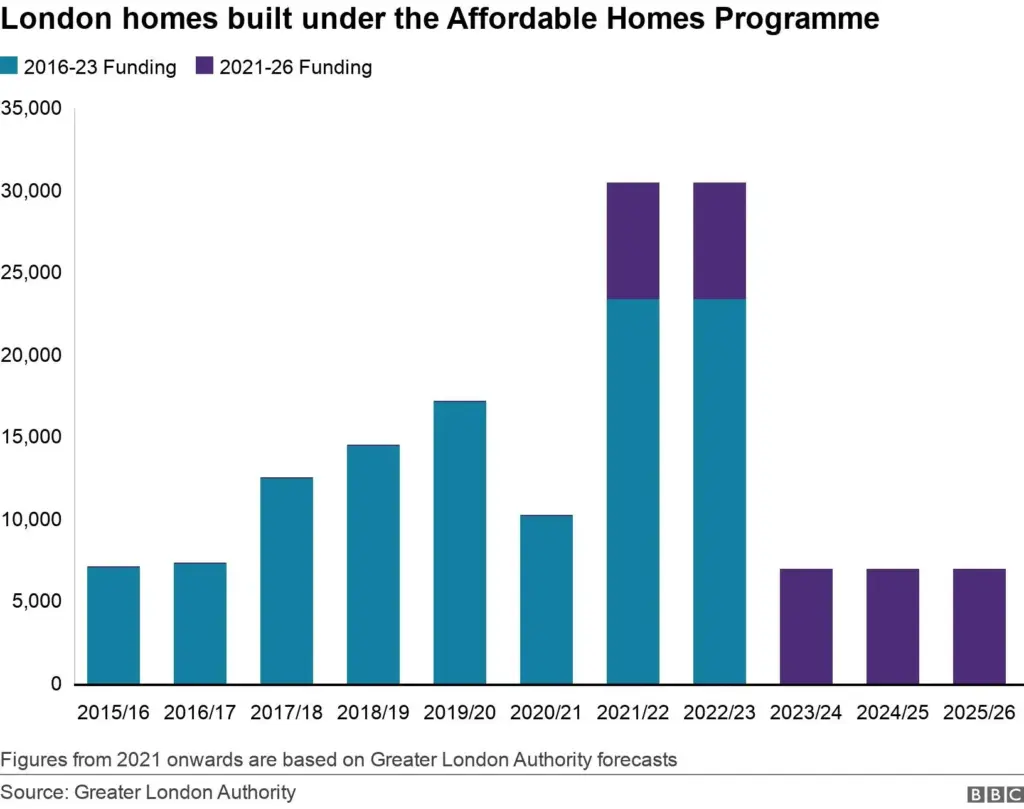
The current state of London’s affordable housing market presents a troubling picture as the city is on course to significantly miss the recently revised affordable homes target set by the government. According to data from City Hall, only 7,878 homes have broken ground under the 2021-26 Affordable Homes Programme (AHP), which necessitates a staggering increase of nearly 10,000 new homes in just three months to meet the adjusted goals. This only represents about 41-44% of what was initially aspired to, prompting serious discussions about the efficacy of current housing policies in London.
Critics are quick to label this performance as a failure, especially as the city grapples with a mounting housing crisis that impacts thousands of families. The discrepancies in the housing data starkly contrast the growing demands for affordable living spaces. Insufficient construction rates are leading to overcrowded homes and soaring rents, which further escalate the problem. With close to 10 million residents depending on adequate housing solutions, the current administration’s struggles stand in sharp relief against the backdrop of urgent needs.
Challenges Facing Affordable Housing in London
Numerous factors contribute to the challenges facing affordable housing in London, with high interest rates and mounting construction costs frequently cited as significant impediments. The mayor and his administration, including deputy mayor for housing, Tom Copley, have indicated that these economic factors have slowed housing progress, even leading to delays tied to the Building Safety Regulator. The combination of these issues complicates the landscape for housing development and raises questions about the strategies employed by City Hall to meet its own affordable housing goals.
In this context, the initiatives undertaken by City Hall to foster housing development come under scrutiny. Though it is reported that the number of housing starts has doubled compared to previous years, the actual completion rates suggest a grim reality where actual living solutions remain limited. The attempt to initiate a multi-billion-pound fund with minimal interest loans for developers could offer some promised relief, but until such initiatives translate into actual completed homes, the pressing needs of Londoners remain unfulfilled.
City Hall’s Response to the Housing Crisis
In response to the ongoing housing crisis, City Hall has asserted its commitment to prioritizing the construction of social rental homes. The mayor’s office acknowledges the historical difficulties faced over the past years and claims to be adapting by implementing measures to bolster housing delivery. Notably, the progress in council home completions has been highlighted as a positive development, with claims that this marks the highest phase of construction since 2016-17. However, questions linger over whether these measures are sufficient amidst the backdrop of a growing housing crisis.
Officials from City Hall aim to dispel notions of failure by citing improved housing starts and significant increases in council home developments. Still, critics argue that these figures are mere statistics and do not accurately represent the lived reality of many Londoners. Families are still facing the brunt of increasing rent and inadequate living conditions, prompting a call for greater urgency and accountability from both City Hall and the national government to resolve the matter constructively.
The Impact of Interest Rates on Housing Development
High interest rates are proving to be a major hurdle for the housing market in London, severely impacting construction timelines and overall housing affordability. Developers are grappling with the rising costs of borrowing, which directly translates to higher prices for new homes. The implications of these financial constraints ripple throughout the market, stalling many projects and pushing potential homeowners further out of reach. This creates a vicious cycle that exacerbates the already tight housing situation in the capital.
Efforts to stimulate housing development under the current conditions face an uphill battle. With mortgage rates fluctuating and the economic landscape becoming increasingly uncertain, prospective homeowners may find themselves deterred from entering the market. Meanwhile, the challenges posed by interest rates compel City Hall to reconsider its approach to affordable housing solutions, pushing for innovative strategies that could alleviate these pressures and protect vulnerable communities affected by rising living costs.
Economic Factors Influencing Housing Construction
The construction of affordable homes in London has become inextricably linked to the broader economic climate, which has shifted dramatically in recent years. Rising material costs, coupled with inflation, have created an environment where developers are hesitant to commit to new projects without assurance of profitability. This hesitation has led to stagnation in construction rates and delays in existing projects, which are particularly detrimental to the overall goal of meeting housing targets set for the current AHP.
In addition to material costs, external economic pressures such as Brexit and the ongoing repercussions of the COVID-19 pandemic have further complicated the landscape for housing development. City Hall’s response to these challenges has involved a re-evaluation of existing frameworks and a concerted effort to streamline processes for new housing initiatives. While some progress has been made, the overarching concern remains that these multifaceted economic challenges could ultimately prevent London from achieving its affordable housing aspirations.
The Role of Government in Housing Initiatives
The government plays a pivotal role in shaping the housing sector’s direction in London. Recent criticisms from the opposition highlight the perceived lack of urgency in addressing the housing crisis. With assertions from City Hall officials that significant strides have been made in housing delivery, sceptics demand accountability and transparency regarding the actual impact of such initiatives. Many Londoners feel they are left to navigate an increasingly complex housing market without adequate support from policymakers.
Moreover, as the housing crisis persists, calls for increased government intervention have grown louder, with suggestions that legislative changes are needed to better protect vulnerable populations. During times of economic instability, advocates argue that the government must take the lead in ensuring that affordable housing remains a priority, rather than leaving it to the local authorities to bear the burden alone.
Public Perception of London’s Housing Crisis
Public sentiment regarding London’s housing crisis is marked by frustration as many feel the weight of the issues at hand. There is a growing sense of urgency as families grapple with unaffordable rents and dwindling housing options. Bedlam has ensued, with many residents caught in limbo, hoping for action from those in charge. This reality fuels discontent among residents who feel that the government’s affordable housing goals are falling woefully short of the mark.
Community leaders and activists are rallying for change, emphasizing that the situation represents not just statistics but individual lives affected by inadequate housing conditions. Encouraged by grassroots efforts, awareness campaigns have emerged, demanding better accountability from local and national representatives. There is a collective push for tangible results that can provide immediate relief to those struggling under the burden of the ongoing crisis.
Financial Allocations for Housing Development
With billions allocated towards the 2021–26 Affordable Homes Programme, there is an intense focus on how these funds are utilized and whether they translate into real improvements on the ground. Critics argue that despite the substantial allocation, the execution of plans leaves much to be desired. Transparency and effective management of finances are crucial if the city hopes to meet its ambitious housing targets.
City Hall officials assert that financial strategies, such as providing low-interest loans to developers, are necessary steps towards stimulating housing growth. However, the efficacy of these strategies remains under scrutiny, particularly in light of the current economic landscape. Stakeholders demand a clearer picture of how funds are allocated and whether they are sufficient to truly address the pressing need for affordable housing across London.
Long-Term Solutions for London’s Housing Needs
As London confronts its housing crisis, it becomes imperative to develop sustainable long-term solutions that cater to the needs of its diverse population. Short-term fixes may alleviate some immediate pressures but fail to address the systemic issues that contribute to the housing fallout. Long-term planning, which includes increased investment in affordable homes, community-led development, and incentives for builders, is essential to create lasting change.
Engaging with community stakeholders to understand their needs can lead to more effective housing solutions that reflect the realities many face daily. By prioritizing community involvement in the planning process, City Hall can foster a collaborative approach to building a stronger, more resilient housing framework that not only meets demand but also upholds the aspirations of all Londoners.
Frequently Asked Questions
What is the current status of the London affordable homes target set by Sadiq Khan?
As of December 2025, London has only commenced construction of 7,878 homes under the 2021-26 Affordable Homes Programme (AHP), achieving approximately 41-44% of the revised target. The mayor needs to initiate nearly 10,000 additional homes in the last three months to meet this goal.
How many homes does London need to build to meet the adjusted affordable housing goals London?
London needs to start nearly 10,000 more homes by the end of March to meet the revised affordable housing goals set under the 2021-26 programme. Currently, only 7,878 homes have been initiated.
What challenges are affecting Sadiq Khan’s ability to meet London’s affordable housing target?
Several challenges are impacting the achievement of London’s affordable housing target, including high interest rates, rising construction costs, and delays caused by the Building Safety Regulator (BSR). These factors have contributed to the performance issues in the affordable homes target.
What measures is City Hall taking to improve affordable housing delivery in London?
City Hall is taking steps to enhance housing delivery by reducing affordability quotas and launching a multi-billion-pound fund offering developers low-interest loans. These measures aim to increase the number of homes built and address the housing crisis.
How do the 2021-26 homes construction figures compare to previous years in London?
The 2021-26 homes construction figures show that housing starts have more than doubled compared to the previous year, with starts increasing from 1,249 to 2,690 in the same timeframe, indicating an effort to ramp up affordable housing development.
What has been the response from City Hall Conservatives regarding the affordable homes performance under Sadiq Khan?
City Hall Conservatives have criticized the performance as a ‘failure,’ citing that fewer than 8,000 homes have begun construction against an original target of 35,000. They express concern over the growing housing crisis and its impact on families in London.
What is the focus of City Hall regarding the type of homes being built in London?
City Hall is primarily focused on increasing social rental homes, with recent years seeing the highest number of council house completions through GLA funding since 2016-17. The goal is to cater to the needs of vulnerable communities despite economic challenges.
How many council homes have been built or are in progress since 2018 in London?
Since 2018, City Hall has either built or is in the process of building 25,000 council homes, demonstrating a commitment to enhancing affordable housing options in London despite external economic pressures.
| Key Point | Details |
|---|---|
| Current Performance | Fewer than 8,000 homes started under the 2021-26 program; only 41-44% of the revised target met. |
| Revised Target Need | Mayor needs nearly 10,000 more homes to meet the target by the end of the program. |
| Construction Increase | Housing starts have doubled compared to last year’s figures, with an increase in council home starts. |
| Criticism from Opponents | City Hall Conservatives label the performance as a “failure” and cite a human housing crisis. |
| Government Response | City Hall insists it’s taking measures to improve housing delivery and has a focus on social rental homes. |
Summary
The London affordable homes target is under significant strain as recent figures suggest that the current construction pace is alarmingly slow. With fewer than 8,000 homes begun since the 2021-26 program’s inception, it is evident that achieving the revised goal will be a monumental challenge. Despite City Hall’s assertions of increased housing starts compared to previous years, the targets set are far from being met, highlighting a pressing need for effective housing solutions in London. It is crucial that the mayor and his administration prioritize addressing this crisis to ameliorate the housing situation for the growing number of families in need.