Listen to this article
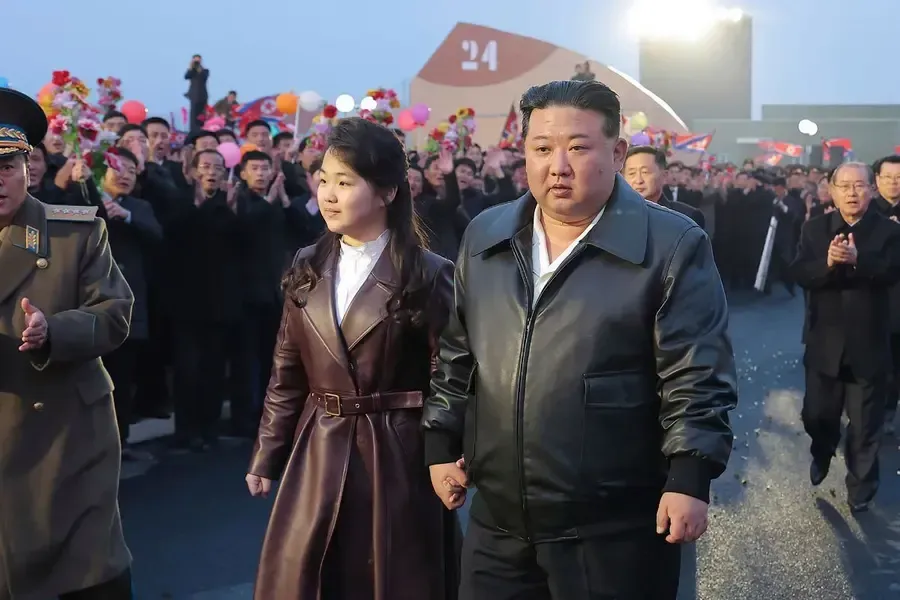
In a surprising twist in North Korean politics, Kim Jong Un has named his daughter, Kim Ju Ae, as his chosen heir, marking a significant moment in the lineage of North Korea leadership. At just 13 years old, Kim Ju Ae’s recent public appearances alongside her father have drawn considerable attention, raising questions about the future of the Kim dynasty. The South Korean National Intelligence Service has indicated that her designation as heir is based on her emerging role in official events, which suggests a deliberate grooming for leadership. As the only acknowledged child of Kim Jong Un and Ri Sol Ju, Kim Ju Ae is poised to navigate the complex landscape of North Korean politics, with the looming party congress set to potentially redefine the nation’s political landscape. Observers are intrigued as to how Kim Ju Ae’s succession will impact North Korea’s future, especially given the historical context of patriarchal leadership in the regime.
The designation of a young female heir in North Korean governance raises intriguing implications for the direction of the state. Kim Ju Ae, now stepping into a spotlight typically reserved for male counterparts, symbolizes a potential shift in traditional norms surrounding leadership within the hermit kingdom. With her increasing visibility at prominent events and growing involvement in state matters, many speculate about her role in shaping future policies. The emergence of a female successor suggests a dramatic evolution in North Korean family dynamics, potentially influenced by the precedent set by Kim Jong Un’s sister, Kim Yo Jong, who has also played a significant role in the regime. As discussions about the future of North Korean politics intensify, the implications of Kim Ju Ae’s succession remain a topic of vital interest for both national and strategic observers.
Kim Jong Un’s Choice: The Rise of Kim Ju Ae as Heir
In a surprising turn of events, North Korean leader Kim Jong Un has selected his young daughter Kim Ju Ae as the official heir to his leadership, according to reports from South Korea’s National Intelligence Service. This decision comes amid increasing public appearances by Ju Ae, who is currently just 13 years old. Her notable visits, including a high-profile trip to Beijing and various national celebrations, suggest that she is not only a symbol of her father’s regime but is also being strategically positioned as a key player in the North Korean leadership landscape. The implications of this succession could resonate deeply within the realms of North Korean politics, especially as she steps into a role typically dominated by male predecessors in the patriarchal society of the country.
Analysts speculate on the motivations behind this unprecedented move. With the Kim dynasty’s history of power transition predominantly favoring males, the decision to elevate a female child as heir raises questions about future leadership dynamics in North Korea. As Ju Ae continues to gain visibility at state functions, many observers are left wondering what her impending role could mean for the country’s governance and its position on the global stage.
The National Intelligence Service has observed Ju Ae’s emergence at significant events, suggesting she has surpassed initial training phases and is now being groomed for successorship. This shift is marked not only by her presence at political gatherings but also by subtle indications of her involvement in policy discussions. Lawmaker Lee Seong-kwen’s comments about her designated status highlight the seriousness with which her public persona is being treated, indicating a strategic move by Kim Jong Un to secure a political lineage that could uphold the family’s traditional authority in North Korean leadership.
Furthermore, her participation in important ceremonies, such as commemorating the founding anniversary of the Korean People’s Army, seems calculated to bolster a new image for the regime—one that contrasts starkly with that of her father, often portrayed as a ruthless dictator. The portrayal of Ju Ae alongside her father in official imagery carries significant weight in the context of North Korean propaganda, symbolizing the continuity of power while possibly hinting at a more progressive move towards inclusivity within the ruling elite.
Understanding the Political Landscape of North Korea Under Kim Ju Ae
The political landscape in North Korea continues to evolve as Kim Ju Ae steps into the spotlight. In a regime characterized by strict hierarchy and traditional gender roles, her ascent as Kim Jong Un’s heir marks a notable deviation from established norms. This development has sparked discussions among defectors and analysts alike, who once dismissed the notion of a woman leading the nation. In addition to challenging patriarchal conventions, her role could reshape North Korean leadership by incorporating fresh perspectives, especially if she assumes a more significant decision-making role in response to the demands of a changing world.
Moreover, the implications of Kim Ju Ae’s prominence extend beyond familial ties, reflecting a tactical maneuver by Kim Jong Un during politically volatile times. By positioning his daughter in the line of succession, he may be signaling a shift towards a more unified leadership approach, which could potentially ease tensions within the ruling party and among military factions. North Korea has historically relied on the hardline ideology of the Kim family lineage; embracing youth and female representation within this narrative may also serve to modernize the regime’s image and approach.
Kim Ju Ae’s increasing visibility in domestic and international contexts raises critical questions about the future trajectory of North Korean politics. If she is indeed receiving informal training and policy input alongside her appearances, we may witness shifts in the country’s approach to issues such as foreign relations, nuclear policy, and even internal governance. Her presence at high-profile events, including military parades and diplomatic visits, also indicates that the Kim family aims to project a softer, more relatable image to both the North Korean populace and the international community. These appearances contrast her father’s typically stern public persona, hinting that the regime might be preparing for a gradual transformation under her influence, should she ascend to power.
As the daughter of Kim Jong Un, her experiences and perceptions could shape North Korean policies in ways that diverge from traditional expectations. With ongoing speculation about her actual role within the ruling hierarchy, the global community watches carefully for signals that could redefine North Korean leadership and policies. How Kim Ju Ae interacts with the established power structures around her—and how she balances them with her emerging vision—will be pivotal in determining the future landscape of North Korea.
The Family Legacy of Kim: Ju Ae’s Unique Position
The Kim family legacy has long been central to the identity of North Korea, characterized by a potent blend of charisma, authority, and controversy. As the only acknowledged child of Kim Jong Un and his wife, Ri Sol Ju, Kim Ju Ae’s existence has stirred intrigue and speculation about the family’s lineage and future leadership. Unlike previous heirs, her youth presents both opportunities and challenges—the potential for promoting youth dynamics in leadership is juxtaposed with the fears of inexperience in handling the intricate web of North Korean politics. The complexities of her position as female heir in a male-dominated society complicate traditional perceptions of power succession.
In the face of historical precedence, Kim Ju Ae’s involvement in state affairs signifies a shift in the narrative surrounding womanhood in North Korean leadership. With her public appearances alongside senior officials and at significant events, it’s evident that she is entering a role that has been considered atypical. This novel representation not only establishes her as an emerging leader but also may exemplify the regime’s adaptability amidst global political shifts. The narrative surrounding her development could further humanize the hardline policies typically associated with her family, making her a central figure in the complex dynamics of North Korean leadership.
As North Korea navigates its future amidst international scrutiny and internal challenges, Kim Ju Ae’s position offers a glimpse into the potential transformation of the regime. Observers note that her frequent appearances have the dual effect of fostering a connection with the populace while enhancing her father’s political legitimacy through association with youth and continuity. This dynastic approach allows the Kim family to retain absolute control and authority while presenting a veneer of modernity in a world that increasingly values youth and representation in leadership roles. It remains to be seen how Kim Ju Ae will influence the strategic directions of North Korea as she adopts responsibilities typically reserved for older officials within the regime.
With female representation in leadership having faced historical skepticism, her gradual emergence could either redefine expectations or reinforce them, depending on the choices she makes. Observers continue to analyze her evolving role, as this could indeed signal a warmer approach towards governance, potentially opening up new dialogues about North Korea’s relationships with the world.
Kim Ju Ae’s Public Appearances: The Shift in North Korean Politics
Kim Ju Ae’s recent public appearances have highlighted a significant shift in North Korean politics, showcasing her transition from a private life to a prominent public role. These appearances have not only contributed to her father’s efforts to present a more approachable image, but they also signify her growing involvement in the political landscape of the nation. The National Intelligence Service has noted that her participation in key state events reflects an emerging role that could reshape perceptions of leadership in North Korea and address the public’s desire for a figure perceived as more relatable.
By attending ceremonial events and diplomatic visits, Kim Ju Ae is crafting her own persona within the tightly controlled narrative of the regime. These public engagements, such as her attendance at military parades and national celebrations, suggest a carefully curated image that aligns with both the longstanding traditions of the Kim family and the evolving expectations of North Korean society. The attention she garners not only benefits her father’s regime by softening its image but also positions her as a potential champion for future policy discussions that could engage the national and international community.
Examining Kim Ju Ae’s strategic appearances, we see a deliberate attempt to normalize her presence in official state matters. This aligns with the regime’s broader strategy to connect more deeply with the populace and symbolize continuity through generational succession. Comparing her public engagements with those of other rulers, it becomes evident that her role extends beyond mere representation; she is being cultivated as a figure who may influence policies reflective of a new era in North Korean leadership. By gradually stepping into a public-facing role usually reserved for seasoned politicians, she could play a unique part in navigating North Korea’s complex relationship with the world.
Thus far, Ju Ae’s public persona appears to blend youthful innocence with the pressures of authoritative leadership, a reflection of her father’s determination to secure his legacy while adapting to shifting political landscapes. Regardless of the outcomes, her journey offers insights into the potential evolution of North Korean governance and the capacities of its future leaders.
The Future of North Korean Leadership: Ju Ae’s Role
The future of North Korean leadership increasingly hinges on the role Kim Ju Ae is set to play in shaping the regime’s direction. As the designated successor, her influence may extend to critical issues such as diplomatic relations, military strategies, and internal governance. Observers note that her youth could foster a more modern approach, aligning with the aspirations of a younger generation yearning for reform within the confines of an authoritarian regime. While skepticism remains about how much power she will wield, her position symbolizes a progressive step for North Korean leadership, especially against the backdrop of patriarchal traditions deeply rooted in the country’s history.
In light of her father’s efforts to soften the image of the Kim dynasty, Ju Ae’s potential ascent reflects an intriguing blend of old and new. With her becoming a visible figure in state affairs, she could leverage her unique position to advocate for reforms or new policies tailored to present-day challenges. The question remains as to whether Kim Jong Un, while still in his prime, is genuinely paving the way for a generational change or strategically positioning his daughter as a puppet leader to reinforce his control amidst the shifting political environment.
The possibility of Kim Ju Ae transitioning into a leadership role raises numerous questions about the devolution of power within North Korea. Past patterns suggest that leadership transitions have historically favored age and experience, putting her youth at odds with the expectations placed on her familial lineage. Nevertheless, the symbolic appointment of a female child as heir marks a significant departure from traditional norms, indicating a potential willingness within the regime to adapt to contemporary societal views on leadership. Given her father’s current health and rule, it is unclear whether Kim Ju Ae will be thrust into a direct leadership position in the near future or if her views will merely mirror those of her father.
Her journey towards leadership is poised at a pivotal intersection of continuity and change within North Korea. As she takes center stage alongside her father, her experiences and perspectives will likely play a critical role in defining the future political direction of the country. The landscape of North Korean politics is rapidly evolving, and Kim Ju Ae’s rise presents an opportunity to reimagine authority within a regime that has long been synonymous with dynasty and rigid hierarchy.
Frequently Asked Questions
What does Kim Jong Un’s selection of his daughter Kim Ju Ae as heir mean for North Korean politics?
The selection of Kim Ju Ae as Kim Jong Un’s heir signifies a potential shift in North Korean politics, as her increased public appearances suggest she may be groomed for leadership. This development has raised discussions about the future of North Korea’s leadership under a hereditary system.
How has Kim Ju Ae’s public presence influenced perceptions of the Kim Jong Un family?
Kim Ju Ae’s public presence alongside her father has softened the image of the Kim Jong Un family, showcasing a more human side of their leadership amidst the authoritarian regime. Her attendance at high-profile events indicates she may play a crucial role in future leadership.
What role does Kim Ju Ae play in the current North Korean leadership structure?
Kim Ju Ae is being positioned as a successor in North Korea’s leadership structure. Lawmakers have noted her participation in events and policy discussions, suggesting she has begun to act as a de facto leader alongside Kim Jong Un.
Why is Kim Ju Ae considered as a potential successor over her brother in North Korean succession?
Despite North Korea’s patriarchal society, Kim Ju Ae is considered a potential successor due to her father’s apparent preference for her. This choice raises questions about gender roles in North Korean politics, especially given Kim Yo Jong’s influence in leadership.
What implications could Kim Ju Ae’s succession have on future policies in North Korea?
Kim Ju Ae’s succession could imply a continuation of Kim Jong Un’s policies, or potentially new directions if she chooses to implement changes. Observers are closely monitoring her development in the political field for insights into North Korea’s future.
How has Kim Ju Ae appeared in North Korean state media?
Kim Ju Ae has made various appearances in North Korean state media, including inspecting military technology and accompanying her father on diplomatic trips, which is remarkable for any family member besides Kim Jong Un to be featured so prominently.
What are the concerns regarding her young age and designation as heir?
Concerns arise from Kim Ju Ae’s age, as she is only 13 and being primed for leadership in a complex and volatile political landscape. Critics question the wisdom of designating such a young child as a successor while Kim Jong Un is still active in leadership.
How did Kim Jong Un’s choice of Kim Ju Ae as heir disrupt traditional views on leadership in North Korea?
Kim Jong Un’s choice to designate Kim Ju Ae as heir challenges traditional views of male supremacy in North Korean leadership, suggesting a potential for a shift in gender dynamics within the ruling elite.
What past precedents exist for female leadership in North Korea?
The presence of Kim Yo Jong, Kim Jong Un’s sister, as a senior figure in the Workers’ Party of Korea provides a precedent for female authority. Her influence indicates that women can hold significant power within North Korea, despite traditional norms.
How might Kim Ju Ae’s leadership differ from Kim Jong Un’s?
While it is uncertain how Kim Ju Ae’s leadership might differ, her youthful perspective and potential for growth might lead to new approaches in North Korean policy, particularly in relation to foreign diplomacy and internal reforms.
| Key Point | Details |
|---|---|
| Heir Designation | Kim Jong Un has chosen his 13-year-old daughter, Kim Ju Ae, as his successor. |
| Public Appearances | Kim Ju Ae has made multiple public appearances alongside her father, indicating her rising profile. |
| NIS Assessment | The National Intelligence Service believes her increased visibility in state events confirms her position as a successor. |
| Cultural Significance | The decision to designate a daughter as heir is unusual in North Korea’s patriarchal society. |
| Family Background | Kim Ju Ae is the only known child of Kim Jong Un and Ri Sol Ju, with rumors of an older son who has never been acknowledged. |
| International Context | Her appearances on state media have softened Kim Jong Un’s image and indicated potential policy input. |
| Future Implications | It’s uncertain what her succession will mean for North Korea, given previous hopes for reform under Kim Jong Un. |
Summary
Kim Jong Un’s daughter, Kim Ju Ae, has emerged as a significant figure in North Korea’s leadership narrative as she is being positioned as the potential heir. This marked transition reflects not only a personal family decision but also signals a noteworthy shift in North Korea’s traditional views on gender and leadership. As Kim Ju Ae becomes more involved in public affairs and events, it amplifies discussions about the future political landscape of the nation and her possible influence on its policy direction.