Listen to this article
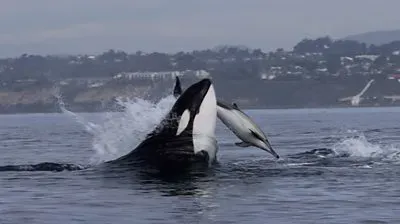
Killer whales dolphins collaborative hunting presents an intriguing look into the complex social behaviors of marine mammals. Recent studies have revealed a remarkable interaction between orcas and Pacific white-sided dolphins, showcasing their joint hunting behaviors off the coast of British Columbia. Captivating footage recorded by scientists has highlighted how these intelligent creatures unite to optimize their foraging strategies, pushing the boundaries of what we know about marine mammal collaboration. As these dolphins and killer whales synchronize their movements, they create a dynamic hunting environment, demonstrating a level of cooperation that is both fascinating and rare. This groundbreaking research, published in Nature Scientific Reports, opens new avenues for understanding the relationships between different marine species and their ecological roles in the ocean.
The phenomenon of cooperative hunting amongst different species of marine mammals, particularly between orcas and dolphins, sheds light on the intricacies of animal behavior in aquatic environments. Collaborative hunting methods employed by these intelligent animals not only enhance their success rates but also highlight their social structures and communication skills. Observations of these joint hunting behaviors have been pivotal in understanding how species like the Pacific white-sided dolphin can closely interact with killer whales, despite their distinct differences. By merging their efforts, these marine mammals exemplify the power of collaboration in the wild, prompting researchers to delve deeper into the dynamics of their interactions. Such insights could redefine our perspective on the ecological relationships within marine ecosystems.
The Fascinating Relationship Between Orcas and Dolphins
Killer whales, or orcas, are not only fascinating due to their size and intelligence but also because of their unique relationships with other marine mammals. Recent studies have shown that orcas and Pacific white-sided dolphins share a remarkable interaction that goes beyond mere coexistence in the ocean. These species demonstrate what can only be described as a complex social structure, enabling them to engage in collaborative hunting behaviors that increase their success rate while foraging for food. Understanding such cooperative dynamics provides insights into the behavioral ecology of these highly intelligent marine beings.
The interaction between killer whales and dolphins is particularly intriguing. While orcas are often seen as apex predators, their collaboration with smaller marine mammals like Pacific white-sided dolphins suggests an evolved strategy of joint hunting. This relationship highlights the adaptability of these species and their ability to benefit from the strengths of each other, leading to more effective hunting techniques and enhanced survival in their challenging oceanic environment.
Frequently Asked Questions
What evidence exists of killer whales and dolphins collaborating in hunting?
Recent studies have provided the first recorded evidence of killer whales and Pacific white-sided dolphins engaging in collaborative hunting behaviors. Researchers captured moments where these species coordinated their efforts while hunting, particularly near British Columbia, Canada.
How do killer whales and Pacific white-sided dolphins interact during hunting?
Killer whales and Pacific white-sided dolphins demonstrate remarkable interaction during their joint hunting efforts. Drones and camera tags have shown that killer whales align their movements with diving dolphins, indicating synchronized hunting strategies that increase their chances of catching prey.
What role do orcas play in the collaborative hunting of dolphins?
Orcas, or killer whales, play a significant role in the collaborative hunting behaviors observed alongside Pacific white-sided dolphins. Their size, intelligence, and social structures enhance group strategies that improve hunting success within these marine mammal collaborations.
Why is it important to study killer whale and dolphin hunting behavior?
Studying the collaborative hunting behavior of killer whales and dolphins is vital for understanding marine mammal interactions and ecology. The findings contribute to our knowledge of predator-prey dynamics and highlight the complexity and sophistication of marine mammal behavior.
Where have researchers observed killer whales and dolphins hunting together?
Researchers have observed killer whales and Pacific white-sided dolphins hunting together primarily near the coastline of British Columbia, Canada. This unique environment offers insights into their joint hunting behaviors and interaction patterns.
What technology is used to study killer whales and dolphins in the wild?
To study the hunting behaviors of killer whales and Pacific white-sided dolphins, researchers utilize advanced technology such as drones and camera tags. These tools allow scientists to monitor and record interactions without disturbing the animals in their natural habitat.
How does this discovery impact our understanding of marine mammals?
The discovery of killer whales and dolphins engaging in collaborative hunting behaviors challenges previous perceptions of these species. It showcases their intelligence and adaptability, emphasizing the importance of conservation efforts for marine mammals and their ecosystems.
What implications does joint hunting have for marine ecosystems?
Joint hunting behaviors between killer whales and Pacific white-sided dolphins can significantly impact marine ecosystems. Their collaboration may affect prey populations, species distribution, and the overall dynamics of oceanic food webs, thus influencing ecosystem health.
What is the significance of the term ‘killer whale’ in relation to dolphins?
Despite the term ‘killer whale’, orcas are actually the largest species of dolphin. This highlights the taxonomic relationship between these two groups and underscores the importance of understanding their interactions, such as the collaborative hunting behaviors exhibited by killer whales and dolphins.
| Key Point | Details |
|---|---|
| Research Findings | First recorded evidence of killer whales and Pacific white-sided dolphins hunting together. |
| Location of Study | Coast of British Columbia, Canada. |
| Study Methods | Researchers utilized drones and camera tags to observe feeding behaviors. |
| Research Leader | Dr. Sarah Fortune from Dalhousie University. |
Summary
Killer whales dolphins collaborative hunting has been observed for the first time in a remarkable study. Researchers recorded the unique cooperative behavior between killer whales and Pacific white-sided dolphins near the coast of British Columbia. This unprecedented footage highlights the dynamism of marine life, showcasing how different species can work together for survival. Scientists employed advanced techniques, including drones and camera tags, to monitor these interactions, revealing key insights into their feeding strategies. By sharing this groundbreaking evidence, we gain a better understanding of the complex relationships within marine ecosystems, emphasizing the importance of collaboration in the animal kingdom.