Listen to this article
The recent **Khamenei Funeral Postponement** has stirred significant attention as Iran navigates through escalating tensions amid ongoing US-Israeli bombardments. Authorities announced the delay of the funeral for the late Supreme Leader, Ayatollah Ali Khamenei, originally set for Wednesday night, citing the overwhelming demand from mourners wishing to pay their respects. As the nation grapples with the aftermath of Khamenei’s death and the pursuit of a successor, the geopolitical landscape becomes increasingly volatile. The situation is further complicated by Iran’s military responses to the US-Israeli strikes, reflecting the broader **Middle East conflict** that has intensified in recent days. Such developments not only dominate **Iran news** but also raise urgent questions about stability in the region and the potential for renewed hostilities.
The postponement of the funeral ceremony for Ayatollah Ali Khamenei marks a significant moment in Iran’s political landscape, impacting both local and international relations. As the Iranian leadership seeks a successor to fill the vacated role, the current atmosphere is charged with uncertainty amidst ongoing military aggression from both the US and Israel. This escalation has prompted discussions about Iran’s potential military response and the implications of further conflict in the **Middle East**. While the nation mourns, the strategic maneuvers involve complexities that resonate with stakeholders beyond its borders, underscoring the intricate dance of diplomacy and warfare that defines the region. The developments surrounding Khamenei’s legacy and the power dynamics at play highlight the urgent need for a thoughtful analysis of Iran’s standing in the face of external pressures.
Postponement of Khamenei’s Funeral Amidst Ongoing Conflict
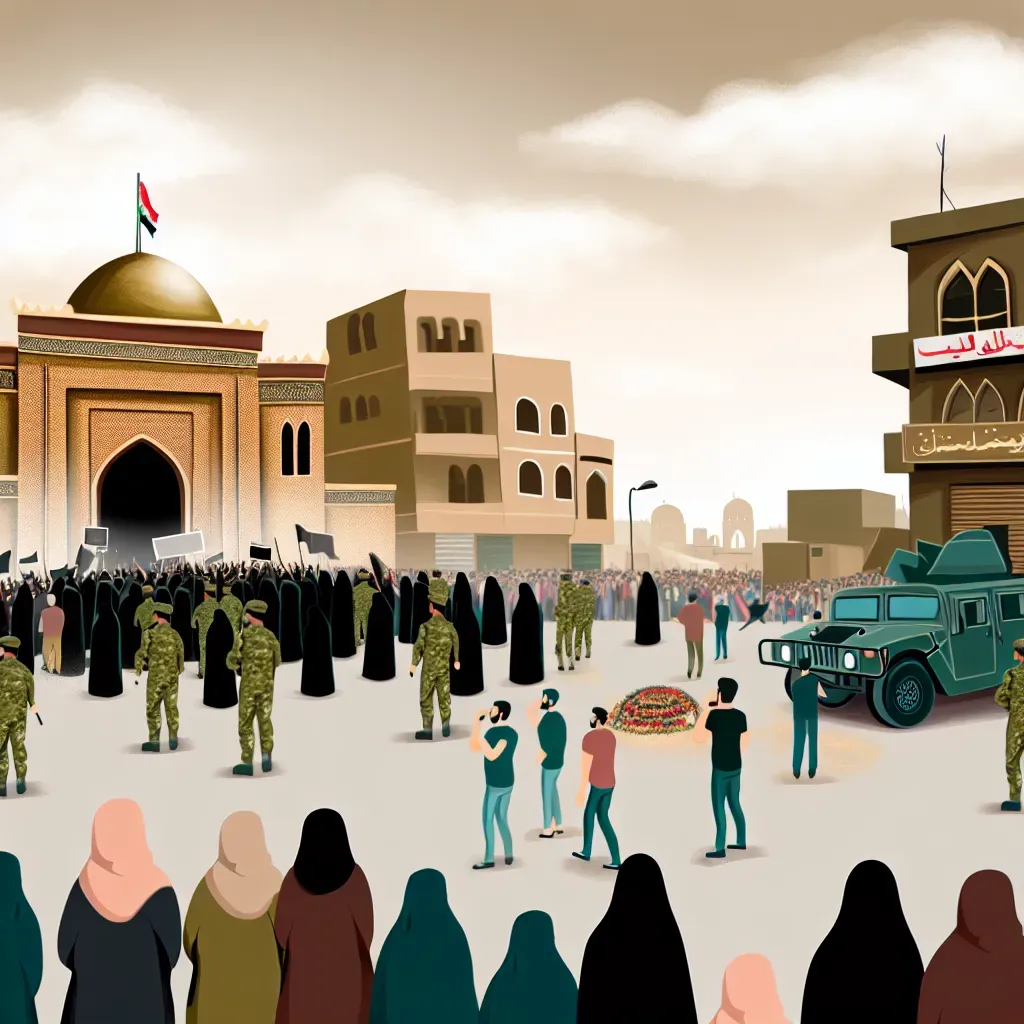
The funeral for Ayatollah Ali Khamenei, once scheduled to take place shortly after his tragic death, has now been postponed due to the escalating violence from US-Israeli airstrikes in Iran. Authorities cited overwhelming public interest as the primary reason for the delay, stating that additional arrangements were needed to accommodate the expected mourners. As tensions rise and military actions intensify, the decision underscores the turmoil gripping the region, particularly amid threats of further assaults and the corresponding need for security measures. The ceremony was set to be a significant event, drawing crowds to the Grand Mosalla prayer complex, yet safety concerns forced officials to reconsider the timing.
This postponement not only reflects the immediate dangers posed by ongoing military strikes but also highlights the uncertainty surrounding Iran’s stability and leadership following Khamenei’s assassination. It suggests a critical moment for the nation, as many citizens seek spaces for collective mourning while simultaneously grappling with the fear of further escalations in violence. The complexities of warfare, political sentiment, and the preparation for a potential successor compound the need for a careful approach to any public event amid unrest.
Iran’s Military Response to US-Israeli Strikes
In the wake of Khamenei’s assassination and ongoing military bombardments, Iran has taken decisive retaliation measures. The country’s armed forces have launched missile strikes on perceived targets in Israel and various Gulf Arab states that host US military resources. This military response illustrates Iran’s commitment to deter further aggression, with leadership making it clear that the nation feels compelled to defend itself amid regional conflicts. Statements from Iranian officials reinforce the view that the strikes are a necessary reaction to what they describe as unwarranted foreign interference in their sovereignty.
The current situation adds a layer of complexity to an already precarious environment in the Middle East. With the stakes higher than ever, there is significant concern among regional powers about the potential for wider conflict as Iran’s military responds to threats from the US and Israel. The potential for miscalculation looms large, as instances of military engagements could spiral into larger-scale confrontations, altering the strategic landscape of the region. Amidst these tensions, calls for diplomacy are overshadowed by the urgency for military preparedness, as Iran continues to assert its influence and retaliatory capabilities.
Amid the chaos, the need for dialogue and negotiation has never been more pertinent. Although the military response showcases Iran’s determination, the long-term implications for regional stability and security remain a significant concern. Key players in the Middle East are closely monitoring these developments, as the consequences of the ongoing conflict could reverberate throughout the entire region, prompting international stakeholders to reconsider their approach to engagements with Iran.
The Search for Khamenei’s Successor
As the dust settles following the chaotic events surrounding Khamenei’s death, attention turns to the critical question of his successor. The Assembly of Experts, responsible for identifying the new supreme leader, was reported to be close to making a decision. Speculations abound regarding potential candidates, with some insiders suggesting that Khamenei’s son, Mojtaba, is a leading contender. His connections within the conservative establishment and the Islamic Revolutionary Guard Corps position him as a powerful figure during this transitional period in Iranian politics, especially against the backdrop of rising tensions with the West.
The selection of Khamenei’s successor carries significant ramifications for both domestic and foreign policy. Given the ongoing military actions from US and Israeli forces, it is likely that the new leader will have to navigate a landscape fraught with complications, balancing calls for military strength against the need for diplomatic engagement. Furthermore, the successor’s stance on the Middle East conflict will be pivotal in determining Iran’s future relations with its neighbors and the West, especially regarding the recent bombings and military escalations. Iran’s internal political dynamics, thus, play a crucial role in shaping the future course of the nation’s governance and international posture.
Impact of Khamenei’s Death on Iranian Society
Khamenei’s assassination marks a monumental shift in Iran’s sociopolitical landscape, igniting both grief and defiance among different factions of society. His death has prompted a surge of protests among his supporters, demonstrating a significant mobilization of voices rallying against US and Israeli actions. Media coverage highlights a stark division: while many stand in support of the Islamic Republic, others voice their grievances, underscoring the intensifying internal contradictions within Iran. This situation hints at a crisis of legitimacy for the governing body amid increasing discontent.
The responses from citizens reveal deep-rooted sentiments towards authoritarian governance and reactions toward external pressures perpetrated by foreign powers. The aftermath of Khamenei’s death signals not only a potential shift in leadership but also possibly a reevaluation of the populace’s relationship to the state. As historical grievances resurface, debates surrounding the future of governance in Iran take on new dimensions—will the existing regime adapt and respond to public demands for change, or will it double down on authoritarian practices?
Iran’s Response to International Condemnation
Iran’s international position has drawn significant scrutiny following Khamenei’s assassination and the subsequent military escalations. Iranian officials have issued strong statements against US and Israeli actions, framing them as acts of aggression against the sovereignty of Iran. The rhetoric from Tehran indicates a unified front towards external adversaries, often invoking anti-Western sentiments and rallying nationalist discourse among the populace. These statements serve both to justify military responses and to steady domestic support against perceived foreign aggression.
However, as Iran engages in military retaliation, it faces the challenge of managing international relations fraught with potential isolation. The ramifications of escalating violence and heightened rhetoric may complicate Iran’s diplomatic outreach and lead to further sanctions or military posturing from Western powers. The balancing act for Iranian leaders will be to navigate these pressures while demonstrating strength and unity, all while considering the broader implications for regional stability amidst the ongoing conflicts.
Future Prospects for Iran Post-Khamenei
Looking ahead, the prospects for Iran following Khamenei’s death are fraught with uncertainty, especially as the nation grapples with both internal dissent and external threats. The appointment of a successor will be crucial, as the new leader will need to address the expectations of a populace yearning for change while remaining steadfast against foreign pressures. The interplay of military actions and public sentiment will shape the trajectory of the country’s governance and diplomatic interactions in the coming months.
As regional tensions amplify, the potential for broader conflict involving neighboring states and superpowers remains a pressing concern. Iran’s military responses to US-Israeli strikes may elicit further retaliation, creating a cycle of violence that could spiral out of control. Strategic decisions made in the aftermath of Khamenei’s death will play a significant role in defining the future of the Islamic Republic, whether through continued militaristic defense or a shift towards diplomatic engagement. Only time will reveal how Iran navigates this pivotal moment in its history.
The Rising Role of the Islamic Revolutionary Guard Corps (IRGC)
In light of Khamenei’s assassination and the subsequent military turmoil, the Islamic Revolutionary Guard Corps (IRGC) is poised to play an increasingly prominent role in shaping Iran’s military and political strategy. Historically, the IRGC has been a crucial player in Iranian affairs, ensuring loyalty to the Islamic Republic’s values and quelling internal dissent. With the leadership vacuum following Khamenei’s death, the IRGC’s influence may expand further, especially in times of heightened external threats.
The organization’s alignment with conservative factions within Iran amplifies its stakes in any potential successor’s appointment. Given their access to military resources and oversight of asymmetric warfare strategies, the IRGC’s perspective will be instrumental in determining how Iran addresses threats from the US and Israel, shaping its future conflicts. Thus, the IRGC’s leadership could be fundamental in navigating the complexities of post-Khamenei Iran, influencing both domestic stability and external military engagement.
Public Sentiment and Protests in the Streets
Following the significant upheaval caused by Khamenei’s death, public sentiment in Iran has manifested itself dramatically in the streets. Widespread protests showcase both support for the Islamic Republic and dissenting voices calling for change. While pro-government demonstrations highlight loyalty and solidarity against perceived aggressors, celebratory protests among oppositional groups point to an enduring desire for reform and a move away from authoritarian rule. This polarization within society reveals deep divisions that could impact the political landscape in the aftermath of Khamenei’s death.
The contrasting emotions displayed in these gatherings illuminate the complexities of Iranian identity in relation to state authority and foreign relations. Activists and dissidents have bravely emerged, seizing this moment to demand accountability and transparency, capitalizing on the existing chaos to push for radically altered governance. As grievances resurface, the protests signify not just a response to national tragedy but a collective yearning for transformation, which could fundamentally reshape Iran’s trajectory in the years to come.
Regional Implications of Iran’s Military Actions
As Iran engages in military retaliation against US and Israeli forces, the broader regional implications cannot be understated. The ongoing conflicts risk destabilizing neighboring countries, with military responses reverberating across the Middle East. Iran’s actions raise alarm among Gulf states, leading to heightened military readiness and potential alliances against perceived threats. The fears of spillover conflicts will be predominant among nations that find themselves inadvertently drawn into escalated hostilities.
Moreover, how the international community responds to Iran’s military actions will significantly influence the geopolitical landscape. Responses from regional players could either exacerbate tensions or pave the way for dialogue and de-escalation. Iran’s military strategies might force neighboring countries to redefine their security policies and engage in reshaping alliances, impacting the balance of power in the region and potentially leading to broader confrontations.
Frequently Asked Questions
Why was the Khamenei Funeral Postponement announced?
The Khamenei Funeral Postponement was announced due to the ongoing US and Israeli strikes across Iran. Authorities cited the high volume of requests from people wanting to attend the ceremony, indicating that more time was needed to prepare the necessary infrastructure for the event.
What impact does the Khamenei Funeral Postponement have on Iran’s political situation?
The Khamenei Funeral Postponement adds to the uncertainty in Iran’s political landscape, especially as the Assembly of Experts is reportedly close to selecting a successor. The delays might indicate instability during a critical period marked by military aggression from US and Israeli forces.
How is the Iranian military responding amidst the Khamenei Funeral Postponement?
In response to the Khamenei Funeral Postponement and the escalating US-Israeli assaults, the Iranian military has launched missiles and drones targeting Israel and Gulf states with US military bases, emphasizing its readiness to defend Iran’s sovereignty.
What are the implications of the Khamenei Funeral Postponement on US-Israeli operations?
The Khamenei Funeral Postponement may influence US and Israeli operations as they currently conduct airstrikes across Iran. The Iranian government’s focus on security and military retaliation could escalate tensions further in the region.
What role does Khamenei’s successor play in the aftermath of the Khamenei Funeral Postponement?
The selection of Khamenei’s successor plays a crucial role in determining Iran’s future direction, especially in the context of the Khamenei Funeral Postponement and ongoing US-Israeli strikes. The new leader will need to navigate the delicate balance of military response and diplomatic outreach.
What has been the public reaction to the Khamenei Funeral Postponement?
Public reaction to the Khamenei Funeral Postponement has been mixed, with reports of large crowds of supporters protesting against US and Israeli actions, contrasting with dissenters who celebrated Khamenei’s death. This reflects the polarized sentiments within Iran during a time of crisis.
How does the Khamenei Funeral Postponement relate to the ongoing Middle East conflict?
The Khamenei Funeral Postponement is directly related to the ongoing Middle East conflict, as heightened military actions from US and Israeli forces coincide with the postponement, creating a volatile environment that may affect regional stability.
What are the consequences of the Khamenei Funeral Postponement for Iran’s international relations?
The Khamenei Funeral Postponement could strain Iran’s international relations further, particularly with the US and Israel, as the military responses to ongoing attacks and the successor’s choice will likely shape Tehran’s foreign policy in the months to come.
What does the Khamenei Funeral Postponement reveal about Iran’s security situation?
The Khamenei Funeral Postponement reveals a precarious security situation in Iran, highlighting the challenges the government faces amid external military threats and the need to maintain public order during a critical transitional period.
How will the Khamenei Funeral Postponement affect the Assembly of Experts in selecting the new leader?
The Khamenei Funeral Postponement places additional pressure on the Assembly of Experts to expedite the selection of Khamenei’s successor, as the need for stable leadership becomes increasingly urgent amidst ongoing conflict and uncertainty.
| Key Points | Details |
|---|---|
| Funeral Postponement | The funeral of Ayatollah Ali Khamenei has been postponed due to ongoing strikes by US and Israeli forces. |
| Reason for Postponement | Authorities need time to accommodate large crowds wishing to attend the three-day funeral event. |
| Ongoing Conflict | US and Israeli forces continue intense bombardments across Iran, with Iran retaliating by targeting Israel and Gulf states. |
| Successor to Khamenei | The Assembly of Experts is close to selecting a new supreme leader, with Khamenei’s son considered a frontrunner. |
| Civilian Casualties | Recent reports indicate significant civilian casualties as a result of the conflict, with over 1,000 deaths recorded. |
| Iran’s Military Actions | Iran’s armed forces have launched missiles and drones in retaliation against US military bases in the region. |
Summary
The Khamenei Funeral Postponement highlights the ongoing turmoil in Iran amidst escalating US and Israeli military actions. Authorities have delayed the ceremony to better accommodate mourners, while the country grapples with the aftermath of Khamenei’s assassination and the implications for Iran’s leadership structure. This situation underscores the broader conflict and the urgency for Iran to respond militarily, all contributing to a rapidly changing political landscape.