Listen to this article
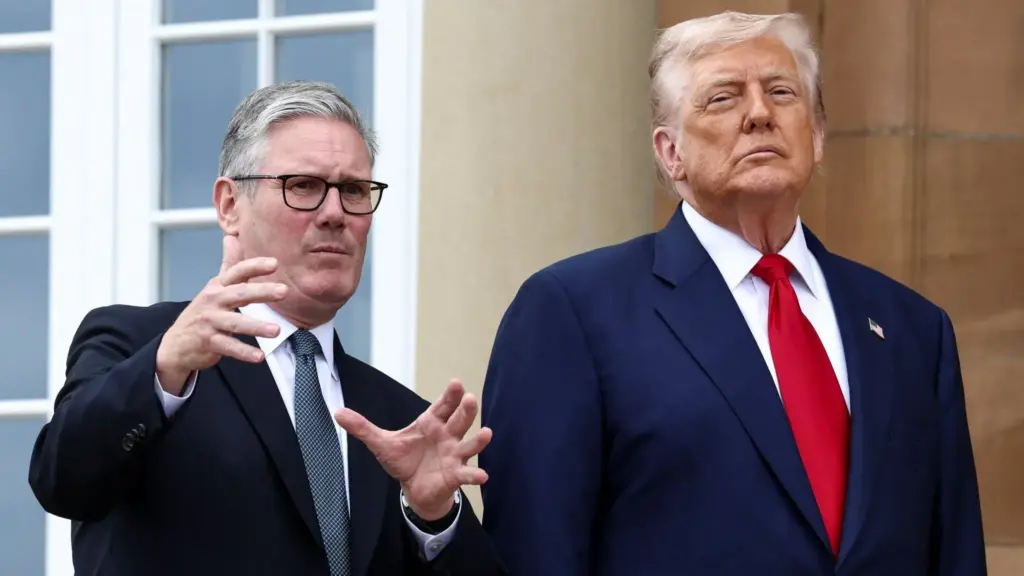
In a bold display of political criticism, UK Prime Minister Keir Starmer has issued his strongest remarks yet against Donald Trump, particularly over the former president’s comments regarding NATO troops in Afghanistan. Starmer’s condemnation comes after a series of disheartening statements from Trump, which he termed “insulting and frankly appalling.” In light of the 457 British soldiers who sacrificed their lives in the conflict, Starmer’s response underlines the seriousness of defending the honor of the armed forces. As public backlash to Trump’s remarks reverberates across the UK, the Prime Minister’s outspokenness resonates with those who feel a deep sense of loyalty and obligation to the service members who have served abroad. This reflection on Starmer’s evolving stance raises questions about the future of UK and US political relations, especially as Starmer addresses concerns about Trump’s diminishing respect for allied sacrifices.
Keir Starmer’s recent criticisms of Donald Trump underscore a significant turning point in the political landscape between the UK and the United States. As the Prime Minister navigates the treacherous waters of international diplomacy, his strong denunciation of Trump’s remarks about NATO reflects a broader concern about the treatment of military personnel and the legacy of their sacrifices. By highlighting Trump’s misstatements, which many consider crass and misleading, Starmer is not only defending the armed forces but also reaffirming the UK’s commitment to its allies. This marks an important moment as public discussions about political relationships and military honor take center stage. With increasing pressure on the government to respond decisively, Starmer’s approach might set a new precedent in how the UK engages with controversial foreign leaders.
Keir Starmer’s Strongest Rebuttal of Trump Yet
In a decisive move, UK Prime Minister Keir Starmer has publicly criticized Donald Trump’s remarks regarding the NATO troops’ involvement in the Afghanistan war, marking his strongest rebuke of the former president to date. Starmer described Trump’s comments as “insulting and frankly appalling,” highlighting the inaccuracies of the president’s claims that British and NATO troops were “a little off the front lines” during the conflict. This sentiment resonates deeply within the UK, particularly for the families of the 457 British service personnel who lost their lives in Afghanistan, underscoring the emotional weight of Starmer’s position.
Starmer’s comments reflect a broader responsibility felt among UK leaders to defend the integrity of their armed forces and the sacrifices they made. The context of these remarks is significant, as they follow several instances where Starmer was compelled to draw a line against Trump’s controversial statements, demonstrating a thread of systemic critiques from UK political circles towards Trump’s diplomatic rhetoric. By choosing to confront Trump directly, Starmer signals his commitment to uphold the honor of those who served, potentially reshaping public perception of his leadership in the realm of international relations.
The Political Fallout of Starmer’s Criticism of Trump
The political ramifications of Keir Starmer’s criticism towards Trump could be significant, especially as tensions between the UK and the US fluctuate. Political analysts suggest that Starmer’s assertiveness may appeal to those constituents who value national defense and closely scrutinize the relationship between the UK and controversial leaders. His strong stance reflects a growing sentiment within the Labour Party, where members have expressed concern over the implications of Trump’s remarks on NATO’s role in Afghanistan. Starmer’s rebuke not only represents a reaction to Trump’s disregard for military sacrifices but also positions him as a defender of British principles on a global stage.
Moreover, this confrontation may indicate an underlying shift in how the Labour Party wishes to align itself in opposition to the policies and rhetoric emanating from the White House. Starmer’s approach to swiftly tackle Trump’s comments shows a willingness to assert UK sovereignty and values, which might sway public opinion among veterans and their families who feel deeply affected by such remarks. As Labour MPs rally behind Starmer in this matter, the party could leverage this criticism to redefine its identity in the political landscape, particularly among those who are concerned about the geopolitical implications of maintaining favorable relations with a figure like Trump.
NATO Troops and Political Criticism: The Context
The ongoing discourse surrounding NATO troops, particularly in the context of Afghanistan, continues to be a critical point of discussion in UK politics. With numerous veterans, bereaved families, and political figures directly impacted by the war’s consequences, any remark deemed disrespectful can ignite a substantial backlash. Starmer’s decision to confront Trump’s assertions stems from the deep-rooted respect owed to those who served, emphasizing a need for careful communication regarding military sacrifices. The reaction from the UK military and public figures showcases the collective consciousness surrounding these topics, which cannot be overlooked by politicians.
Starmer’s condemnation can also be seen as a strategic maneuver to realign Labour’s position amidst rising political criticism from within and outside the party. By addressing Trump’s comments head-on, Starmer not only responds to immediate outrage but also establishes a narrative that honors national values and priorities. This presents him not only as a responsible leader but one who prioritizes Britain’s long-standing commitment to its armed forces. His willingness to stand against a controversial figure like Trump may set a precedent for how future UK leaders engage with the American president, balancing diplomatic relations with the moral imperatives of leadership.
Public Backlash Against Trump: UK Responses
In the wake of Trump’s remarks about NATO troops in Afghanistan, public backlash has been immediate and pronounced. Many UK citizens, especially those who have experienced the losses associated with the conflict, have expressed outrage at the insensitive nature of his comments. This widespread anger has galvanized support for Starmer, as many view his condemnation as a necessary rebuke to protect the dignity of British service members and their families. Social media platforms and public forums have seen a surge of discussions surrounding Trump’s ability to comment on international matters, prompting reflections on the relationship between the UK and the US.
As opinion polls reflect a growing sentiment of disapproval towards Trump’s remarks, Starmer’s actions might also serve to bolster his political standing domestically. Engaging the public on issues of military respect and personal sacrifices resonates strongly with a populace that harbors a strong connection to its veterans. The rising tension between public sentiment and Trump’s statements underscores the importance of UK political figures being vocal about international relationships, especially when they involve controversial leaders whose comments can have far-reaching implications.
Navigating Complex Relationships: Starmer and Trump
Navigating the often-complex relationship with Donald Trump presents both challenges and opportunities for Keir Starmer. Amidst the tumult of international politics, Starmer’s past efforts to maintain a cordial relationship with Trump underscore his belief in the importance of diplomacy. However, after the recent remarks, it is clear that the stakes involve more than mere diplomacy; they encompass the honoring of sacrifices made by British service members. Starmer’s rapid shift towards a more critical stance suggests that he recognizes the need to protect the integrity of the UK-TUS alliance while also responding to domestic pressures.
The question remains as to how Starmer will move forward in his dealings with Trump. His ability to balance the nuances of a vital international relationship while addressing internal concerns will be a test of his leadership. Should Trump continue to make controversial statements, it may lead to a continuum of defensive postures from Starmer, potentially reshaping their interactions in the future. By strategically positioning himself as a defender of UK values amidst such controversies, Starmer may enhance his position both domestically and on the international stage.
Implications of Starmer’s Leadership Style
Keir Starmer’s leadership approach, particularly in the face of criticism towards Trump, showcases a commitment to standing firm on principles while navigating the complexities of political relationships. His unapologetic stance regarding Trump’s remarks signals a departure from traditional diplomatic restraint that previous leaders might have adhered to. This forthrightness not only enhances Starmer’s reputation as a strong defender of military honor but also communicates a clear message of accountability, reinforcing the importance of national pride and respect for those who serve.
The implications of this leadership style extend beyond Starmer’s relationship with Trump; they reflect a broader trend of political leaders taking bold stances against perceived disrespect, particularly when it comes to military matters. By asserting himself in this manner, Starmer may galvanize support from constituents who are weary of diplomatic niceties at the expense of integrity and honor. Ultimately, this could redefine expectations of leadership in the UK, urging future representatives to show similar strength and resolve in addressing controversial issues on international platforms.
Starmer’s Public Persona in Crisis Management
In times of political strife, public perception of leaders is critical, and Keir Starmer’s handling of his response to Trump’s comments highlights his capacity for crisis management. By taking a firm stand against the disrespect shown to British soldiers, Starmer has not only illustrated his values but also reinforced the legitimacy of his leadership. His use of direct language and visible frustration reflects a dynamic leader willing to confront challenges head-on, which can resonate well with constituents who value action over inaction.
Moreover, this ability to respond promptly to a crisis situation strengthens Starmer’s public persona, presenting him as a leader who prioritizes both principled governance and public sentiment. As political landscapes evolve, such effectiveness in managing crises will likely play a significant role in shaping his legacy as Prime Minister. Each confrontation with Trump serves as an opportunity for Starmer to solidify his position not only as a defender of the UK’s defense forces but as a proactive leader attuned to the undercurrents of public sentiment.
The Future of UK-US Relations Amid Trump’s Remarks
As the UK and US navigate their relationship in a post-Trump era, Starmer’s recent criticisms provide a unique lens through which to assess future dynamics. The impact of public figures like Starmer standing against controversial remarks can set the stage for a re-evaluated partnership, one that may prioritize mutual respect over camaraderie. Particularly in light of Trump’s continued provocative statements, the question becomes how the UK will maintain its voice and influence while dealing with a challenging ally.
Looking ahead, the relationship’s evolution may depend on how forthcoming leaders are in addressing uncomfortable truths and ensuring that military sacrifices are respected at home and abroad. Starmer’s firm stance against Trump’s comments could signal a new era in UK politics where leaders are emboldened to speak truth to power, challenging ideologies that conflict with their values. As public sentiment evolves, Starmer’s actions could help shape a narrative that balances traditional alliances with a commitment to compassion and respect for those who have served.
Starmer’s Defense of Military Honor in Political Discourse
Starmer’s insistence on defending the honor of military personnel serves as a reminder of the weight words carry in political discourse, particularly when discussing topics as sensitive as warfare. His emphasis on holding Trump accountable for his comments highlights a crucial aspect of leadership: the responsibility to represent those who cannot advocate for themselves. By vocally opposing statements that belittle the sacrifices made by service members, Starmer reinforces the idea that such matters transcend politics and touch upon fundamental human dignity.
Increasing public awareness of military issues through Starmer’s actions aligns with a broader movement where political figures are held to account for their words. By fortifying the narrative that prioritizes respect for soldiers, Starmer may garner wider support from the public, including veterans and their families who desire reassurance regarding their sacrifices. This aspect of Starmer’s leadership could become a hallmark of his political identity, setting a standard for how issues of military honor are addressed in the public arena.
Frequently Asked Questions
What did Keir Starmer criticize about Donald Trump’s comments on NATO troops in Afghanistan?
Keir Starmer criticized Donald Trump’s remarks stating that NATO troops had stayed ‘a little off the front lines’ in Afghanistan, calling these comments ‘insulting and frankly appalling.’ Starmer emphasized the sacrifices of British soldiers, noting that 457 service personnel lost their lives in the conflict and deserved respect.
How has Keir Starmer’s criticism of Trump evolved over recent remarks?
Keir Starmer’s criticism of Trump has intensified notably in recent weeks, culminating in his firm rebuke regarding Trump’s comments on NATO troops in Afghanistan. This was at least the third time Starmer had to publicly criticize the President, signaling a significant shift in Starmer’s approach as he seeks to defend essential principles against what he views as Trump’s harmful remarks.
What implications does Keir Starmer’s criticism of Trump have on political relations in the UK?
Keir Starmer’s criticism of Trump could signal a turning point in diplomatic relations between the UK and the United States. As Starmer navigates the complex relationship with Trump, he must balance the necessity of maintaining a strong alliance while publicly addressing remarks that are seen as offensive to British troops and national interests.
Why did Keir Starmer feel the need to publicly rebuke Trump’s comments about Afghanistan?
Keir Starmer felt compelled to publicly rebuke Trump’s comments about NATO troops because he sees defending the armed forces as a fundamental duty of his role. His strong reaction comes in response to what he deemed a serious offense against those who sacrificed their lives in Afghanistan, reflecting his commitment to honor their memory.
What was the context of Keir Starmer’s comments on Trump regarding NATO troops?
The context of Keir Starmer’s comments on Trump stemmed from a series of remarks made by the President that were perceived as downplaying the severity of NATO troop involvement in Afghanistan. With growing pressure from Labour MPs and public backlash against Trump’s characterization of military sacrifices, Starmer’s response depicts a necessary assertion of respect for the armed forces.
What was the public reaction to Keir Starmer’s criticism of Trump’s NATO remarks?
The public reaction to Keir Starmer’s criticism has been largely supportive among those who value the sacrifices of British servicemen and women. Veterans and relatives of service personnel expressed outrage over Trump’s comments, indicating a significant public consensus that Starmer’s robust defense of the armed forces is both timely and necessary.
How does Starmer intend to maintain UK political integrity in light of Trump’s remarks?
Keir Starmer aims to maintain UK political integrity by openly addressing controversial remarks from Trump that undermine the contributions of British troops. His approach involves striking a balance between diplomacy and the moral obligation to defend the reputation and honor of those who served, suggesting that future interactions with the U.S. may be more critically examined.
What did Keir Starmer say about the role of NATO troops during the Afghanistan conflict?
In his comments, Keir Starmer asserted that NATO troops, including those from the UK, faced significant risks and losses during the Afghanistan conflict, highlighting that Trump’s claims of their being ‘a little off the front lines’ misrepresents the reality of their service. Starmer’s remarks stress the importance of recognizing the sacrifices made by members of the armed forces.
| Key Point | Details |
|---|---|
| Starmer’s Strong Rebuttal | Keir Starmer publicly condemned Trump’s remarks on Afghanistan, marking his strongest critique yet. |
| Incorrect Claims by Trump | Trump’s assertion that NATO troops stayed ‘a little off the front lines’ is factually incorrect and deemed offensive. |
| Starmer’s Emotional Response | Upon returning to Downing Street, Starmer expressed his anger, calling Trump’s comments ‘insulting and frankly appalling.’ |
| Historical Context | The war in Afghanistan resulted in the deaths of 457 British service personnel, calling for respect towards their sacrifices. |
| Pressure from Labour MPs | Growing pressure from Labour MPs prompted Starmer to strengthen his comments against Trump. |
| Potential Consequences | Starmer’s latest comments could mark a turning point in his diplomatic relationship with Trump. |
Summary
Keir Starmer’s criticism of Trump has emerged as a significant moment in UK-American diplomatic relations. Starmer’s strong condemnation of Trump’s remarks regarding NATO troops in Afghanistan reflects not only his commitment to honoring those who served but also signals a shift in his approach towards Trump’s controversial statements. By standing up firmly against these inaccuracies and offensive comments, Starmer reinforces his position on national defense and the dignity of the armed forces, while navigating the complexities of maintaining a working relationship with a polarizing figure like Trump.