
Listen to this article
The impact of AI on employment is a pressing issue that is reshaping the job landscape as we know it. As automation and AI technologies become more prevalent, the potential for AI job displacement raises critical questions about the future of work AI. Experts highlight the urgent need for AI skills training to equip workers with the competencies necessary to thrive in this evolving environment. However, the rise of AI automation could lead to an increase in unemployment effects, especially among younger job seekers who may find entry-level positions increasingly elusive. As we navigate this transition, it is essential to consider how we can prepare the workforce for the changes that lie ahead.
The influence of artificial intelligence on job opportunities is an increasingly debated topic, with many observers noting significant shifts in career dynamics. The concept of job displacement due to automation has echoed throughout various sectors, prompting discussions about the future economic landscape shaped by AI. As the demand for new skills emerges, proactive approaches to workforce training are essential to mitigate potential gaps. Concerns about the onset of AI-induced unemployment effects suggest a need for strategic planning within communities and corporations alike. Emphasizing adaptive educational frameworks can help ensure that individuals are not left behind in this rapidly evolving job market.
The Impact of AI on Employment: A Historical Perspective
The impact of AI on employment echoes the historical changes witnessed during the Industrial Revolution. Just as machines replaced manual labor in the 18th and 19th centuries, modern AI technologies are poised to displace many traditional jobs today. The governor of the Bank of England, Andrew Bailey, highlighted these parallels, emphasizing that the rapid integration of AI into various sectors could lead to significant job displacement. Such changes necessitate a paradigm shift in workforce skills and capabilities, as jobs evolve and new opportunities arise. Despite fears of mass unemployment, experts suggest that the transition may not result in blanket joblessness but rather a transformation in the types of jobs available, requiring workers to adapt and reskill accordingly.
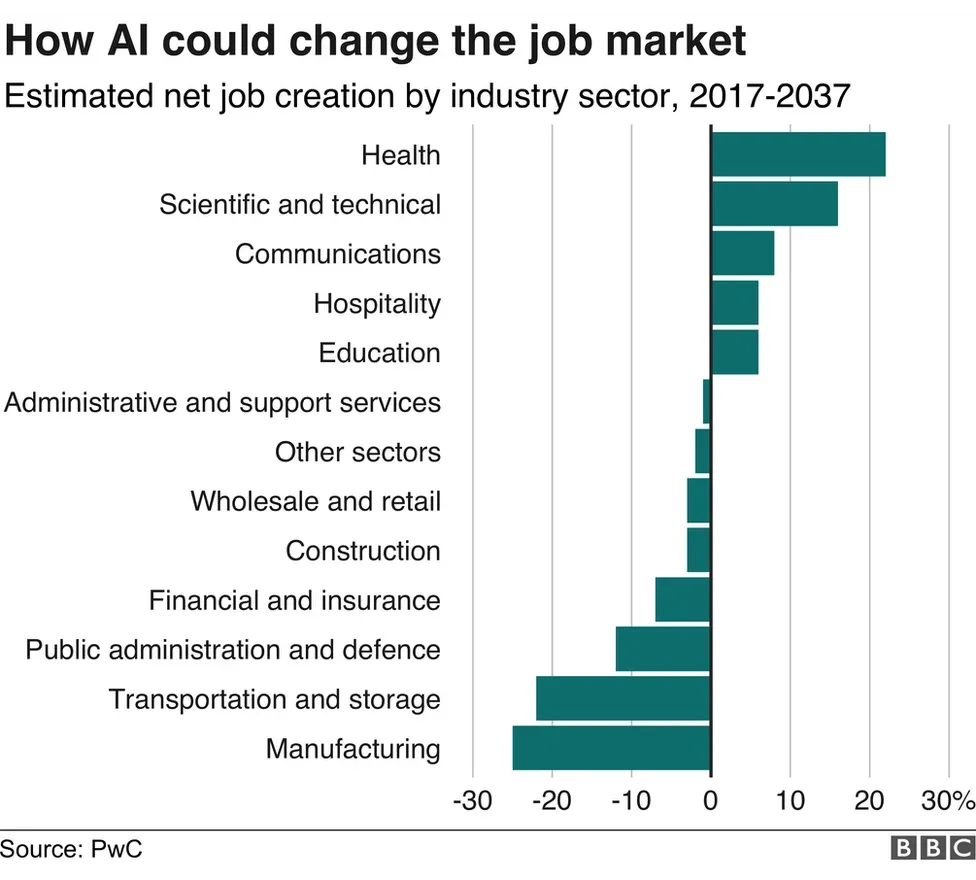
In considering the future of work with AI, it is crucial to assess the potential changes in job roles and industries. With companies increasingly incorporating AI to enhance efficiencies, entry-level positions are particularly vulnerable. Positions in law, accounting, and administration, traditionally viewed as stable career paths for graduates, may diminish due to automation. However, as businesses like PwC adjust to these evolving dynamics, there will likely be a newfound emphasis on critical thinking, data interpretation, and AI management skills. This evolution may create opportunities for those who are willing to embrace AI and develop the necessary expertise for thriving in a tech-centric job market.
The Future of Work: Adapting to AI Technologies
As the landscape of work continues to evolve with AI at its helm, adapting to new technologies becomes imperative for both workers and employers. This shift necessitates comprehensive AI skills training programs that equip the workforce with the necessary tools to not only keep pace with automation but to thrive within it. Companies must recognize the importance of investing in their employees through training initiatives that focus on tech aptitude, data analytics, and user-driven AI applications. In doing so, organizations can leverage the potential of AI while ensuring that their workforce is prepared to navigate the future job market effectively.
Furthermore, the urgency of establishing effective AI skills training programs is underscored by the rising unemployment rates among younger individuals, many of whom may lack the essential skills for a tech-driven labor market. The integration of automation and AI technologies presents both challenges and opportunities, and those who proactively seek to enhance their knowledge and competencies will be better positioned for success. Job seekers must be adaptable; learning new skills—whether through formal education or hands-on training—will be vital in ensuring employment prospects remain bright as automation reshapes industries.
AI Job Displacement: Understanding the Risks and Opportunities
AI job displacement poses a dual-edged sword: while the potential for job loss can cultivate fear and uncertainty, it also heralds opportunities for growth and innovation within various industries. Historic precedents show that as jobs are eliminated due to technological advancements, new employment opportunities often arise, albeit in different forms. During the Industrial Revolution, threats to livelihoods were counterbalanced by the emergence of new sectors and job categories. Today’s labor market is likely to experience similar upheavals, with new roles focusing on AI management, data analytics, and tech-enabled services.
Nevertheless, the risks associated with AI job displacement remain significant, particularly for entry-level professionals and those in roles highly susceptible to automation. As the Bank of England governor noted, younger workers may encounter barriers when trying to secure employment in a workforce increasingly dominated by AI capabilities. To mitigate these risks, stakeholders must advocate for policy changes that prioritize job training programs and reskilling initiatives, ensuring that the workforce can adapt to emerging job demands. While the challenges are real, a forward-thinking approach can guide a transition that embraces the advantages of AI while minimizing its adverse effects.
The Role of Automation in Shaping Jobs Today
Automation’s role in today’s job market signifies a transformative era for industries and employees alike. By incorporating AI technologies, companies can streamline processes, reduce costs, and improve productivity. However, this often leads to a dilemma as labor forces shrink or evolve. For instance, higher wages and taxes may discourage businesses from hiring junior staff, leaving new graduates in difficult positions. Understanding these dynamics is essential for both job seekers and industry leaders, as the key to surviving automation lies in adapting to the changing set of skills required in this new environment.
Moreover, as businesses leverage automation to mitigate operating costs, the demand for workers shifts towards those possessing advanced skills in technology and AI management. This shift highlights the importance of fostering a workforce skilled in areas that AI cannot easily replicate, such as creativity, emotional intelligence, and complex problem-solving. In preparing for a future where automation prevails, educational institutions and policymakers must prioritize the development of these competencies, ensuring that workers are not only equipped to meet current labor demands but are also prepared for the evolution of work in the AI era.
AI Unemployment Effects: A Growing Concern
The effects of AI on unemployment are becoming an increasingly pressing concern for economists and policymakers alike. With the unemployment rate in the UK rising to 5.1%, it raises questions about how rapidly integrating AI may exacerbate job losses among vulnerable demographics, particularly younger workers. Recent statistics indicate that individuals aged 18 to 24 experienced one of the most significant surges in unemployment, prompting discussions about the role AI plays in shaping this unsettling trend. Addressing these concerns requires immediate action from policymakers to implement strategies that support job seekers in transitioning to AI-compatible roles.
Furthermore, the anxiety surrounding AI unemployment effects is compounded by a perception that traditional educational systems may not be equipping students with the skills needed for tomorrow’s job market. As businesses increasingly seek talent that can thrive alongside AI, there is an urgent need for educational institutions to evolve their curricula to focus on AI literacy and technical training. Fostering an educational environment that stresses the importance of digital skills, problem-solving, and adaptive thinking will not only empower students but also contribute to a more resilient workforce ready to tackle the challenges of an AI-driven economy.
Preparing for the Economic Shift: AI as a Growth Engine
Amid concerns about AI’s impact on the workforce, its potential to act as a catalyst for economic growth should not be overlooked. As articulated by Governor Bailey, AI may usher in a new era of productivity, potentially accelerating economic expansion in the UK and beyond. By harnessing AI technologies, businesses can optimize their operations and create new markets, leading to increased job creation in sectors focused on innovation and technological development. The challenge lies in ensuring that the workforce is adequately prepared to take on these new roles, requiring significant investments in skills training and education.
Moreover, as awareness of AI’s transformative capabilities rises, it becomes essential for both businesses and governments to create conducive environments for AI adoption. This includes developing infrastructures that support technological advancements while assuring job security for existing workers. Policymakers must consider comprehensive strategies that not only focus on immediate labor market challenges but also emphasize sustainable economic growth. By fostering a proactive approach to embracing AI’s potential, society can align workforce development efforts with the broader economic objective of leveraging technology for long-term benefits.
Addressing Market Concerns: Navigating the AI Bubble
The emergence of an AI bubble has raised significant concerns in the financial market, paralleling historical precedents like the dot-com bubble. The Bank of England’s warnings about the volatile nature of AI valuations highlight the need for investors and stakeholders to approach this rapidly changing sector with caution. The promise of AI has attracted a multitude of businesses aiming for quick growth, but not all will survive. As CEO Jamie Dimon cautioned, a potential market correction could cause extensive harm, underlining the importance of due diligence and strategic planning in navigating this new landscape.
To mitigate the risks associated with an AI bubble, it’s vital for policymakers to monitor valuation trends closely and establish guidelines to ensure responsible growth within the sector. Business leaders should focus on sustainable practices and long-term viability rather than short-term gains, fostering a business culture that prioritizes innovation and ethical AI deployment. By acknowledging the risks while simultaneously investing in AI development, industries can adapt to this evolving paradigm in a way that protects both employment and market stability.
Frequently Asked Questions
What is the impact of AI on employment in the UK?
The impact of AI on employment in the UK is significant. AI job displacement is expected to mirror historical shifts seen during the Industrial Revolution, with many roles becoming automated. While AI may boost productivity and economic growth, it also raises concerns about job losses, particularly among younger workers and those in entry-level positions.
How does AI job displacement affect entry-level positions?
AI job displacement significantly affects entry-level positions, especially in fields like law, accounting, and administration. As companies leverage AI to streamline processes, the demand for junior staff may decrease, making it more challenging for recent graduates to secure employment and gain experience in their chosen industries.
What are the skills needed for the future of work with AI?
To prepare for the future of work with AI, workers need to focus on AI skills training. This training should include data analysis, programming, and digital literacy, enabling individuals to adapt to technologically advanced roles and work alongside AI systems effectively.
Will automation and jobs lead to an increase in unemployment rates?
Automation and jobs influenced by AI have the potential to increase unemployment rates, particularly among younger demographics. Official statistics have shown a rise in unemployment for workers aged 18-24, as businesses adapt to new technologies and potentially reduce the hiring of entry-level positions.
What are the potential AI unemployment effects on the workforce?
The potential AI unemployment effects on the workforce could lead to job displacement for many individuals, especially those in roles that can be automated. While AI may enhance productivity, it necessitates a transition for workers, emphasizing the importance of training and education to equip them for new opportunities in an evolving job market.
How can training and education mitigate the impact of AI on employment?
Training and education can mitigate the impact of AI on employment by equipping workers with the necessary skills to thrive in an AI-enhanced job market. By facilitating AI skills training, individuals can better transition into roles that leverage AI technologies, increasing their employability and ensuring a smoother adaptation to changes in the workforce.
Is there a risk of an AI bubble affecting job markets?
Yes, there is a risk of an AI bubble that could impact job markets. Similar to historical market corrections, a sudden decrease in AI firm valuations could lead to layoffs and hiring freezes in sectors reliant on these technologies. Policymakers must monitor trends to safeguard against potential economic fallout.
What sectors are most vulnerable to AI job displacement?
Sectors that are most vulnerable to AI job displacement include law, accounting, and administration. These fields often involve tasks that can be automated, leading to a decrease in demand for junior staff and entry-level roles due to the efficiency that AI introduces.
| Key Point | Details |
|---|---|
| AI Displacement | AI may displace workers similar to the Industrial Revolution, as per the Governor of the Bank of England. |
| Need for Skills | Training and education are essential for workers to transition to AI-related roles. |
| Youth Impact | Younger workers may struggle to find entry-level positions due to AI’s rise and its effect on the job market. |
| Unemployment Rate | UK unemployment rose to 5.1%, with 85,000 more unemployed young individuals aged 18 to 24. |
| Business Trends | Companies are reconsidering entry-level hiring due to automation and rising costs, impacting sectors like accounting and law. |
| Historical Reflection | Concerns over AI’s impact mirror historical fears during technological advancements, like the knitting machine in Queen Elizabeth I’s time. |
| AI Bubble Risk | Warnings about potential crash in AI firm valuations, similar to the dot-com bubble, need monitoring by policymakers. |
| Economic Growth | AI could drive significant economic growth and productivity, but its full impact will take time to unfold. |
Summary
The impact of AI on employment is poised to reshape the job market significantly, raising concerns about displacement reminiscent of the Industrial Revolution. As AI technologies continue to integrate into various sectors, the demand for a skilled workforce capable of adapting to new roles becomes crucial. This transition underscores the importance of education and training in ensuring that workers are equipped to thrive in an AI-driven economy, while also addressing the challenges faced by younger individuals in the job market.

