
Listen to this article
Homicides in England have reached their lowest level since records began, marking a significant shift in the country’s crime landscape. The latest statistics reveal a remarkable 7% decrease in overall homicides, with knife crime in England also seeing a substantial drop of 23% in recent years. This progress is documented in the 2025 Office for National Statistics (ONS) crime report, which outlines the ongoing efforts to tackle violent crime. Despite concerns about safety, particularly in urban areas like London, the murder rate has shown improvement, countering claims of rising crime rates. As we delve into the latest crime statistics, it’s crucial to understand the developments and challenges that shape safety across England.
In recent years, the trend of violent deaths in England has taken a promising turn, reflecting broader societal changes and law enforcement initiatives. The drop in fatalities, especially those involving knives, aligns with increases in police resources and community safety programs aimed at reducing crime. While discussions around the decline in homicide rates have gained traction, terms like ‘fatal assaults’ and ‘violent offenses’ also feature prominently in the discourse surrounding public safety. Furthermore, the stability in violent crime incidents suggests a more complex view of law and order, further enriched by ongoing analyses from organizations such as the Office for National Statistics. Understanding these dynamics is essential for grasping the evolving narrative of crime and safety across this region.
Overview of Homicides in England and Wales
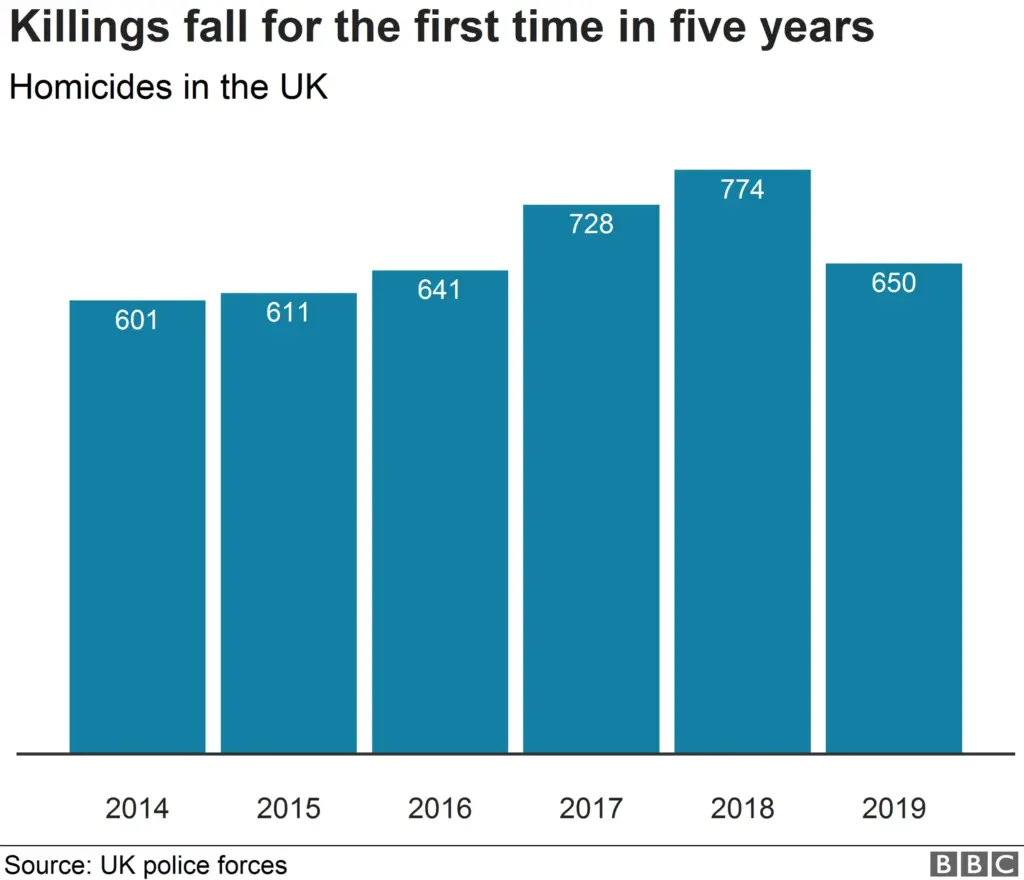
Recent statistics indicate a significant drop in homicides across England and Wales, showcasing a remarkable achievement in public safety. According to the latest data from the Office for National Statistics (ONS), there were only 499 recorded homicides in the 12 months leading up to September 2025. This figure marks a 7% decline from 539 homicides in the previous year, making it the lowest number since records began in 2003. This reduction is a positive shift for communities, highlighting the success of law enforcement and public safety initiatives in recent years.
Homicides involving knives or sharp instruments have also seen a notable decrease, plummeting by 23% to just 174 instances. This decline in knife crime is particularly significant given the ongoing concerns regarding violent crime in urban areas. Interestingly, while overall homicides have decreased, there remains a stable estimate of approximately 1.1 million violent crime incidents in England, suggesting that while serious offenses may be on the decline, the prevalence of less severe violent crimes appears constant.
The Impact of Knife Crime on Homicide Rates
Knife crime has long been a contentious issue in England, sparking heated debates regarding public safety and law enforcement strategies. Recent reports from the ONS reveal a 9% decrease in knife crime offenses, down to 50,430 from 55,149 in the prior year. This trend directly contributes to the overall decline in homicide rates, indicating that targeted interventions may be effectively addressing the factors driving knife-related violence. Furthermore, areas such as Greater Manchester and the West Midlands have reported significant reductions in knife crime, supporting the notion that consistent policing efforts can lead to meaningful changes.
In London specifically, the drop in knife-related incidents has coincided with a general reduction in homicide rates. The Metropolitan Police recently recorded that homicides fell to a decade low, with 97 cases reported in 2025, down from 109 in 2024. This suggests that addressing the root causes of knife crime is crucial in sustaining these positive trends in public safety. Shabana Mahmood, the Home Secretary, acknowledged these achievements, yet emphasized the need to address other rising crimes, such as shop theft, which poses ongoing challenges for law enforcement.
Violent Crime Trends in the UK
Amidst the declining homicide rates, the broader landscape of violent crime in the UK remains complex. The ONS reported that the crime survey shows no significant change in the total incidents of violent crime, which includes everything from threats to assault. With around 1.1 million recorded incidents, this stable figure may contrast with the encouraging news on homicides and knife crime, highlighting the ongoing challenges faced by law enforcement. The findings suggest a maturity in crime trends, where certain categories of crime fluctuate while others stabilize.
Moreover, the levels of robbery offenses have remained consistent, with 82,678 recorded incidents. This suggests that while some severe crimes are decreasing, others are persistent, warranting continued focus from policymakers and law enforcement. The increase in shoplifting by 5%, alongside sustained robbery rates, indicates areas that still require attention to ensure the overall safety and security of communities across the UK.
Police Initiatives and Their Effectiveness
The significant decline in homicide and knife crime rates can be partly attributed to proactive police initiatives across England. The government’s announcement of nearly 3,000 additional prison places, alongside the deployment of 13,000 neighborhood officers, reflects a commitment to enhancing public safety. These measures are crucial in fostering community trust and deterring crime. The steady decrease in knife crimes, especially in larger urban areas, showcases the effectiveness of targeted policing strategies.
These efforts have also been corroborated by NHS data, showing a consistent decline in hospital admissions related to assaults involving sharp objects. This multifaceted approach—combining increased policing, community engagement, and public health strategies—signals an integrated model for addressing violent crime. Continued investments by the government into police forces indicate a long-term strategy aimed at reducing both homicides and broader criminal activity, enhancing community safety.
Predictions for Crime Statistics in England 2025
Looking ahead, the crime statistics for England in 2025 are likely to reflect ongoing trends seen in previous years, particularly concerning homicides and violent crime. Analysts speculate that the sustained focus on community safety initiatives and support for law enforcement will contribute to further declines in serious crime rates. With knife crime already trending downwards, there is hope that these efforts can extend to other areas of violent crime as well. Public expectations for safety will serve as a crucial driver in shaping future law enforcement strategies.
Moreover, as the government continues to allocate resources towards combating crime, the upcoming ONS crime reports are anticipated to provide insights into the overall effectiveness of these measures. Policymakers and community leaders will closely monitor these statistics, as they play a critical role in formulating robust responses to any emerging crime trends. The overall outlook, fueled by these positive trajectories, suggests a potential for continued improvement in public safety across England.
Challenges Ahead for Law Enforcement
Despite the progress made towards reducing homicide and knife crime rates, significant challenges remain for law enforcement in England. With rising levels of shoplifting and persistent violent crime rates, police forces face the task of reallocating resources effectively to address these evolving issues. As the landscape of crime changes, so must the strategies employed to combat it. The shift towards community-based policing and engagement will be essential in responding to these challenges.
There is also the ongoing scrutiny from various political factions regarding the effectiveness of law enforcement’s strategies and whether public safety is genuinely improving. The government’s commitment to increasing police presence and funding demonstrates a response to these challenges, but continuous engagement with communities is crucial to ensure that law enforcement remains attuned to the needs and concerns of the public. Only by addressing these multifaceted issues can law enforcement hope to maintain and enhance the gains made in homicide and knife crime reduction.
The Role of Community Engagement in Crime Reduction
Community engagement has emerged as a critical component in the ongoing efforts to reduce crime across England. As research indicates, when communities actively participate in crime prevention initiatives, including neighborhood watch schemes and local policing forums, the collective impact can significantly lower crime rates. By fostering trust and collaboration between residents and law enforcement, communities can create a deterrent against violent crime, including homicide and knife-related incidents.
In recent years, various programs have been launched to enhance community involvement, such as youth outreach and educational programs aimed at reducing knife crime. By addressing the root causes of violence and engaging with at-risk populations, these initiatives aim to create lasting change. The decrease in homicide rates, particularly in urban areas like London, is a testament to the power of community involvement, showing that when people unite for a common cause, significant progress can be made in public safety.
Government Funding and Its Impact on Crime Rates
Government funding plays a pivotal role in shaping crime rates through the provision of resources necessary for effective law enforcement. Recent announcements regarding additional funding for police forces show a commitment to maintaining the progress made in combatting violent crime. This financial support is vital not only for increasing police presence but also for implementing community-focused programs that contribute significantly to crime reduction efforts.
Moreover, the targeted allocation of funds towards initiatives addressing knife crime, youth violence, and community safety has proven effective in various regions. As we move forward into 2025 and beyond, continuing this trend of funding will be essential to sustain and build upon the decreases in homicide rates and other violent crimes. The collaborative approach between government, law enforcement, and communities will ultimately determine the long-term success of crime reduction strategies in England and Wales.
Future Crime Prevention Strategies in the UK
The future of crime prevention strategies in the UK is poised to evolve further as data-driven insights become increasingly integral to law enforcement practices. Utilizing advanced analytics and crime mapping technologies will allow police forces to identify hotspots and allocate resources more effectively. This proactive approach is essential in maintaining decreases in homicide and knife crime rates, ensuring that interventions are targeted where they are most needed.
Additionally, collaborations with community stakeholders, including schools and local organizations, will remain crucial in shaping these strategies. By integrating crime prevention within community development plans, the government can help foster environments that discourage crime. Looking ahead, the continued adaptation of strategies based on real-time data and community feedback will be essential in crafting a safer future for all in England.
Frequently Asked Questions
What are the latest statistics on homicides in England and Wales?
According to the latest ONS figures, the total number of homicides in England and Wales has fallen to 499 for the year leading up to September 2025, representing a 7% decrease from the previous year, and the lowest figure since records began in 2003.
How has knife crime in England impacted homicide rates?
Homicides involving knives or sharp objects have significantly decreased, with a 23% drop to 174 cases in the last year. This reduction in knife crime is a contributing factor to the overall fall in homicide rates in England.
What are the trends in London murder rate based on recent data?
The murder rate in London has reached its lowest in a decade, with 97 recorded homicides in 2025, an 11% decrease from 109 in 2024. This trend highlights overall improvements in public safety and reduced violence in the capital.
How do current crime statistics reflect trends in violent crime drop in the UK?
The crime statistics indicate a drop in various forms of violent crime across the UK, with overall incidents remaining stable. While there are around 1.1 million incidents of violent crime reported, the significant decreases in homicides and knife crime show a positive trend.
What does the ONS crime report 2025 indicate about crime rates in urban areas?
The ONS crime report 2025 reveals that many urban areas, including Greater Manchester and the Metropolitan area, have reported decreases in knife crime. This is supported by NHS data showing a reduction in hospital admissions due to sharp object assaults, indicating a positive trend in public safety.
| Key Point | Details |
|---|---|
| Homicide Statistics | Total recorded homicides in England and Wales dropped to 499, the lowest since 2003. |
| Decrease in Knife Crime | Homicides involving knives fell by 23%, totaling 174 cases. |
| Overall Crime Rates | Approximately 1.1 million incidents of violent crime were reported, showing stability in many crime forms. |
| Government Response | An increase of nearly 3,000 prison places has been established since July 2024. |
| Urban Crime Trends | Most major cities, including London, see decreased knife crimes and lower homicide rates. |
| Community Concerns | While homicides decline, theft-related crimes like shoplifting are on the rise, prompting concerns from authorities. |
Summary
Homicides in England have fallen to their lowest level since records began, reflecting significant progress in public safety. With a notable 7% decrease in total homicides and a 23% drop in those involving knives, the government is encouraged by these trends. While violent crime remains stable, the surge in theft-related offenses poses new challenges. Continued efforts toward enhancing community safety, including adding more neighborhood officers, are crucial in addressing the multifaceted crime landscape.