Listen to this article
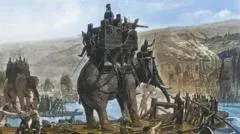
Hannibal war elephants are among the most iconic symbols of military strategy in ancient history. The legendary Carthaginian General Hannibal famously led a diverse army that not only included thousands of soldiers but also the formidable ancient war elephants. His audacious Alps crossing in 218 BCE during the Roman wars showcased his unyielding determination to confront Rome. While historical accounts painted vivid pictures of these mighty beasts in battle, tangible evidence of their existence had long eluded scholars. However, recent archaeological discoveries, including an elephant foot bone in southern Spain, suggest that Hannibal’s troops might have indeed traversed the European landscape, marking a significant step in our understanding of ancient warfare.
When one thinks of Hannibal war elephants, visions of massive creatures thundering into battle come to mind. These remarkable animals, which were crucial to Hannibal’s military strategy, symbolize the audacity of his campaign against Rome. On his perilous journey through the rugged terrain of the Alps, this Carthaginian General utilized these colossal beasts, a tactic that had a profound impact during the Punic Wars. Not only did they serve as a psychological weapon, but their sheer size and strength also provided a unique advantage on the battlefield. Recent findings, including skeletal remains in Europe, have sparked renewed interest in these ancient war elephants and the role they played in shaping military tactics of the era.
The Legendary Crossing of the Alps by Hannibal’s War Elephants
In 218 BCE, the Carthaginian General Hannibal embarked on a remarkable journey that is etched in the annals of military history. This audacious campaign involved crossing the treacherous Alps with his army and a troop of war elephants, an unprecedented move that aimed to surprise the Roman forces from the north. The challenges he faced included harsh weather conditions, steep terrain, and the logistical nightmare of transporting such large animals over mountains. The inclusion of Hannibal’s war elephants not only provided a tactical advantage but also instilled fear and confusion among the Roman ranks, illustrating the psychological warfare elements present in ancient battles.
Recent archaeological discoveries, particularly the elephant foot bone found in southern Spain, may shed light on the historical accuracy of this routing. While there has been much speculation about the role of these ancient war elephants in high-profile military confrontations, including the Roman wars, solid evidence has been lacking until now. The findings suggest that at least some of Hannibal’s elephants did exist and made their way to the battlefield, contributing to our understanding of the logistics and impacts of Hannibal’s ambitious plans.
Hannibal: The Carthaginian General Who Changed Warfare
Hannibal is often heralded as one of the greatest military commanders of all time. His strategic genius, highlighted by the daring Alps crossing, allowed him to challenge Rome at the height of its power. The use of war elephants in his strategy demonstrated an innovative approach to warfare; he famously utilized these massive creatures not only for combat but also as a unfathomable psychological weapon. Their sheer size and the novelty of elephants in battle stunned the Roman legions, creating a lasting legacy of Hannibal’s tactics that has been studied throughout military history.
The significance of Hannibal’s strategies transcends mere battlefield success; they contributed over the centuries to a deep examination of military logistics and animal warfare. As Rome expanded its territories and faced constant military challenges, Hannibal’s tactics remained a reference point. His employment of ancient war elephants highlights the extremes to which he went to secure Carthage’s dominance in the Mediterranean, a position later understood as crucial when analyzing the strategies of both sides during the Punic Wars.
The Evidence of War Elephants in Ancient Europe
The recent excavation near Cordoba, Spain, where the elephant bone was discovered, serves as a potential breakthrough in understanding the role of war elephants in ancient military campaigns. This area, identified as a battleground site from the Iron Age, raised expectations about discovering artifacts that pertain to Hannibal’s movements through Europe. The validation of the elephant bone through carbon dating provides compelling evidence supporting the narrative that these creatures made their way into European battlegrounds.
The implications of finding such skeletal remains are significant; they not only connect Hannibal to the Romans through physical evidence but also help historians and archaeologists develop a clearer picture of tactical decision-making during warfare. This discovery ignites interest in how war elephants influenced battles and strategies during prominent military conflicts, reopening discussions on how these mammals were viewed by societies that relied on them for warfare. As evidence mounts, it enhances our understanding of the dynamics between Carthaginian forces and their Roman adversaries.
Hannibal’s Strategy: Elephants as Weapons of War
Hannibal’s strategic brilliance was not just in his maneuvers but also in his adaptation of war elephants as weapons of warfare. Utilizing these colossal animals represented a significant shift in the battlefield that aimed to disrupt enemy formations and intimidate soldiers. Elephants served multiple purposes; they were not only a symbol of strength but also practical assets that could charge into enemy lines, causing chaos and destruction. This tactic was vital in the conception of Hannibal’s overall strategy throughout the Roman wars.
The effective use of war elephants can be traced to various ancient civilizations, but Hannibal’s integration of these animals into his military strategy marked an unparalleled moment in military history. Knowledge of how to train, transport, and deploy these beasts effectively was critical to maintaining their role as weapons of war. This unprecedented cohesion between animal and soldier led to resounding successes in engagement and contributed to Hannibal’s reputation that endures to this day.
Crossing the Alps: Challenges and Triumphs
The crossing of the Alps is one of the most storied feats in military history, often highlighted by Hannibal’s determination to transport elephants through unforgiving terrain. This journey was fraught with obstacles: from harsh weather conditions to hostile inhabitants, the challenges were immense. Hannibal’s ability to navigate these difficulties while maintaining the health and safety of his troops and elephants stands testament to his leadership and strategic planning. The decision to use war elephants was as much about leveraging shock value against Roman forces as it was about sheer military logistics.
The tale of Hannibal’s crossing has become symbolic of resilience and ingenuity in warfare. Despite the loss of many elephants and soldiers during the arduous trek, the crossing itself remains a remarkable narrative of determination. It illustrates the lengths to which Hannibal and his forces went to secure a tactical surprise against Rome, altering the course of history in the struggle for dominance over the Mediterranean.
The Role of Elephants in the Punic Wars
The Punic Wars marked a significant epoch in ancient history, where the military tactics involving elephants brought a unique dimension to warfare. Hannibal famously employed these beasts throughout the conflicts against Rome, positioning them as a cornerstone of his strategy. Elephants were used not only to charge enemy lines but also to transport supplies, showcasing their versatility in various military functions. Their presence on the battlefield shifted the tides of several key engagements, forcing Roman generals to adapt their strategies to counter the shock and awe created by Hannibal’s war elephants.
As the remnants of the elephants’ remains are slowly being pieced together through archaeological efforts, it becomes evident that their use reflected the complexities of ancient warfare. The small but significant findings contribute to a broader understanding of how these majestic creatures were integrated into the fabric of military strategy. The analysis of their role in battles against Rome enhances narratives surrounding the Punic Wars and supports examinations into how cultures prepared their troops and adapted to the dynamics of combat.
Analyzing the Archaeological Evidence
Archaeological findings related to ancient war elephants have largely been few and far between, making the recent discovery in Spain all the more significant. As research continues to unfold, it becomes imperative to analyze the remains within the context of their geographical and historical background. The comparison of the elephant bone to both modern elephants and steppe mammoths provides crucial insights that underline the evolution of these majestic creatures and their use in ancient military contexts. Such analyses not only validate historical narratives but also challenge existing theories regarding the extent of elephant deployment in Europe.
The broader implications of this research extend into understanding the ecological and social environments of the time. Findings from digs not only offer a glimpse into the past but also showcase how ancient peoples interacted with large animals. The contextualization of this data with artifacts like coins and ceramics found at the site enhances the narrative surrounding Hannibal’s campaigns and the role of elephants within them. Through careful examination, scholars can begin to construct a more comprehensive picture of the past, shedding light on the multifaceted relationship between ancient cultures and their adapting strategies amid conflict.
The Significance of Findings for Modern Historiography
The discoveries surrounding Hannibal and his war elephants are reshaping how modern historians interpret ancient military campaigns. The intersection of archaeology and historical documentation offers a unique lens to examine the reliability of classical texts and the realities of historical events. As more evidence surfaces, it not only enriches our understanding of Hannibal’s tactics but also questions long-held beliefs regarding the extent of his influence over Roman strategies during the Punic Wars.
Moreover, this reflects a trend towards utilizing interdisciplinary methods in the study of history, combining science with traditional methodologies to fetch a narrative that is factually grounded. The ongoing studies of elephant remains promise to unlock further understanding of the traditions of war that surrounded these magnificent creatures, illustrating how they were perceived in their time. This confluence of archaeological evidence and historical analysis serves as a critical reminder of history’s evolving narrative, marking pivotal moments in military strategies as we delve deeper into the intricacies of the past.
Frequently Asked Questions
What role did Hannibal’s war elephants play in his crossing of the Alps?
Hannibal’s war elephants were crucial during his famed Alps crossing in 218 BCE, serving as both a psychological weapon against Roman forces and as pack animals for supplies. Their inclusion in his military strategy exemplified the innovation of the Carthaginian General in utilizing ancient war elephants in warfare.
Is there any recent evidence supporting the use of war elephants by Hannibal during his campaigns?
Yes, recent archaeological findings, including an elephant foot bone in southern Spain, provide potential evidence of Hannibal’s war elephants. This discovery could be the first concrete proof of their presence during the Second Punic War, reinforcing long-held theories about the use of ancient war elephants by Hannibal.
How did Hannibal transport his war elephants from Carthage to Italy?
Hannibal transported his war elephants by utilizing ships to carry them across the Mediterranean Sea from Carthage. Once in Europe, he and his army moved the elephants through Spain and into the Alps as part of his tactical maneuvers against Rome during the Roman wars.
What challenges did Hannibal face when bringing war elephants through the Alps?
The journey through the Alps posed significant challenges for Hannibal’s war elephants, including harsh weather, difficult terrain, and logistical issues related to feeding and maintaining the health of such large animals in an unfamiliar environment. Despite these challenges, Hannibal is credited with successfully crossing the Alps with a portion of his troop.
What significance do Hannibal’s war elephants hold in the context of ancient warfare?
Hannibal’s war elephants symbolize the innovative military strategies of the Carthaginian General and highlight the use of ancient war elephants as a psychological warfare tool. Their presence in battle could intimidate enemy troops and provide logistical support, marking a significant evolution in military tactics during the Roman wars.
Are there any other archaeological discoveries related to Hannibal’s elephants?
While the discovery of elephant remains in Spain is one of the few concrete pieces of evidence regarding Hannibal’s war elephants, additional archaeological findings, such as artillery and coins from the era, reinforce the historical significance of Hannibal’s campaigns and the potential role of ancient war elephants in them.
What do historians believe about the diet and care of Hannibal’s war elephants?
Given their size and status as non-native species during Hannibal’s campaigns, war elephants would have required specialized care and considerable resources. Historians suggest that Hannibal would have established logistics to ensure adequate food, transport, and health management for these large animals throughout their journey.
What impact did Hannibal’s use of war elephants have on Roman military strategy?
The introduction of war elephants by Hannibal prompted the Roman military to adapt their strategies to counter this unique threat. Roman generals began exploring their own use of large animals in warfare and developed new tactics to neutralize the psychological and physical impact of encountering elephants in battle.
| Key Points |
|---|
| The discovery of an elephant foot bone in southern Spain may provide evidence of Hannibal’s war elephants crossing the Alps during the Second Punic War. |
| Previously, there was no hard evidence supporting the use of elephants in Hannibal’s military campaigns against Rome. |
| The bone, found in an Iron Age dig near Cordoba, is believed to be from an elephant that died before reaching the Alps. |
| Researchers led by Professor Rafael M. Martínez Sánchez used carbon dating to estimate the bone’s age, linking it to the Second Punic War. |
| The site contained artifacts like artillery and coins, suggesting it was the location of a battle. |
| While the origin species of the elephant remains uncertain, this discovery might be the first known relic of war elephants used in the Punic wars. |
Summary
Hannibal war elephants are a legendary aspect of ancient military history, and recent findings may be reshaping our understanding of their journey across the Alps. The unearthing of an elephant foot bone in Spain offers promising evidence that these remarkable creatures indeed accompanied Hannibal on his daring campaign against Rome during the Second Punic War. With no previous hard evidence, this discovery marks a significant milestone in archaeology, shedding light on the logistics and realities of Hannibal’s war strategy while captivating scholars and enthusiasts alike.