
Listen to this article
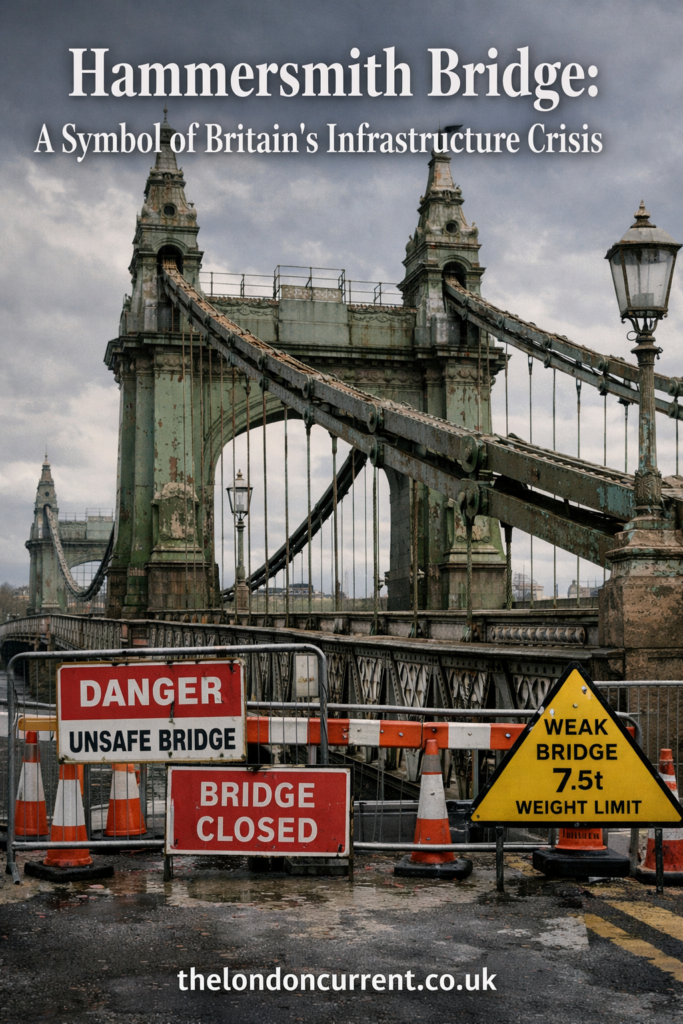
Hammersmith Bridge, an iconic emblem of London’s engineering legacy, stands at the forefront of current discussions about the state of UK infrastructure and the urgent need for effective restoration efforts. Closed since 2019 due to serious structural issues, this historic suspension bridge has become a symbol of the broader transportation issues plaguing Britain. As the nation grapples with its infrastructure crisis, the lack of funding and decisive action for Hammersmith Bridge restoration highlights the fragmentation of responsibility across agencies. With estimates for repairs soaring into the hundreds of millions, many are left wondering whether our leaders can navigate the complexities of bridge restoration and infrastructure funding. The future of Hammersmith Bridge not only epitomizes a key route for local commuters but also serves as a pivotal case study in the urgency for a reliable transportation network in the UK.
The Hammersmith suspension crossing, celebrated for its historical significance, embodies the pressing challenges currently facing Britain’s transportation framework. This landmark structure, once bustling with vehicles, now mirrors the fragmented nature of infrastructure management in the UK, raising questions about funding strategies and governance. As communities wrestle with prolonged closures and diminishing access, the broader implications for Britain’s engineering and financial resources become increasingly evident. Restoration efforts are crucial not only for revitalizing this essential link but for addressing the systemic deficiencies within the UK’s infrastructure development processes. The story of Hammersmith Bridge calls for a reevaluation of how local and national bodies manage the pressing needs of urban connectivity and transportation efficiency.
The Case for Hammersmith Bridge Restoration
Hammersmith Bridge is not just an essential transportation link; it embodies the tale of Britain’s struggle with its infrastructure challenges. The significance of restoring Hammersmith Bridge extends beyond mere functionality; it represents a larger commitment to revitalizing Britain’s decaying infrastructure system. With transportation issues plaguing various sectors, this historic structure’s resurrection could serve as a catalyst for broader reforms in the UK’s infrastructure policy. The restoration project would generate numerous jobs and stimulate local businesses that have suffered from prolonged road closures.
Restoring Hammersmith Bridge can signify a turning point in how the UK addresses and funds infrastructures like bridges, roads, and railways. The ongoing debates surrounding Hammersmith Bridge funding reflect a larger national crisis in infrastructure management. Reviving this bridge would send a message about the importance of prioritizing critical projects and asserting the need for a reliable funding structure to support future endeavors. As Britain grapples with its infrastructure crisis, investing in Hammersmith Bridge’s restoration may embody a strategic move towards sustainable urban development.
Navigating the Challenges of Funding
The challenges of funding Hammersmith Bridge restoration highlight the fragmented nature of UK infrastructure financing. While the government has approved various funding proposals, the implementation has been bogged down by bureaucratic disputes and financial mismanagement. Presently, Hammersmith & Fulham Council holds ownership of the bridge, but the reliance on Transport for London (TfL) for repairs complicates the funding process. To overcome these transportation issues, a clear and unified funding strategy must be developed to streamline resource allocation and ensure that enhancements can be made to mitigate future risks.
Furthermore, addressing the financial strains on TfL, which has historically borne the costs of numerous repairs, is crucial. The prolonged indecision surrounding Hammersmith Bridge raises concerns about whether adequate funding will ever be secured to restore this vital link. The government must step in and clarify the financial responsibilities among the involved parties to move forward with restoration plans. Inadequate funding could lead to a longer wait for residents and commuters who depend on this essential crossing, leading to further economic ramifications in the surrounding areas.
Integrating Modern Solutions in Restoration Efforts
Restoration of Hammersmith Bridge presents an opportunity to integrate modern engineering solutions that can enhance both functionality and safety. As the debate continues over various restoration options, it is essential to consider innovations in construction and urban planning that can lead to more efficient outcomes. Proposed solutions, such as a temporary bridge alongside rebuilding efforts, could ensure minimal disruption while work is in progress, allowing pedestrian and cyclist access to be maintained and eventually restoring full vehicle access.
Additionally, incorporating modern materials and techniques could result in a bridge that is not only restored but enhanced for future use. By prioritizing walking and cycling, planners can create a safer and more sustainable crossing that addresses the transportation needs of an evolving urban demographic. The lessons learned from the initial construction of Hammersmith Bridge in the Victorian era should serve as a reminder of the value of bold innovation in tackling today’s infrastructure challenges.
The Importance of Swift Legislative Action
History teaches us that timely and decisive action is crucial in infrastructure projects. When Hammersmith Bridge faced initial issues, Victorian lawmakers swiftly passed legislation to rectify the situation. By establishing a central authority responsible for the bridge’s construction, Parliament effectively streamlined funding and decision-making processes. Modern Britain could benefit from a similar approach, where disruption prompts immediate legislative responses to empower a single authority to take control of the restoration process.
With significant funding already allocated for urban infrastructure, a decisive commitment towards a unified authority could expedite the restoration of Hammersmith Bridge. Instead of allowing the problem to linger in delayed discussions, policymakers should revisit legislative avenues that simplify the ownership and funding issues associated with this historic site. A revitalized approach to legislative responsibility for Hammersmith Bridge could lead to a renaissance in how Britain approaches infrastructure projects, showcasing a path for future developments.
Hammersmith Bridge as a Symbol of Change
Hammersmith Bridge has evolved into a symbol of the need for decisive action in Britain’s ongoing infrastructure crisis. Its closure has resulted in a range of transportation issues, from increased travel times to disrupted local economy dynamics. As businesses and commuters grapple with the ramifications of the prolonged closure, it is clear that restoring this bridge is essential not just for connectivity, but for healing the community’s economic wounds and revitalizing local commerce.
Moreover, the Hammersmith Bridge situation exemplifies a much larger narrative of Britain’s struggle with infrastructure neglect. The ongoing debates, delays, and uncertainties surrounding this pivotal project serve as a wake-up call for the nation. By viewing the restoration of Hammersmith Bridge as a benchmark for future infrastructure projects, Britain can commit to a vision where substantial investments in maintenance and development are prioritized, ultimately restoring public confidence in the nation’s ability to build and maintain its critical infrastructure.
Learning from the Hammersmith Bridge Experience
The series of challenges surrounding Hammersmith Bridge presents profound lessons for Britain’s approach to managing its infrastructure challenges. As decision-makers grapple with the complexities of funding and responsibility, the situation serves as a cautionary tale of what happens when processes are overly complicated and unclear. By streamlining decision-making and establishing robust accountability mechanisms, Britain can avoid similar pitfalls in other infrastructure projects across the country.
Additionally, the Hammersmith Bridge experience sheds light on the impact of prolonged indecision. Businesses and communities are affected by transportation disruptions, leading to wider economic implications. Enhancing collaboration between local authorities, central government, and transport agencies will be crucial in fostering a proactive approach to infrastructure management in the future. Lessons learned from this endeavor can inform comprehensive strategies to relieve other troubled portions of Britain’s infrastructure landscape and ensure that essential projects never fall victim to stagnation.
Public Sentiment and Infrastructure Development
Public sentiment plays a critical role in how infrastructure projects are perceived and prioritized. The emotional connection that community members feel towards Hammersmith Bridge highlights a broader social need for preserving historical landmarks while ensuring practicality in urban environments. The bridge is not just a physical structure; it represents the community’s identity and its continuous engagement with its transportation network. As stakeholders engage with local residents, inclusive discussions can shape restoration efforts that align with community values.
Understanding public sentiment towards infrastructure can lead to more effective advocacy for funding and restoration efforts. By actively involving residents in conversations about Hammersmith Bridge, planners can create a sense of ownership and responsibility. This collaboration can foster a greater appreciation for the importance of the bridge and, in turn, can rally more support for necessary funding commitments from both local and central governments.
Reimagining Future Infrastructure in Britain
The current predicament of Hammersmith Bridge should serve as a springboard for reimagining Britain’s approach to future infrastructure. Lessons from the bridge’s struggles can inform new strategies that prioritize swift action, robust funding structures, and stakeholder engagement. The time has come for Britain to consider not just restoring Hammersmith Bridge, but also establishing a blueprint for revitalizing the nation’s broader infrastructure landscape to ensure resilience against future challenges.
Moreover, Britain’s future infrastructure projects should integrate sustainable designs and environmentally friendly practices. The restoration discussions surrounding Hammersmith Bridge present an opportunity to incorporate greener transport solutions, ensuring that the bridge serves not just as a connector but as a symbol of a sustainable urban future. As Britain navigates its infrastructure crisis, innovative and forward-thinking solutions like those surrounding Hammersmith Bridge can help pave the way towards a more connected and resilient society.
Frequently Asked Questions
What is the current status of Hammersmith Bridge restoration?
Hammersmith Bridge restoration has been a prolonged process due to significant structural issues discovered in 2019. The bridge is currently closed to motor vehicles, with only pedestrians and cyclists allowed to cross. Temporary stabilization works were completed in 2025, but a funded and scheduled plan to fully restore vehicle access has not yet been established.
Why is Hammersmith Bridge significant in the context of UK’s infrastructure issues?
Hammersmith Bridge exemplifies the UK’s broader infrastructure issues, reflecting the challenges of funding, decision-making, and maintenance in aging transport systems. The ongoing closure and disruptions highlight the fragmented responsibility among local councils, Transport for London, and the central government. This situation underscores Britain’s infrastructure crisis and the urgent need for competent management of public works.
What are the funding challenges related to the restoration of Hammersmith Bridge?
Funding challenges for Hammersmith Bridge’s restoration stem from a complex dispute over costs between Hammersmith & Fulham Council, Transport for London, and the central government. Despite an agreed three-way funding settlement in 2021, a lack of clear resolution has delayed restoration efforts, leading to cost estimates reaching hundreds of millions and a narrative of indecision.
How has the closure of Hammersmith Bridge affected local transportation?
The closure of Hammersmith Bridge has significantly impacted local transportation by canceling bus routes and increasing travel times. Neighborhoods have become more isolated, leading to considerable frustration for commuters and businesses alike, as this historic crossing was a vital artery for the community.
What potential solutions have been proposed for the future of Hammersmith Bridge?
Various proposals for Hammersmith Bridge have included a double-deck structure, a bus-only reopening, permanently banning cars, or repurposing the bridge as a static monument. However, none of these options have been finalized, and there is a growing call for decisive action similar to the legislative response from the Victorian era that could restore the bridge more effectively.
What has been the government’s response to the issues surrounding Hammersmith Bridge?
The government has acknowledged the disruption caused by Hammersmith Bridge’s closure and has provided £17m in funding to maintain some access for walking and cycling. However, calls for a comprehensive solution to restore full functionality remain urgent, emphasizing the need for focused leadership and accountability in addressing Britain’s infrastructure challenges.
How does Hammersmith Bridge illustrate Britain’s approach to infrastructure management?
Hammersmith Bridge illustrates Britain’s cautious and often fragmented approach to infrastructure management, where indecision and bureaucratic processes have stalled necessary repairs. This situation highlights the need for streamlined decision-making and a singular focus on restoration to avoid prolonged disruption and further deterioration of vital public infrastructure.
| Key Points |
|---|
| Hammersmith Bridge represents Britain’s infrastructure decay. |
| Closed to vehicles since 2019, now only allows cyclists and pedestrians. |
| Fragmented responsibility for repairs involves local council and TfL. |
| Funding disputes have led to estimates in the hundreds of millions. |
| Historic decisions in the past provided quick solutions—suggesting a need to revamp decision-making today. |
| The importance of a streamlined process for infrastructure projects. |
Summary
Hammersmith Bridge, a historic yet failing structure, encapsulates the broader challenges faced by Britain’s infrastructure today. The prolonged indecision regarding its restoration highlights a significant need for effective governance and decisive action. Rehabilitating Hammersmith Bridge is not merely about restoring a crossing; it’s an opportunity to demonstrate a commitment to rebuilding Britain’s infrastructure, suggesting that a focus on effective decision-making could pave the way for future enhancements in public transport and connectivity.