
Listen to this article
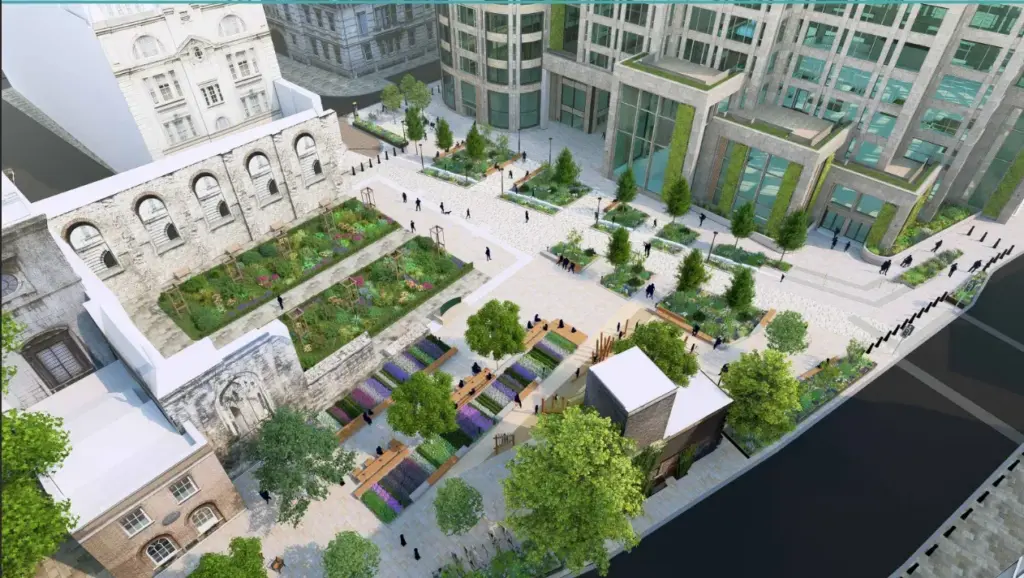
Nestled in the heart of London, Greyfriars Square represents a significant leap in urban rejuvenation efforts. This expansive 3,500 square meter public square will soon rise near the iconic St Paul’s Cathedral, marking a key investment in London’s public spaces with a dedicated £19 million redevelopment plan. Designed to accommodate both relaxation and recreation, Greyfriars Square aims to provide essential amenities like seating areas and a play zone for families. The anticipated completion in spring 2027 will not only create the largest public square in the City of London but will also facilitate better connectivity within the bustling Square Mile. As highlighted by Tom Sleigh, chair of the City of London Corporation Planning and Transport Committee, this initiative epitomizes the city’s ambition for world-class urban development that enriches the experience of residents, workers, and visitors alike.
Greyfriars Square, soon to be constructed in central London, showcases a transformative urban initiative aimed at enhancing public spaces in one of the city’s most visited areas. Situated near the historic St Paul’s Cathedral, this new square is a key component of the Square Mile redevelopment, addressing both aesthetic and practical needs of the area. As part of a £19 million investment, the 3,500 square meter space will offer not only green patches and seating but also engaging facilities for children. This strategic effort to reshape London public spaces highlights a commitment to improving urban life while supporting the area’s rich heritage. With completion slated for spring 2027, Greyfriars Square not only promises to be a hub of activity but also serves as a model for future developments in urban planning across London.
The Vision Behind Greyfriars Square: Urban Development in London
The construction of Greyfriars Square represents a significant investment in urban development in London. With its expansive 3,500 square meters, this new public square near St Paul’s Cathedral is poised to transform the landscape of the City of London. Designed with modern amenities like seating areas and play zones, it aims to cater to the diverse needs of residents, workers, and tourists alike. This initiative is part of a £19 million plan that meticulously integrates the square into the rich tapestry of London public spaces, emphasizing the importance of communal areas in urban planning.
Moreover, Greyfriars Square will enhance the area not only aesthetically but also functionally. The redevelopment aims to remove outdated infrastructure from the 1970s, replacing it with a vibrant space that promotes connectivity. As urban planners strive to create an inclusive environment, Greyfriars Square stands as a testament to the City of London’s commitment to high-quality public spaces that encourage social interaction and community engagement.
Connecting Greyfriars Square with London’s Iconic Landmarks
Strategically located near St Paul’s Cathedral, Greyfriars Square will serve as a focal point for visitors exploring the Square Mile. The transformation of the surrounding area will significantly improve accessibility to one of London’s most iconic landmarks, making it easier for pedestrians to navigate between the square and the cathedral. The design incorporates elements that highlight the stunning architecture of St Paul’s, ensuring that visitors can enjoy both the square’s greenery and the cathedral’s grandeur.
In addition to connectivity, the development will also enhance the overall experience of exploring the area. With its proximity to other attractions and enhancements to public transport routes, Greyfriars Square will likely become a hub for both leisure and cultural activities. Urban development in London continues to focus on creating environments that promote foot traffic and social gatherings, and Greyfriars Square is set to be a key player in this ongoing evolution.
Phased Redevelopment: Enhancing Public Spaces in the Square Mile
The redevelopment of Greyfriars Square is only one part of a larger vision for revitalizing urban spaces in the Square Mile. This phased approach allows for careful consideration of the architectural and environmental impacts of each stage of construction. The first phase targets the southern streets of the former Museum of London, where improvements will include wider walkways and increased greenery. As the project unfolds, residents and visitors can expect a seamless integration of modern design with London’s historical context.
Moreover, the removal of the one-way gyratory system is expected to create a more pedestrian-friendly environment, further encouraging the public to enjoy the newly developed spaces. Initiatives like this are crucial in urban development London, as they reflect the growing awareness of the need for accessible and pleasant public areas. As the project moves forward, the planning committee aims to ensure that every change contributes positively to both the urban landscape and the experience of its users.
The Role of Public Squares in London’s Urban Landscape
Public squares have always played a pivotal role in urban landscapes, serving as communal gathering spaces that foster social connections. Greyfriars Square is set to elevate this tradition by providing a place that encourages interaction among diverse groups of people. In a bustling metropolis like London, where space often feels limited, such squares become essential for community-building, offering a respite from the city’s hustle and bustle.
These urban havens not only enhance the aesthetic appeal of the city but also contribute to its ecological footprint. By integrating green spaces and recreational facilities, Greyfriars Square will promote a healthier lifestyle among Londoners while enhancing biodiversity. As urban public spaces evolve, they offer lessons on how thoughtful design can improve the quality of life for city dwellers.
Amenities to Expect at Greyfriars Square
The upcoming Greyfriars Square is designed with a variety of amenities to cater to the community’s diverse needs. Aside from play areas for children, the square will feature comfortable seating arrangements, making it an attractive destination for both relaxation and social gatherings. This thoughtful layout ensures that every visitor can enjoy the space, whether they’re looking to unwind with a book or enjoy a casual meetup with friends.
Additional amenities may include decorative landscaping and public art installations that reflect the cultural heritage of London. Such elements serve not only to beautify the area but also to create a unique identity for Greyfriars Square within the City of London. As more people seek outdoor settings to engage with each other and their environment, the amenities at Greyfriars Square will play a crucial role in enhancing the overall experience of urban living.
Benefits of Enhanced Connectivity Around Greyfriars Square
Improving connectivity around Greyfriars Square is a primary goal of the redevelopment project. By modifying the existing transportation layout, planners aim to reduce congestion and enhance the safety of pedestrians, cyclists, and drivers alike. The changes will facilitate smoother traffic flow and shorten pedestrian routes, making it more convenient to visit nearby landmarks like St Paul’s Cathedral and the River Thames.
In addition to transportation improvements, the enhanced connectivity promises to foster economic activities in the neighborhood. As more visitors are drawn to the area, local businesses are likely to experience increased foot traffic, leading to greater sales opportunities. The revitalized public square, as part of the larger urban development plan in London, thus supports both social and economic vitality in the City.
Sustainability Initiatives in the Greyfriars Square Project
Sustainability is at the forefront of the Greyfriars Square redevelopment project. As cities like London grapple with climate change and environmental degradation, initiatives that promote sustainability are no longer optional; they are essential. The design plans for Greyfriars Square will incorporate sustainable materials and practices, reducing the carbon footprint associated with construction and ensuring that the space is eco-friendly.
Furthermore, the incorporation of greenery and trees will help combat urban heat and improve air quality in the area. The project aims to set an example of responsible urban development, one that prioritizes the health of both residents and the environment. By creating a public square that not only serves the community but also nurtures the ecosystem, Greyfriars Square will illustrate the potential for combining urbanization with ecology.
Integrating Greyfriars Square with Local Culture and History
Another exciting aspect of Greyfriars Square is its potential to celebrate the rich cultural and historical tapestry of London. The square is located near significant historical landmarks, including St Paul’s Cathedral, providing an opportunity to create a narrative that honors the past while embracing the future. Potential public art installations and community events can be designed to reflect the heritage of the area, making Greyfriars Square a magnet for both locals and tourists.
Through programming efforts, the square could host various cultural activities, from outdoor performances to market days, allowing for community engagement and interaction. Such integration of local culture into public spaces fosters a sense of belonging, allowing residents to connect with their community and history. As Greyfriars Square takes shape, it promises to be more than just a public area; it aims to become a dynamic cultural hub in the heart of London.
Planning for the Future: Greyfriars Square in Urban Development
As part of the broader Square Mile redevelopment, Greyfriars Square marks a crucial step in London’s urban evolution. This project signifies a shift toward designing cities that prioritize public use while integrating natural landscapes and community needs. The planners are not merely looking to beautify the area but are also prioritizing functionality and accessibility, which are vital for sustainable urban living.
Moreover, the lessons learned from the construction and operation of Greyfriars Square could influence other urban development projects across London and beyond. As cities strive to create more livable and engaging environments, Greyfriars Square may serve as a blueprint for future public spaces that foster community, economic vitality, and environmental sustainability. The commitment to holistic urban design is clearer than ever as Greyfriars Square approaches its opening.
Frequently Asked Questions
What services and amenities will be available at Greyfriars Square London?
Greyfriars Square London will feature various amenities, including seating areas and a play area, making it a welcoming space for residents, workers, and visitors. This new public square forms part of the £19 million redevelopment project aimed at improving public spaces near St Paul’s Cathedral.
When is Greyfriars Square London expected to open?
Greyfriars Square London is scheduled to open in spring 2027, following the completion of the surrounding redevelopment aimed at enhancing urban spaces within the City of London.
How is Greyfriars Square London contributing to urban development in London?
Greyfriars Square London plays a pivotal role in the ongoing urban development in London. It is part of a larger initiative to transform the Square Mile, which includes improvements to connectivity and public spaces in the St Paul’s Cathedral area, ultimately enhancing the urban environment.
What is the significance of Greyfriars Square London in the context of public squares in London?
Greyfriars Square London will become the largest new public square in the City of London for generations. Its development marks a significant step towards creating world-class public spaces, enhancing the experience for everyone visiting the area.
How does the construction of Greyfriars Square London affect St Paul’s Cathedral area?
The construction of Greyfriars Square London is part of a broader redevelopment project that seeks to improve the streets and public realm surrounding St Paul’s Cathedral. This initiative aims to enhance connectivity and the overall experience of the area.
What are the funding details for Greyfriars Square London?
The construction of Greyfriars Square London is funded by a £19 million redevelopment project, which includes an additional £9.4 million specifically allocated for the square’s construction, highlighting the city’s commitment to improving public spaces.
What impact will Greyfriars Square London have on the community?
Greyfriars Square London is designed to enhance the community experience by providing a significant public space for gatherings, recreation, and relaxation, ultimately improving the quality of life for those who live, work, and visit the Square Mile.
| Key Points |
|---|
| Approval for a £19 million redevelopment project to construct Greyfriars Square in central London. |
| The new public square will cover 3,500 square meters near St Paul’s Cathedral. |
| Features of Greyfriars Square will include seating areas and a children’s play area. |
| The new highway layout is scheduled to ‘go live’ in September 2026, with the square to open in spring 2027. |
| Once completed, it will be the largest public open space in the Square Mile. |
| The project aims to improve connectivity and the overall experience in the area surrounding St Paul’s Cathedral. |
| Funding includes an additional £9.4 million specifically for Greyfriars Square’s construction. |
| The redevelopment will proceed in phases, with upgrades to the streets first, followed by changes to the gyratory system. |
Summary
Greyfriars Square London is set to become a landmark public space, following the approval of a £19 million redevelopment project. This initiative not only aims to enhance connectivity in the area but also to provide a welcoming environment for locals and visitors alike. With a public square of 3,500 square meters, alongside various amenities, Greyfriars Square London is expected to transform the landscape surrounding St Paul’s Cathedral, creating the largest new public square in the City for generations to come.