
Listen to this article
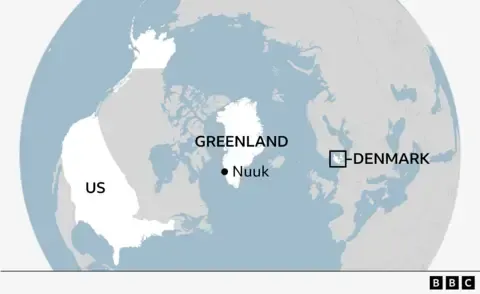
Greenland US Denmark Relations have become increasingly complex, especially in light of recent discussions at the White House. Denmark’s foreign minister, Lars Lokke Rasmussen, has publicly expressed a “fundamental disagreement” with US President Trump, who has shown a keen interest in the resource-rich island, describing it as crucial for US security and even suggesting its acquisition. This stance has raised significant concerns among European allies, underscoring Greenland’s strategic importance in the Arctic region. Despite tensions, both parties have agreed to form a high-level working group to explore future cooperation, which includes the potential establishment of additional US military bases on the island. As the geopolitical landscape shifts, maintaining a careful balance between Denmark, Greenland, and the US is essential for ensuring stability in this vital area.
The dynamics between the United States, Denmark, and Greenland have sparked keen interest as these nations navigate their diplomatic ties. The recent discussions highlight a stark difference in priorities, particularly concerning the United States’ pursuit of military and strategic interests in Greenland. The involvement of key officials, including the Denmark foreign minister and US Vice President, indicates the high stakes in maintaining collaborative relations. Notably, Greenland’s military significance has become a focal point, illustrating the delicate interplay of sovereignty and international cooperation. As these nations work through their disagreements, the path forward remains uncertain, with both opportunity and tension interwoven throughout their engagements.
The Strategic Importance of Greenland in US Foreign Policy
Greenland’s geographical location renders it an asset of strategic importance, particularly in the context of US foreign policy. Positioned between North America and the Arctic, it serves as a potential hub for military operations and surveillance. The United States views Greenland as a key location for establishing military bases, which could enhance defense capabilities against perceived threats from Russia and China in the Arctic region. Discussion around the island has increased significantly, particularly under the Trump administration, highlighting the US’s interest in securing its influence over this crucial territory.
Moreover, the ongoing conversations regarding the integrity of Greenland underscore its role in international relations. US efforts to include Greenland in its defense strategy demonstrate an understanding of its importance as an early warning system for missile threats and maritime monitoring. As tensions rise globally, particularly with China and Russia, the U.S. government’s position on Greenland reflects a broader strategy aimed at reinforcing its military presence and safeguarding its national security. The critical nature of these discussions becomes apparent as allies consider the implications of US involvement in Greenland, shaping the future of its governance and relationships with both Denmark and Greenland.
Greenland and Denmark: Navigating Disagreements
Recent talks between Denmark and the United States have illuminated the fundamental disagreements that exist regarding the future of Greenland. Danish Foreign Minister Lars Lokke Rasmussen has expressed a resolute stance against President Trump’s desire for the acquisition of the island, branding it as ‘totally unacceptable’. Such disagreements highlight the challenges faced by Denmark in balancing its responsibilities as the sovereign power over Greenland while accommodating US interests in the region. The notion of a high-level working group initiated during these discussions aims to address areas of contention, but it also raises concerns about the autonomy and governance of Greenland.
The insistence by the US on military collaboration, including the notion of establishing additional bases, presents a dichotomy for Denmark. While there is recognition of the strategic benefits these bases could provide against threats posed by external forces, there is also a clear desire to maintain Greenland’s autonomy. The Danish government is at a crossroads where it must assert its control over Greenland while considering the implications of US military strategies in the Arctic. As discussions move forward, the complexity of the relationship between Greenland, Denmark, and the US remains a focal point in regional security and international diplomacy.
International Reactions and Military Support for Greenland
The unfolding discussions about US interests in Greenland have spurred reactions from various European allies, who are keen to support Denmark in maintaining the region’s stability. Sweden’s commitment to supply armed forces to Greenland on Denmark’s request, alongside Germany’s deployment of a reconnaissance team, reflects a unified European approach to defending Greenland’s territorial integrity against potential external threats. The UK has also pledged to provide military assistance, which signifies the vital role that Greenland plays not only in US strategy but also within NATO’s collective security framework.
France’s announcement of opening a consulate in Greenland and the deployment of military personnel underscores a growing European commitment to engagement in the Arctic region. These initiatives not only enhance security but also symbolize the collaborative efforts among allies to counterbalance the perceived expansionist aims of both Russia and China. As geopolitical tensions escalate, the coordinated military footing established by Denmark and its allies may serve as a deterrent against possible aggressions targeting Greenland, reinforcing the island’s significance in global security dynamics.
Public Sentiment on US Acquisition of Greenland
Public opinion polls reveal that the prospect of US control over Greenland faces significant opposition from both the locals and the wider American public. A Reuters/Ipsos poll indicates that only a small fraction of Americans support the idea of seizing Greenland, while a notable percentage outright oppose Trump’s ambitions towards the island. These sentiments suggest a deep-rooted resistance to the notion of territorial acquisition, reflecting concerns about imperialistic overtones and national sovereignty.
In Greenland itself, resistance to any form of US takeover is firmly articulated by government officials, showcasing a strong commitment to autonomy among its citizens. Minister of Foreign Affairs Vivian Motzfeldt has clearly stated that any discussions around cooperation should not infringe upon Greenland’s sovereignty. The strong pushback from both Greenlanders and Americans demonstrates a collective sentiment towards self-determination, posing significant hurdles for any US attempts to intervene or take control. As these discussions evolve, it is crucial to consider the voices of those most affected—denizens of Greenland—who vehemently stand against the idea of being under foreign governance.
Future Cooperation and Military Bases in Greenland
Despite the disagreements about ownership, there are indications that Denmark and Greenland are open to a framework of cooperation with the United States. Foreign Minister Rasmussen has acknowledged the necessity of enhancing security measures in the face of global uncertainties, indicating a possible willingness to accept an increased military presence on the island. Establishing military bases to bolster defense capabilities against Russian and Chinese aggression has nuanced implications and could redefine the existing agreements between the US, Denmark, and Greenland.
The proposed high-level working group aims to explore pathways for collaboration that respect Greenland’s sovereignty while also addressing legitimate security concerns. This prospect of military expansion aligns with the notion that enhanced cooperation is crucial in maintaining stability in the Arctic. However, it remains essential that any military cooperation does not infringe upon the rights and aspirations of the Greenlandic people, ensuring that all parties move forward with mutual respect and understanding.
Understanding Trump’s Perspectives on Greenland
President Trump’s fascination with Greenland can be viewed through the lens of US national security interests. His repeated assertions that the acquisition of Greenland is paramount for protecting against potential threats underscore a broader narrative of prioritizing military readiness. Trump’s vision incorporates the establishment of a robust defensive architecture that relies on Greenland as a strategic outpost capable of monitoring and deterring hostile actions in the Arctic, reflecting his administration’s assertive foreign policy stance.
However, this unwavering focus on Greenland raises questions about the implications of such a viewpoint on international relationships and the autonomy of Greenland itself. The insistence on ‘conquering’ Greenland from the US side appears at odds with Denmark and Greenland’s goals of independence and self-determination. The dynamic interplay between Trump’s military aspirations and the desire of Greenlanders for stability without external disturbance presents a complex scenario that must be navigated thoughtfully as both sides seek to articulate their interests.
Geopolitical Tensions: Russia, China, and Greenland
The geopolitical landscape surrounding Greenland is increasingly influenced by the rising assertiveness of Russia and China in the Arctic. The location of Greenland provides strategic advantages, and both nations have shown a keen interest in exploiting resources and asserting territorial claims in the region. The US’s focus on Greenland must be framed against the backdrop of these external pressures, where proactive measures are deemed necessary to counterbalance increasing competition and potential military threats.
Denmark’s approach towards Greenland acknowledges the complex interplay of international relations, where strengthening military presence could deter unwanted encroachments. By aligning with allies in response to these geopolitical tensions, the US and NATO can leverage Greenland as a critical component of their broader strategy to maintain stability in the Arctic. The unfolding narratives around Greenland’s future are, thus, not merely local issues; they resonate deeply within the fabric of global security architecture.
The Pros and Cons of Acquiring Greenland
The debate surrounding the acquisition of Greenland has elicited a range of opinions expressing both the potential advantages and disadvantages. On one hand, proponents argue that ownership could enhance US security interests and establish a strategic foothold in the Arctic, which is critical for monitoring and deploying military resources effectively. Advocates for the acquisition contend that it could solidify the US’s position against adversarial powers, strengthening national defense mechanisms in a key region that is becoming increasingly vital amid geopolitical shifts.
Conversely, the argument against acquiring Greenland resonates with themes of sovereignty and self-determination. Critics of the acquisition warn that it raises ethical questions about colonialism and undermines the autonomy of the Greenlandic people. The sentiment among many residents who oppose US control emphasizes the importance of respecting local governance and culture. The discussions around potential acquisition invite a deep examination of what it means to secure territory in a contemporary landscape marked by global alliances and historical context.
Moving Forward: The Role of Diplomacy in Greenland’s Future
As discussions on Greenland’s future unfold, the role of diplomacy becomes increasingly paramount. Given the complex nature of international relationships, fostering dialogue among the US, Denmark, and Greenland is essential for reaching a consensus that respects the interests of all parties involved. The establishment of a high-level working group is a significant step in this direction, paving the way for constructive negotiations that can potentially alleviate tensions and create a multifaceted approach to security and cooperation.
Cultivating a diplomatic environment that balances military cooperation with the recognition of Greenland’s autonomy will be critical in shaping the territory’s future. The ongoing engagement from Europe, coupled with diplomatic overtures from the US, indicates that a collaborative framework may emerge, one that honors the unique status of Greenland while addressing the pressing security concerns in a rapidly changing geopolitical landscape. Moving forward, it will be crucial for all stakeholders to prioritize diplomacy over dominance, ensuring that the voices of Greenland and its people are integral to whatever agreements may arise.
Frequently Asked Questions
What are the key issues surrounding Greenland US Denmark relations?
The Greenland US Denmark relations are marked by disagreements regarding the strategic importance of Greenland and US aspirations for its acquisition. Denmark’s foreign minister emphasized that recent discussions highlighted a ‘fundamental disagreement’ over the US’s stance on Greenland, particularly President Trump’s interest in acquiring the territory, which is viewed as totally unacceptable by Denmark.
How does US foreign policy influence Greenland’s strategic importance?
US foreign policy plays a crucial role in determining Greenland’s strategic importance, especially in light of security concerns in the Arctic. The presence of US military bases in Greenland, like Pituffik, positions the US as a key player in monitoring Arctic activities and addressing potential threats from Russia and China, making Greenland essential for national security measures.
What is Denmark’s position on US military bases in Greenland?
Denmark has indicated openness to the establishment of additional US military bases in Greenland, citing the need for enhanced security against Arctic threats. However, Denmark’s foreign minister also reiterated that any increase in military presence must respect the autonomy and interests of Greenland.
What prompted Trump’s interest in Greenland acquisition?
Trump’s interest in the acquisition of Greenland stems from the island’s resource-rich potential and its strategic geographical position. He has expressed that controlling Greenland is vital for US national security, particularly to support future military initiatives like missile defense systems.
What is the reaction of Greenland’s government to the idea of a US takeover?
Greenland’s government firmly rejects the idea of a US takeover, with officials stating that they have clear limits regarding their autonomy. They are open to cooperation with the US but articulated that Greenland is not for sale and remains an integral part of the Kingdom of Denmark.
How did European allies respond to the tensions in Greenland US Denmark relations?
European allies, including Sweden, Germany, and the UK, have moved to reassure their support for Greenland in response to the tensions in Greenland US Denmark relations. These countries have committed to providing military assistance and reinforcing their presence in the Arctic to support Denmark’s governance of Greenland.
What are the implications of military discussions between the US and Denmark concerning Greenland?
The discussions surrounding US military presence in Greenland reflect the growing geopolitical tensions in the Arctic. Enhanced military cooperation could lead to increased security measures, while also raising concerns among local Greenlanders about their sovereignty and the potential impacts of foreign military deployment.
What recent polls indicate about public opinion on US control of Greenland?
Recent polls, including a Reuters/Ipsos survey, reveal that a significant majority of Greenland’s residents oppose coming under US control, with 47% of Americans also expressing opposition to Trump’s pursuit of acquiring the island. This underscores a lack of public support for the notion of US ownership of Greenland despite its strategic importance.
| Key Points | Details |
|---|---|
| Denmark’s Disagreement | Denmark’s foreign minister stated there is a “fundamental disagreement” with the US over Greenland following a White House meeting. |
| Trump’s Proposal | President Trump is interested in acquiring Greenland for its resources, which Denmark finds unacceptable. |
| High-Level Working Group | A working group will meet to discuss the future of Greenland and seek compromises. |
| Military Presence | The US has a base in Greenland with over 100 personnel and the right to deploy more troops. |
| International Support | European allies such as Sweden and Germany have offered military assistance to Denmark regarding Greenland. |
| Public Sentiment | Majority of Greenland’s residents oppose US control, with only 17% of Americans supporting the acquisition. |
Summary
Greenland US Denmark Relations have entered a new chapter following critical talks between Denmark and the US that revealed strong disagreements, especially concerning the potential acquisition of Greenland. Despite differing opinions on military strategies and territorial control, both Denmark and Greenland remain committed to dialogue and international cooperation, ensuring the region’s security amidst rising geopolitical tensions.

