Listen to this article
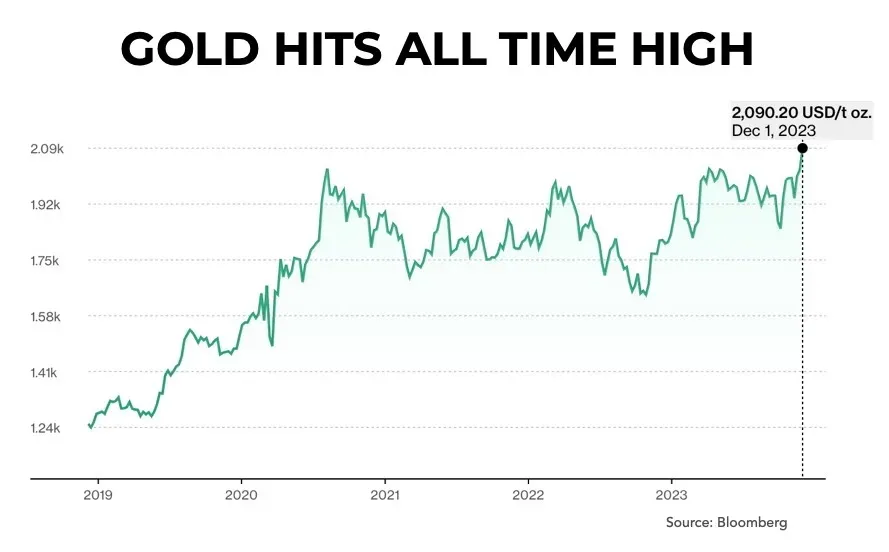
The gold price has reached a record high, now trading above $4,400 an ounce, reflecting a significant surge in the precious metals market. This remarkable increase is driven by rising investor demand for safe haven assets amidst turbulent economic forecasts and potential US interest rate cuts. With gold prices up over 68% this year alone, savvy investors are now eyeing opportunities in investment in gold as a hedge against uncertainty. Notably, silver has also hit its own record highs, indicating a broader trend in precious metals that can’t be overlooked. As global tensions escalate and economic conditions shift, the appeal of these commodities becomes ever more compelling for those looking to secure their financial futures.
As the market grapples with fluctuating economic signals, the recent surge in the gold price highlights a vital aspect of today’s financial landscape. The record-breaking levels of this precious metal demonstrate a renewed interest from investors who regard gold as a strategic shield against inflation and instability. Meanwhile, the burgeoning silver price increase showcases how these precious metals are intertwined, captivating attention across various investment portfolios. With rising projections about future US interest rates and a weak dollar, many are reconsidering their positions in safe haven assets. The dynamics of the precious metals market suggest that both gold and silver will continue to play pivotal roles for those navigating uncertain economic waters.
Gold Price Record High: Understanding the Surge
Gold has recently reached a record high of over $4,400 an ounce, marking a significant milestone in the commodities market. This increase is attributed to a confluence of factors, including geopolitical uncertainties and the expectation of further cuts in US interest rates in the coming year. Analysts project that lower interest rates usually lead to diminished returns for bonds, prompting investors to seek out gold as a safer asset for capital preservation. As a result, the precious metals market has witnessed an uptrend, with gold prices rising over 68% since the start of the year.
The rise in gold prices has also triggered a ripple effect throughout the entire precious metals market, pushing silver prices to new heights. With silver reaching a record high of $69.44 per ounce, it’s evident that investor behavior is shifting towards safe haven assets amidst growing economic instability. Financial experts highlight that as confidence in traditional investment avenues wavers, commodities like gold and silver become the preferred choice for safeguarding wealth.
Silver Price Increase and Its Impact on Precious Metals Market
Similar to gold, silver has seen a remarkable price increase, with year-to-date gains approaching 138%. This surge is largely driven by both the demand for safe haven assets and silver’s intrinsic value in industrial applications. The shift towards greener technologies, which utilize silver in solar panels and electronics, has further accelerated its demand, making it a critical component of modern manufacturing.
However, market analysts caution that while the current hype around precious metals can be enticing for investors, it also invites volatility. Speculative trading can result in potential losses for those who do not pay attention to market fundamentals. It’s important for investors to approach the precious metals market with a strategy that balances immediate profits with long-term wealth preservation.
The Role of Safe Haven Assets in Uncertain Economic Times
In times of economic instability, the concept of safe haven assets gains prominence among investors, with gold often being the go-to choice. The recent geopolitical tensions and fluctuating US economic indicators have highlighted the importance of diversifying portfolios with assets like gold and silver. As traditional financial instruments falter, investors increasingly seek refuge in commodities that have historically retained their value.
Consequently, central banks globally are increasing their gold reserves, reflecting a strategic move to mitigate risks associated with currency fluctuations and economic hardships. This trend underpins the notion that as uncertainties grow, precious metals will likely continue to be an attractive investment for those looking to navigate turbulent financial waters.
US Interest Rates and Their Influence on Gold Investments
The trajectory of US interest rates has a profound impact on the appeal of investment in gold and other precious metals. Lower interest rates typically mean lower returns on savings accounts and fixed income securities, which prompts investors to diversify into gold. As the Federal Reserve signals possible interest rate cuts, this expectation has already contributed to the rising gold prices, as seen in the recent surpassing of the $4,400 threshold.
Moreover, the connection between interest rates and inflation fears is crucial. As the cost of living rises, many turn to gold as a hedge against inflation. This cyclical relationship between interest rates, inflation, and gold pricing illustrates why monitoring monetary policy changes can provide valuable insights for investors targeting growth in the precious metals market.
Investment Strategies in Gold Amid Market Volatility
In a landscape marked by fluctuating prices of precious metals, devising a thoughtful investment strategy is essential for those looking to capitalize on the current market conditions. Investors should consider both short-term gains and long-term stability, taking into account factors such as geopolitical events, currency strength, and the economic outlook overall. Diversifying investments across different precious metals, including gold and silver, can help mitigate risks derived from volatility.
Additionally, understanding the industrial uses of silver can inform investment decisions, as its value can be further driven by new market demands, such as renewable energy technologies. Engaging with dedicated financial advisors or utilizing resources from market analysts can provide deeper insights into effective investment strategies in the precious metals arena.
Geopolitical Factors Shaping Precious Metals Prices
Geopolitical tensions have historically influenced the prices of precious metals significantly, with investors often turning to gold and silver as safe haven assets during crises. The current environment, characterized by trade wars and international conflicts, has led to increased uncertainty in financial markets. Consequently, this uncertainty tends to drive investors towards gold, causing its price to surge as they seek stability amidst chaos.
Analysts point out that as long as geopolitical issues persist, we might see further growth in the precious metals sector. The financial contagion effects of tensions can push even the most risk-averse investors to consider gold not just as a commodity but as a crucial defense against financial risk.
Central Banks Boosting Gold Holdings to Mitigate Economic Risks
In response to recent economic turbulence, many central banks around the world are actively increasing their gold reserves. This strategic decision reflects an overarching goal to reduce dependence on the US dollar and guard against monetary instability. With the ongoing threat of economic decline, the trend of central bank accumulation is expected to continue as a means to diversify national assets and ensure long-term financial security.
Economic analysts forecast that this trend will support increasing demand for gold in the market, thus elevating its price and rendering it an even more attractive option for economic buffering. The push for central banks to hold more gold not only underscores its perceived value as a safe haven but also elevates the overall significance of precious metals in global economics.
Inflation Fears Driving Investment in Precious Metals
Current economic indicators suggest that inflationary fears are on the rise, prompting an increased interest in precious metals such as gold and silver. As inflation erodes purchasing power, investors are turning to these assets as effective hedges, underpinning their values in times of significant price fluctuations across other investment avenues. The recent surge in gold prices illustrates this behavioral shift among investors seeking to secure their wealth.
Furthermore, as inflation expectations grow, this could lead to a self-reinforcing cycle where rising gold prices encourage more investment in the metal. This dynamic also highlights the role of gold as a long-term investment, capable of weathering economic storms and preserving value over time.
The Future of Gold Prices: Predictions and Trends
Looking ahead, the future of gold prices appears closely tied to a number of economic indicators and global events. Market analysts indicate that as long as geopolitical tensions and economic uncertainties persist, prices may continue to rise. The anticipated cuts in US interest rates could serve to bolster investor confidence in precious metals, further driving demand for gold as a fundamental asset in investment portfolios.
However, the landscape is not without its caveats. As potential market corrections loom due to speculative bubbles, investors need to remain vigilant and informed about the underlying dynamics at play. Continuously monitoring economic news, geopolitical developments, and interest rate changes will be crucial for those looking to navigate the evolving precious metals market and make informed decisions for their investments.
Frequently Asked Questions
What caused the gold price record high above $4,400?
The gold price record high exceeding $4,400 an ounce can be attributed to several factors including rising geopolitical tensions, strong investor demand for safe haven assets amid economic uncertainty, and anticipations of further US interest rate cuts by the Federal Reserve.
How have US interest rates influenced the gold price record high?
The recent increase in gold prices to a record high has been significantly influenced by expectations that the US Federal Reserve will lower interest rates. Lower rates typically reduce yields on bonds, prompting investors to seek higher returns in gold and other precious metals.
What impact does the gold price record high have on investment in gold?
The gold price record high encourages more investment in gold as investors look for ways to protect their wealth amid inflation and economic instability. As gold becomes a critical safe haven asset, its rising price boosts its appeal among investors.
What relationship exists between silver price increases and the gold price record high?
The silver price increase, which reached a record high alongside gold, is closely related as both precious metals often experience synchronized price movements due to shared demand patterns as safe haven assets in unstable economic conditions.
Why do analysts believe the precious metals market is influenced by geopolitical tensions?
Analysts suggest that geopolitical tensions, such as trade wars and uncertainties surrounding US policies, contribute to the precious metals market’s volatility, pushing investors towards safe haven assets like gold, leading to record highs.
What role does the weaker US dollar play in the recent gold price record high?
A weaker US dollar has positively impacted the gold price record high by making gold cheaper for international buyers, thereby increasing global demand for the precious metal.
How does the current economic climate affect the demand for safe haven assets like gold?
In times of economic upheaval, decreasing confidence in financial markets often drives investors to seek safe haven assets like gold. The recent gold price record high reflects increased demand for gold as a reliable store of value amid global economic uncertainties.
What forecasts do analysts have for future gold prices after hitting record highs?
Analysts are predicting that as central banks continue to expand their physical gold holdings and expectations for further US interest rate cuts persist, the price of gold may continue to rise, maintaining its status as an essential investment in precious metals.
What should investors consider when investing in gold after its record high?
Investors should consider the volatility in the market, their investment goals, and the potential risks associated with buying at record highs. Diversifying portfolios and staying informed on economic indicators can help in making strategic investment decisions.
How has the demand for precious metals evolved in 2025?
The demand for precious metals like gold and silver has surged in 2025, influenced by economic factors including inflation fears, political instability, and expectations of lower US interest rates, all playing roles in pushing their prices to record highs.
| Aspect | Details |
|---|---|
| Gold Price Record | Gold priced at over $4,400/ounce, reaching $4,426.66. |
| Increase Percentage | Gold prices have risen over 68% this year. |
| Contributing Factors | Rate cuts from the US central bank, geopolitical tensions, and trade wars. |
| Investor Behavior | Investors turning to gold as a safe haven due to economic uncertainty. |
| Silver Price Record | Silver reached a record of $69.44/ounce, up 138% year-to-date. |
| Market Trends | Continued global demand for gold and silver influenced by geopolitical factors. |
Summary
The gold price record high has become a crucial topic as it reflects the growing demand for safe investment assets amidst uncertainty in global economic conditions. Investors are increasingly turning to gold and silver, driving prices up significantly. This spike is attributed to expectations of lower interest rates from the US central bank and ongoing geopolitical tensions. With gold reaching unprecedented levels, the situation signals a potential shift in investment strategies, focusing more on commodities as a shield against economic volatility.