
Listen to this article
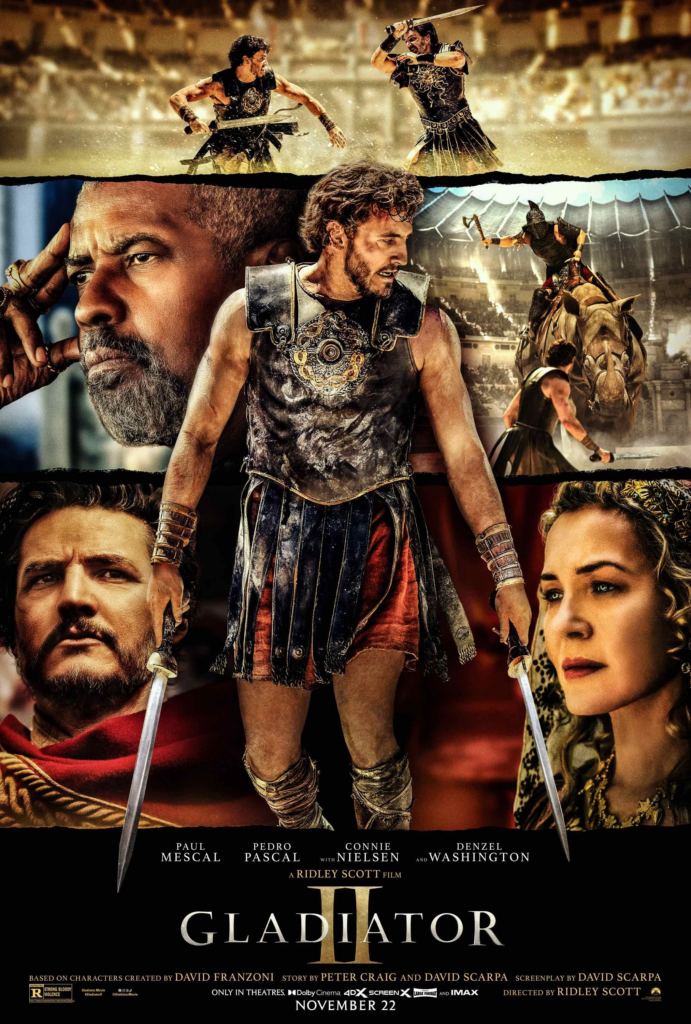
The criticism surrounding the Gladiator sequel has ignited passionate debates among fans and critics alike, especially following Russell Crowe’s recent statements on the matter. Crowe, who famously portrayed the iconic Maximus character, expressed concerns about the sequel’s understanding of the original film’s “moral core,” which he believes is crucial to its enduring legacy. Directed by Ridley Scott, the highly-anticipated Gladiator II review has received mixed feedback, with some labeling it a disappointing follow-up. Critics have pointed out that while the film features new talent like Paul Mescal and Pedro Pascal, it struggles to capture the essence that made Russell Crowe’s Gladiator a cinematic masterpiece. As discussions continue to unfold, the contrast between the original and its successor raises questions about storytelling and character depth in blockbuster cinema.
The recent backlash over the follow-up to the beloved Gladiator film underscores a cultural conversation about sequels and their fidelity to source material. Russell Crowe, who embodied the heroic Maximus in the original epic, has publicly voiced his critique regarding the sequel’s disconnect with the film’s fundamental ethical themes. While director Ridley Scott attempts to revitalize the storyline with fresh characters and dramatic arcs, the reception of this new adventure has sparked varied opinions among audiences and film reviewers. Many comparisons are drawn between the daring moral questions posed in the first movie and the perceived hollow spectacle of its successor. This discourse not only highlights the evolution of cinematic storytelling but also speaks to the loyalty of fans to narratives that resonate with their values.
Criticism of the Gladiator Sequel by Russell Crowe
Russell Crowe’s criticism of the Gladiator sequel reflects a deep concern for the franchise’s legacy, emphasizing that its original essence may have been lost in the attempt to recreate its success. In his statement, Crowe articulated that the core appeal of Gladiator was not its action-packed sequences or visual grandeur, but rather its moral foundation. This sentiment closely ties to the character of Maximus, who embodies resilience and honor amid the brutality of Roman society. For fans of the original who valued the story’s depth, Crowe’s perspective resonates strongly in the face of a sequel that some might argue prioritizes spectacle over substance.
The mixed reviews that followed the release of Gladiator II have added to the discourse surrounding the film’s authenticity. Critics, while praising certain elements like the performances of new leads such as Paul Mescal, noted the sequel as lacking the emotional weight that defined its predecessor. Crowe’s sentiments were echoed in several reviews which cautioned against chasing blockbuster success at the expense of a rich narrative. While Sir Ridley Scott’s direction is commendable, many felt that the sequel fell short of capturing the true essence of the Maximus character arc that captivated audiences over two decades ago.
The Importance of the Moral Core in Gladiator
The moral core of Gladiator served as the backbone of its storytelling, elevating the film from a standard action epic to a profound commentary on honor, vengeance, and redemption. Maximus, portrayed masterfully by Crowe, is a character driven by personal loss and a longing for justice, which struck a chord with viewers. This integral aspect is what distinguishes the original film from countless others within the genre; its message lingers long after the credits roll. Crowe’s concern that the sequel overlooks this moral dimension raises critical questions about its narrative integrity and the audience’s expectations.
In the pursuit of recreating the Gladiator brand, it appears that subsequent filmmakers may have neglected the heart of the story. The moral dilemmas faced by Maximus not only define his journey but also challenge audiences to reflect on their values. However, if the sequel veers towards action-bias rather than character-driven storytelling, it risks alienating those who were drawn to the original film’s rich moral landscape. The essence of Gladiator is not merely in its grand fight scenes, but in the timeless moral questions it presents — a pursuit of integrity that must not be lost in the transition to sequels.
Analyzing the Maximus Character in Gladiator
Maximus, as a character, represents the duality of a warrior’s spirit and a loving father, a portrayal that Crowe brought to life with remarkable depth. His journey from a general to a slave and finally to a vengeful gladiator encapsulates a story of tragic heroism. In the first film, audiences witnessed his unwavering commitment to honor and loyalty, which are qualities that have become synonymous with the character. This complexity compels viewers to emotionally invest in his story, seeking justice for the atrocities he endures. In the sequel, however, the interpretation of Maximus’s legacy may not do justice to the original’s character insights.
The notion that the sequel could deviate from Maximus’s established character traits raises concerns about coherence in the Gladiator narrative. Crowe’s insistence on preserving the moral foundation of Maximus highlights the potential pitfalls of narrative evolution through sequels. Characters should grow and evolve while retaining core ideals that define them; otherwise, they risk losing relatability and resonance with the audience. As Gladiator II attempts to introduce new characters, the challenge lies in sustaining the Maximus legacy without compromising its essential narrative elements.
Reception of Gladiator II and Comparisons to the Original
Upon its release, Gladiator II faced a spectrum of critiques that reflected both appreciation and disappointment. Some reviewers highlighted the fresh take offered by the sequel, commending new actors like Paul Mescal for their performances. Yet, others were quick to point out that despite its thrilling visuals, it eluded the raw emotional core that made the original compelling. The juxtaposition of Gladiator II against its predecessor reveals a stark contrast in tone, with many fans agreeing that the sequel lacks the weight and gravitas that made Gladiator such a monumental film in cinema history.
Critics often cite how sequels can struggle under the shadow of their iconic predecessors. Gladiator II, while ambitious, is viewed by some as merely a shadow of the original, which won five Academy Awards, including Best Picture. The iconic status of Russell Crowe’s Gladiator has set an exceptionally high benchmark, making it difficult for new entries to elicit the same emotional engagement. As opinions continue to unfold, it remains pivotal for future productions to recognize the delicate balance between expanding a narrative and maintaining the elements that initially captured audiences’ hearts.
The Role of Ridley Scott in the Gladiator Franchise
Sir Ridley Scott’s role as the director of Gladiator and its sequel positions him as a pivotal figure in the franchise’s storytelling. His directorial vision in the first film defined the standard of epic storytelling, combining historical narrative with profound character development. As he returns for the sequel, there are expectations that his experienced direction will carry forth the original’s thematic richness while introducing a new story. However, with the mixed reception of the sequel, questions arise regarding how well Scott navigated the balance between nostalgia and innovation.
Critics have always noted that Scott has a unique ability to weave moral complexities into his films, which was a hallmark of Gladiator. The reception of Gladiator II, alongside Russell Crowe’s commentary, suggests that not all audiences feel this moral core has been adequately represented. As a result, it raises the question of whether Scott’s continued involvement guarantees fidelity to the original’s message, or if it can successfully adapt to new storytelling methods. The future of the Gladiator franchise thus hangs on Sir Ridley’s ability to reconcile the old and the new for contemporary audiences.
Examining the Theme of Legacy in Gladiator
Legacy is a central theme in Gladiator, impacting character motivations and shaping the narrative landscape. For Maximus, his legacy as a general and father intertwines his quest for vengeance and justice throughout the original film. Crowe’s embodiment of this theme resonated deeply, prompting audiences to reflect on their legacies and the moral choices that define them. The sequel is tasked with grappling not only with the legacy of the original film but also how new characters, like Lucius, interpret and interact with that legacy.
In Gladiator II, the emergence of Lucius as the illegitimate son of Maximus represents a narrative opportunity to explore ideas of lineage, honor, and the inheritance of values. How Lucius carries on his father’s legacy will be crucial in developing the moral complexities that supporters of the franchise have come to expect. Failure to navigate this theme sensitively could risk alienating fans of the original, who cherish the moral questions posed by Maximus’s journey. Ultimately, connecting the legacy of Gladiator with its sequel will be vital in preserving its integrity.
Audience Expectations for Gladiator II
As with any sequel to a beloved classic, expectations for Gladiator II have been high among audiences eager to revisit the cinematic world of ancient Rome. Given the first film’s transformative journey led by Maximus and its exploration of ethical dilemmas, viewers anticipated a narrative that would honor and build upon these foundations. However, Russell Crowe’s criticisms hint that the sequel may have misaligned with what audiences hope for, potentially departing from the themes that made the original so special.
Audience expectations can greatly influence the reception of a sequel, with fans often hoping for familiar emotional beats while embracing innovation. Yet, if Gladiator II prioritizes spectacle over the nuanced storytelling that characterized the original, it may meet resistance from those who esteemed the first film’s moral depth. Thus, ensuring that the sequel resonates with fans’ emotional connections to Gladiator will be imperative in determining its success and acceptance.
Gladiator’s Impact on the Epics Genre
The success of Gladiator set a significant precedent for the epics genre, revitalizing interest in grand historical narratives and character-driven storytelling. Russell Crowe’s portrayal of Maximus not only earned him an Academy Award but also established a template for future films that sought to blend action with deeper moral inquiries. The emotional resonance and narrative complexity of Gladiator proved that audiences are drawn to stories that engage with human struggles, a notion that many filmmakers have strived to replicate since its release.
As sequels and reboots have continued to emerge in Hollywood, Gladiator’s influence is felt in how stories are structured and the emphasis placed on character development. However, with the arrival of Gladiator II, it’s essential to consider how effectively the sequel honors this legacy. By engaging with Gladiator’s epic formula and moral underpinnings, the sequel has the potential to either stand as a worthy successor or falter as another attempt to capitalize on a successful brand without grasping its foundational elements.
Future Directions for the Gladiator Franchise
The future of the Gladiator franchise hangs in a delicate balance of honoring the past while navigating new storytelling avenues. As the cinematic landscape evolves, opportunities arise for the franchise to explore diverse narratives, characters, and themes that resonate with contemporary audiences. The sequel’s release has sparked discussions on where the franchise can go next, especially concerning character arcs and engagement with the historical context of Gladiator.
Maintaining the moral and thematic integrity of Gladiator may prove crucial in shaping its sequel or any potential spin-offs. As Russell Crowe pointed out, the heart of Maximus’s journey should guide any new stories, ensuring they connect with the values that made the original compelling. This commitment to character-driven narratives and ethical exploration will be fundamental in determining the franchise’s trajectory and its lasting impact on audiences across generations.
Frequently Asked Questions
What are Russell Crowe’s criticisms of the Gladiator sequel?
Russell Crowe has expressed significant criticism of the Gladiator sequel, suggesting that the creators did not grasp the essence of what made the original film special. He emphasized that the ‘moral core’ of the story attracted audiences to the first Gladiator film, a theme he believes was poorly understood in the sequel.
How does Gladiator II compare to the original Gladiator in terms of moral core?
Critics note that the Gladiator sequel struggles to replicate the moral core that defined Russell Crowe’s performance as Maximus in the original. Crowe himself stated that the focus on spectacle in the sequel detracts from the character’s depth and the story’s emotional weight.
What were the critical reviews for Gladiator II after its release?
Critics offered mixed reviews for Gladiator II. While some, like The Guardian’s Peter Bradshaw, praised it as a ‘thrilling spectacle,’ others, including Variety’s Owen Gleiberman, deemed it a ‘mere shadow’ of the original film, suggesting it lacked the profound storytelling that characterized the 2000 classic.
What does Russell Crowe say about the representation of Maximus in Gladiator II?
Russell Crowe questioned the portrayal of his character, Maximus, in the Gladiator sequel, particularly the suggestion of romantic relationships that he believes undermine the character’s power. He described attempts to add unnecessary elements, like sex scenes, as detrimental to the integrity of Maximus.
How did Russell Crowe’s role in Gladiator influence audience perceptions of the sequel?
Russell Crowe’s role as Maximus in the original Gladiator set a high standard for character integrity and emotional depth. His criticisms of the sequel reflect a deep concern among fans that the same values, such as the film’s moral core, might be compromised in the follow-up.
What did Russell Crowe say about audience reactions to Gladiator II?
Crowe mentioned that many fans approached him expressing disappointment in Gladiator II, indicating a disconnect between audience expectations and the final product. He humorously noted his response to their concerns by stating, ‘It wasn’t me, I didn’t do it’.
| Key Point | Details |
|---|---|
| Russell Crowe’s Criticism | He believes the creators did not understand the essence of the original film. |
| Moral Core Importance | Crowe emphasized that the ‘moral core’ was central to the original’s appeal. |
| Mixed Reviews on Sequel | Critics gave the sequel mixed reviews, praising some aspects while criticizing its connection to the original. |
| Russell’s Experience on Set | He mentioned struggles to maintain the moral core during the production of the original. |
| Audience Reactions | Many fans expressed disappointment with the sequel, leading to Russell’s defensive responses. |
| John’s Role | Paul Mescal plays Lucius, purportedly Maximus’s illegitimate son, in the sequel. |
Summary
Gladiator sequel criticism has gained momentum with Russell Crowe’s remarks about the film’s creators failing to capture the essence of the original. His emphasis on the importance of the moral core highlights a significant disconnect between what made the 2000 epic resonate with audiences and the perceived shortcomings of the sequel. While the film features new talent and impressive visuals, the mixed critical reception indicates a struggle to live up to its predecessor’s legacy. Crowe’s insights illustrate both his deep connection to the character of Maximus and the expectations that fans hold for such beloved franchises.