Listen to this article
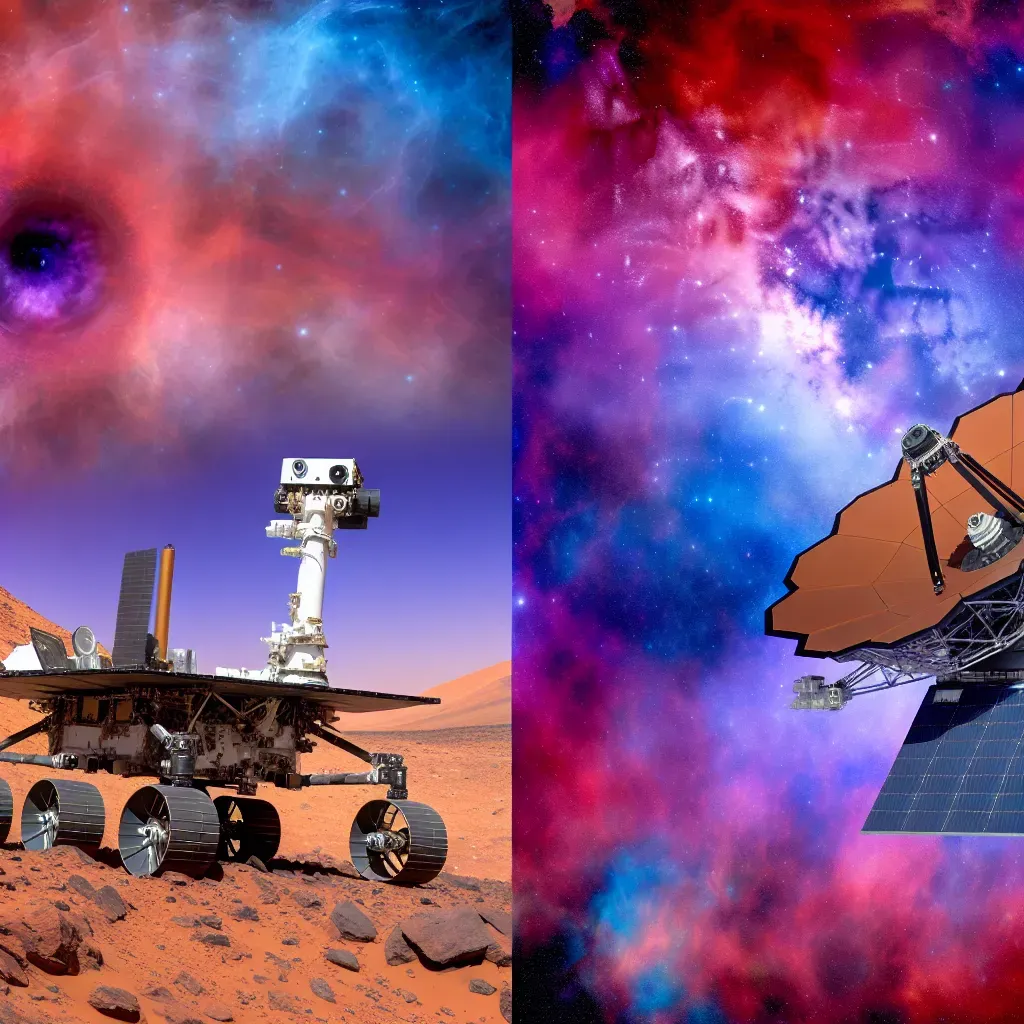
Galactic Discoveries are at the forefront of humanity’s quest to unravel the mysteries of the universe, transforming our understanding of space exploration. With remarkable advancements in technology, such as NASA’s Mars Rover and the groundbreaking James Webb Telescope, we are witnessing unprecedented insights into the vast cosmos. These tools enable scientists to discover exoplanets that could potentially harbor life, while initiatives like SpaceX Starship aim to bring interplanetary travel within reach. Each new revelation ignites a sense of wonder, illustrating the power of exploration beyond our Earthly confines. Join us as we delve into the latest galactic discoveries that continue to inspire curiosity and advance our pursuit of knowledge.
The exploration of the cosmos, also known as galactic research, encompasses a broad range of studies that seek to expand our understanding of celestial phenomena. Innovations like the Mars Rover and the James Webb Space Telescope are pivotal in this journey, providing insights into other planets and distant star systems. Meanwhile, efforts surrounding interstellar travel, led by companies like SpaceX with their Starship program, signify an exciting shift towards interplanetary habitation. As we search for exoplanets in habitable zones, the possibilities for discovering life beyond Earth are growing ever more tangible. This discussion on galactic explorations serves to highlight not just the marvels of technology, but the enduring human spirit of discovery.
Galactic Discoveries: Journey through the Cosmos
Galactic discoveries, marking milestones in our quest to understand the cosmos, play an integral role in expanding our horizons. With missions targeting regions such as Mars and the depths of outer space, each finding contributes to a broader narrative about our place in the universe. The advancements in technology, especially in telescopes like JWST and rovers like Perseverance, allow us to capture detailed insights on celestial bodies, sparking interest in astronomical research and education.
As we delve into these galactic events, we realize that each discovery is not just an exploration of space, but also a reflection of human ingenuity and spirit. By enhancing our understanding of phenomena such as black holes, star formation, and exoplanets, researchers reveal the complexities of the universe that were once thought unreachable. Such engagements fuel curiosity, leading to public interest in space exploration missions and potential future advancements that can lead to transformative changes in science.
Furthermore, galactic discoveries remind us of the interconnectedness of various scientific fields. As experts in astronomy collaborate with those in physics, engineering, and biology, they bring multi-faceted perspectives to address complex cosmic questions. With initiatives like the Artemis Program and upcoming Mars missions, there’s a collective anticipation for what’s next. The achievements of today serve not only to inform the present but also to inspire future generations to explore the intricacies and wonders that lie beyond our planet.
Mars Rover: Uncovering Secrets of the Red Planet
The Mars Rover, particularly the Perseverance model, represents a revolutionary leap in our efforts to explore the Red Planet. This advanced robot is not only analyzing Martian soil and rock samples, but it is also searching for evidence of ancient microbial life, which raises profound questions about past life forms on Mars. The rover’s recent feat of extracting oxygen from the thin Martian atmosphere stands as a testament to human creativity and problem-solving abilities, potentially paving the way for future manned missions.
Moreover, the data collected by the Mars Rover is crucial for understanding the planet’s climate and geology. As scientists review these findings, they’re developing target strategies for future exploration missions and highlighting the importance of sustained human presence on Mars. These discoveries take us a step closer to realizing the long-held dream of establishing a colony on another planet, enhancing our experience of interplanetary travel and inhabitation.
In the same vein, the science derived from the rover’s explorations extends beyond just Mars. Discoveries about its soil composition, atmospheric composition, and even water ice deposits inform our understanding of planetary science as a whole. By recognizing and studying such details, we can better understand Earth’s own history and future prospects. The insights gained fuel not only scientific inquiry but also increase public enthusiasm regarding Mars as a potential new frontier for humanity.
The James Webb Space Telescope: A Window into the Universe
The James Webb Space Telescope (JWST) is hailed as the next generation of space telescopes, poised to unveil the mysteries of the universe with unprecedented clarity. By employing powerful infrared technology, JWST can see further back in time than ever before, helping us to understand the formation of stars, galaxies, and possibly even life-sustaining exoplanets. As we observe celestial objects billions of light-years away, we grasp not only the history of the universe but also the evolution of cosmic structures that lead to our very own existence.
JWST’s ability to study the chemical compositions of exoplanet atmospheres brings hope for discovering habitable conditions beyond our solar system. As it analyzes exotic worlds with crushing atmospheres or vast oceans, scientists glean insights that could inform our search for life in the cosmos. The data produced by JWST will be foundational, guiding future missions and deepening our understanding of other planetary systems.
Moreover, the collaboration involved in the JWST project highlights the unifying goal of global space research endeavors. Scientists and engineers from around the world have come together to engineer this telescope, showcasing international cooperation in the realm of space exploration. The continued success of such efforts emphasizes that the pursuit of knowledge transcends borders, fostering a sense of shared humanity in our quest to explore and understand the universe.
Decoding Exoplanets: The Search for Habitable Worlds
The search for exoplanets—planets outside our solar system—has gained remarkable momentum, driven by advancements in technology and improved observational techniques. Instruments such as the Transiting Exoplanet Survey Satellite (TESS) and the Kepler Space Telescope have expanded our catalog of potentially habitable planets. Discoveries of rocky exoplanets in the habitable zone of their respective stars excite astronomers and raise the possibility that life could exist elsewhere in the universe.
Recently discovered exoplanets like LHS 1140 b demonstrate the potential for scientists to analyze atmospheres and assess conditions that could support life. The examination of these exoplanets is significant because they may harbor necessary elements like water and carbon-based compounds essential for life as we know it. The quest to study these distant worlds reflects a broader interest in not just understanding them but perhaps ensuring humanity’s survival by finding a second home among the stars.
The implications of finding habitable exoplanets drive researchers to ponder many philosophical questions about life’s uniqueness and our role in the cosmos. As we push further into this frontier, the debates surrounding space ethics and colonization arise, challenging us to think critically about our place in the universe. Ultimately, the discoveries we make in the realm of exoplanets expand our understanding of planetary systems, deepen the mystery of life’s origins, and enhance our appreciation of the natural laws that govern all celestial bodies.
SpaceX Starship: Advancing Interplanetary Travel
SpaceX’s Starship is positioned as a game changer in the realm of interplanetary travel, designed with the goal of making Mars and beyond accessible to humans. With its full reusability, Starship promises to significantly reduce the cost of space travel, making it feasible to transport people and cargo to the Moon, Mars, and potentially other celestial bodies. This shift toward affordable space exploration could trigger a surge in space tourism and open the doors to commercial opportunities in orbit and beyond.
Starship’s ambitious mission architecture includes plans for human colonization of Mars, which has fueled public interest and excitement about the possibilities of living on another planet. The ongoing prototypes and launches demonstrate SpaceX’s commitment to pushing the boundaries of technological advancement, setting the stage for unprecedented exploration endeavors that could redefine humanity’s relationship with space.
Moreover, SpaceX is not just focused on the Starship for travel; influential projects like the Starlink initiative aim to provide global internet coverage, thus benefiting life on Earth while supporting missions further afield. As the potential for crossing the solar system increases, the work being done by companies like SpaceX illustrates that the future of space exploration may increasingly lie in the hands of private enterprises, which could lead to a new era of international cooperation and innovation in the quest to unlock the universe’s secrets.
Frequently Asked Questions
What are some of the most significant galactic discoveries made by the James Webb Telescope?
The James Webb Space Telescope (JWST) has made monumental strides in galactic discoveries, capturing stunning images of distant galaxies and nebulae. It focuses on studying the formation of stars and galaxies, along with analyzing the atmospheres of exoplanets to evaluate their potential habitability. JWST’s advanced infrared technology is revealing new insights into the origins of life and the universe.
How is SpaceX’s Starship contributing to future galactic discoveries?
SpaceX’s Starship is designed to facilitate interplanetary travel, making it a key player in future galactic discoveries. Its high payload capacity and reusability will allow for more frequent missions to Mars and other celestial bodies. This innovation could greatly enhance our capability to explore and discover new frontiers beyond Earth, including potential habitats for life.
What role does the Mars Rover play in our understanding of galactic discoveries?
The Mars Rover, especially NASA’s Perseverance, plays a crucial role in advancing galactic discoveries by exploring the Martian surface for signs of past life. Its ability to analyze soil samples and extract oxygen from the atmosphere signifies a step towards human colonization and provides essential data to comprehend the planet’s geology and habitability.
How are new exoplanets being discovered, and what is their significance for galactic discoveries?
New exoplanets are being discovered using advanced instruments like the Transiting Exoplanet Survey Satellite (TESS) and the Kepler Space Telescope. These discoveries are significant for galactic exploration as they unveil potential Earth-like planets in the habitable zones of stars, expanding our understanding of where life might exist beyond our solar system.
Why does space exploration matter for future galactic discoveries?
Space exploration is vital for future galactic discoveries as it encourages international collaboration, fosters innovation, and inspires new generations. Missions to explore planets and other celestial bodies expand our knowledge of the universe and drive technological advancements that can benefit life on Earth. The exploration of Mars, moons of Jupiter, and beyond exemplifies the human quest for knowledge.
| Key Point | Details |
|---|---|
| Perseverance Rover on Mars | Landed in February 2021; assesses Martian geology and habitability; first successful oxygen extraction from Mars atmosphere. |
| James Webb Space Telescope | Launched in December 2021; powerful infrared capabilities; studies formation of stars and galaxies, and exoplanet atmospheres. |
| SpaceX Starship Developments | Designed for missions to Mars and beyond; features high payload capacity and reusability for a new era of interplanetary travel. |
| Discovering Exoplanets | Instruments like TESS and Kepler have identified many exoplanets; focus on Earth-like planets in habitable zones. |
| Importance of Space Exploration | Fosters international collaboration; inspires innovation and interest in STEM education among youth. |
| Future Missions | Exploration of Europa’s ocean, Lunar Gateway for deep-space missions, and advancements in propulsion technology. |
Summary
Galactic Discoveries encompass the latest achievements in space exploration, showcasing humanity’s ongoing quest to uncover the mysteries of the universe. From the Perseverance rover’s groundbreaking work on Mars to the James Webb Space Telescope’s stunning imagery of galaxies and exoplanets, these advancements not only enlighten our scientific understanding but also inspire a new generation of explorers and thinkers. By investing in space exploration, we cultivate international cooperation and innovation, leading to discoveries that may one day alter the course of human history. As we stand on the cusp of new frontiers, the excitement surrounding Galactic Discoveries reminds us of our potential and the importance of exploring the cosmos.