
Listen to this article
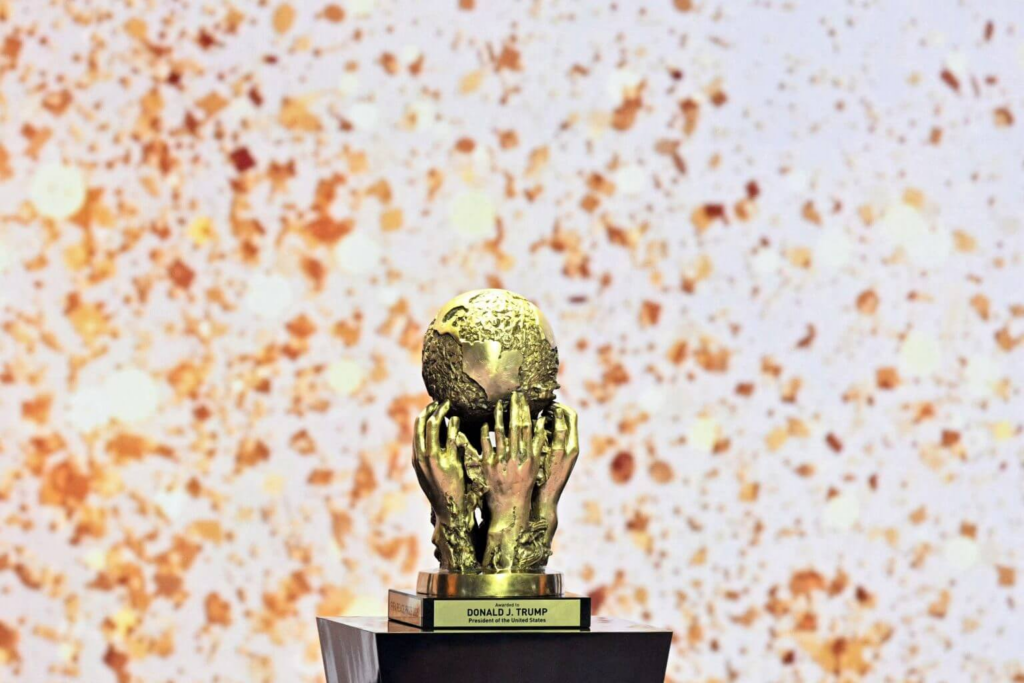
The FIFA Peace Prize, a newly minted accolade, has ignited considerable controversy following its presentation to former President Donald Trump by Gianni Infantino, the president of FIFA. What was anticipated to be a momentous celebration of football’s unifying spirit quickly devolved into a display of political theater, showcasing the troubling intersection of sports and politics. Infantino’s actions as a MAGA fanboy not only shocked spectators but also left many questioning the integrity of FIFA itself. This farcical event, staged just a stone’s throw from the White House, revealed a disturbing trend where the beautiful game is exploited to elevate political figures with questionable legacies. As Infantino bestowed the dubious honor upon Trump, football’s reputation seemed to hang in the balance, teetering dangerously close to a tarnished image amid a backdrop of global unrest and factionalism.
The recent introduction of the FIFA Peace Prize has sparked intense discussion, especially given its controversial recipient, Donald Trump. As global discussions about diplomacy and unity play out on the world stage, the dichotomy of honoring such a divisive figure like Trump reveals a deep schism in how sports organizations like FIFA navigate political allegiances. Infantino’s overt admiration for Trump, a constant symbol of political drama, raises questions about FIFA’s claim of neutrality in a world where moral clarity is increasingly essential. The spectacle at the World Cup draw underscored a troubling narrative—one where powerful leaders engage in a performative dance that underscores their mutual interests rather than the sport’s core values. In this landscape, the lines between political ambition, sportsmanship, and genuine peace efforts blur dangerously, exposing underlying tensions that can no longer be ignored.
The FIFA Peace Prize: A Political Farce?
The unveiling of the FIFA Peace Prize during the World Cup draw may have been intended to honor peace initiatives, but it quickly devolved into an exhibition of political theater, effectively reducing the award’s significance. When Gianni Infantino, the president of FIFA, handed the first prize to Donald Trump—a man whose political actions often contradict the very concept of peace—the event garnered fierce criticism. Instead of celebrating the unifying spirit of football, the occasion showcased Infantino’s uneasy alliance with a divisive figure, raising questions about the integrity of such an accolade. The implications of this moment transcend sports, as they reflect the troubling intersection of politics and the global game, highlighting how such events can be manipulated to serve personal agendas rather than genuine peace efforts.
Within moments of the award’s presentation, social media lit up with ridicule and outrage, labeling it a blatant display of sycophancy by Infantino. Critics argue that awarding Trump a prize linked with peace while he conducts military operations undermines FIFA’s credibility and calls into question the organization’s commitment to its purported values. Detractors worried this event signals a worrying trend where sports organizations can be co-opted into political propaganda, diminishing the reputation of football as a unifying force across nations and communities. Thus, the so-called FIFA Peace Prize risks becoming synonymous with hypocrisy rather than hope.
Gianni Infantino: The MAGA Fanboy at the Helm
Gianni Infantino’s recent actions have led many to label him a “MAGA fanboy,” particularly in light of his enthusiastic support for Donald Trump. This characterization stems from Infantino’s overly dramatic display during the FIFA World Cup draw, which was designed to extol the values of unity and togetherness but instead turned into a platform for Trump’s self-congratulatory remarks. Critics note that Infantino’s admiration for Trump appears to be more than mere respect; it exposes a deeper commitment to a political agenda that many believe undermines FIFA’s supposed neutrality, raising eyebrows in an already tumultuous global political landscape.
As Infantino continues to navigate his role at FIFA amidst ongoing FIFA controversies, his decisions are indicative of his alignment with controversial leadership. This loyalty has not only sparked debate among football fans but has also raised moral questions regarding FIFA’s leadership. How can an organization dedicated to promoting global unity and peace ally itself with a figure like Trump, whose conduct often incites division? Infantino’s leadership style seems to blur the line between sport and politics, exemplifying a concerning fusion that may have lasting implications for FIFA’s integrity and the credibility of global football.
Political Theatre at the FIFA World Cup Draw
The World Cup draw, an event celebrated by football enthusiasts worldwide, turned into a troubling spectacle due to its heavy political nature this year. What should have been a straightforward celebration of sport’s spirit was overshadowed by an atmosphere steeped in political theatre, highlighted by Infantino’s handover of the FIFA Peace Prize to Trump amidst applause. Such a display raises critical discussions about the role of sports in political narratives and how these moments can be co-opted by leaders to garner support. Infantino’s decision to intertwine football with political theatrics seems a significant departure from FIFA’s mission, creating a spectacle that disrespected the very essence of the game.
Participants and viewers alike were left questioning the appropriateness of such a demonstration at a sporting event, particularly with the backdrop of Trump’s controversial policies. The stark contrast between the ideals of the FIFA Peace Prize and the realities of political action raises an ethical dilemma regarding the integrity of sports organizations. By framing Trump’s receipt of the award in a celebratory context, Infantino only reinforced the idea that global sports can become a platform for self-serving political agendas rather than a force for genuine unity and peace—something football has historically championed.
The Fallout of Infantino’s Political Alignment
Infantino’s blatant political alignment has not gone unnoticed, and many within the football community worry about the ramifications for FIFA’s reputation. The optics of a FIFA president fawning over a controversial figure like Donald Trump can alienate fans and stakeholders who expect football to rise above partisan politics. This backlash reflects a growing sentiment among football fans that the organization, once devoted to the betterment of the sport, is increasingly becoming embroiled in political playground antics. Fans fear this trend could ultimately detract from the beautiful game and further compromise its integrity.
In the long run, FIFA’s reputation hinges on its ability to maintain impartiality in the face of global politics. Infantino’s apparent willingness to embrace political figures conflicting with the core values of the organization could have lasting effects on FIFA’s image. If power plays take precedence over the spirit of football, the consequences could include decreased fan engagement and skepticism towards the organization’s efforts aimed at promoting peace and unity. For many, the once proud FIFA now aligns itself with figures who evoke division and controversy, overshadowing the sport’s noble goals.
What the FIFA Peace Prize Says About Modern Sports
The establishment of the FIFA Peace Prize serves as a double-edged sword in modern sports, raising questions about the credibility and intentions behind such recognitions. As Infantino champions the award in honor of political leaders like Trump, many wonder if the prize carries any real weight or is merely a promotional tool designed to bolster FIFA’s image amidst a multitude of scandals. This scenario illustrates the tension between the values of sportsmanship and the realities of political maneuvering, suggesting that in today’s climate, awards may be disassociated from genuine merit.
Furthermore, recognizing political figures through sports introduces a slippery slope, whereby the integrity of the sport can be compromised. Supporters of football believe that sports have the potential to bridge divides, but when organizations like FIFA align themselves with individuals whose actions contradict this ethos, the message becomes muddled. This compromise raises alarm bells among fans and advocates of sports, who worry that the joy and purity of football will be overshadowed by political agendas. In the end, the FIFA Peace Prize highlights the profound implications of merging politics and sports, as the identity and integrity of the game come into question.
The Controversy of Awarding Peace Amidst War
Awarding the FIFA Peace Prize to Donald Trump during a time when he is engaged in military actions brings to light the significant contradictions inherent in the decision. This decision has many questioning the message FIFA intends to convey. War and conflict are ongoing in various regions of the world, and to present a trophy to a leader perceived to be promoting violence encapsulates the hypocrisy surrounding the award. The juxtaposition of honoring someone with a peace prize while they are actively involved in warfare is not only jarring but also damaging to the credibility of the prize itself.
FIFA, as the governing body of football, has a chance to promote messages of peace and unity globally. Yet, in this moment, they risk forsaking these values for political favoritism. Ignoring the realities of the conflicts abroad diminishes any genuine pursuit of peace and undermines the efforts of those truly advocating for it. By bestowing an honor such as the FIFA Peace Prize upon a controversial figure undercuts the very fabric of the ideal it seeks to promote, leaving fans and players alike questioning the organization’s motives and integrity.
Gianni Infantino’s Leadership Under Scrutiny
Gianni Infantino’s leadership of FIFA has been steeped in controversy, especially following the highly publicized awarding of the FIFA Peace Prize to Donald Trump. As president, his decisions are increasingly viewed through a lens of skepticism, not only due to this political spectacle but also because of a broader context of growing distrust surrounding FIFA’s governance. From past corruption scandals to this recent event characterized by political adulation masquerading as diplomacy, Infantino’s tenure appears fraught with contradictions that paint a troubling picture for the future of FIFA.
Moreover, Infantino’s insistence on maintaining an image of political neutrality is becoming harder to substantiate as his favorable ties with Trump become more evident. The implications of this favoritism extend beyond the realm of politics; they jeopardize FIFA’s image and threaten to alienate a global fanbase that yearns for genuine leadership. This erosion of trust poses the question: Can Infantino steer FIFA back to a path that values integrity and unity, or will the organization become an extension of political ambitions that ultimately betray the spirit of sport?
Understanding the Global Response to FIFA’s Decisions
The global response to FIFA’s decision to award Trump the Peace Prize has been overwhelmingly critical, reflecting a widespread disconnection between the organization and its supporters. Many fans and stakeholders feel disenfranchised by FIFA’s actions, which seem to prioritize political endorsements over the noble values of the sport. This backlash signifies a broader concern about the future of football’s governance and how the sport navigates a landscape increasingly influenced by political ideals. As the sentiments of supporters grow increasingly vocal, FIFA risks alienating a passionate global community that sees football as a unifying force.
Furthermore, the actions of FIFA under Infantino’s leadership have sparked a necessary discourse about accountability in sport. Fans are calling for transparency and ethics, urging FIFA to remain committed to its foundational values rather than become embroiled in political rhetoric. Amidst rising political tensions globally, the implications of FIFA’s decisions carry an immense weight, reinforcing the necessity for sports organizations to remain focused on unifying efforts rather than indulging in what many deem political posturing. The backlash against this award serves as a reminder of football’s power not just as a game, but as a platform for advocacy and social change.
Frequently Asked Questions
What is the FIFA Peace Prize and why was it awarded to Donald Trump?
The FIFA Peace Prize is a controversial award introduced by FIFA president Gianni Infantino, aimed at recognizing efforts towards peace. Donald Trump was the first recipient of this prize, which many critics, including political commentators, view as a political theatre rather than a genuine acknowledgment of peace efforts, especially given his administration’s military actions at the time.
How has Gianni Infantino’s relationship with Donald Trump influenced the FIFA Peace Prize?
Gianni Infantino’s relationship with Donald Trump has drawn significant scrutiny, particularly following the award of the FIFA Peace Prize to Trump. Critics argue that Infantino, often described as a MAGA fanboy, has compromised FIFA’s political neutrality, turning what should be a celebration of football into a platform for political sycophancy.
What criticisms have been made regarding the FIFA Peace Prize event featuring Donald Trump?
The FIFA Peace Prize event has faced backlash for being seen as a degrading political spectacle. Critics highlighted the stark contrast between the award’s intention and the reality of honoring a U.S. president, like Trump, whose policies include military actions that contradict the notion of peace, thereby labeling the event as a farce.
In what context was the FIFA Peace Prize awarded to Donald Trump?
The FIFA Peace Prize was awarded to Donald Trump during a World Cup draw event held at the Kennedy Center in Washington, D.C. This ceremony, perceived as a politically charged event, led to discussions on whether it was appropriate to recognize a polarizing figure like Trump amid his controversial foreign policy actions.
How does the FIFA Peace Prize reflect on FIFA’s credibility and Infantino’s leadership?
The introduction of the FIFA Peace Prize under Gianni Infantino’s leadership has raised questions about FIFA’s credibility. Critics argue that instead of restoring trust after past corruption scandals, the organization has become a PR tool for divisive political figures, undermining its legitimacy and commitment to neutrality in sports.
What was the global reaction to the awarding of the FIFA Peace Prize to Donald Trump?
The global reaction to the awarding of the FIFA Peace Prize to Donald Trump has largely been negative, with many football fans and commentators expressing outrage. The event has sparked conversations about the intersection of politics and sports, especially regarding the implications of having a controversial figure like Trump being celebrated at a sports event.
What does the FIFA Peace Prize signify for the future of football politics?
The FIFA Peace Prize’s award to Donald Trump signifies a worrying trend where football, under Gianni Infantino’s leadership, may increasingly intertwine with politics, potentially compromising the integrity of the sport. This relationship raises concerns about future awards and honors being utilized for political gain rather than the intended promotion of peace and unity in sports.
| Key Points | Details |
|---|---|
| Gianni Infantino’s Politics | Criticism for his perceived sycophancy towards Donald Trump during the FIFA Peace Prize ceremony. |
| The FIFA Peace Prize | Awarded to Trump despite his controversial foreign policy and actions viewed as contradictory to ‘peace’. |
| Public Reaction | General disapproval from the football community regarding the political overtone of the event. |
| Dramatic Ceremony | A montage dedicated to Trump preceded his award, showcasing a trophy with his name pre-engraved. |
| FIFA’s Integrity | Allegations that FIFA has compromised its credibility for political favor. |
| Critique from Journalists | Journalists note that the display was more about personal ambition than the sport itself. |
Summary
The FIFA Peace Prize was intended to honor efforts to promote peace, but instead, it has become a symbol of political favoritism and discredit to the beautiful game. Events surrounding the award to Donald Trump, orchestrated by FIFA President Gianni Infantino, highlight deeper issues within the organization regarding its commitment to neutrality and integrity. This incident serves as a stark reminder that the intersection of politics and sports can sometimes tarnish the very essence of the games we cherish.

