
Listen to this article
Euston HS2 station is set to play a pivotal role in reshaping high-speed rail in London as construction progresses on the anticipated redevelopment. With tunneling for HS2 now underway, the excitement surrounding the expansion of rail services has never been more palpable. Ministers have assured the public that the new station will be substantial enough to serve the nation’s growing transport needs, which will help enhance connectivity across the UK. As plans for Euston station redevelopment evolve, officials emphasize the profound economic impact HS2 will have, promising not only improved travel experiences but also substantial boosts in regional economies. With HS2 London transforming how we move, the future of commuting looks brighter than ever.
The Euston HS2 terminal is envisioned as a cornerstone of London’s rail infrastructure, heralding a new era for high-speed train travel across the country. The ongoing tunneling efforts are part of a broader initiative to create a seamless transportation network that reaches far beyond just London. With significant redesigns and increased platform capacities planned, the Euston station redevelopment aims to accommodate a surge in passenger demand while attracting investments to the area. The expected economic gains are set to resonate throughout the UK, providing job opportunities and stimulating commercial ventures as communities adapt to this transformative project. Ultimately, the high-speed rail initiative stands as a beacon for innovation—promising to enhance travel efficiency and foster growth through enhanced connectivity.
The Future of Euston HS2 Station
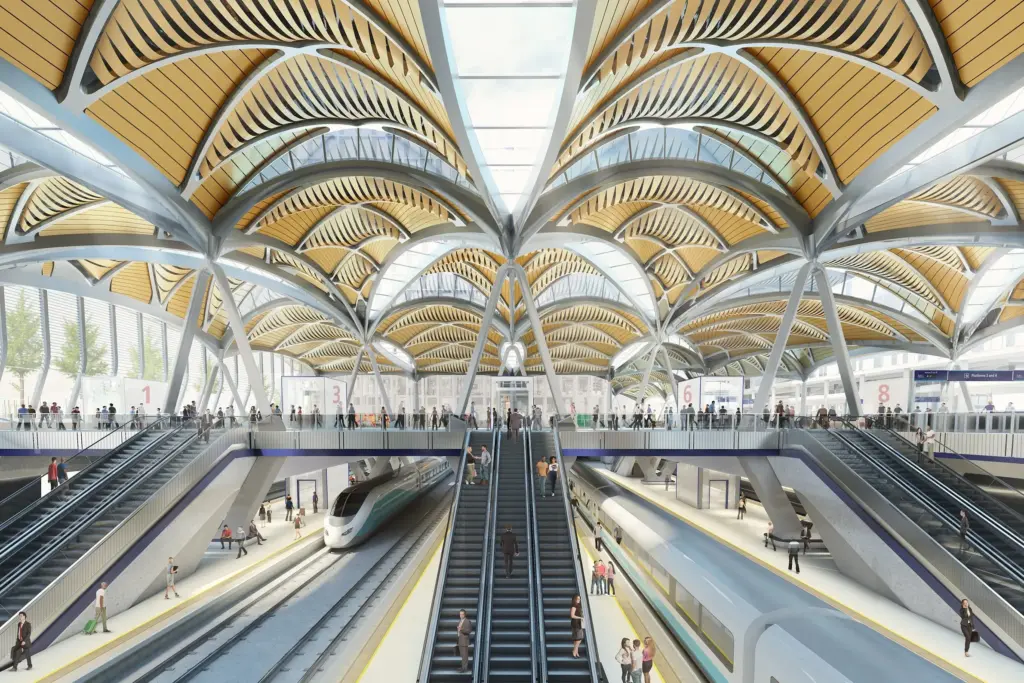
The redevelopment of Euston HS2 station aims to create a transformative hub that can serve the needs of the nation. With the increasing demand for high-speed rail in London, the new station will be designed with an emphasis on efficiency and size. According to recent statements from officials, the station will not only accommodate more high-speed platforms but is also intended to function as a major rail interchange, enabling connections to various regional destinations across northern England. This strategic approach to its design reflects the anticipation of a growing number of passengers seeking rapid transit options.
Moreover, the commitment to expand Euston station underscores the broader strategy behind the HS2 project. By investing in infrastructure, the government expects to enhance connectivity between the major cities in the UK, which in turn should stimulate local economies. The envisioned redevelopment aligns perfectly with the needs of Londoners and travelers alike, promising to bolster the city’s role as a critical transportation hub that could eventually rival major European stations.
Economic Impact of HS2 on London and Beyond
The HS2 project is set to have a significant economic impact on London and surrounding areas by unlocking massive opportunities for growth and development. Estimates suggest that the development associated with the Euston HS2 station and the surrounding areas could generate £41 billion for the economy by 2053 and lead to the creation of around 34,000 new jobs. This potential contribution is vital as it comes at a time when post-pandemic recovery is a national priority, and urban regeneration is crucial for sustainable growth.
As tunneling progresses, government officials are already in discussions with potential developers to ensure that the area around Euston benefits from a blend of public and private investments. Focus areas will include providing affordable housing, fostering job opportunities, and attracting commercial enterprises that can thrive alongside HS2. The vision is clear: the revitalization of Euston and its surroundings will not just cater to transit needs but will transform it into a vibrant economic district.
Furthermore, the benefits of high-speed rail extend beyond immediate job creation. They also manifest in long-term gains such as increased productivity as travel times decrease. This efficient connectivity can draw businesses to London, enhancing its reputation as a leading economic center in Europe. As seen in other countries with high-speed rail systems, successful integration of transport and regional developments tends to yield remarkable economic dividends.
Tunneling for HS2: A Major Engineering Feat
The ongoing tunneling for HS2 from Old Oak Common towards Euston represents an engineering milestone of significant magnitude. The use of advanced tunneling technology, specifically the deployment of two massive 1,600-tonne tunnel boring machines, highlights the commitment to innovative engineering solutions that the HS2 project embodies. As excavation progresses, each phase over the anticipated 12 to 18 months will further validate the strategic planning behind the project.
Moreover, the challenges posed by such extensive tunneling efforts serve as a learning experience, emphasizing the importance of meticulous preparatory work. As Mark Wild of HS2 Ltd emphasized, ‘go slow to go fast’ is a mantra that reflects the project’s aim to avoid previous delays and ensure a solid foundation for all subsequent stages. This calculated approach signifies a renewed confidence in the project’s timeline and budget, reassuring stakeholders of HS2’s viability as a transformative transportation system.
Redevelopment Plans for Euston Station
The plans for redeveloping Euston station are designed to integrate modern amenities with extensive transport links, making it a cornerstone of the UK’s future transport network. With designs undergoing revisions to better match the scope required for handling increased passenger flow, the project aims to provide a superior experience for travelers. The emphasis on more than just high-speed platforms is indicative of a broader vision, one that includes ample facilities for retail and leisure, thus enhancing the overall appeal of Euston as more than just a transit point.
These redevelopment efforts not only focus on functionality but also aesthetics, ensuring that Euston station stands as a modern architectural landmark in London. With a design that balances both efficiency and passenger comfort, the station is poised to become a vital link in the high-speed rail network, catering to a diverse array of travelers whether commuting for business or leisure. This transformative project, funded through mixed investments from public and private sectors, highlights the government’s ambition to revitalize not just Euston but also create a blueprint for future rail developments in the UK.
Connecting Euston to Northern England
As part of its broader ambitions, the HS2 project intends to create seamless connections from Euston to northern England. This goal is not only crucial for enhancing intercity travel but also for extending the reach of London’s transport infrastructure far beyond its immediate vicinity. Rail minister Peter Hendy has stated the aim for trains to leave Euston heading towards most of northern England, highlighting the strategic importance of this connection in facilitating better travel options for citizens across the UK.
The establishment of high-speed connections could significantly reduce travel times and improve accessibility for millions of passengers. This development is poised to encourage economic investments in northern regions, as improved transportation links can lead to higher visitation rates and potentially transform local economies. Therefore, the anticipated connections from Euston are a vital step not only in supporting urban centers but also in promoting national unity through better transport links.
Strategic Importance of HS2 Project in London
The strategic importance of the HS2 project in London cannot be understated as it represents an ambitious commitment towards enhancing the UK’s transport infrastructure. As the government reaffirms its resolve to progress with HS2, this initiative is increasingly recognized as a vital element in London’s broader urban planning and mobility strategy. The Euston HS2 station plays a pivotal role by acting as a key terminal that integrates high-speed rail, regional transit, and national connectivity, ultimately determining how efficiently people and goods can travel across the country.
In a rapidly changing urban landscape, the need for modernized transport solutions has become more pressing. HS2 is seen not just as a railway but as a framework that supports economic resilience and provides the necessary infrastructure for future growth. The success of projects such as the Euston redevelopment is reliant on their ability to respond to dynamic trends in population growth and urban migration, thus ensuring that London remains a competitive metropolis on the global stage.
Public and Private Investment in HS2
The ambitious HS2 project thrives on a blended investment model that capitalizes on both public and private financing to achieve its goals. Government officials have expressed optimism that collaborating with private partners will lead to innovative solutions for funding the redevelopment of Euston station and its environs. This dual approach not only alleviates the financial burden on taxpayers but also harnesses the efficiency and expertise of the private sector to expedite construction and development timelines.
Moreover, as pointed out by Darren Jones, the focus on integrating affordable housing and job opportunities within the project plan represents a comprehensive strategy aimed at maximizing the social and economic benefits engendered by HS2. By emphasizing responsible investment, the government aims to ensure that the local communities around Euston truly benefit from the economic surge expected to accompany the completion of this landmark project.
Challenges Faced by the HS2 Project
Despite the clear vision for HS2, the project has faced numerous challenges that underscore the complexities of large-scale infrastructure undertakings. Initial delays and budget overruns brought scrutiny and reassessment of timelines, particularly concerning the Euston section of the line. The need for thorough planning and public consultations has led to a cautious approach, emphasizing that rushing through development could exacerbate existing issues.
Additionally, the logistical challenges associated with tunneling in urban environments present unique hurdles. The project must navigate existing structures and transport networks while minimizing disruption to surrounding communities. Learning from previous setbacks, the HS2 team has committed to a more deliberate pace designed to ensure that all challenges are adequately addressed while keeping the project on track, with completion projected for the 2030s.
The Vision for High-Speed Rail in London
The overarching vision for high-speed rail in London represents a transformative leap towards modern transportation. HS2 is not just about transporting passengers faster; it encompasses a comprehensive redesign of how cities interact with their transport networks. By enabling rapid connections to key locations, such as Euston station, the project dovetails with London’s ambition to eliminate travel barriers and foster economic interactions across the UK.
This vision extends to efficient operations and sustainability, with high-speed trains designed to be environmentally friendly compared to older rail systems. As London’s infrastructure evolves with the implementation of HS2, the strategic integration of these systems is anticipated to bolster the city’s reputation as a forward-thinking metropolis while enhancing the quality of life for its residents. The high-speed rail initiative stands as a beacon of future transportation innovation.
Frequently Asked Questions
What is the current status of the Euston HS2 station redevelopment?
The Euston HS2 station redevelopment is progressing with excavation of the 4.5-mile tunnels from Old Oak Common, which is expected to take between 12 and 18 months. Plans for the new station design are nearing completion, promising to serve nation-wide high-speed rail connections.
How will tunneling for HS2 impact the Euston station area?
Tunneling for HS2 is expected to create significant development opportunities in the Euston station area, potentially boosting London’s economic growth. It will facilitate new residential and commercial developments, contributing to the economy and creating job opportunities.
What are the expected features of the new Euston HS2 station?
The new Euston HS2 station is anticipated to have more than the originally planned six high-speed platforms, accommodating future HS2 services to various destinations across the UK. The design aims for efficiency and extensive connectivity.
What is the economic impact of high-speed rail in London with regards to Euston HS2 station?
The high-speed rail initiative, particularly through the Euston HS2 station, is projected to significantly enhance the economy, with estimates suggesting up to £41 billion in contributions and 34,000 jobs by 2053 due to surrounding developments.
Who is responsible for the construction of the Euston HS2 station?
HS2 Ltd, led by chief executive Mark Wild, is responsible for the construction and oversight of the Euston HS2 station. The project includes public and private investment aimed at affordable housing and economic development.
When is the Euston HS2 station expected to be completed?
The Euston HS2 station is expected to be completed and operational in the 2030s. A revised timeline for the project’s completion will be approved by the government and detailed in the coming months.
What measures are being taken to ensure the growth and efficiency of the Euston HS2 station?
To ensure efficiency and future growth, Minister Peter Hendy has emphasized a comprehensive spatial design that allows for additional platforms and increased services, connecting Euston HS2 station with the broader UK rail network.
How has the government supported the Euston HS2 project?
The government has re-committed to the Euston HS2 project, lifting previous restrictions to allow tunneling to proceed and focusing on attracting both public and private investments to stimulate economic growth in the area.
| Key Point | Details |
|---|---|
| Rehabilitation Plans | The Euston HS2 station will be redesigned to adequately serve national travel needs. |
| Tunneling Status | Excavation has commenced for the 4.5-mile tunnels connecting to central London, expected to finish within 12-18 months. |
| Funding Concerns | Funding details for the new station are not fully disclosed; developers are being liaised with for public and private investments. |
| Station Capacity | Plans indicate more than six high-speed platforms to accommodate future services beyond Birmingham. |
| Economic Impact | It is anticipated that a new Euston station could generate £41 billion for the economy by 2053. |
| Completion Timeline | The revised completion date for HS2 is now aimed for the 2030s, following a previously unrealistic 2033 deadline. |
Summary
The Euston HS2 station is poised to be a transformative project that will elevate national connectivity. As tunneling has begun, the development aims to address substantial travel demands while simultaneously driving economic growth in the region. With plans to extend beyond Birmingham and create more platforms, the station itself will likely stimulate remarkable local development. Moreover, the collaboration between public and private sectors reflects a strong commitment to ensuring that Euston HS2 station fulfills its potential not only as a transit hub but also as an engine for job creation and urban regeneration.