
Listen to this article
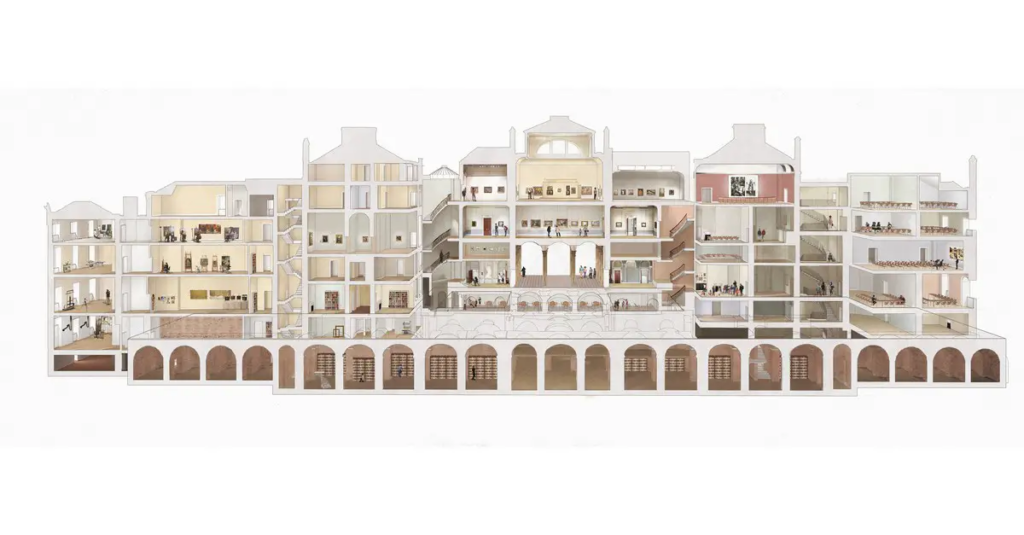
The Courtauld redevelopment signals an ambitious £82 million initiative aimed at transforming the Courtauld Institute of Art’s historic site at Somerset House in London. This “once-in-a-generation transformation” involves a comprehensive renovation led by the esteemed architects Witherford Watson Mann, renowned for their innovative designs. As the only independent college of the University of London focused on art history education, the Courtauld seeks to enrich the academic landscape while ensuring all teaching and gallery spaces are seamlessly integrated under one roof. The project not only revitalizes the Grade-I listed building but also aims to foster a deeper connection to London art galleries, attracting future generations of art historians and enthusiasts. With increased enrollment and a commitment to innovative teaching spaces, the redevelopment reinforces the Courtauld’s legacy in the art world for years to come.
The transformation at the Courtauld represents a significant shift within the landscape of art education and public engagement in London. This landmark project underscores the Courtauld’s dedication not only to preserving its rich historical roots but also to adapting to modern educational needs. The redevelopment aims to create a cohesive environment that enhances the institution’s role as a center for art historical scholarship and public exhibitions. As the Courtauld Institute rejuvenates its flagship location within Somerset House, it is poised to become a vital hub for students, researchers, and art lovers alike, securing its future contribution to the vibrant arts scene in the capital.
The Courtauld Redevelopment: A New Era for Art Education
The Courtauld Institute of Art has laid out plans for a monumental £82 million redevelopment of its campus within the historical Somerset House. This project is more than just a facelift; it’s positioned as a transformative initiative aimed at redefining art history education in the UK. By intertwining the academic and public spaces, the Courtauld seeks to foster a vibrant community that encourages dialogue between students, researchers, and the public. The impressive architectural vision by Witherford Watson Mann promises not only to enhance the physical space but also to rejuvenate the academic environment, catering to a new generation of art historians.
As part of the broader goal to revitalize the educational framework surrounding art history, the Courtauld redevelopment is set to integrate advanced teaching facilities and dynamic gallery spaces. With student numbers at risk due to declining A-level art history programs, this new approach is critical. The plan emphasizes the need for updated, state-of-the-art classrooms, ensuring that art history remains a vital and accessible field of study for upcoming scholars. By moving its teaching spaces from King’s Cross back to Somerset House, the Courtauld is not just creating a unified campus but also reinforcing its commitment to enriching cultural education in London and beyond.
Revamping Somerset House: A Historic Undertaking
Somerset House, a Grade-I listed building, stands as a monumental backdrop for the Courtauld Institute’s redevelopment efforts. The strategic choice of this historic site is pivotal, as it provides a deep connection to London’s art scene while acknowledging the rich history of the courtyard that has hosted multi-faceted art narratives. With the expertise of Stirling Prize-winning architects Witherford Watson Mann, this redevelopment aligns seamlessly with the architectural elegance of Somerset House yet introduces modern elements that meet today’s educational needs. The task is challenging, considering the structural intricacies and heritage considerations, making the project not just an upgrade but a careful restoration.
The historical significance of Somerset House cannot be overstated; it has been a cultural hub for centuries. This redevelopment not only aims to honor that legacy but also seeks to attract a wider audience to the Courtauld’s offerings. It will expand accessibility by enhancing visitor experiences and creating new pathways for engagement within London’s vibrant art galleries landscape. The renovation plans suggest a fresh dialogue between the past and the present, as the Courtauld strives to forge a connection with both the local community and the international art world.
Celebrating Art and Cultural Heritage Through Modern Design
The Courtauld’s redevelopment emphasizes the importance of cultural heritage while simultaneously adapting to the demands of contemporary art education. With advanced design strategies and a focus on sustainability, the renovation plans include modern classrooms equipped with the latest technology to facilitate innovative learning and scholarly exploration in art history. This commitment to exceeding educational needs reflects a broader trend within the UK’s art institutions to blend tradition with innovation, ensuring that educational spaces are not merely functional but also inspiring.
Moreover, the Courtauld recognizes that its mission extends beyond its walls. Engaging with schools and communities interested in art history education is central to this vision. By launching initiatives aimed at revitalizing A-level course offerings and creating partnerships with local schools, the Courtauld not only strengthens its academic role but also reinforces its status as a leader in art education. This approach is essential in encouraging a younger generation to appreciate and understand art history, ensuring that the legacy of the Courtauld and Somerset House continues to thrive.
The Impact of Generous Donations on the Courtauld’s Future
The ambitious redevelopment project at the Courtauld Institute of Art is significantly funded by generous donations, including a landmark £30 million contribution from the Reuben Foundation. Such financial support is crucial, especially considering the declining interest in A-level art history. This considerable investment will enable the Courtauld to enhance its facilities and attract prospective students eager to delve into art history studies, ultimately promoting a greater appreciation for the arts across the UK.
Additionally, the Courtauld has received a substantial £10 million from the Blavatnik Family Foundation, demonstrating the philanthropic community’s recognition of the importance of art education. These donations reflect a wider commitment to preserving and promoting art history amidst declining educational opportunities. As the Courtauld embarks on this transformative journey, the collaboration with these foundations illustrates a shared vision for nurturing future generations of art historians and preserving cultural heritage.
Innovative Architectural Design in Art Spaces
The role of architecture in enhancing art education is vividly illustrated through the renovation efforts led by Witherford Watson Mann at the Courtauld. Their design philosophy emphasizes creating flexible learning environments that stimulate creativity and collaboration among students. By integrating natural light and open spaces, the new academic facilities will encourage a dynamic approach to art history—a field that thrives on discussion and interpretation. This architectural foresight aligns perfectly with the vision of creating a campus that serves modern educational needs while honoring the traditional aesthetic of Somerset House.
The Courtauld’s new architectural blueprint extends beyond classroom spaces to include innovative gallery areas that host exhibitions and installations. This design will not only showcase the institution’s impressive collection but will also serve as a platform for student-led displays, bringing emerging artists to the forefront of London’s cultural scene. By fostering a harmonious relationship between educational and exhibition spaces, the Courtauld ensures that learning about art is a hands-on, engaging experience, paving the way for a more interactive future in art appreciation.
Art History Education: Bridging the Gap in the UK
In recent years, the sharp decline in the number of schools offering A-level art history has raised concerns about the future of art education in the UK. With only 77 schools currently providing this vital subject, down from 122, there is an urgent need for institutions like the Courtauld to take proactive measures. The redevelopment of the campus is not only a step towards providing a modern education environment but also acts as a rallying point for advocating the importance of art history. The Courtauld intends to play an influential role in reversing this trend by engaging with secondary schools and inspiring a new generation of students.
Efforts to bridge the gap include outreach programs, workshops, and resources tailored to help teachers interested in introducing or revitalizing art history courses. This initiative is part of the Courtauld’s commitment to inclusivity and access in London, ensuring diverse educational opportunities are available to all students. Empowering schools, particularly in underrepresented areas, is crucial for nurturing interest in the arts and developing skills that will keep cultural discourse alive in the UK.
Fostering Community Engagement Through Art
The Courtauld’s redevelopment is poised to create a cultural hub that fosters deeper community engagement through art. By unifying its teaching facilities with its gallery space, the Courtauld will not only strengthen academic programs but also facilitate greater public access to its resources. The enhanced campus will be designed with community interaction in mind, hosting events, lectures, and exhibitions that emphasize the relevance of art in everyday life. This openness aims to demystify art and make it more accessible to diverse audiences, encouraging a lifelong appreciation for culture and creativity.
Furthermore, as part of its mission, the Courtauld seeks to create partnerships with local organizations and schools, enabling collaborative projects that integrate art history into community initiatives. Such partnerships will serve to enrich the educational landscape in London while inspiring local residents to engage with their cultural heritage. By maintaining a focus on community engagement, the Courtauld aims to ensure that the arts remain a vibrant, interwoven part of life in the city, reaching individuals of all backgrounds.
The Legacy of the Courtauld: Preserving Excellence in Art Education
The Courtauld Institute of Art has long been recognized as a beacon of excellence in art education, with a legacy that continues to evolve. This redevelopment represents a commitment to preserving that legacy while adapting to the current needs of students and educators. As the institute transitions its teaching spaces back to Somerset House, it also honors the vision set forth by its past directors like Michael Kauffmann, who recognized the importance of location and environment in fostering an exceptional educational experience.
By securing its legacy for the next century, the Courtauld aims to cultivate a new generation of art historians who can navigate the complexities of both historical and contemporary art discourse. This vision includes enhancing the curriculum and leveraging advances in digital technology to provide students with a comprehensive grounding in art history. The enduring commitment to excellence underscores the Courtauld’s role not only as an academic institution but also as a pivotal player in the global art community.
Visiting the Courtauld Gallery: Enhancing Public Appreciation of Art
The Courtauld Gallery, recognized for its remarkable collection of masterpieces, has long been a pivotal part of the London art scene. Following its recent renovation, visitors can expect an enriched experience that enhances appreciation of not just the artworks on display but also the educational programs offered by the Courtauld Institute. This renewed focus on public access is crucial for engaging diverse audiences and sparking interest in art history among future scholars.
With the Courtauld Gallery’s strategic positioning within Somerset House, it creates a unique opportunity to attract a broader audience to its collections, including works by Manet and Van Gogh. As the gallery continues to host exhibitions and collaborate with contemporary artists, it seeks to create an ongoing dialogue around art and its significance in society today. The development will ensure that the gallery not only serves as a space for admiration and study but also as a vibrant cultural destination within London, fostering a deeper public appreciation for the arts.
Frequently Asked Questions
What is the Courtauld redevelopment project at Somerset House?
The Courtauld redevelopment project at Somerset House is a transformative £82 million initiative designed to update and enhance the facilities of the Courtauld Institute of Art. The project, spearheaded by the Stirling Prize-winning architects Witherford Watson Mann, aims to create a state-of-the-art campus that will bring together the institute’s teaching spaces and its renowned gallery, securing its legacy for future generations.
Who is overseeing the Courtauld redevelopment at Somerset House?
The Courtauld redevelopment at Somerset House is being overseen by Witherford Watson Mann, an award-winning architectural firm known for their innovative designs and revamps, including the recent renovation of the Courtauld Gallery in 2021.
How will the Courtauld redevelopment impact art history education?
The Courtauld redevelopment is expected to significantly enhance art history education by relocating the institute’s teaching spaces to Somerset House, effectively consolidating resources and facilities under one roof. This move aims to create flexible, state-of-the-art learning environments that will better serve today’s art history students.
What historical significance does Somerset House hold in relation to the Courtauld Institute of Art?
Somerset House is historically significant for the Courtauld Institute of Art as it has been the institute’s home since the late 1980s when it relocated from Portman Square. The ongoing redevelopment project reinforces its importance as a leading center for art history education and research in London.
How will the new Courtauld campus benefit students and the broader community?
The new Courtauld campus, part of the redevelopment at Somerset House, will benefit students by providing modern, adaptable learning spaces that foster collaboration and creativity. It aims to enhance community engagement by serving as a public art gallery and educational resource, linking the institute more closely with local schools and residents.
What challenges does the Courtauld Institute of Art face regarding art history education in the UK?
The Courtauld Institute of Art faces challenges in art history education due to a notable decline in the number of UK schools offering A-level art history, which has dropped by 37% over the past decade. The Courtauld is committed to addressing this by supporting schools and initiatives aimed at revitalizing interest in art history.
Who are some notable alumni of the Courtauld Institute of Art?
Notable alumni of the Courtauld Institute of Art include Nicholas Cullinan, Director of the British Museum; Sir Nicholas Serota, Chair of Arts Council England; and Gabriele Finaldi, Chief of the National Gallery. Their achievements highlight the institute’s strong legacy in art history education.
What is the timeline for the Courtauld redevelopment project?
The Courtauld redevelopment project at Somerset House is set to span four years. It will encompass various phases of construction and renovation, ultimately creating a cohesive and modern campus for the Courtauld Institute of Art and its gallery.
How is the Courtauld redevelopment being funded?
The funding for the Courtauld redevelopment at Somerset House includes significant donations, such as a record £30 million from the Reuben Foundation and a £10 million contribution from the Blavatnik Family Foundation, which previously funded the renovation of the Courtauld Gallery.
What are the future goals for the Courtauld Institute of Art following the redevelopment?
Following the redevelopment, the Courtauld Institute of Art aims to strengthen its position as a leading institution for art history education and research. The goals include creating a dynamic educational environment, increasing accessibility for students and the public, and revitalizing the interest in art history in the UK.
| Key Point | Details |
|---|---|
| Project Announcement | The Courtauld has announced an £82 million redevelopment, claiming it is a ‘once-in-a-generation transformation’. |
| Architects | Stirling Prize-winning architects Witherford Watson Mann will oversee the project. |
| Project Duration | The redevelopment is a four-year project. |
| Purpose | To create a new flexible, state-of-the-art campus integrating teaching and exhibition space. |
| Current Research | Research indicates a 37% drop in UK schools offering A-level art history. |
| Historical Context | The Courtauld was relocated to Somerset House in the late 1980s by former director Michael Kauffmann. |
| Funding | The project is funded by donations, including £30 million from the Reuben Foundation and £10 million from the Blavatnik Family Foundation. |
| Notable Alumni | Includes Nicholas Cullinan, Sir Nicholas Serota, and Gabriele Finaldi. |
Summary
The Courtauld redevelopment is set to significantly enhance the institute’s capacity to educate and engage with the public by renovating its historic location at Somerset House in London. The £82 million investment aims to create a modern educational environment that meets today’s academic needs, reflecting its commitment to art history amidst declining interest in the subject in schools. With a strong foundation laid by past leadership and notable alumni, the redevelopment promises to ensure that the Courtauld Institute flourishes for another century, nurturing future generations of art historians in a beautifully restored setting.