Listen to this article
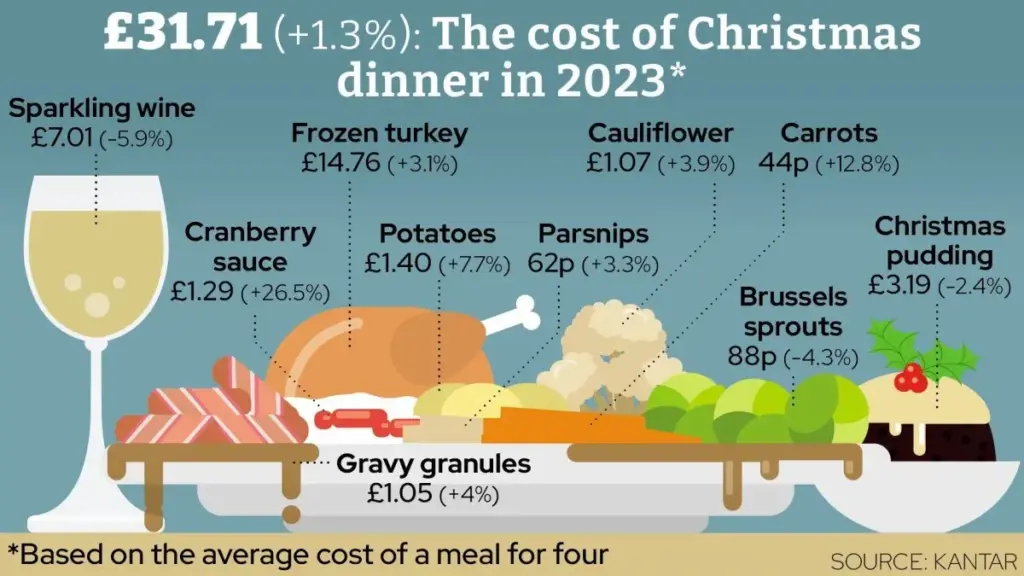
Understanding the cost of Christmas dinner is essential for anyone planning to celebrate the festive season without breaking the bank. This year, the average expense for a traditional Christmas dinner is about £32.45, reflecting a £1.24 increase compared to last year, driven largely by the turkey price increase in 2025, where the cost of a standard frozen turkey has risen significantly. Additionally, with the recent rise in Brussels sprouts price, which now sits at 94p a bag, it’s crucial for families to consider festive food budgeting to manage their holiday meal costs effectively. As prices fluctuate for various ingredients, tracking these changes can help plan a more affordable celebration while still enjoying all the holiday staples. Exploring ways to cut costs on holiday meals can maximize enjoyment and reduce stress during this busy season.
As the holiday season approaches, many families are facing the challenge of managing their festive meal budgets. The expenses associated with traditional holiday feasts have been impacted by fluctuating market prices, including a notable uptick in poultry costs and the rising expense of seasonal vegetables like Brussels sprouts. Consumers are urged to consider planning ahead, employing strategic budgeting techniques, and taking advantage of sales to enjoy a memorable gathering without incurring unnecessary financial stress. Understanding the dynamics of this year’s Christmas dinner expenses—including the variances in prices for essential items—can aid in making informed decisions. With the right approach, it is possible to maintain the festive spirit while keeping a close eye on the overall cost of holiday meals.
2025 Christmas Dinner Prices: What to Expect
As we approach the festive season, many families are curious about the anticipated costs associated with Christmas dinner in 2025. This year, the average cost of a traditional Christmas dinner is approximately £32.45, representing a notable increase from the previous year. The increase is largely attributed to the rising costs of key ingredients, particularly turkey. The average price for a standard frozen turkey has risen to £20 for a 10lb bird, reflecting the impact of factors such as bird flu outbreaks which have reduced supply significantly.
In addition to turkey prices, other elements that contribute to the overall cost of holiday meals have also increased. For instance, the price of Brussels sprouts has climbed by over 9%, now sitting at 94p a bag. This uptick in festive food budgeting reflects ongoing economic pressures, making it crucial for families to plan ahead. With careful consideration of these costs, consumers can better manage their holiday expenses, perhaps by exploring different options for sourcing their Christmas dinner ingredients.
The Impact of Turkey Price Increase in 2025
The turkey price increase in 2025 is a significant concern for many households looking to prepare the quintessential Christmas dinner. Rising from £18.62 to £20 for a standard frozen turkey represents a 7.37% hike, which can strain holiday budgets. Factors contributing to this increase include not only bird flu-related culling but also ongoing supply chain challenges, which continue to ripple through the agricultural sector. Farmers have reported increased costs for feed and maintenance, leading to increased prices on the shelves.
For households, understanding the dynamics of turkey pricing is key to making informed decisions. This season, many families might consider alternative protein sources or look into local farmers’ markets for potentially more affordable options. By being flexible with their meal planning, consumers can mitigate the financial impact of higher turkey prices while still enjoying a delightful Christmas meal.
Festive Food Budgeting for Christmas Dinner
Effective festive food budgeting is essential for families preparing for Christmas dinner amidst rising costs. With the average price of holiday meals creeping upward, it is vital to take a strategic approach to meal planning. By compiling a comprehensive food list and prioritizing essential items, consumers can avoid overspending on unnecessary extras. Furthermore, shopping early and comparing prices across different retailers can yield significant savings, especially with many supermarkets offering holiday discounts.
Additionally, pooling resources with family or friends can provide cost-effective solutions for larger gatherings. By purchasing items in bulk or splitting the cost of shared dishes, everyone can enjoy the festive feast without the financial burden. Emphasizing budget-friendly recipes that utilize stable price ingredients, like certain vegetables or homemade treats, can also ensure that holiday meals remain delicious yet affordable. This proactive strategy can transform the pressures of holiday spending into an enjoyable experience for all.
Understanding the Cost of Holiday Meals
Understanding the cost of holiday meals requires examining various components of the Christmas dinner spread. With prices fluctuating due to seasonal availability and market dynamics, it’s essential to be aware of which items may be more cost-effective this year. For instance, while the cost of turkey may have surged, the prices for root vegetables like carrots and potatoes have shown stability, offering a counterbalance for holiday cooking.
Moreover, certain festive treats such as Christmas pudding and mince pies have become more affordable, attributed to a decline in flour and sugar prices in response to a global surplus. This nuanced view of holiday meal costs sheds light on how consumers can navigate their choices, ensuring the festive spirit remains intact while adhering to budget constraints. Knowledge of these market trends empowers shoppers to find the best deals without sacrificing the richness of their traditional Christmas dinner.
Rising Prices: The Case of Brussels Sprouts
The price increase of Brussels sprouts is a noteworthy aspect of the 2025 Christmas dinner costs. These traditional holiday vegetables have seen a hike of more than 9%, now priced at 94p per bag, which can have a noticeable effect on the overall festive budget. This increase can be linked to various factors including adverse weather conditions affecting crop yields, reflecting the broader challenges within agricultural supply chains.
Despite this rise, some consumers may opt to explore alternative seasonal vegetables that are currently more affordable, thereby maintaining traditional festive flavors without incurring excessive costs. Understanding the price movements of traditional items like Brussels sprouts helps families adjust their meal plans and maintain a festive atmosphere without breaking the bank this Christmas.
Navigating Supply Chain Pressures in Holiday Planning
Navigating supply chain pressures is vital when planning for the Christmas dinner in 2025. Continuous disruptions from global events have led to higher prices for various holiday essentials. With input costs surging—whether it be livestock feed, energy costs, or workforce expenses—farmers are feeling the crunch more than ever. As a result, many holiday staples may also bear the pain of these increased operational costs, impacting consumers directly.
Households can respond strategically by staying informed about supplier prices and utilizing local markets where possible. Engaging in community buying or partnerships can also help mitigate some of these supply chain impacts. By being proactive, families can circumvent price hikes while still enjoying a satisfying festive meal without excessive financial strain.
Budget-Savvy Tips for Holiday Meals
Employing budget-savvy tips for holiday meals can help families enjoy a wonderful Christmas without overspending. One reliable strategy involves creating a detailed shopping list that prioritizes essential items and sticking to it while shopping. This practice not only helps prevent impulse purchases but also allows families to estimate their total expenditures more effectively. Utilizing discounts and promotions available at local supermarkets can significantly reduce costs.
Additionally, cooking from scratch using bulk ingredients can be a game changer for holiday meal budgeting. Dishes that capitalize on stable-priced vegetables or those with decreased price tags, like potatoes and parsnips, can stretch budgets while providing hearty options for festive gatherings. With some forethought and planning, households can ensure that they enjoy a delightful, budget-friendly Christmas dinner.
Long-term Trends in Christmas Dinner Costs
Long-term trends in Christmas dinner costs provide essential insights for families looking to prepare financially for future holiday meals. While 2025 has its unique challenges, such as price increases attributed to global supply issues and disease outbreaks among livestock, understanding these trends allows consumers to anticipate and adapt to upcoming changes. Historical data shows that peaks and troughs in pricing often coincide with global economic events, and with informed foresight, families can manage their budgets more effectively.
Recognizing that certain items like turkey and Brussels sprouts may fluctuate in cost due to seasonality can also guide consumers in making informed purchasing decisions. By remaining adaptable and staying updated on market conditions, families can plan their Christmas dinners better and navigate the festive season’s financial demands more successfully.
The Influence of Local Markets on Christmas Dinner Prices
The influence of local markets on Christmas dinner prices highlights the beneficial role community shopping can play during the festive season. While major supermarkets often dictate broader price trends, local farmers’ markets can offer competitive prices and fresh produce directly sourced from local farms. Engaging with these markets may also uncover hidden gems, such as unique holiday items that contribute to a special Christmas dining experience.
Shopping locally empowers families to influence their own budgets while supporting regional farmers and reducing supply chain pressures. By attending festive events or exploring seasonal markets, families can discover budget-friendly options for traditional holiday meals, resulting in a more authentic and community-centric Christmas celebration.
Frequently Asked Questions
What is the average cost of Christmas dinner in 2025?
The average cost of a Christmas dinner in 2025 is approximately £32.45, which reflects a £1.24 increase over the previous year, largely due to rising turkey prices and Brussels sprouts cost increases.
How much has the turkey price increased for Christmas dinner 2025?
In 2025, the price of a standard 10lb frozen turkey has risen to £20, marking a 7.37% increase from last year’s cost of £18.62, contributing significantly to the overall Christmas dinner cost.
What factors are driving the 2025 Christmas dinner costs?
The 2025 Christmas dinner costs are driven by several factors, including bird flu outbreaks that impacted turkey supply, adverse weather affecting Brussels sprouts harvests, and ongoing supply chain pressures that have increased overall food prices.
How have Brussels sprouts prices changed for the 2025 festive meal?
Brussels sprouts prices have risen by more than 9% for the 2025 festive meal, now costing 94p per bag, which adds to the growing Christmas dinner cost.
What are some tips for festive food budgeting for Christmas dinner?
To achieve cost-effective festive food budgeting for Christmas dinner, consider setting a clear budget, compiling a shopping list, seeking out deals, and potentially pooling resources with family and friends to buy in larger quantities.
Which festive food items have decreased in price for Christmas dinner 2025?
Despite the overall increase in Christmas dinner costs, certain items such as potatoes and parsnips have decreased in price along with festive treats like Christmas pudding and mince pies, making them more affordable this holiday season.
How do supply chain issues affect the cost of holiday meals in 2025?
Supply chain issues continue to affect the cost of holiday meals in 2025 due to increased costs for livestock feed, energy, and labor, along with inflationary pressures from previous years still lingering.
What should consumers be aware of regarding the cost of holiday meals this Christmas?
Consumers should be aware that while some items have seen price reductions, the overall cost of holiday meals has been affected by supply chain challenges and rising prices for key ingredients like turkey and Brussels sprouts.
| Item | Cost (£) | Price Change (%) | Comments |
|---|---|---|---|
| Typical Christmas Dinner | 32.45 | 4 | Overall cost increase from last year. |
| Turkey (10lb) | 20.00 | 7.37 | Culled due to bird flu outbreak. |
| Brussels Sprouts (1 bag) | 0.94 | 9 | Increase due to adverse weather. |
| Potatoes | Decreased | Price reduction compared to last year. | |
| Parsnips | Decreased | Price reduction due to better harvest. | |
| Christmas Pudding | Cheaper | Reduced flour and sugar prices. | |
| Mince Pies | Cheaper | Reduced flour and sugar prices. |
Summary
The cost of Christmas dinner has become a significant concern for many households, with a typical Christmas dinner cost rising to approximately £32.45 this year. This increase is primarily driven by the impact of bird flu on turkey prices and adverse weather affecting vegetable harvests. However, some items like potatoes and festive desserts have seen cost reductions. It’s essential for consumers to be strategic in their holiday planning to ensure they can enjoy the festive season without overspending.