
Listen to this article
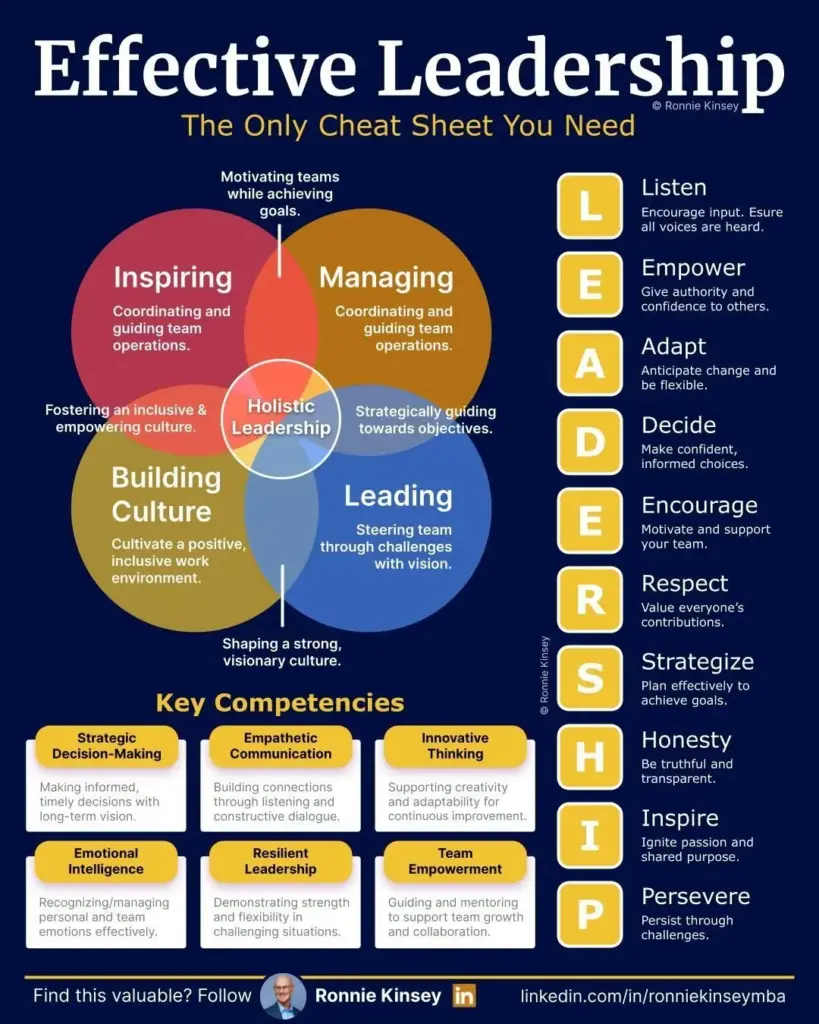
Business leadership plays a pivotal role in today’s corporate landscape, where the ability to inspire and guide a team can distinguish a successful manager from a mediocre one. Mastering essential leadership skills, such as effective communication in leadership and emotional intelligence for managers, is crucial for fostering a motivated workplace. Beyond just enforcing rules, visionary leaders must also excel at decision-making, adapting to changes, and resolving conflicts efficiently. As the demands of business continue to evolve, the importance of team management and adaptability in business becomes ever more pronounced. Embracing these concepts not only enhances your leadership capabilities but also propels your organization toward thriving in a competitive market.
In the realm of organizational management, the essence of guiding and motivating a team is referred to as leadership within business frameworks. Successful executives and managers are those who master a variety of competencies essential for steering their teams in the face of challenges. The cornerstone of effective management lies in critical attributes, including effective communication, emotional insight, and the ability to make informed decisions quickly. Furthermore, fostering a culture of adaptability and honing conflict resolution skills are necessary to maintain harmony and productivity in teams. This exploration into leadership styles will illuminate ways in which one can elevate their role within an organization.
The Power of Communication in Leadership
Effective communication is not just a leadership skill; it’s a cornerstone of successful management. In a world where project goals and responsibilities can get blurred, a clear directive can enhance team alignment. As a leader, communicating openly about both successes and challenges fosters a culture where employees feel heard and valued, which in turn enhances morale. Managers who master communication skills can inspire their teams to reach new heights, as they become the guiding voice that helps their employees navigate the complexities of their tasks.
Moreover, strong communication in leadership involves not only expressing oneself clearly but also fostering an environment where feedback flows seamlessly in both directions. This two-way communication is critical—employees are more likely to report issues and suggest improvements when they believe their opinions matter. Thus, cultivating an atmosphere of open dialogue can lead to innovative solutions and a more engaged workforce, which ultimately drives the business forward.
Emotional Intelligence: The Heart of Effective Leadership
Emotional intelligence has become a buzzword in today’s leadership discussions, and for good reason. Leaders with high EQ can connect with team members on a deeper level, understanding their motivations and emotions. This skill manifests not just in managing one’s own emotions but also in recognizing the emotional states of others. By fostering empathic relationships, managers can create a supportive workplace where employees feel comfortable sharing concerns and working collaboratively.
Additionally, investing time in developing emotional intelligence leads to improved decision-making abilities. When managers understand how emotions influence their choices and those of their teams, they can navigate complex interpersonal dynamics with greater ease. This adaptability in recognizing emotional indicators allows leaders to make more informed decisions, ultimately promoting a healthier, more productive workplace where conflict is resolved constructively.
Strategic Thinking for Forward-Thinking Leaders
Strategic thinking isn’t merely about setting high-level goals; it’s about being agile enough to adapt those goals as market trends shift. As a business leader, developing the ability to foresee challenges and embrace opportunities can set your organization apart from competitors. Encouraging your team to participate in strategic discussions allows for diverse perspectives, which often leads to more robust and innovative solutions.
Furthermore, effective strategic thinking can enhance team performance. By establishing clear objectives and aligning them with your team’s skillsets, managers can inspire motivation and focus. Engaging your team in brainstorming sessions to develop strategies not only fosters creativity but also encourages ownership of the tasks at hand, leading to higher productivity and a greater sense of job satisfaction.
Mastering Decision-Making in Leadership Roles
Decision-making is a daily occurrence for managers, impacting not only immediate tasks but also the long-term vision of the organization. Effective leaders must balance speed with thoroughness, gathering diverse input while staying mindful of deadlines. The ability to incorporate the input of team members can lead to more holistic decisions that consider various viewpoints and insights, which is essential in fostering a culture of inclusion and empowerment.
Moreover, good decision-making includes a willingness to reflect on outcomes—both positive and negative. This aspect of leadership can encourage a culture of learning from mistakes rather than fearing them. By being transparent about decision-making processes and outcomes, managers can help their teams understand the reasoning behind tough calls, thus enhancing trust and buy-in for future initiatives.
Effective Problem-Solving: Skills Every Manager Should Employ
Problem-solving is an essential skill that thrives on critical thinking. Managing a team means constantly addressing obstacles, whether they’re team-related or operational challenges. Effective leaders will cultivate a problem-solving mindset within their teams by encouraging brainstorming sessions and collaborative efforts to tackle issues head-on. By showing that every problem has a solution, managers can instill a sense of resilience and resourcefulness.
Implementing structured techniques to approach problems can further enhance a team’s effectiveness. For instance, the art of defining problems clearly can prevent misdirection when searching for solutions. By utilizing team input in this phase, leaders also empower their employees, making them key players in the problem-solving process, which not only bolsters team morale but also leads to innovative resolutions.
Delegation: The Key to a Productive Team
Mastering delegation is about knowing your team’s strengths and leveraging them effectively. A common pitfall for leaders is micromanaging; however, trusting your team to take ownership of their responsibilities is essential for growth. Effective delegation not only frees up a manager’s time for strategic initiatives, it also allows employees to develop their skills and confidence through hands-on experience.
To delegate effectively, a manager must clearly convey expectations and provide the necessary support without stifling creativity. Encouraging autonomy fosters a sense of accountability within the team, leading to higher engagement and productivity. When leaders delegate successfully, they cultivate an environment of trust and empowerment, where team members feel inspired to contribute their best efforts.
Fostering Adaptability in a Dynamic Business Environment
Adaptability is no longer a nice-to-have; it’s a necessity in today’s fast-paced business landscape. Business leaders must not only anticipate changes but also respond effectively to them. This involves being open to new ideas and technologies, revising strategies in real-time, and guiding teams through transitions smoothly. As a leader, showing flexibility in your approach helps set the tone for your team and encourages them to embrace change positively.
Moreover, cultivating a culture that celebrates adaptability can lead to continuous improvement within the organization. Encouraging teams to learn from failures and pivot their strategies reinforces resilience and fosters a mindset geared toward growth. By establishing practices that support continuous learning and professional development, managers can prepare their teams to tackle the unexpected head-on, enhancing overall business agility.
Navigating Conflict Resolution as a Manager
Conflict is an inevitable aspect of any workplace, but how managers address these conflicts can make or break team dynamics. Effective conflict resolution involves not only active listening but also understanding the underlying issues at play. By calling for open dialogue and encouraging team members to voice their concerns, managers can facilitate resolutions that are acceptable to all parties involved, thereby maintaining a harmonious work environment.
In addition, managers should approach conflicts with the intention of finding collaborative solutions rather than imposing decisions. This approach not only strengthens relationships among team members but also builds trust in leadership. By teaching conflict resolution skills and encouraging team members to communicate openly, managers can cultivate a resilient team that views conflict as an opportunity for growth and understanding.
Frequently Asked Questions
What are the key leadership skills needed for effective business leadership?
Essential leadership skills for effective business leadership include communication skills, emotional intelligence, decision-making abilities, strategic thinking, problem-solving proficiency, delegation skills, adaptability, and conflict resolution capabilities. These skills help managers lead their teams successfully in today’s dynamic work environment.
How does emotional intelligence impact decision making in business leadership?
Emotional intelligence significantly influences decision-making in business leadership by allowing managers to understand their emotions and those of others. This understanding helps leaders make more informed decisions, fostering an empathetic workplace and improving team morale.
Why is adaptability considered a crucial skill in business leadership?
Adaptability is crucial in business leadership because it enables managers to respond effectively to changing market conditions, new technologies, and evolving team dynamics. Leaders who embrace adaptability can pivot strategies and encourage their teams to overcome challenges.
What role does communication play in effective business leadership?
Communication plays a pivotal role in effective business leadership by facilitating clear and open dialogue between managers and their teams. Strong communication skills ensure that goals, expectations, and feedback are clearly understood, leading to enhanced collaboration and innovation.
How can managers improve their conflict resolution skills?
Managers can improve their conflict resolution skills by practicing active listening, seeking to understand diverse perspectives, and facilitating discussions among team members. Understanding the root causes of conflicts and guiding teams towards mutually beneficial solutions is key.
What techniques can enhance problem-solving abilities in business leadership?
To enhance problem-solving abilities in business leadership, managers should define problems clearly, collaborate with teams to brainstorm solutions, and critically evaluate the feasibility of each proposed solution. Encouraging creativity can lead to innovative outcomes.
What is the importance of delegation skills for managers in business leadership?
Delegation skills are vital for managers in business leadership as they allow leaders to assign tasks effectively based on team members’ strengths. This not only fosters a sense of ownership among employees but also enables managers to focus on higher-level strategic planning.
| Skill | Importance | Techniques |
|---|---|---|
| Communication Skills | Crucial for clear goals and expectations. | Encourage two-way communication, seek feedback. |
| Emotional Intelligence | Builds strong relationships and aids decision-making. | Practice self-regulation, cultivate empathy. |
| Strategic Thinking | Allows for long-term planning and goal setting. | Stay informed, encourage brainstorming. |
| Decision-Making | Involves making informed choices daily. | Gather input, weigh pros and cons. |
| Problem Solving | Critical for addressing and overcoming obstacles. | Define problems, brainstorm solutions. |
| Delegation Skills | Ensures efficient task distribution. | Assess team skills, trust autonomy. |
| Adaptability | Essential in a changing business environment. | Lead by example, support continuous learning. |
| Conflict Resolution | Maintains a positive team dynamic. | Listen actively, facilitate discussions. |
Summary
Business Leadership is an essential area for any manager aiming to drive their team towards success. In our conversation about leadership skills, we explored how effective communication, emotional intelligence, and strategic thinking are just a few key areas that can transform a manager into an influential leader. It’s vital for aspiring leaders to embrace these skills and continuously develop them, ensuring not only personal growth but also the success of their teams.