Listen to this article
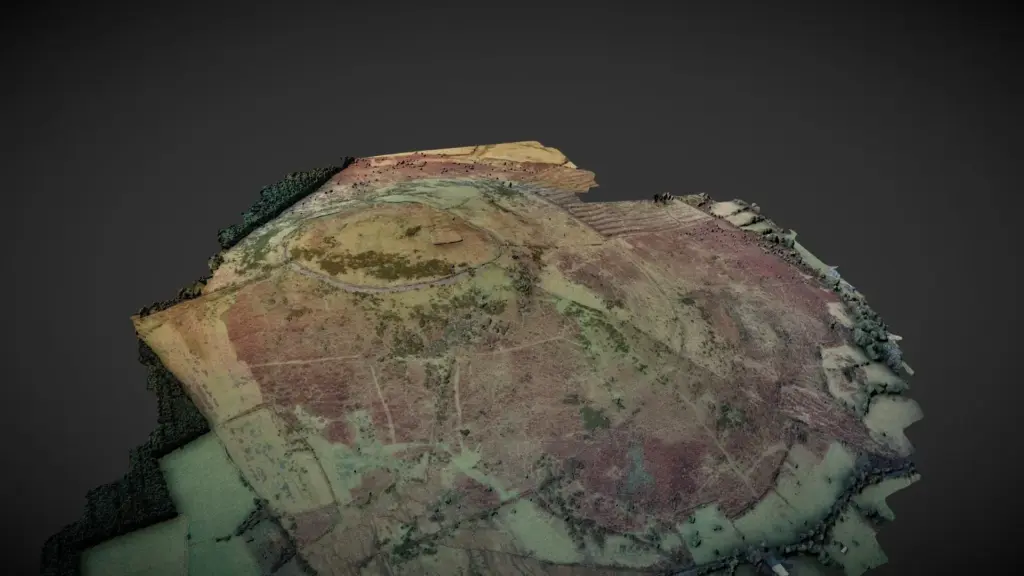
Brusselstown Ring stands as a monumental testament to prehistoric human ingenuity, challenging long-held beliefs regarding the origins of urban settlements in Ireland. This recently uncovered hilltop settlement boasts over 600 suspected houses, making it the largest nucleated settlement discovered to date in both Britain and Ireland. Dated to the Late Bronze Age around 1200 BC, Brusselstown Ring is nestled within the picturesque Baltinglass Hillfort Cluster of the Wicklow Mountains, an area rich in archaeological discoveries. Many have previously viewed Viking towns in Ireland as the first true urban centers, but evidence from Brusselstown Ring suggests sophisticated prehistoric settlements thrived long before. As researchers delve deeper into this remarkable site, the implications for our understanding of Bronze Age Ireland and hilltop settlements continue to unfold, offering a fresh perspective on ancient societal organization and living conditions.
The uncovering of Brusselstown Ring invites a reevaluation of the narrative surrounding early town formation in Ireland. Often associated with Viking influence, the concept of primitive settlements is being enriched by discoveries from such significant archaeological sites. With numerous roundhouse structures indicating complex social dynamics, this ancient settlement offers insights into life during the Late Bronze Age. The groundbreaking findings push the boundaries of our understanding of historic habitation patterns, demonstrating that large communal living spaces existed much earlier than previously thought. As experts continue to explore this site, the legacy of ancient human activity in Ireland is set to reveal an intricate tapestry of cultural evolution.
The Significance of Brusselstown Ring in Viking History
The recent discovery of the Brusselstown Ring has significant implications for our understanding of Viking history in Ireland. Traditionally, it has been posited that the Vikings were the architects of Ireland’s first towns, establishing urban centers that laid the groundwork for future settlements. However, the findings at Brusselstown Ring challenge this view, suggesting that large, organized communities existed far earlier than previously thought, potentially dating back to the Late Bronze Age around 1200 BC. This archaeological discovery includes over 600 identified structures, indicating a level of societal complexity that necessitates a reevaluation of our historical narratives regarding settlement patterns in prehistoric Ireland.
Dr. Dirk Brandherm and his team’s work demonstrates that the Brusselstown Ring could represent a proto-town—a term referring to an early urban center—distinctively larger than the simple hamlets of its time. If validated, this discovery could pivot the timeline on the development of urban settlements in Ireland, shifting the focus from Viking towns to indigenous creations. Such archaeological discoveries underscore the rich tapestry of prehistoric settlements that existed in Ireland long before the Viking Age, illuminating the complex histories that shaped the island.
Archaeological Discoveries in the Baltinglass Hillfort Cluster
The Baltinglass Hillfort Cluster, where Brusselstown Ring is located, represents a pivotal area for archaeological discoveries. This region is notable for containing numerous large hilltop enclosures that date back to various prehistoric periods. The extensive excavations conducted by a dedicated team have unveiled structures that date from the Neolithic era through the Early Bronze Age, showcasing a continuity of human occupation and adaptation to the challenging landscape of the Wicklow Mountains. The scale of the Brusselstown Ring, being the largest nucleated settlement uncovered in Britain and Ireland thus far, adds considerable value to our understanding of prehistoric societal organization.
These archaeological discoveries highlight the significance of localized settlements in shaping social dynamics during the Bronze Age. The concentration of roundhouses, as found in Borisstown, shifts the paradigm from the belief in scattered, small communities to the realization that organized settlements likely fostered social interaction, trade, and cultural exchange. Furthermore, such discoveries encourage a deeper investigation into the social structures, economic systems, and everyday life of the prehistoric populations in Ireland.
Comparative Analysis with Other Prehistoric Settlements
When examining the Brusselstown Ring in relation to other prehistoric settlements, such as the Corrstown excavation in Northern Ireland, a stark contrast emerges. The 74 roundhouses found at Corrstown were remarkable; however, the sheer scale and complexity of Brusselstown Ring—with its 600+ structures—indicate a much more sophisticated community. This raises interesting questions about the social organization and living conditions of the time, as the existing model has predominantly viewed Bronze Age sites as small village-like structures with limited interaction. The archaeological data collected thus far propose a new narrative of larger, integrated communities that could have played significant roles in trade and cultural development.
Comparative analysis also reveals how prehistoric settlements throughout the Atlantic Archipelago were interconnected. The findings at Brusselstown Ring suggest that it was not merely a settlement isolated in the Wicklow Mountains but potentially part of a larger network of communities engaged in exchange and cultural contact. The designs of these hilltop enclosures could reflect shared architectural practices or social strategies that highlight the adaptability of prehistoric peoples in Ireland. Such discussions about the overarching connections between these sites deepen our understanding of social dynamics in prehistoric Ireland.
Exploring Bronze Age Ireland and Its Settlements
The Late Bronze Age in Ireland, particularly around 1200 BC when Brusselstown Ring emerged, was pivotal for the evolution of settlements. This era is marked by increased social stratification and more complex community structures, which enabled the formation of significant nucleated settlements. With Brusselstown Ring serving as a prominent example, understanding its role provides insights into how societies organized themselves, managed resources, and interacted with surrounding areas. The evidence collected highlights the advanced architectural techniques and community planning accomplished by these prehistoric settlers.
Additionally, the settlements of this era, including the hilltop enclosures in the Baltinglass region, reflect the adaptation strategies that early inhabitants employed to thrive in diverse environments. They made use of the natural geographical features, which played an integral role in their settlement choices. Continued research into sites like Brusselstown Ring will further illuminate the societal complexities of Bronze Age Ireland, revealing how its inhabitants shaped their landscapes and how these communities may have interacted with one another across regional borders.
The Role of Roundhouses in Prehistoric Communities
Roundhouses have long been a defining feature of prehistoric settlements, serving as a fundamental element of domestic architecture in Bronze Age Ireland. The discovery of numerous roundhouses within the Brusselstown Ring is particularly significant; it not only showcases the architectural preferences of the time but also indicates the social structures that may have existed within these prehistoric communities. Each roundhouse likely served multifaceted purposes, including living space, storage, and communal gatherings, contributing to an intricate social fabric that characterized these settlements.
Furthermore, the large concentration of roundhouses at Brusselstown Ring challenges previous assumptions that Bronze Age structures were sparsely distributed. The observed architectural complexity and density suggest that these roundhouses were not mere shelters, but rather part of a well-organized community. Studies focusing on the layout and functionality of these structures can uncover insights into the daily lives and social organization of their inhabitants, revealing a sophisticated lifestyle forged during the Bronze Age.
Investigating the Enclosing Elements and Community Structures
The enclosing elements of Brusselstown Ring, including the two widely spaced ramparts, serve as remarkable features that merit extensive investigation. These ramparts not only demarcate the settlement area but may also provide insight into the social stratification and communal identity of its occupants. Understanding the construction techniques and purposes of these enclosing features can reveal the level of cooperation and organization within the community, shedding light on their ceremonial or defensive functions during this era. Further excavations and research will aim to unravel the significance of these structures in relation to the everyday lives of the inhabitants.
Moreover, the research into the internal layout of settlement structures within Brusselstown Ring will focus on how social dynamics played out within this community. With evidence suggesting possible social stratification, future studies will explore whether there were distinct zones within the settlement that catered to different social roles or functions. By analyzing the arrangement and features of the enclosing elements and community structures, researchers can piece together a more comprehensive understanding of societal organization in prehistoric times.
Future Research Avenues at Brusselstown Ring
As researchers proceed with investigations at Brusselstown Ring, several promising avenues for future research are emerging. With the potential discovery of a stone-lined water cistern, for example, the implications for domestic life and resource management in prehistoric communities become increasingly profound. If confirmed, this remarkable finding could enhance our understanding of water usage and storage practices, which is vital for sustaining large populations during the Bronze Age. Additionally, the methods employed in testing and excavation will be crucial in piecing together the site’s complex history.
Future work will further emphasize the importance of detailed analysis regarding the occupation patterns at Brusselstown Ring. By employing advanced archaeological techniques like photogrammetry and geophysical surveys, researchers can uncover more about the daily lives of the inhabitants, their agricultural practices, and their interactions with the landscape around them. As excavations continue, the goal is to build a more comprehensive timeline that situates Brusselstown Ring within a broader narrative of prehistoric Ireland and challenges existing notions about settlement and urbanization during that era.
Cultural Implications of the Brusselstown Ring Findings
The cultural implications of the findings at Brusselstown Ring extend beyond its physical structures to encompass broader questions about identity and community in prehistoric Ireland. The large number of gathered structures suggests a population that engaged in communal efforts, which could have fostered shared rituals or collective cultural identities. As evidence of organized life surfaces at Brusselstown Ring, understanding how these dynamics influenced social cohesion and cultural expression becomes increasingly vital. This could lead to a reimagining of how various groups may have interacted or even competed during the Bronze Age.
Furthermore, examining the potential cultural exchanges between the inhabitants of Brusselstown Ring and neighboring settlements could provide evidence of trade networks or social alliances that existed at the time. This will not only enhance the understanding of local dynamics but also contribute to the broader narrative of European prehistory, highlighting how communities may have influenced one another. The ongoing study of such archaeological sites will continue to reveal the intricate connections that shaped the lives of prehistoric societies in Ireland.
Brusselstown Ring: A New Perspective on Prehistoric Urbanization
Brusselstown Ring offers a revolutionary perspective on the understanding of prehistoric urbanization in Ireland. The evidence of extensive habitation and the complex layout of this hilltop settlement paint a picture of early communities developing urban characteristics, such as centralized housing, organized social structures, and communal resources. This paradigm shift leads researchers to question the conventional belief that urban centers in Ireland arose exclusively during the Viking era, suggesting that earlier indigenous populations demonstrated similar sophistication in settlement patterns.
As more archaeological research uncovers layers of history at Brusselstown, this site could redefine our comprehension of urbanization in the Atlantic Archipelago. The study of larger nucleated communities, as illustrated by Brusselstown Ring, underscores the need for a more nuanced understanding of how prehistoric societies operated, adapted, and thrived long before outside influences. Consequently, ongoing investigations are crucial for revealing the full scope of ancient urban living arrangements and expanding our historical timelines.
Frequently Asked Questions
What does the discovery of Brusselstown Ring tell us about Viking towns in Ireland?
The discovery of Brusselstown Ring challenges the long-held belief that Vikings established the first towns in Ireland. With over 600 roundhouses identified, this large hilltop settlement might represent a proto-town that existed around 1200 BC, predating Viking settlements by almost two millennia.
How significant is Brusselstown Ring compared to other prehistoric settlements in Ireland?
Brusselstown Ring is the largest nucleated settlement discovered in both prehistoric Ireland and Britain to date. Its exceptional size and density of occupation provide a unique insight into prehistoric community organization, contrasting with the small hamlets previously thought to be the norm during the Bronze Age.
What archaeological discoveries were made at Brusselstown Ring during the excavation?
The excavation of Brusselstown Ring revealed more than 600 suspected houses, making it a monumental archaeological discovery. Researchers also identified possible structural features indicative of complex social organization and a stone-lined chamber that might serve as a water cistern.
What time period does Brusselstown Ring date back to, and how does it relate to Bronze Age Ireland?
Brusselstown Ring dates back to approximately 1200 BC, during the Late Bronze Age. This period marks significant development in settlement patterns, as evidenced by the large number of roundhouses found, which suggests complex habitation and social structures not previously recognized in Bronze Age Ireland.
Are there any unique architectural features at Brusselstown Ring?
Yes, Brusselstown Ring features unique architectural elements such as two widely spaced ramparts that encompass multiple hill summits, which is rare for hillforts in Europe. Additionally, the presence of over 600 house platforms indicates a level of complexity in design and organization uncommon in prehistoric settlements.
What future research is planned for BrusselsTown Ring?
Future research at Brusselstown Ring will focus on confirming the nature and date of the potential stone cistern, identifying specific structural features of the prehistoric roundhouses, and exploring the broader implications of the enclosing elements for understanding social and economic stratification within the settlement.
How does the size of Brusselstown Ring change our understanding of prehistoric settlements in Ireland?
The size of Brusselstown Ring, with its concentration of over 600 roundhouses, prompts a reevaluation of how we understand prehistoric settlements. It suggests that communities were larger and more organized than previously thought, challenging the notion of small, isolated Bronze Age hamlets.
What is the significance of the research team’s findings about Brusselstown Ring?
The findings from the Brusselstown Ring excavation, published in the journal *Antiquity*, signify a groundbreaking shift in the understanding of prehistoric Irish settlements, illustrating that complex, nucleated communities existed much earlier than the Viking Age, potentially altering our historical narrative of urban development in Ireland.
| Key Points | Details |
|---|---|
| Discovery of Brusselstown Ring | A large hilltop settlement challenging the theory that Vikings built the first towns in Ireland. |
| Significance | Largest nucleated settlement discovered in prehistoric Britain and Ireland, with more than 600 suspected houses. |
| Date of Settlement | Emergent around 1200 BC during the Late Bronze Age. |
| Location | Situated in the Baltinglass Hillfort Cluster, southwestern edge of the Wicklow Mountains. |
| Research Team | Excavation conducted by a team including PhD researcher Cherie Edwards, Dr. Dirk Brandherm, and Dr. Linda Boutoille. |
| Publication | Findings published in *Antiquity*, addressing settlement size, occupation density, and architectural complexity. |
| Comparison with Other Sites | Contrasts with smaller Bronze Age settlements and previous discoveries like Corrstown. |
| Current Research Focus | Future excavations aim to confirm the nature of structures and investigate community stratification. |
Summary
Brusselstown Ring represents a groundbreaking discovery in prehistoric archaeology, revealing that a large, organized settlement existed around 1200 BC, predating Viking towns in Ireland by nearly 2000 years. This finding reshapes our understanding of societal development during the Late Bronze Age, indicating complex urban structures rather than small hamlets. The ongoing research aims to uncover further details about this significant prehistoric site and what it reveals about ancient Irish civilization.