
Listen to this article
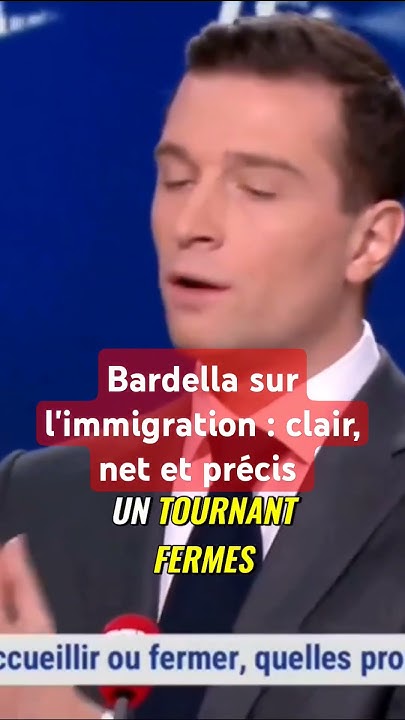
Bardella immigration policy is a focal point of discussion as Jordan Bardella, the influential leader of France’s National Rally, outlines his vision for a transformed immigration landscape in the country. Amid rising concerns about mass migration and its implications for national identity, Bardella asserts that if he assumes power, France will no longer be a target for uncontrolled immigration. His stance resonates with the sentiments expressed in recent discussions concerning immigration in France, where he aligns himself with the far-right politics that have seen a resurgence in popularity. As the 2027 French presidential election looms, Bardella’s strong rhetoric on this issue highlights the growing divide within French society regarding immigration and integration. By channeling national pride and security concerns, Bardella aims to reshape the narrative around immigration to garner support from a populace increasingly anxious about cultural preservation and societal cohesion.
The immigration framework proposed by Bardella encompasses ample critique of current policies and a call to redefine the criteria for entering France. Through his leadership, the National Rally promotes a stringent approach to immigration, arguing that past leniency has compromised the fabric of French society. By emphasizing the importance of assimilating into French culture and values, Bardella sets forth a narrative that prioritizes national unity over multiculturalism. As the far-right continues to exert influence in French politics, discussions surrounding immigration, national identity, and societal integrity are becoming more prevalent. Bardella’s vision serves as a pivotal element as France heads towards significant elections, reflecting a broader trend of questioning immigration policies across Europe.
The Vision of Jordan Bardella for Immigration in France
Jordan Bardella, the emerging face of France’s far-right National Rally (RN), has a clear and steadfast vision for immigration policy in the country. In his recent statements, he articulated a firm stance against what he views as mass immigration, asserting that if elected, France will no longer be the destination of uncontrolled foreign entrants. Bardella’s proposal includes a significant overhaul of existing immigration legislation, emphasizing the need for stricter measures to salvage what he perceives as the integrity of French society. This rhetoric resonates with a growing segment of the French population that feels overwhelmed by the current immigration landscape.
Bardella’s comments reflect a broader trend within French far-right politics, where immigration is a central talking point. By drawing parallels with U.S. immigration concerns highlighted by President Donald Trump, Bardella aligns himself with a populist narrative that prioritizes national sovereignty and cultural preservation. He argues that lenient immigration policies over the past decades have jeopardized French social fabric and security, suggesting that a more cohesive national identity could emerge from stricter immigration controls. Such views are likely to be pivotal as he campaigns for the presidency in the approaching elections.
Impact of Bardella’s Immigration Policy on French Society
The implications of Bardella’s proposed immigration policy extend beyond mere numbers and regulations; they delve into the very essence of French identity and social cohesion. Bardella argues for a vision of France where immigration is tightly controlled and social benefits strictly reserved for citizens. This notion of exclusivity raises essential questions about integration and what it truly means to be French. According to Bardella, being French is not just about citizenship; it is about embracing values that promote equality and secularism. He emphasizes that those who reject these foundational principles fundamentally undermine the democratic fabric of the nation.
Moreover, Bardella’s approach aims to disentangle ethnic and cultural backgrounds from the definition of citizenship. By differentiating between those who contribute to society and those who are perceived as undermining it, he hopes to establish a society that prioritizes unity and shared values. This perspective seeks to resonate with multiple demographics, including those who feel their identities are being overshadowed by a surge in immigration. However, critics argue that such policies can lead to divisiveness and may reinforce xenophobic sentiments, potentially breeding societal conflict rather than fostering genuine integration.
Bardella’s Perspective on Far-Right Politics in Europe
Jordan Bardella is at the forefront of a political movement that is gaining traction across Europe amidst rising concerns over immigration and national identity. His alignment with the tenets of far-right politics highlights a significant shift not only in France but across the continent, where many leaders echo similar sentiments regarding immigration and national sovereignty. Bardella’s recent interview underscores his belief that European nations are at risk of losing their cultural heritage, a sentiment that resonates strongly with many citizens disenchanted with current immigration policies and globalism.
Bardella’s discourse borrows heavily from U.S. narratives, indicating a strategic positioning that transcends national borders. The far-right, particularly under leaders like Bardella, is targeting disillusioned voters by framing immigration as a paramount threat. This approach has seen success in various countries, suggesting that Bardella’s influence may extend beyond France. As he navigates the political landscape leading up to the 2027 presidential election, his alliance with other like-minded populists may solidify the far-right’s position in European politics.
Bardella’s Stance Amidst Opposition and Historical Context
The historical context of the National Rally reveals a transformation from its origins under Jean-Marie Le Pen to its current iteration under Jordan Bardella. While Bardella has publicly distanced himself from the more extremist views associated with the RN’s past, he unabashedly leverages the party’s anti-immigration platform to galvanize support. His strategy involves acknowledging the party’s contentious history while reframing its narrative to appeal to a broader electorate that now craves security and stability in an uncertain socio-political climate.
Bardella faces significant opposition both from within the political landscape of France and from critics who question the legitimacy of his party’s claims to reform. While he promotes a vision of national recovery and unification, there remains a palpable skepticism regarding whether this vision can be realized without alienating various demographic groups within the country. The path forward for Bardella will inevitably involve balancing the party’s historical baggage with the aspirations of a new generation eager for change, especially concerning immigration policy and its implications for society.
The Significance of the Upcoming Presidential Election for Bardella
The upcoming presidential election in 2027 is pivotal for Jordan Bardella and the National Rally, representing a critical juncture in French politics. Recent polling suggests a favorable outlook for Bardella, potentially positioning him to succeed Marine Le Pen and cementing the RN’s hold on the French political sphere. With immigration set to be a dominant theme in the electoral discourse, Bardella’s approach could significantly influence the electorate’s perception of the RN as a legitimate alternative to traditional parties in France.
This election not only represents a personal milestone for Bardella but is also indicative of a larger trend wherein far-right parties are increasingly becoming viable contenders in mainstream politics. The way Bardella navigates this election could determine the future direction of immigration in France, along with the party’s political strategy moving forward. If successful, Bardella’s leadership could mark a historical turning point in the nation’s immigration policy and redefine what it means to be part of the French Republic in the 21st century.
Bardella’s Relationship with Marine Le Pen
Bardella’s relationship with Marine Le Pen has been characterized by mutual respect and a shared vision for the future of the National Rally. As both politicians navigate the challenges of leading a party with a contentious history, their collaboration signifies a united front against criticism and a collective effort to reshape the party’s image. Bardella’s loyalty to Le Pen, especially in light of her legal troubles and potential disqualification from the next election, reflects a strategic partnership aimed at consolidating their positions within the party and the broader political landscape.
Their joint campaign efforts underscore a commitment to their political ideals while demonstrating an adaptive leadership style that resonates with their base. Bardella’s assertions of trust and friendship indicate a willingness to uphold the party’s legacy while also appealing to a new generation of voters concerned about immigration and national identity. As they work side by side, their alliance will be crucial in charting a path for the RN in a rapidly changing political environment.
Challenges Ahead for Bardella’s Immigration Plan
While Jordan Bardella has laid out a bold vision to overhaul immigration policy in France, implementing these changes presents considerable challenges. The French constitution imposes strict limitations on the ability to hold referendums on immigration matters, necessitating significant reforms if Bardella intends to fulfill his campaign promises. Without an absolute majority in parliament or reliable allies, his ability to initiate substantial changes may be hampered, creating potential friction within his party and among opposing political factions.
Moreover, public opinion on immigration is complex and varied, with many citizens divided on the issue. Bardella’s plan to initiate a referendum on immigration seeks to engage the populace directly, potentially galvanizing support for his policies. However, there remains skepticism about whether such measures can genuinely address the nuances of immigration and integration while fostering a cohesive national identity. Thus, Bardella will need to prepare for a rigorous campaign that not only promotes his vision but also counters critiques from all sides of the political spectrum.
The Effect of Economic Concerns on Bardella’s Policies
In addition to immigration, Bardella has pointedly commented on the economic challenges facing France, particularly the issues of excessive taxation and regulation. He argues that these economic difficulties are intertwined with immigration policies, suggesting that a sharp focus on controlling borders could alleviate fiscal pressures on the state. Bardella’s economic narrative aims to link the immigration debate with financial stability, appealing to voters who prioritize economic growth alongside national security.
However, there’s a risk that addressing immigration predominantly through an economic lens may inadvertently oversimplify a multifaceted issue. As Bardella continues to articulate his vision, he must navigate the delicate balance between addressing legitimate economic concerns while being cognizant of the broader social implications of his policies on various communities within France. How he manages this interplay between economic issues and immigration will be critical in shaping public perception and support as the election approaches.
Frequently Asked Questions
What is Jordan Bardella’s immigration policy as the leader of the National Rally in France?
Jordan Bardella’s immigration policy focuses on significantly reducing mass immigration to France. He believes that France should regain control over its borders and prioritize the interests of French citizens. Bardella has expressed intentions to initiate a referendum on immigration if elected, signaling a commitment to stricter immigration regulations that limit social benefits to French nationals.
How does Jordan Bardella view the influence of immigration on French society?
Jordan Bardella views immigration as a critical issue impacting French society and culture. He argues that mass immigration poses a threat to the balance and identity of France, referring to a ‘civilizational erasure’. Bardella asserts that the lenient immigration policies of the past 30 years have jeopardized French national identity and values.
What did Bardella mean by ‘France will no longer be the target of mass immigration’?
When Jordan Bardella stated that ‘France will no longer be the target of mass immigration’, he emphasized his intention to adopt a firm stance against immigration. He aims to implement policies that significantly limit inflows, ensuring that immigration aligns with the nation’s social and cultural integration expectations.
What role does nationalism play in Bardella’s immigration policy?
Nationalism is a central theme in Jordan Bardella’s immigration policy. He advocates for a sense of national pride and identity, suggesting that being French encompasses more than just citizenship. Bardella supports the notion that immigrants must embrace French values, language, and culture, reflecting his belief in a strong national identity amid increasing pressures from immigration.
How does Bardella’s immigration stance compare with previous National Rally policies?
Bardella’s immigration stance aligns closely with traditional National Rally policies, which have consistently advocated for strict immigration controls and national sovereignty. However, his approach aims to modernize the party’s image and distance it from its controversial past while maintaining core anti-immigration principles.
What actions does Bardella propose if elected regarding immigration control?
If elected, Jordan Bardella proposed initiating a referendum on immigration as one of his first actions to reclaim national control over borders. This demonstrates his commitment to reforming French immigration law and ensuring that future policies reflect the priorities of the National Rally’s vision for France.
Is Bardella’s immigration policy supported by the majority of French voters?
Recent polling suggests that Jordan Bardella’s stance on immigration resonates with a significant portion of the French electorate, particularly among those concerned about national identity and security. His position as the leader of the National Rally, which has gained popularity, indicates that many voters support stricter immigration measures.
What challenges does Bardella face in implementing his immigration policy?
Jordan Bardella faces several challenges in implementing his immigration policy, including the need for constitutional amendments to conduct a referendum on immigration. Additionally, the requirement for a legislative majority complicates his ability to achieve rapid reforms. Political opposition and public opinion on immigration could also impact the feasibility of his proposed measures.
| Key Points |
|---|
| Jordan Bardella, leader of the National Rally (RN), agrees with U.S. concerns about Europe’s challenges regarding immigration and national identity, emphasizing France should control mass immigration. |
| Bardella asserts that if he becomes head of government, he will not target France for mass immigration, pledging stricter immigration policies and a referendum on immigration. |
| He criticized the leniency of past immigration policies over the last 30 years, arguing they threaten the balance of European societies, especially France. |
| Bardella distances himself from the extremist views associated with the RN’s founder, Jean-Marie Le Pen, promoting a more moderate stance to attract broader support. |
| Despite facing political challenges, including Marine Le Pen’s potential withdrawal from candidacy, Bardella expresses confidence in leading RN through upcoming elections. |
| He advocates for French national values, secularism, and against extremism, pledging to address radical elements and emphasize integration of immigrants. |
| On economic issues, Bardella identifies excessive taxation and regulation as barriers to growth, promising to liberate the economy. |
| His position on Ukraine includes opposing troop deployment, viewing Russia as a significant threat, while contrasting with the current government’s stance. |
Summary
Bardella immigration policy underscores a strong commitment towards limiting mass immigration in France. As the young leader of the National Rally, Jordan Bardella articulates a vision for a France that prioritizes national identity and security through stricter immigration controls. He sees the issues surrounding immigration not just as administrative matters but as fundamental challenges that require reevaluation of France’s societal values. Bardella’s emphasis on patriotic pride, secularism, and economic reform positions him as a defining figure in the future of French politics, especially as the nation approaches its next presidential election.

