
Listen to this article
The Artemis II mission marks an exciting new chapter in lunar exploration, as NASA prepares to launch a crew around the Moon for the first time in over 50 years. Slated for early March 2023, this groundbreaking moon mission will see four astronauts embark on a 10-day journey beyond Earth’s atmosphere, traversing the far side of the Moon before returning home. This mission follows the successful Artemis I test flight and brings NASA one step closer to its lunar landing plans aimed for the Artemis III mission. Featuring an expedition that includes astronauts from both the United States and Canada, the Artemis II mission promises to deliver significant advancements in lunar exploration news. As anticipation builds for the NASA Artemis II launch, the world watches eagerly as humanity inches closer to reestablishing its presence on the Moon.
In the upcoming Artemis II endeavor, NASA is set to showcase a crewed voyage encircling the lunar body, a journey that has not been undertaken in decades. Planned for early March 2023, this mission represents a critical milestone in the agency’s broader objectives for lunar exploration. The selected astronauts will undertake a ten-day odyssey, examining the Moon’s hidden hemisphere while contributing to scientific advancements and laying groundwork for future ventures, including a potential lunar landing. As preparations intensify for this historic flight and the atmosphere of excitement swells, the world is keenly attuned to the unfolding developments in human space travel. This mission is a pivotal element of NASA’s strategy to return to the Moon and further explore possibilities for sustainable human presence there.
Overview of the Artemis II Mission
NASA’s Artemis II mission is poised to be a groundbreaking voyage, marking the first time in over 50 years that astronauts will circumnavigate the Moon. With a planned launch date of March 6, 2023, the mission is part of NASA’s broader goal of returning humans to the lunar surface and eventually establishing a sustainable presence on the Moon. The Artemis II mission will see four astronauts—Reid Wiseman, Victor Glover, Christina Koch, and Jeremy Hansen—embark on a 10-day journey into deep space, exploring areas of the Moon previously unseen by human eyes. This ambitious mission underscores NASA’s commitment to lunar exploration and the evolution of space technologies, setting the stage for future endeavors including lunar landings and possible missions to Mars.
During their exciting journey, the Artemis II crew will be housed in the Orion capsule, traveling aboard the Space Launch System—a powerful mega Moon rocket measuring 98 meters tall. The mission has ignited a wave of enthusiasm among space enthusiasts and professionals alike, reminding us of the enduring allure of lunar exploration after decades of dormancy in human activity beyond Earth.
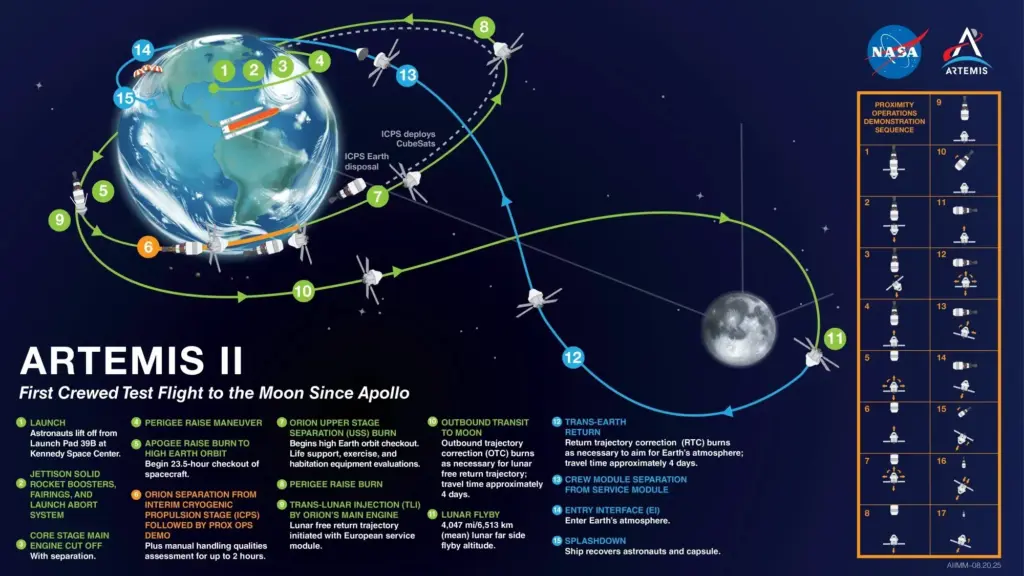
As the world awaits the culmination of months of rigorous preparation, it’s worth noting that Artemis II is not just a mission to orbit the Moon; it is a crucial step in NASA’s goal of sustainable lunar exploration. Following their departure from Earth, the astronauts will spend nearly four days in transit before reaching the Moon, where they will conduct scientific observations and capture stunning images of the lunar surface. This includes areas of the Moon that have remained untouched since the Apollo era, providing valuable data for future missions and scientific research. The Artemis II mission represents a leap forward in human spaceflight capabilities, reinforcing humanity’s push for exploration and discovery in outer space.
Significance of NASA’s Lunar Missions
The Artemis II mission highlights NASA’s unwavering commitment to returning humans to the Moon and paving the way for future lunar and Martian exploration. In a global landscape where countries like China are rapidly advancing their own lunar plans, the U.S. is under increasing pressure to lead in space exploration. NASA’s vision focuses on establishing a sustainable human presence on the Moon, which would allow astronauts to conduct research, test new technologies, and potentially serve as a launch point for missions to Mars. The mission also plays a pivotal role in demonstrating the capabilities of the Space Launch System and Orion spacecraft for future lunar landings.
In addition to its technical achievements, the Artemis II mission serves as an inspirational beacon for future generations of explorers. By reigniting public interest in space exploration, NASA is fostering a new era of scientific discovery and collaboration within the global community. With ambitious goals set for the coming years, including Artemis III, which aims to land astronauts on the Moon, NASA demonstrates its commitment not only to lunar exploration but to charting a course for humanity’s future as a multi-planetary species.
Excitement is building not just among the team preparing for the launch, but also within the scientific community and beyond, as Artemis II prepares to broaden the horizons of human knowledge and achievement in space.
Challenges Facing the Artemis II Mission
Despite the optimism surrounding the Artemis II mission, there are numerous challenges that NASA must navigate to ensure success. The agency’s commitment to safety and reliability is paramount, especially after experiencing complications during the initial rehearsal. The resolution of the hydrogen fuel leak was a crucial step forward, but the Artemis team must remain vigilant as they conduct further tests and preparations leading up to the launch. These challenges highlight the complexities involved in modern space exploration, where even minor issues can lead to significant delays.
Moreover, competition from private companies and international agencies adds an additional layer of complexity to the mission. SpaceX and Blue Origin are vying to partner with NASA on future lunar missions, with the construction of lunar landers and other technologies. As these companies push the boundaries of innovation in the aerospace sector, NASA must carefully manage its partnerships to leverage technological advancements while maintaining mission integrity and safety. The stakes are high, as the success of Artemis II could influence future funding and support for the next generation of lunar exploration.
The Role of International Collaboration in Lunar Exploration
International collaboration has become an increasingly important aspect of modern space exploration, particularly in the context of NASA’s Artemis program. The involvement of Canadian astronaut Jeremy Hansen reflects a growing trend in space exploration: nations working together to achieve mutual goals. By collaborating with international partners, NASA can share expertise, resources, and technology, enhancing the overall success of lunar missions. This cooperation can serve not only to bolster scientific research but also to foster goodwill and collaboration in a global landscape where competition in space is intensifying.
Additionally, NASA’s partnerships are vital for preparing for lunar landings. The space race is no longer just limited to national governments; private companies and rival nations are aligning their sights on the Moon. As seen in the rivalry with China’s lunar ambitions, collaboration offers a strategic avenue for shared knowledge and innovation. A unified approach towards lunar exploration can accelerate the timeline not only for Artemis III but also for establishing a long-term presence on the Moon and laying the groundwork for future missions to Mars.
The Future of NASA’s Lunar Landing Plans
Looking beyond the Artemis II mission, NASA’s future lunar landing plans are both ambitious and transformative. With Artemis III slated to potentially land astronauts on the Moon by 2028, the agency is hard at work in fine-tuning its approach to not only landing but also conducting sustainable activities on the lunar surface. This mission will aim to return humans to the Moon’s south pole, an area rich in resources and scientific potential. As NASA works with partners like SpaceX and Blue Origin, there’s a strong emphasis on ensuring a robust landing technology that can support not just one mission but a series of explorations.
The journey towards the Moon is a significant step in NASA’s long-term vision for space exploration, paving the way for future missions that could ultimately take humans to Mars. With each successful mission, including Artemis II, NASA is building a roadmap that outlines not only a return to the Moon but an eventual human settlement on another planet. The success of these missions will rely not just on technology, but also on the collaboration between nations and private sectors, fostering a collective spirit of exploration that has been the hallmark of human endeavor throughout history.
Anticipation for Crew Training and Preparations
As the Artemis II launch approaches, crew training and mission preparations are in full swing. The four selected astronauts, each with a diverse background of experience, undergo rigorous training to prepare for the challenges of deep space travel. This includes simulations that mimic the conditions they will face, from the care of their spacecraft to potential challenges that could arise during their journey around the Moon. The involvement of both seasoned and new astronauts brings a richness to the team’s capabilities, ensuring that they are well-equipped to handle whatever comes their way.
Moreover, the quarantine protocols implemented for the crew highlight the seriousness with which NASA treats astronaut health and safety. As the crew prepares to embark on this monumental journey, every precaution is being taken to ensure that they are physically and mentally ready. The excitement among the astronauts as they undergo this preparation reflects the broader anticipation felt around the world, as space enthusiasts look forward to witnessing new chapters in human exploration and scientific discovery.
Technological Innovations in Lunar Exploration
The Artemis II mission will serve as a pivotal moment for technological innovation in lunar exploration. NASA’s Space Launch System (SLS) and Orion capsule represent the culmination of years of research and development. These technologies not only enhance surface-to-orbit travel capabilities but also lay the groundwork for future scientific missions. As the Artemis program advances, continuous improvements in rocket technology, life support systems, and spacecraft systems will be crucial for conducting sustainable activities on the Moon and beyond.
Investments in reusable rocket technology and improvements in safety protocols will also be essential for the success of upcoming missions. With SpaceX’s achievements in reuse and rapid turnaround of their launch vehicles being closely followed, NASA is likely to incorporate similar innovations as they work towards their lunar landing goals. The rapid pace of technological advancements, combined with collaborative partnerships, will ensure that NASA’s lunar exploration goals remain not just ambitious but achievable, increasing the prospects for human expansion into space.
The Inspiration Behind the Artemis Program
The Artemis program is about more than just exploration; it embodies the spirit of human curiosity and the innate desire to push beyond our known boundaries. The name ‘Artemis’ reflects the agency’s commitment to inclusivity, as it pays homage to the twin sister of Apollo, symbolizing a new generation of explorers that seeks to go further than ever before. This program aims to inspire younger generations and encourage them to consider careers in STEM fields. The excitement that surrounds the Artemis II mission serves as a rallying cry for a renewed interest in space exploration, captivating the imaginations of millions around the globe.
Moreover, the Artemis program invites a collective participation in the journey to the Moon by inspiring people to dream big and believe in the potential for human ingenuity. Just as the Apollo missions paved the way for future generations, Artemis endeavors to forge a legacy that emphasizes collaboration, exploration, and scientific breakthroughs. As the world watches NASA prepare for Artemis II, the hope is not just to witness the first crewed flight around the Moon in decades, but to ignite a passion for exploration that resonates through generations to come.
Frequently Asked Questions
What are the key objectives of the NASA Artemis II mission?
The NASA Artemis II mission aims to send four astronauts on a 10-day journey around the Moon, marking humanity’s first crewed lunar flyby in over 50 years. This mission will test the Orion spacecraft and the Space Launch System (SLS) rocket’s capabilities, laying the groundwork for future lunar landing missions.
When is the expected launch date for the Artemis II mission?
NASA plans to launch the Artemis II mission as early as March 6, 2024. The schedule follows the successful completion of a crucial ‘wet dress rehearsal’ at Kennedy Space Center, ensuring that all systems are ready for this landmark moon mission.
Who are the astronauts involved in the Artemis II crew around the Moon?
The Artemis II mission will feature a crew of four astronauts: three Americans—Reid Wiseman, Victor Glover, and Christina Koch—and one Canadian, Jeremy Hansen. They will embark on their historic journey on NASA’s Orion spacecraft.
What does the Artemis II mission mean for future lunar exploration?
The Artemis II mission is a significant step in NASA’s lunar exploration plans, setting the stage for Artemis III, which aims for the first crewed moon landing since the Apollo program. Successful completion of Artemis II will pave the way for establishing a sustainable presence on the Moon.
What will the astronauts do during their journey around the Moon in Artemis II?
During the Artemis II mission, the astronauts will orbit the Moon’s far side, conducting scientific observations and taking photographs. They will spend about four days traveling to the Moon, followed by four days returning to Earth, culminating in a splashdown in the Pacific Ocean.
What technologies are being tested in the Artemis II mission?
The Artemis II mission will test various technologies essential for lunar exploration, including the Space Launch System (SLS) rocket and the Orion spacecraft systems. This mission aims to validate the performance of these technologies in crewed space travel.
How does the Artemis II mission fit into NASA’s overall lunar landing plans?
Artemis II is a crucial component of NASA’s overall lunar landing plans, which include returning humans to the Moon by 2028 through the Artemis III mission. This broader initiative seeks to facilitate sustainable lunar exploration and eventually enable human missions to Mars.
What challenges did NASA face leading up to the Artemis II mission launch?
NASA encountered challenges during the Artemis II mission preparations, such as a hydrogen fuel leak during the first rehearsal in February 2024. However, the team has addressed and resolved these technical issues, allowing for successful testing and preparations for launch.
Will the Artemis II mission include a lunar landing?
No, the Artemis II mission is a crewed flyby around the Moon without a lunar landing. The mission’s primary objective is to test the spacecraft and systems that will eventually support landings in future Artemis missions, such as Artemis III.
What is the significance of the Artemis II mission for international space collaboration?
The Artemis II mission highlights international collaboration in space exploration, featuring Canadian astronaut Jeremy Hansen as part of the crew. This collaboration reflects a growing trend of partnerships among space agencies and private companies in ambitious lunar and space exploration efforts.
| Key Point | Details |
|---|---|
| Launch Date | Earliest launch set for March 6, 2024. |
| Mission Duration | 10-day journey around the Moon. |
| Crew Composition | 4 astronauts: 3 Americans and 1 Canadian. |
| Rocket Details | Utilizing the SLS (Space Launch System), 98 meters tall. |
| Mission Objectives | Test systems for future lunar landings, specifically Artemis III. |
| Lunar Flyby | Crew will circle the far side of the Moon at altitude of 6,500-9,500 km. |
| Future Plans | Aim for lunar landing by 2028 with Artemis III. |
Summary
The Artemis II mission represents a significant milestone, setting the stage for the first crewed lunar journey in over five decades. Launching in early March, this mission will not only showcase NASA’s capabilities but also bolster international competition as countries like China aim to assert their presence on the Moon. As the Artemis II astronauts prepare for their historic journey, the mission embodies humanity’s ongoing quest to explore and understand our solar system.

