Listen to this article
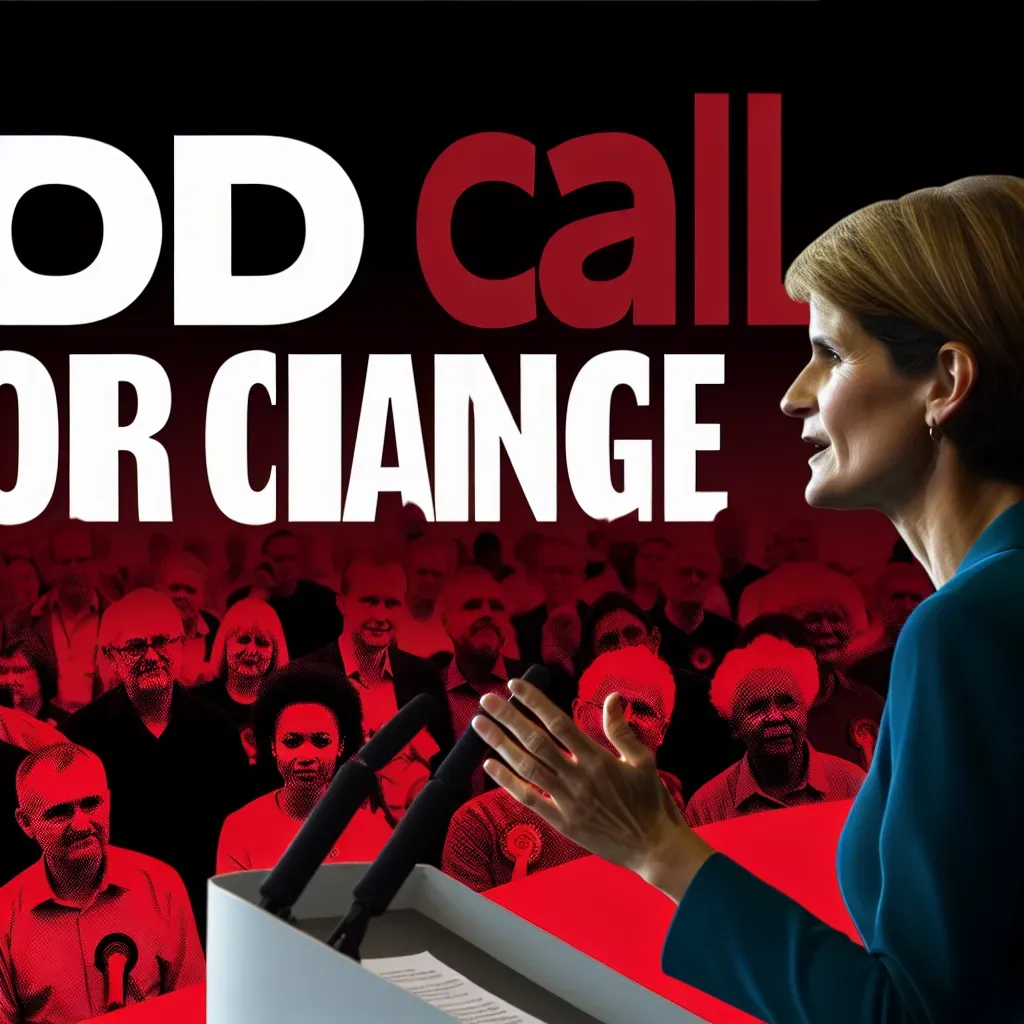
Angela Rayner’s speech delivered to Labour activists on Tuesday night was a potent and unyielding critique of the current Keir Starmer leadership, capturing the frustrations of many within the party. With sharp rhetoric, this 1,500-word address voiced a sense of urgency, clearly indicating that the Labour Party is at a critical crossroads. Her analysis highlighted a disconnect between the government and working-class constituents, making it a compelling call to action for Labour supporters and activists alike. Importantly, her remarks have sparked intrigue over a possible Angela Rayner leadership bid, as she presents an alternative vision for how the party must evolve to remain relevant. This political speech analysis underscores the tension within Labour, signaling that the party’s future may hinge on Rayner’s bold stance against the establishment.
In her recent address, Angela Rayner articulated a powerful message aimed at reinvigorating the Labour Party’s grassroots supporters. The rhetoric mirrored broader discontent regarding leadership decisions and reflects a growing yearning for a transformation within the party’s approach to governance. This Labour activist speech not only challenges the status quo but also invites scrutiny of the leadership dynamics under Sir Keir Starmer. By voicing a critique that resonates with many constituents, Rayner positions herself as a key player in the ongoing political discourse, potentially paving the way for her own leadership ambitions. The implications of her words suggest a pivotal moment for Labour, as the need for a revitalized political strategy becomes increasingly urgent.
Angela Rayner’s Provocative Speech: A Critique of Leadership
Angela Rayner’s recent speech has resonated deeply among Labour activists, illustrating a pointed critique of Sir Keir Starmer’s leadership without directly addressing him. In a spirited atmosphere at a Westminster pub, Rayner’s 1,500-word address struck chords of frustration and urgency, reflecting her perception that the Labour Party is failing to connect with its traditional base. By abstaining from naming Starmer, Rayner tactfully sidesteps direct confrontation while still delivering an unambiguous call for introspection and change within the party. The impact of her words places her in a unique position as she signals a challenge to the status quo, encouraging members to rethink the party’s direction in the face of potential electoral decline.
Focused and galvanized, Rayner’s articulation about Labour’s diminishing efficacy captures the sentiment shared by many who feel the party is drifting away from its foundational values. Her declaration that “the Labour Party is at its best when we are bold” resonates especially in current times, illuminating the critical need for a return to the party’s more progressive roots. This boldness, according to Rayner, is not just a political strategy but a necessary evolution for the party to regain its relevance among working-class voters disillusioned by governmental policies that favor the elite.
The Future of the Labour Party: Rayner’s Call for Boldness
Angela Rayner’s insistence during her speech that the Labour Party must adopt a bolder and more compelling vision speaks volumes about the challenges facing Keir Starmer’s leadership. Given the perception that the party has been too tepid in its responses to current issues, Rayner emphasizes the need to rekindle the spirit of conviction and action that once defined Labour. This appeal resonates particularly amid critiques from party activists who yearn for a return to a more left-oriented agenda, highlighting a clear division within the party on its tactical approach moving forward. The idea of a “popular Left with heart and vision” articulated by the Mainstream group encapsulates this desire, suggesting that only through renewed boldness can Labour truly represent its constituency.
Moreover, Rayner’s cautions about the impending perils of stagnation are particularly poignant; she argues that Labour is “running out of time” to regain the trust of the electorate. The urgency in her voice serves as a rallying cry for Labour members not to only engage with existing policies but to also challenge the establishment narrative that seems to dominate contemporary politics. By fostering a dialogue within the party about the necessity of bold policies, she opens the door for re-evaluation of their ideological stance, thereby reigniting passions among the grassroots supporters who feel sidelined from political discourse.
Response to Key Policies: Rayner’s View on Immigration
In her latest address, Angela Rayner boldly spoke out against the government’s immigration plans proposed by Home Secretary Shabana Mahmood, a move that some within the party found surprising. Her criticism highlights a growing rift in the Labour Party, with varying opinions on how to deal with immigration policy. By actively opposing a position that many Labour MPs privately detest, Rayner not only aligns herself with the frustrations of her colleagues but also positions herself as a viable alternative leader who is unafraid to tackle difficult subjects. This reflects her broader critique of the government as one that caters to elite interests rather than advocating for working-class voices.
Her opposition is notable in the context of Labour’s wider electoral strategy; while some party members argue for a gentler approach, Rayner’s stance suggests a readiness to embrace more confrontational tactics. The assertion that the party must engage with its base more authentically is underlined by her direct challenge to government policies that undermine the party’s commitment to the public. This strategic positioning not only boldly redefines her political identity but also drives home the essential message that Labour must reflect core values when addressing real issues affecting people’s lives.
Unpacking Labour’s Internal Dynamics: The Impact of Rayner’s Speech
Angela Rayner’s criticism was not just a reflection of personal perspective; it also encapsulated the internal divisions within the Labour Party. By aligning herself with the Mainstream group and voicing discontent with the leadership’s cautious approach, she has effectively reignited discussions around party unity and ideological clarity. This internal dynamic is crucial as the party navigates its future direction amidst an ever-evolving political landscape. Rayner’s remarks speak to the broader frustrations shared by many activists who feel that Labour must become a stronger advocate for its principles to be effective in opposing the current government.
In a response from the Right of the party, some members question the viability of embracing those on the hard Left, indicating a hesitance to return to policies reminiscent of Jeremy Corbyn’s tenure. This tension signifies a critical moment for Labour, where the older factions must reconcile with newer, more progressive voices like Rayner’s. If the party is to remain relevant in reviving its connection with the British electorate, these conversations around leadership and policy must advance beyond mere rhetoric to embrace substantial, actionable change.
Angela Rayner’s Potential Leadership Bid: Evaluating the Stakes
As speculation swirls around Angela Rayner’s possible bid for Labour leadership, her recent speech provides a litmus test for gauging support from her colleagues and grassroots activists. Throughout her address, there were clear indications of her ambitions, with pointed criticisms of current leadership strategies indicating her readiness to seize the helm if presented with the opportunity. However, lingering concerns about her unresolved tax affairs create uncertainty regarding her candidacy’s viability. This situation exemplifies how personal challenges can intertwine with political aspirations, particularly within a party striving for integrity while combating historical baggage.
Furthermore, Rayner’s call for strong, leftist policies may resonate with a significant portion of the electorate that seeks more vocally progressive leadership from Labour. Her oppositional stance to the current government’s immigration policy aligns with a growing sentiment among party members who recognize the need to reclaim a more pronounced leftist identity. As the leadership landscape continues to shift, Rayner’s embrace of challenging government narratives places her at the forefront of a potential resurgence within Labour, positioning her not only as a critic but as a unifying figure among disillusioned party activists.
Labour’s Post-Election Strategy: Rayner’s Vision for Governance
Angela Rayner’s recent remarks signal a significant departure from the complacency seen in previous leadership approaches, particularly after Labour’s landslide victory in the last general election. Her belief that Labour is at a critical juncture and must adopt a more proactive and bold governance style aligns with the urgent encouragement from party activists. This call for action reflects a shared aspiration among the grassroots to transform electoral success into genuine governance that actively represents the interests of working people, rather than merely maintaining the status quo.
Additionally, Rayner’s critique touches upon a fundamental concern regarding Labour’s future direction. By emphasizing the need to address pressing social issues with innovative policies, she shapes a narrative of a party that not only understands the electorate’s struggles but is also willing to implement tactics that prioritize social equity. The implication of her speech is clear: without embracing a vision of governance that prioritizes bold initiatives and a clear ideological grounding, Labour risks further alienating the very people it seeks to represent.
Reactions from Downing Street: A Test of Labour Unity
Following Angela Rayner’s incisive speech, Downing Street’s decision to decline comments underscores the potential ramifications of Rayner’s critique on government-Labour relations. By choosing to remain silent in the face of such pointed criticism, the government exhibits its awareness of the fragility of its reputation and position within Parliament. This reaction signals a recognition that Rayner’s boldness might resonate beyond party lines, interpreting her words as a rallying cry for Labour unity amid a backdrop of uncertainty about policies that affect the public.
Moreover, the tensions within Labour, as articulated by Rayner, may lead to a fracturing effect if resolutions aren’t found. As the party grapples with internal conflicts and varying factions advocating for change, the silence from Downing Street acts as both a tactical maneuver and a recognition of the need to address the very issues Rayner has spotlighted. The emerging discourse surrounding leadership, particularly with Rayner at the center, will likely play a critical role in shaping Labour’s strategies as it prepares for future confrontations with the government.
Final Thoughts: Rayner’s Impact on Labour’s Future
Angela Rayner’s speech acts as a powerful reminder of the evolving landscape within the Labour Party. By articulating frustrations that align with many activists’ sentiments, she not only emphasizes the importance of bold leadership but also invites a fervent dialogue about the necessary steps Labour must take to thrive. This balancing act of aiming for unity while advocating for more pronounced leftist policies captures the complexities of modern political engagement within Labour, positioning Rayner as an influential figure in determining the party’s future.
Ultimately, the success of Rayner’s vision is contingent upon how party leaders and activists respond to her call for action. By embracing a bolder stance—both in terms of leadership and political strategy—Labour can potentially steer its course towards a reinvigorated connection with its base. The inherent challenges posed by internal divisions present opportunities for re-examination and growth, particularly as the party prepares to confront an increasingly polarized political arena. Rayner’s willingness to challenge the party’s leadership dynamics is a crucial component of this transformation, hinting at a more promising, united future for Labour.
Frequently Asked Questions
What were the main criticisms in Angela Rayner’s speech about the Labour Party’s performance?
In her speech, Angela Rayner delivered a sharp critique of the Labour Party’s current direction under Keir Starmer leadership, emphasizing the need for the party to represent working people rather than the establishment. She expressed frustration over the party’s lackluster performance and warned that the ‘Labour Party is running out of time,’ signaling urgency for change and a bold vision.
How did Angela Rayner’s speech influence speculation about her leadership bid?
Angela Rayner’s speech reignited speculation about a potential leadership bid against Sir Keir Starmer. Her incisive critique and presentation of an alternative vision for Labour’s governance prompted discussions among Labour activists about her suitability as a leader, particularly within the context of her bold stance on key issues like government policies.
What was the significance of Angela Rayner’s remarks on the Labour Party’s representation of working people?
In her speech, Angela Rayner highlighted the perception that the Labour Party has become an establishment entity rather than a champion for working people. This assertion was crucial in addressing the disconnect that some voters feel, reinforcing her argument for Labour to adopt a more progressive and bold agenda to regain public trust.
How did Angela Rayner address the issue of migration in her speech?
Angela Rayner’s speech included a pointed critique of the government’s migration policy, particularly opposing Home Secretary Shabana Mahmood’s plans. This opposition, seen as a move to solidify her support among the ‘soft left’ within the Labour Party, indicates her commitment to a compassionate and worker-focused approach, diverging from mainstream party narratives.
What does Angela Rayner’s term ‘running out of time’ signify for the Labour Party?
The phrase ‘running out of time’ in Angela Rayner’s speech signifies a critical urgency for the Labour Party. It suggests that immediate action and decisive leadership are needed to prevent further decline in public support and to revitalize the party’s mission and vision as a credible alternative to the current government.
How does Angela Rayner’s speech reflect the internal dynamics within the Labour Party?
Angela Rayner’s speech highlights the internal friction within the Labour Party, particularly between factions. By addressing the need for a bold approach and engaging with the ‘Mainstream’ group’s desires for a ‘popular Left,’ her remarks underline the competing ideologies within the party amidst growing tensions about leadership and policy direction.
What impact might Angela Rayner’s unresolved tax issues have on her leadership ambitions?
Angela Rayner’s unresolved tax issues could significantly impact her leadership ambitions, as concerns from fellow Labour MPs arise about whether these issues could hinder her candidacy. The mention of her tax affairs by voters suggests that public perception could also be a barrier, making it a critical consideration as she contemplates a potential leadership bid.
In what context should Angela Rayner’s speech be analyzed?
Angela Rayner’s speech should be analyzed within the broader context of political speech analysis, focusing on its implications for the Labour Party’s direction, internal dynamics, and leadership challenges. Her critique serves as both a rallying cry for Labour activists and a pivotal moment in the ongoing discourse about the party’s future under Keir Starmer’s leadership.
What was the audience’s reaction to Angela Rayner’s speech among labour activists?
The audience of labour activists responded positively to Angela Rayner’s speech, which resonated as a clear call for a bolder stance from the Labour Party. Her sharp critique and emphasis on the party’s urgency seemed to invigorate attendees, reflecting a shared anxiety about the party’s current trajectory and the need for decisive change.
| Key Points | Details |
|---|---|
| Critique of Leadership | Rayner’s speech was a pointed critique of Sir Keir Starmer’s leadership without naming him. |
| Frustration and Vision | She expressed frustration at the Labour Party’s performance and offered an alternative vision for governance. |
| Mainstream Group Addressed | Rayner addressed the Mainstream group within the Labour Party, linked to Mayor Andy Burnham, advocating for a ‘popular Left’. |
| Immigration Policy | Critiqued current government policy on migration, surprising some Labour MPs. |
| Leadership Speculation | Her stance raises questions about her potential bid for leadership amid unresolved tax issues. |
| Party Unity | At the speech time, the leadership issue seemed calmed but has now ignited tensions again. |
| Government Response | Downing Street declined to comment on Rayner’s remarks, indicating potential political repercussions. |
Summary
Angela Rayner’s speech has sparked significant discussion within the Labour Party, highlighting her concerns over the party’s direction and leadership. In her address, she articulated a passionate critique of current leadership, emphasizing the urgency for Labour to reconnect with its base and present a bold alternative vision. Her remarks have reignited speculation about her own aspirations for leadership amid concerns regarding party unity and external government policies. As her words resonate through Labour ranks, the implications for the party’s future and her role within it bear watching.