
Listen to this article
In recent years, the integration of AI in law firms has become a pivotal trend, especially as firms like Clifford Chance begin to implement significant changes in staffing. As artificial intelligence transforms traditional legal practices, the impact of AI on employment cannot be overstated, leading to strategic reductions in law firm staff cuts. The increasing capabilities of legal industry technology are enabling these firms to perform complex tasks more efficiently, which raises questions about the future of workforce dynamics. With AI workforce reduction becoming a reality, many legal professionals are left pondering how these advancements will reshape their roles. Notably, experts highlight that while productivity may increase, the essence of human involvement in legal processes remains critically important.
The application of advanced technologies in legal practices is heralding a new era for law firms, pushing them towards automation and efficiency that were previously unimaginable. Terms like intelligent systems and machine learning are gaining traction as frameworks reshaping the industry. As many legal entities adapt to this technological evolution, they are also re-evaluating their workforce needs, leading to notable staff transformations. Discussions around the ramifications of AI adoption often include debates over the potential for job displacement and the creation of new roles that modern technology demands. With the legal sector evolving rapidly, it is imperative for professionals to navigate the intersection of innovation and personnel management.
AI’s Transformative Role in the Legal Industry
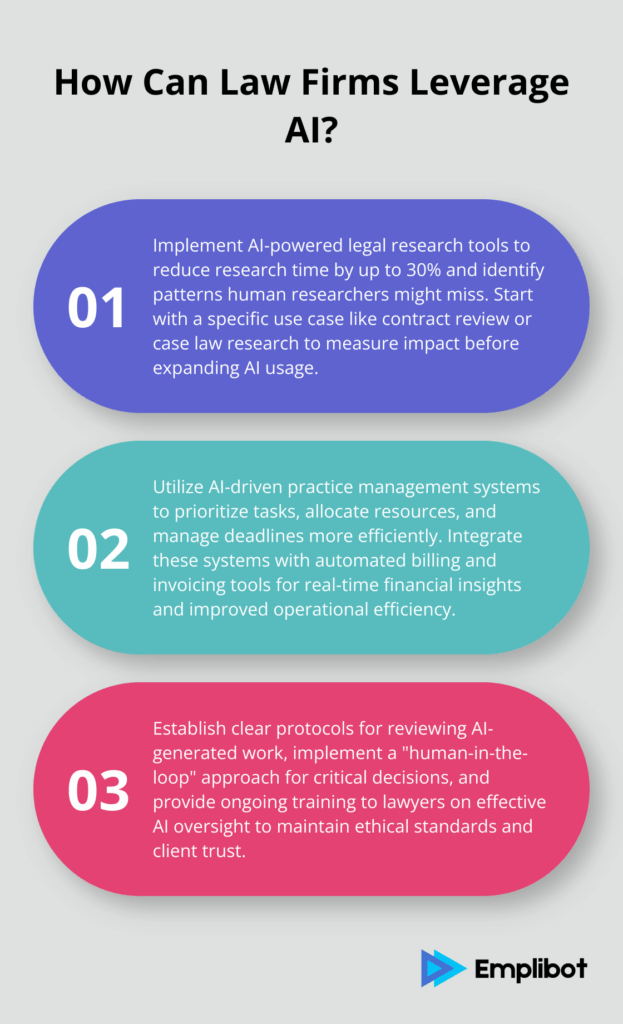
The introduction of artificial intelligence (AI) in law firms is ushering in a new era for the legal industry, redefining how legal services are delivered. Firms like Clifford Chance are increasingly adopting AI technologies to streamline operations, enhance efficiency, and reduce operational costs. For example, AI tools can automate routine tasks such as document review and legal research, enabling attorneys to focus on higher-level casework and strategic decision-making. This shift not only contributes to faster turnaround times for clients but also significantly impacts staffing requirements, prompting firms to reassess their workforce needs.
As AI continues to evolve, law firms are faced with both opportunities and challenges. While the technology can drive operational efficiencies and facilitate better client service, it also raises questions about the future of employment within the sector. With advances in AI leading to reduced demand for traditional support roles, law firms may find themselves needing fewer staff members in areas such as finance and human resources. Hence, the challenge becomes balancing the incorporation of AI with the human touch that remains vital to legal counsel.
Frequently Asked Questions
How is AI influencing staff cuts in law firms?
AI is significantly impacting law firms by enhancing efficiency and automation in various functions, leading to decisions like staff reductions. For instance, Clifford Chance announced a 10% cut in its London back-office roles due to the increased implementation of artificial intelligence, indicating a shift in workforce dynamics within the legal industry.
What are the implications of AI on employment in law firms?
The rise of AI in law firms is causing a shift in employment patterns, often resulting in workforce reduction. As tasks such as contract review and legal research become automated, firms like Clifford Chance may opt to hire fewer employees or restructure roles, leading to changes in the traditional workforce model in the legal sector.
What role does artificial intelligence law play in modern law firms?
Artificial intelligence law is becoming crucial as law firms adopt legal industry technology to improve operational efficiency. AI tools assist in various tasks, leading firms to rely less on human resources for roles traditionally filled by legal professionals, thus reshaping the landscape of legal employment.
Are law firm staff cuts attributed to AI innovations?
Yes, many law firm staff cuts are directly attributed to AI innovations. For example, Clifford Chance’s recent reduction was influenced by an increased reliance on AI technologies which automate many business service functions, demonstrating the direct link between AI adoption and workforce changes.
How does AI technology affect job roles within law firms?
AI technology is transforming job roles within law firms by automating routine tasks and enhancing productivity. As roles adapt to incorporate AI, some positions may be redefined or rendered redundant, as seen in Clifford Chance’s restructuring efforts.
What are common concerns regarding AI workforce reduction in legal environments?
A prevalent concern regarding AI workforce reduction in legal environments is the potential displacement of jobs, particularly among entry-level positions. As demonstrated by PwC’s decision to halt significant hiring due to AI advancements, many worry that these technologies could limit opportunities for new graduates entering the legal job market.
Is AI reshaping recruitment strategies in law firms?
Yes, AI is reshaping recruitment strategies in law firms by affecting the number and type of roles available. Firms may prioritize hiring specialists in AI technology rather than expanding general staff, as noted by PwC’s reduced hiring goals amid AI advancements.
What challenges do law firms face when integrating AI into their workforce?
Law firms face significant challenges when integrating AI into their workforce, including difficulties in finding qualified AI specialists and balancing automation with the need for human oversight in legal processes. This dual focus on technology and human expertise is crucial for successful implementation.
| Key Points |
|---|
| Clifford Chance is cutting 10% of its London back-office staff due to AI integration. |
| Around 50 roles are being made redundant in finance, HR, and IT departments. |
| Changes to 35 other roles are also proposed as part of restructuring. |
| AI is enhancing efficiency, leading to reduced demand for traditional back-office roles. |
| A survey found 41% of business leaders are using AI to decrease their workforce. |
| PwC has halted plans to recruit 100,000 employees due to the impact of AI. |
| There is a high demand for AI specialists but a shortage of qualified candidates. |
Summary
AI in law firms is reshaping roles and workforce dynamics significantly. As demonstrated by Clifford Chance’s recent decision to reduce back-office staff by 10%, the integration of AI is leading to both workforce reductions and a shift in the types of roles needed within the legal sector. With AI streamlining operations and allowing for greater productivity, firms are re-evaluating hiring strategies and the necessity of certain positions. This evolving landscape necessitates adaptability, as firms like PwC acknowledge the potential decrease in entry-level positions while simultaneously seeking skilled AI professionals.